

Signing first formal step in creating historic conservation area

Advertisement
Read this article for free:
or
Already have an account? Log in here »
To continue reading, please subscribe:
Digital Subscription
One year of digital access for only $1.44 a week*
- Enjoy unlimited reading on winnipegfreepress.com
- Read the E-Edition, our digital replica newspaper
- Access News Break, our award-winning app
- Play interactive puzzles
*Billed as $5.77 plus GST every four weeks. After 52 weeks, price increases to the regular rate of $19.95 plus GST every four weeks. Offer available to new and qualified returning subscribers only. Cancel any time.
To continue reading, please subscribe:
Add Free Press access to your Brandon Sun subscription for only an additional
$1 for the first 4 weeks*
- Enjoy unlimited reading on winnipegfreepress.com
- Read the E-Edition, our digital replica newspaper
- Access News Break, our award-winning app
- Play interactive puzzles
*Your next Brandon Sun subscription payment will increase by $1.00 and you will be charged $17.95 plus GST for four weeks. After four weeks, your payment will increase to $24.95 plus GST every four weeks.
Read unlimited articles for free today:
or
Already have an account? Log in here »
Hey there, time traveller!
This article was published 18/01/2024 (1013 days ago), so information in it may no longer be current.
The rhythm of Northlands Denesuline drummers filled the air Thursday, as chiefs of four Manitoba First Nations led provincial, federal and Indigenous leaders into a historic ceremony that marked a formal step towards establishing Manitoba’s first — and Canada’s largest — terrestrial Indigenous-protected area across the vast wilderness of the Seal River Watershed.
In the presence of Manitoba Keewatinowi Okimakanak chiefs and several dozen guests, leaders of the Sayisi Dene, O-Pipon-Na-Piwin Cree, Northlands Denesuline and Barren Lands First Nations joined Premier Wab Kinew and federal Environment and Climate Change Minister Steven Guilbeault. The parties were assembled to sign a long-awaited memorandum of understanding committing all parties to a feasibility study and mineral exploration moratorium across 50,000 square kilometres of culturally and ecologically vital land.
“Together with their nations, we are leading the way,” Stephanie Thorassie, executive director of the Seal River Watershed Alliance, said during the signing.
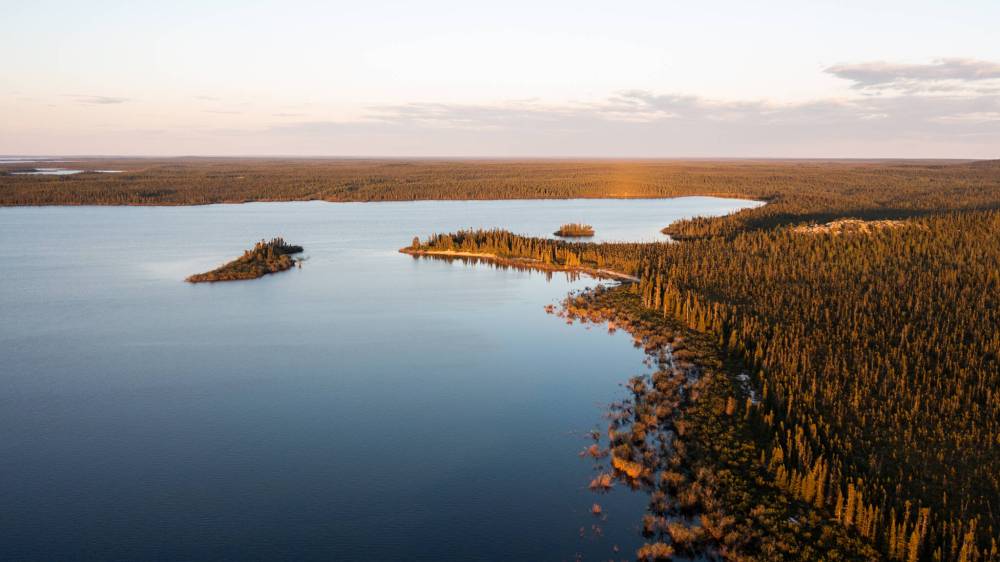
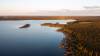
The Seal River watershed encompasses 50,000 square kilometres of pristine land in Manitoba’s north. (Jordan Melograna / Seal River Watershed Indigenous Protected Area Initiative)
“For so long, others have dictated where we lived, where we went to school, how we wash our clothes, our hair, what language we spoke. Now, our communities are standing up in defining how we want to care for these lands and waters.”
From its source at Shethanei Lake, the Seal River flows uninterrupted for 260 kilometres to Hudson Bay.
It is the last river in Manitoba untrammelled by hydroelectric dams or developments; there are no permanent roads and mineral developments across the pristine territory. The watershed is home to at least 25 at-risk species, including the culturally significant barren ground caribou, whose herds have been in decline for decades. It is also a significant carbon sink, storing 1.7 billion tonnes of carbon in the soil, according to a Ducks Unlimited Canada study.
The alliance formed between the four First Nations in 2019, with a vision to preserve the health of the river. Since then, they have completed several studies outlining the economic and ecological case for conserving lands they have called home for generations. The new feasibility study will take that work a step further, helping parties decide what shape a protected area in the region could take — including working with Parks Canada to explore the possibility of a national park designation.
“We still want this pristine land to be there for our younger generations,” OPCN Chief Shirley Ducharme said. “We are looking to continue our ancestral ways and use the land with respect.”
The eventual Indigenous-led protected area will join just three other federally recognized Indigenous Protected and Conserved Areas across the country, all located in the Northwest Territories.
Whatever shape the protected area takes, leaders say Indigenous traditions, practices and knowledge will be at the centre of the conversation.

(Shawn Parkinson / The Narwhal)
“We’re writing our own story by doing this,” Thorassie said. “We’re stepping away from the narrative of this terrible history of residential schools and forced relocation. We know what story needs to be written from here on out, we know we are the ones who need to be responsible for that. We can’t have other people writing our stories anymore.”
The people in Thorassie’s community, the Sayisi Dene, were forcibly removed from their homelands on the watershed by the government of Canada almost 70 years ago. Though the community returned to its home of Tadoule Lake 17 years later, one-third of the population died during the relocation.
The people of the O-Pipon-Na-Piwin Cree Nation were forced to relocate to the shores of South Indian Lake, after Manitoba Hydro developments flooded their traditional lands and decimated the community’s trap lines and fisheries in the 1970s.
“The signing of the (memorandum of understanding) is a critical step towards reconciliation,” said Lianna Anderson, a land guardian from OPCN.
“As we move forward there will be equality in all processes to ensure that our inherent and treaty rights will always be upheld. That’s the expectation now.”
The alliance’s land guardian staff are currently going door-to-door, interviewing community members in all four First Nations to gain an understanding of sacred and historically important locations throughout the watershed — information that will be used to inform the feasibility study.
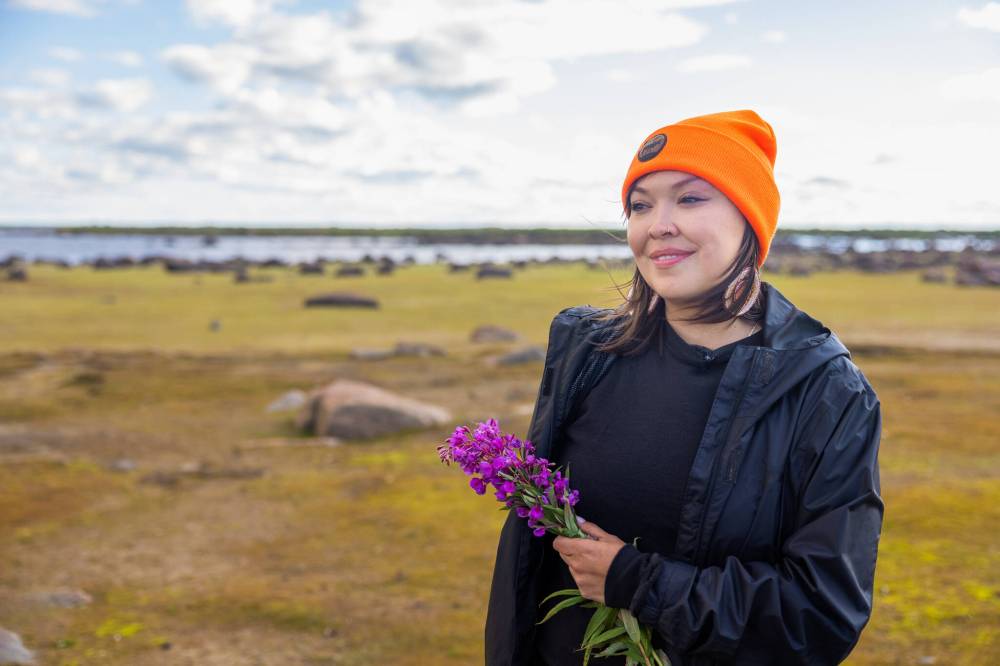
Alliance Executive Director Stephanie Thorassie says the agreement allows for Indigenous peoples to write their own history. (Jordan Melograna / Seal River Watershed Indigenous Protected Area Initiative Stephanie Thorassie )
“We have to combine western science with the Indigenous knowledge that we’re carrying, and we’re aware that that’s a big part of the feasibility study,” Thorassie said.
“What’s so beautiful about this is that we have a chance here to change the narrative and make the Indigenous knowledge a priority in the work that we do.”
For the province, protecting the Seal River Watershed is a significant step toward meeting the international conservation target of conserving 30 per cent of lands and waters by 2030.
The watershed comprises about eight per cent of Manitoba’s land area. Once permanently conserved it will add more to the province’s network of protected areas than in the last 25 years combined.
“We’re doing it in a way that is with community and with Indigenous nations and we’re also doing it in a way that ensures that there’s going to be good economic developments in the future of our province,” Kinew told reporters after the signing.

The memorandum of understanding was first announced during the United Nations biodiversity conference in December 2022, while the Progressive Conservatives led the Manitoba government. According to Guilbeault, progress on the signing “unfortunately stalled for months — until Premier Kinew decided to withdraw the land from future mining.”
On Thursday, Manitoba’s cabinet passed an order to temporarily ban claim staking or mineral exploration in the study area. Geological assessments will form part of the feasibility study, but Thorassie stressed it’s unlikely extractive industries will be able to conduct work on those lands in the future, provided community support for a protected area remains high.

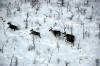
The watershed is home to at least 25 at-risk animal species, including the barren ground caribou.(Josh Pearlman photo)
Instead, economic development opportunities across the Seal River Watershed could include eco-tourism, similar to the tourism industry in nearby Churchill.
“We can’t have healing in the community without this land and the land being protected,” Thorassie said.
julia-simone.rutgers@freepress.mb.ca
Julia-Simone Rutgers is an investigative reporter who joined the Free Press in 2020. Read more about Julia-Simone.
Every piece of reporting Julia-Simone produces is reviewed by an editing team before it is posted online or published in print — part of the Free Press‘s tradition, since 1872, of producing reliable independent journalism. Read more about Free Press’s history and mandate, and learn how our newsroom operates.
Our newsroom depends on a growing audience of readers to power our journalism. If you are not a paid reader, please consider becoming a subscriber.
Our newsroom depends on its audience of readers to power our journalism. Thank you for your support.
Julia-Simone Rutgers is an investigative reporter who joined the Free Press in 2020. Read more about Julia-Simone.
Every piece of reporting Julia-Simone produces is reviewed by an editing team before it is posted online or published in print — part of the Free Press‘s tradition, since 1872, of producing reliable independent journalism. Read more about Free Press’s history and mandate, and learn how our newsroom operates.
Our newsroom depends on a growing audience of readers to power our journalism. If you are not a paid reader, please consider becoming a subscriber.
Our newsroom depends on its audience of readers to power our journalism. Thank you for your support.
Related Articles
Seal River Watershed Alliance paddle to preserve one of the world’s largest remaining intact watersheds

Advertisement Advertise With Us
Advertisement Advertise With Us
History
Updated on Thursday, January 18, 2024 6:33 PM CST: Updates earlier brief to final version of story.
Updated on Friday, January 19, 2024 1:05 PM CST: Corrects reference to source of Seal River