

Manitoba should honour commitment
Advertisement
Read this article for free:
or
Already have an account? Log in here »
To continue reading, please subscribe:

Digital Subscription
One year of digital access for only $205*
- Enjoy unlimited reading on winnipegfreepress.com
- Read the E-Edition, our digital replica newspaper
- Access News Break, our award-winning app
- Play interactive puzzles
*First annual payment billed as $205.00 + GST for one year. This annual subscription will automatically renew at $233.00 + GST every 52 weeks (10% off the regular annual price of $259.35). Offer available to new and qualified returning subscribers only. Cancel any time.
To continue reading, please subscribe:
Add Free Press access to your Brandon Sun subscription for only an additional
$1 for the first 4 weeks*
- Enjoy unlimited reading on winnipegfreepress.com
- Read the E-Edition, our digital replica newspaper
- Access News Break, our award-winning app
- Play interactive puzzles
*Your next Brandon Sun subscription payment will increase by $1.00 and you will be charged $17.95 plus GST for four weeks. After four weeks, your payment will increase to $24.95 plus GST every four weeks.
Read unlimited articles for free today:
or
Already have an account? Log in here »
Hey there, time traveller!
This article was published 26/06/2023 (1173 days ago), so information in it may no longer be current.
As we come to the end of National Indigenous History Month, we are reminded once again that the past shapes the present. Schools, businesses and cultural institutions across Manitoba are featuring the resilience of Indigenous Peoples, but also the painful realities of residential schools and other impacts of colonialism. Grappling with this history can leave people wondering how to move forward.
One way to advance reconciliation is for governments to keep their promises.
In northern Manitoba, for instance, four First Nations are working to protect the Seal River Watershed, one of the healthiest, most intact watersheds in the world. Sustaining these lands will strengthen our communities. It will also conserve clean waters, create economic opportunities and help fight climate change for all Manitobans.
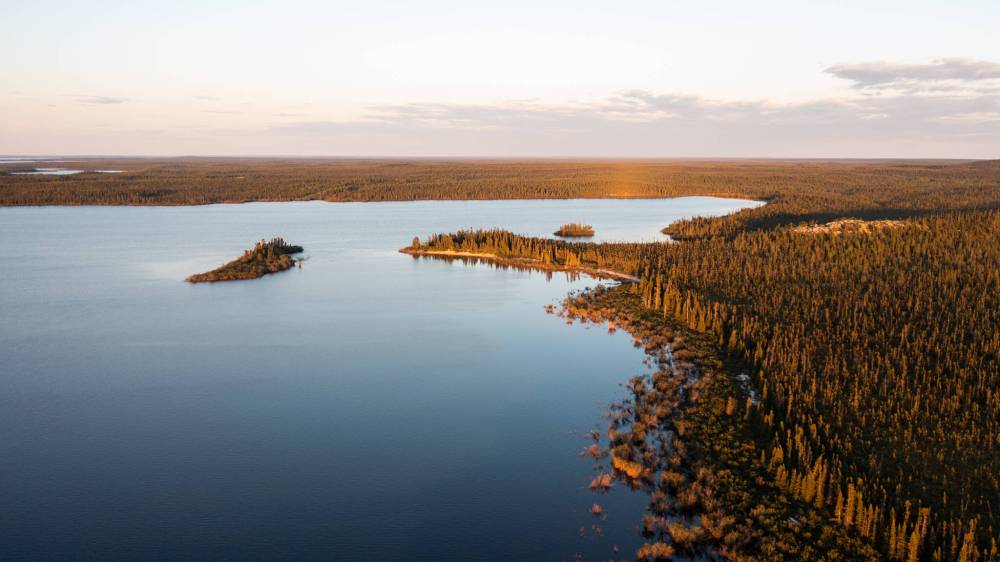
Jordan Melograna/File
An area of more than 50,000 square kilometres in the Seal River Watershed is waiting for government action.
Jordan Melograna / Seal River Watershed Indigenous Protected Area Initiative
The Government of Manitoba has expressed support for the proposed Seal River Watershed Indigenous Protected Area (IPA), yet it has failed to take agreed-upon steps.
Last December, Government of Manitoba representatives stepped onto the world stage at the COP15 Biodiversity Summit in Montreal — a once-in-a-decade event where 195 countries negotiated an agreement to sustain biodiversity — and announced it would support a feasibility study of the proposed Indigenous Protected Area in the watershed.
Environment, Climate and Parks Minister Jeff Wharton said in the announcement that Manitoba is “very interested in working in partnership with First Nations in the region to advance reconciliation and sustainable economic development for the Indigenous people living in the area.”
Six months later, Manitoba has still not signed the memorandum of understanding that would turn these words into action. It has stalled and delayed instead of helping our province move forward.
Meanwhile, many want to be a part of the future envisioned by the Seal River Watershed Alliance.
More than 16,000 people have sent letters to the Manitoba government in support of the IPA. Hundreds of thousands have watched videos about the project. Viewers have learned about the watershed from national and international media coverage. And audiences from the National Guardians Gathering in Ottawa, the United Nations in New York, and beyond have been inspired by our plan to care for the watershed.
It’s not hard to understand why this project gives people hope.
In an age of record-breaking wildfires and megadroughts, the Seal River Watershed IPA offers a climate solution: the watershed stores 1.7 million tonnes of carbon in boreal soils and wetlands. That’s equivalent to eight years’ worth of all greenhouse gas emissions in Canada. Keeping this carbon stored in the ground away from the atmosphere is a gift to the globe.
In a time of declining caribou, bears and migratory birds, the Seal River Watershed IPA will sustain more than 50,000 square kilometres of healthy habitat. Research confirms that 80 per cent of the world’s remaining biodiversity is on lands cared for and loved by Indigenous People. Our four nations have been in relationship with this watershed for millennia, and we have the knowledge to ensure it continues to nurture our languages, cultures and our connection with caribou.
And in the shadow of residential schools and the forced relocation of the Sayisi Dene First Nation that resulted in decades of illness, poverty and death, the IPA charts a path to healing and reconciliation. It marks an end to imposed decision making and ushers in a new era of partnership and respect for Indigenous Nations’ vision for the watershed.

The IPA is led by our communities, and we are happy to share all these benefits.
That’s why we are calling on the Manitoba government to honour its commitment to do its part in conducting a feasibility study for the IPA and to put interim protection in place while the study is underway, as is standard practice across the country.
The Seal River Watershed Alliance is ready to work with this government and Manitobans to create real reconciliation on the ground.
It’s time for promises made to become promises kept.
Stephanie Thorassie is the executive director of the Seal River Watershed Alliance, an initiative of four First Nations working to establish an Indigenous Protected Area in the region. She is a member of the Sayisi Dene First Nation from Tadoule Lake.
Related Articles
Signing first formal step in creating historic conservation area
Advertisement Advertise With Us
Advertisement Advertise With Us
History
Updated on Monday, June 26, 2023 10:04 AM CDT: Adds photo