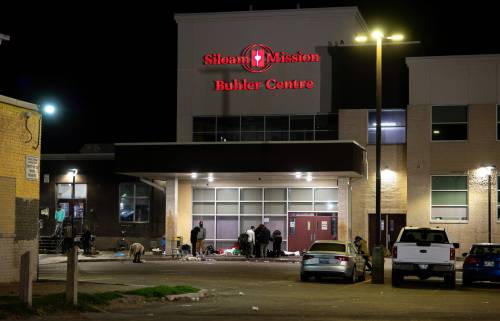
Searching for Buffalo Woman Years later, jacket, shred of DNA remain only evidence of admitted killer’s unidentified victim
Read this article for free:
or
Already have an account? Log in here »
To continue reading, please subscribe:

Digital Subscription
One year of digital access for only $205*
- Enjoy unlimited reading on winnipegfreepress.com
- Read the E-Edition, our digital replica newspaper
- Access News Break, our award-winning app
- Play interactive puzzles
*First annual payment billed as $205.00 + GST for one year. This annual subscription will automatically renew at $233.00 + GST every 52 weeks (10% off the regular annual price of $259.35). Offer available to new and qualified returning subscribers only. Cancel any time.
To continue reading, please subscribe:
Add Free Press access to your Brandon Sun subscription for only an additional
$1 for the first 4 weeks*
- Enjoy unlimited reading on winnipegfreepress.com
- Read the E-Edition, our digital replica newspaper
- Access News Break, our award-winning app
- Play interactive puzzles
*Your next Brandon Sun subscription payment will increase by $1.00 and you will be charged $17.95 plus GST for four weeks. After four weeks, your payment will increase to $24.95 plus GST every four weeks.
Read unlimited articles for free today:
or
Already have an account? Log in here »
Hey there, time traveller!
This article was published 10/05/2024 (862 days ago), so information in it may no longer be current.
The admitted serial killer doesn’t know her real name. At this point, nobody does.
Not the Crown attorneys prosecuting the killer, whose lawyers argue he should be found not criminally responsible due to mental disorder.
Not the homicide detectives who spent 20 hours, in and out of a cold concrete room at Winnipeg Police Service headquarters, interviewing him about his life and the circumstances in which four Indigenous women died before his sudden confession.
Not the countless down-and-out people on Winnipeg’s Main Street strip who walked past posters taped to lamp posts and hydro poles that appealed for information on who she was.
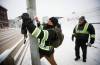
JOHN WOODS / FREE PRESS FILES Posters seeking information to help identify Mashkode Bizhiki’ikwe, or Buffalo Woman, on Main Street in January 2023. 
Not even the police identification specialists, who pulled a scrap of DNA from the left sleeve cuff of her winter jacket that was left behind in the killer’s apartment and then sold online, have determined who she was.
That DNA from her Baby Phat brand jacket, which was recovered after being sold on Facebook Marketplace, was the only evidence police found of the woman Indigenous leaders named Mashkode Bizhiki’ikwe, or Buffalo Woman, a Winnipeg police constable confirmed in court earlier this week.
SUPPLIED DNA from this Baby Phat brand jacket is the only evidence police found that could lead to the identitity of the woman Indigenous leaders have named Mashkode Bizhiki’ikwe, or Buffalo Woman.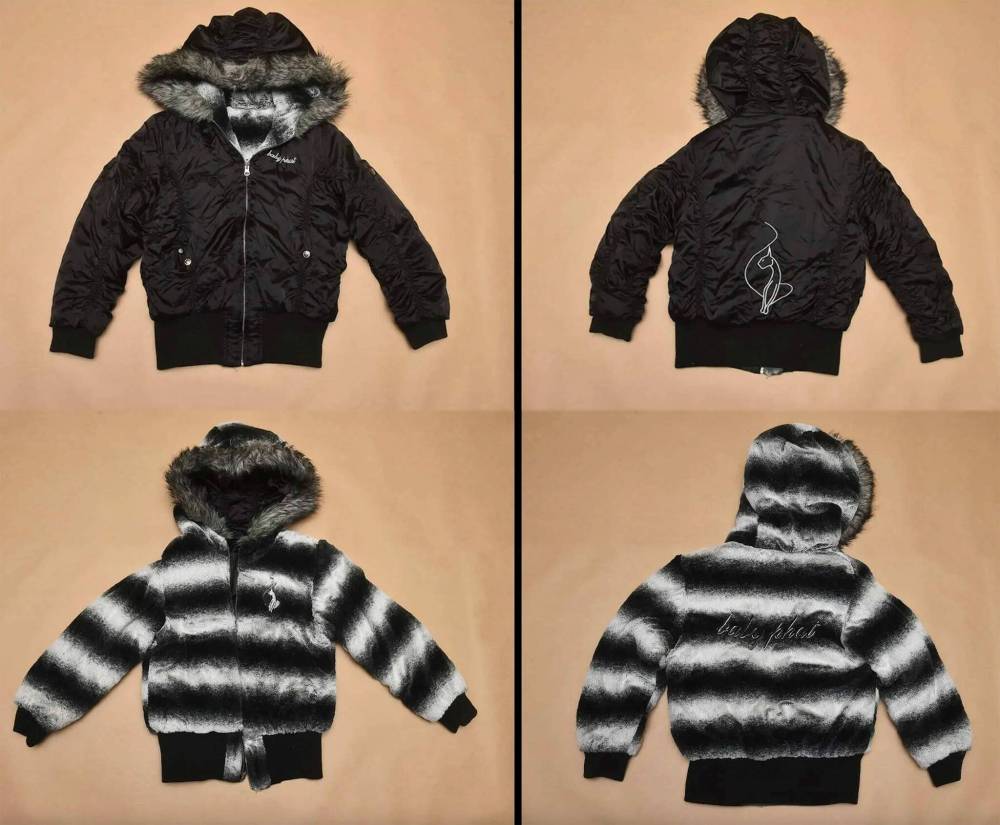
Crown prosecutor Christian Vanderhooft asked if the DNA profile had been identified, during the second day of 37-year-old Jeremy Skibicki’s Court of King’s Bench trial, where he is charged with four counts of first-degree murder.
WPS forensics identification Const. Jan de Vries said Buffalo Woman’s DNA had still not been identified, telling court that police have not been able to find a match.
Skibicki has pleaded not guilty in the 2022 slayings of Rebecca Contois and two other First Nations women — Morgan Harris and Marcedes Myran — as well as the fourth still-unidentified woman. The Crown alleges Skibicki, an admitted white supremacist, had racial motivations.
Skibicki was arrested after Contois’s partial remains were discovered in garbage bins not far from his apartment, on May 17, 2022. He was charged at first with just her killing.
De Vries told court this week he sent clothing, jewelry and blood-stained items from Skibicki’s McKay Avenue apartment suite for testing, receiving back confirmations identifying Harris, Myran and Contois, as well as Buffalo Woman.
The testing also found the DNA profiles of 12 additional women, nine of whom police have not been able to identify because their genetic material is not in law enforcement databases, Vanderhooft said.
The presence of their DNA does not mean the women were victims of crime.
SUPPLIED Jeremy Skibicki has pleaded not guilty in the 2022 slayings of Rebecca Contois and two other First Nations women — Morgan Harris and Marcedes Myran — as well as the fourth still-unidentified woman.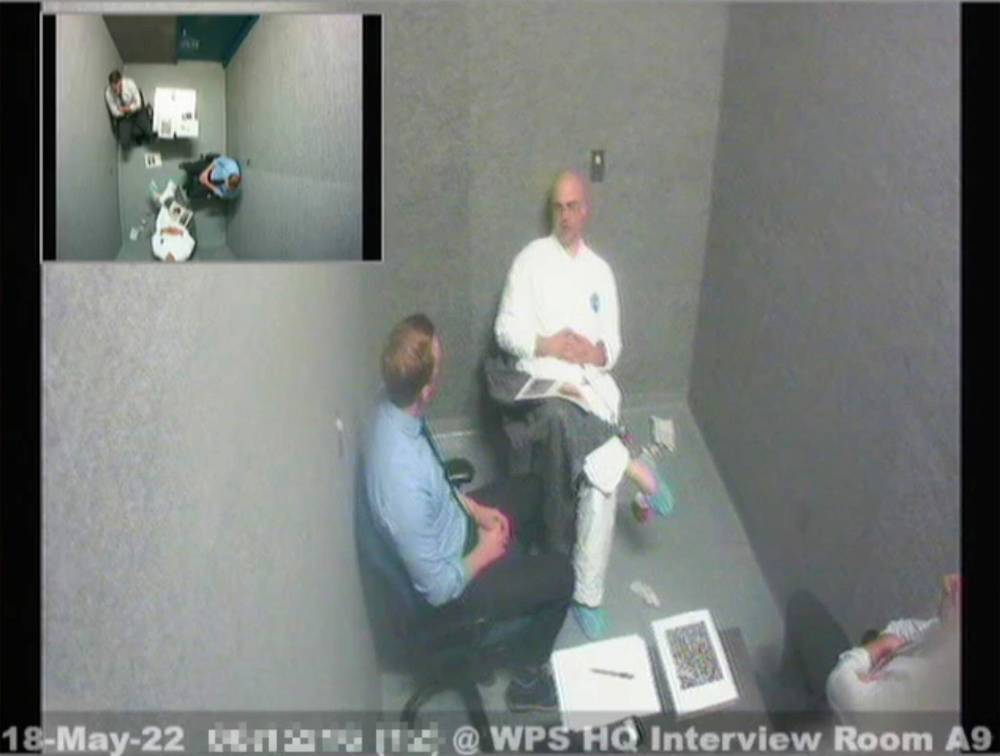
Among the DNA profiles confirmed was that of Ashlee Christine Shingoose, a woman in her early 30s who was reported missing from Henry Avenue and Main Street in March 2022, court was told.
Albert Shingoose, Ashlee’s father, said a DNA sample family gave police in January 2023 didn’t come back as a match to Buffalo Woman.
“Shingoose is still considered to be a missing person,” police spokeswoman Const. Dani McKinnon said Friday.
Her father said Friday the family is holding a vigil on Saturday in her home community of St. Theresa Point to keep her in people’s thoughts.
Buffalo Woman was the first of four women Skibicki killed, around March 15, 2022. Skibicki told homicide detectives, during his lengthy interview, what he believed was her name. The woman had been reported missing in the spring of 2022.
“I’m not even sure if it’s actually her, but it just seems like (it) has to be her based on like what I saw on a Bear Clan (Patrol) poster. Like a missing picture of her,” Skibicki told detectives. “It just seems like a striking resemblance.”
That woman was later found alive, the Bear Clan said that year. McKinnon said Friday officers had interacted with the woman in January.
MIKE DEAL / FREE PRESS FILES Police released photos of a jacket similar to the one the Buffalo Woman was believed to be wearing, a reversible “Baby Phat” jacket with a fur-lined hood, in December 2022.
Police released images of Buffalo Woman’s coat in December 2022 when they announced Skibicki was to be charged with the three additional counts of first-degree murder.
Detectives believe Buffalo Woman was in her mid-20s with an average build. She was most likely Indigenous. They don’t know where her remains may have ended up — unlike those of Harris and Myran, who investigators believe are in Prairie Green Landfill.
The jacket, which has a fur-lined hood, is black on one side and striped on the other. The black side has “Baby Phat” on the front and a cat logo on the back. The striped side has a cat logo on the front and “Baby Phat” across the back.
It led community members to plaster the city, particularly in areas where street people frequent, with posters that read “Help us identify Buffalo Woman.”
Investigators encouraged people to phone in tips, even if the information seemed trivial.
“Somewhere out there, there’s a family and a community that are missing a loved one and truly deserve to know what happened,” police Insp. Shawn Pike said in 2022, appealing for help.
erik.pindera@freepress.mb.ca

Erik Pindera is a reporter for the Free Press, mostly focusing on crime and justice. The born-and-bred Winnipegger attended Red River College Polytechnic, wrote for the community newspaper in Kenora, Ont. and reported on television and radio in Winnipeg before joining the Free Press in 2020. Read more about Erik.
Every piece of reporting Erik produces is reviewed by an editing team before it is posted online or published in print — part of the Free Press‘s tradition, since 1872, of producing reliable independent journalism. Read more about Free Press’s history and mandate, and learn how our newsroom operates.
Our newsroom depends on a growing audience of readers to power our journalism. If you are not a paid reader, please consider becoming a subscriber.
Our newsroom depends on its audience of readers to power our journalism. Thank you for your support.
Related Articles
Nearly a year later, no details are publicly known about Buffalo Woman