Skibicki found guilty of murdering four Indigenous women Judge rejects defence argument Skibicki had mental defect
Read this article for free:
or
Already have an account? Log in here »
To continue reading, please subscribe:

Digital Subscription
One year of digital access for only $205*
- Enjoy unlimited reading on winnipegfreepress.com
- Read the E-Edition, our digital replica newspaper
- Access News Break, our award-winning app
- Play interactive puzzles
*First annual payment billed as $205.00 + GST for one year. This annual subscription will automatically renew at $233.00 + GST every 52 weeks (10% off the regular annual price of $259.35). Offer available to new and qualified returning subscribers only. Cancel any time.
To continue reading, please subscribe:
Add Free Press access to your Brandon Sun subscription for only an additional
$1 for the first 4 weeks*
- Enjoy unlimited reading on winnipegfreepress.com
- Read the E-Edition, our digital replica newspaper
- Access News Break, our award-winning app
- Play interactive puzzles
*Your next Brandon Sun subscription payment will increase by $1.00 and you will be charged $17.95 plus GST for four weeks. After four weeks, your payment will increase to $24.95 plus GST every four weeks.
Read unlimited articles for free today:
or
Already have an account? Log in here »
Hey there, time traveller!
This article was published 11/07/2024 (797 days ago), so information in it may no longer be current.
Loved ones of the women slain by Jeremy Skibicki in 2022 cheered and applauded upon hearing a judge rule he will be held criminally responsible for their deaths, in a packed Winnipeg courtroom filled with emotion Thursday.
The 37-year-old had pleaded not guilty by reason of mental disorder to four counts of first-degree murder at the start of his six-week trial in May, for the slayings of Rebecca Contois, 24, Morgan Harris, 39, and Marcedes Myran, 26, and an unidentified woman known as Buffalo Woman (Mashkode Bizhiki’ikwe) — all Indigenous women he’d targeted after meeting them at downtown shelters in early 2022.
Three of the victims of serial killer Jeremy Skibicki: Morgan Beatrice Harris (from left), Marcedes Myran and Rebecca Contois.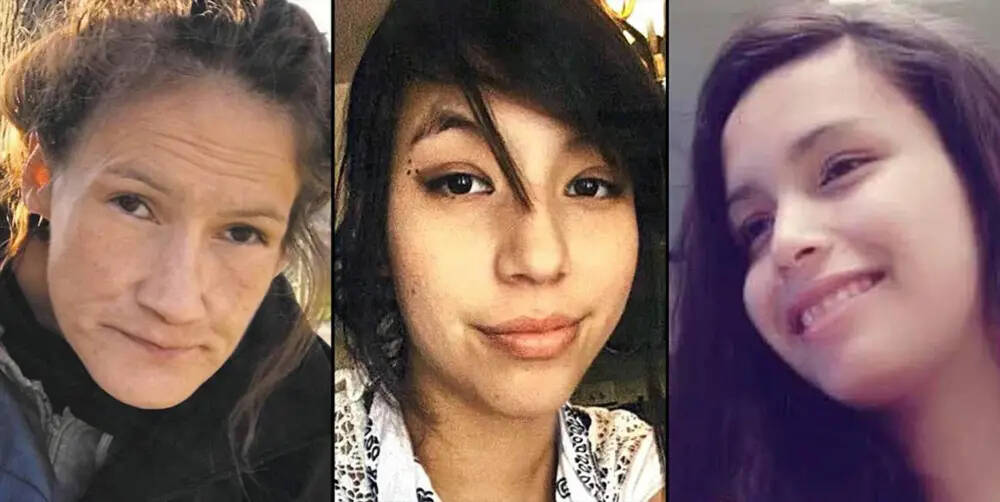
Skibicki admitted to killing them, but argued he should be found not criminally responsible because of a mental disorder, specifically schizophrenia, claiming he had heard voices and believed he was on a mission from God.
Court of King’s Bench Chief Justice Glenn Joyal rejected that argument and convicted Skibicki of all four counts.
“The accused did not have a mental disorder, such as schizophrenia,” said Joyal. “Such assertions were fabrications… they suggested malingering on the part of the accused.”
Joyal said the Crown had proved beyond a reasonable doubt that Skibicki understood the planned and deliberate killings were legally and morally wrong.
JOHN WOODS / THE CANADIAN PRESS Families and supporters of four murdered women react outside the Manitoba Law Courts after the guilty verdict of serial killer Jeremy Skibicki is read in a courtroom in Winnipeg on Thursday.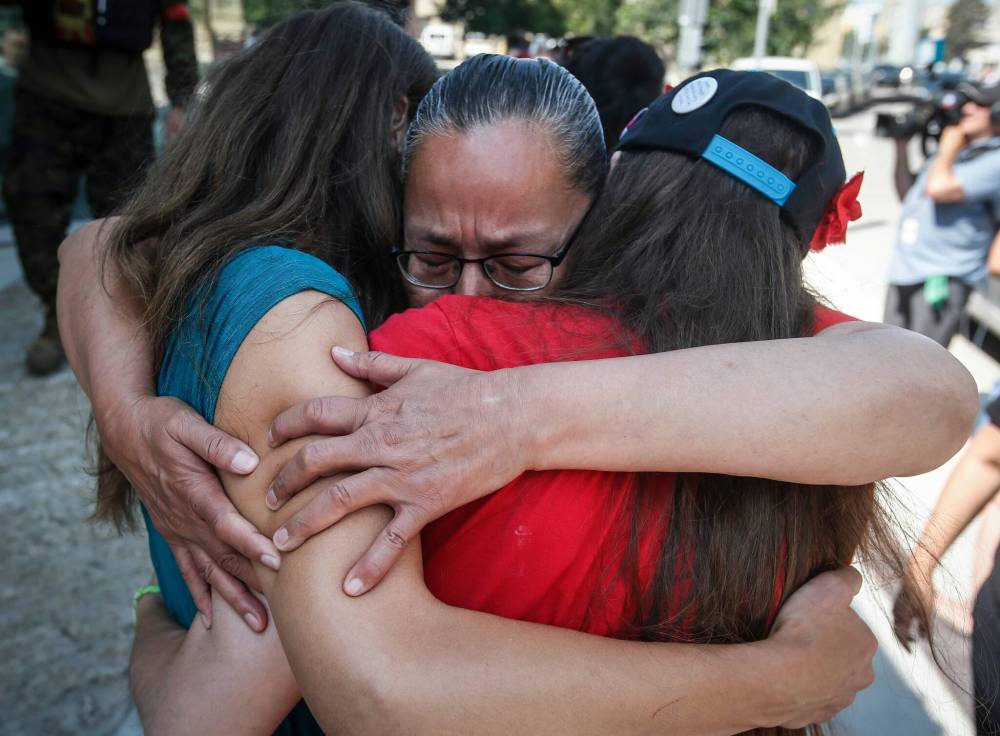
Skibicki, a bald-headed man with a long beard, who was dressed in a jail-issued grey T-shirt, showed no visible emotion throughout the court proceedings.
Crown prosecutors Chris Vanderhooft and Renee Lagimodiere had argued Skibicki was driven to kill the women because of his perverse desire to have sex with people he had killed, as well as his white supremacist beliefs and an urge for power and control.
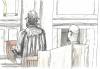
JAMES CULLETON ILLUSTRATION
“The necessary prosecution and criminal trial of the accused, Jeremy Skibicki, has had an undeniable and profound impact on the entire Manitoba community, Indigenous and non-Indigenous,” said Joyal, adding the impact on the victims’ loved ones who attended the trial was apparent in the courtroom each day.
Joyal read a summary of his lengthy and legally complex decision, which will be released to the public next week. He said he hopes the verdict will help the families grieve and heal.
Skibicki will face a mandatory sentence of life in prison with no chance of parole for 25 years. He will be sentenced at a later date, after the court has heard victim impact statements from family and community members. That is atypical in first-degree murder convictions, which carry a mandatory sentence.
“But it is important that the victims and the community have an opportunity to provide their impact statement,” said prosecutor Lagimodiere, outside the court after the verdict had been delivered.
JOHN WOODS / THE CANADIAN PRESS Families and supporters of four murdered women react outside the Manitoba Law Courts after the guilty verdict of serial killer Jeremy Skibicki is read in a courtroom in Winnipeg on Thursday.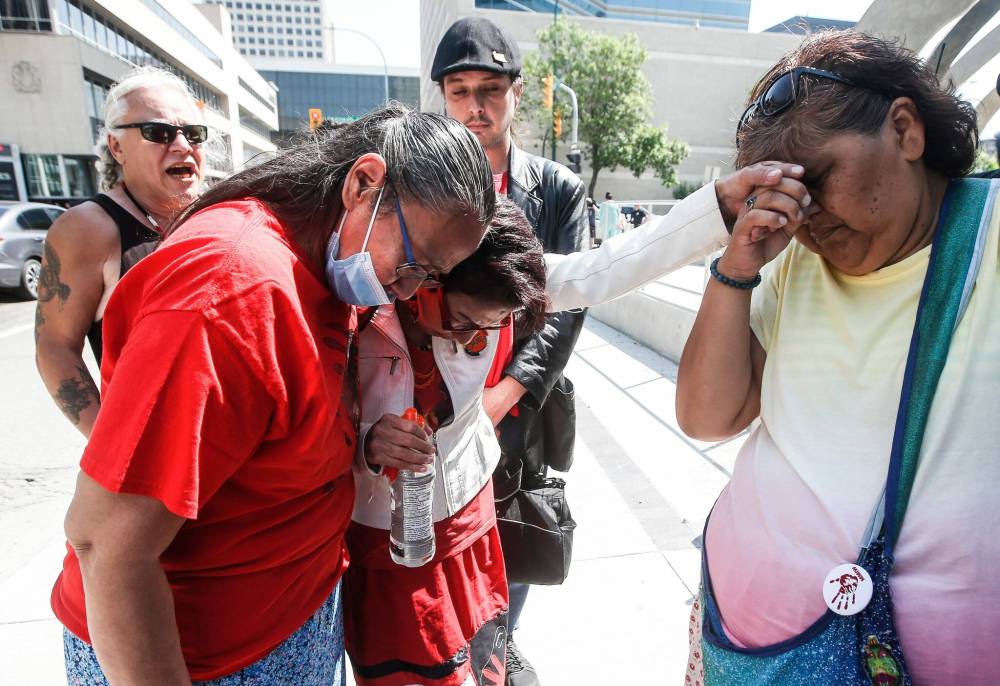
Skibicki’s lawyer, Leonard Tailleur, argued at trial that Skibicki had been in the throes of a psychotic episode at the time of the slayings.
Joyal said he gave little weight to evidence given by Dr. Sohom Das, a forensic psychiatrist from the United Kingdom, who testified for the defence. He said he believed the killer was driven by the delusional belief that he was on a mission from God, preventing him from understanding the immorality of his actions.
Joyal said he took issue with Das’s professionalism, but was more concerned with his unfamiliarity with the Canadian legal concept of finding a person not criminally responsible.
The judge said he found the testimony of Canadian forensic psychiatrist Dr. Gary Chaimowitz, who testified for the Crown, to be credible and reliable.
Chaimowitz testified Skibicki had a paraphilia, specifically homicidal necrophilia, and that his claims of delusions were fabricated.
Skibicki preyed on vulnerable First Nations women at homeless shelters. The killings, and the police decision not to search a landfill for some of the victims’ remains, became symbols of the issue of missing and murdered Indigenous women and girls.
“There was, and continues to be, an undeniable backdrop to this exceptionally high-profile prosecution,” said Joyal.
“For many, this case was and is in numerous respects, emblematic… of the tragedies of… the very grim reality of missing and murdered Indigenous women and girls in Canada.”
SUPPLIED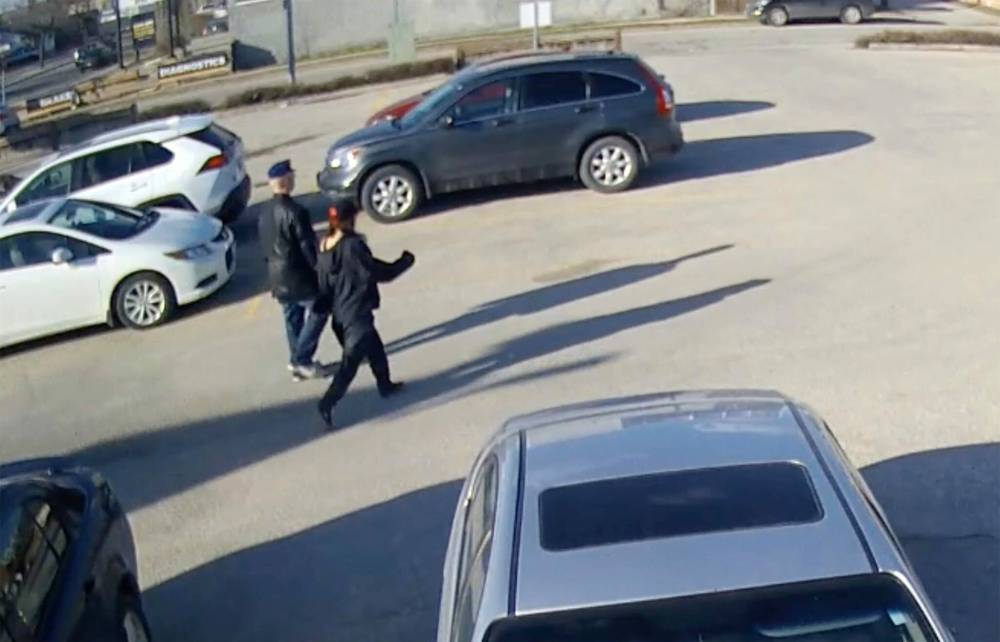
Joyal said it would be artificial and disingenuous not to acknowledge that backdrop, but it could not play a part in his decision, which had to remain impartially focused on the legal issues and facts.
“As should be obvious, the facts of this case are mercilessly graphic. Those facts were largely uncontested as they were established by the accused’s own admission,” said Joyal, calling what Skibicki did “jarring” and “numbing.”
Skibicki was arrested on May 17, 2022, after a man looking for scrap metal found Contois’s head in a garbage bin near the killer’s North Kildonan apartment days earlier in what Joyal called a “gruesome discovery.”
SUPPLIED A still from police interrogation video shows Jeremy Skibicki (right) being questioned by police following his arrest.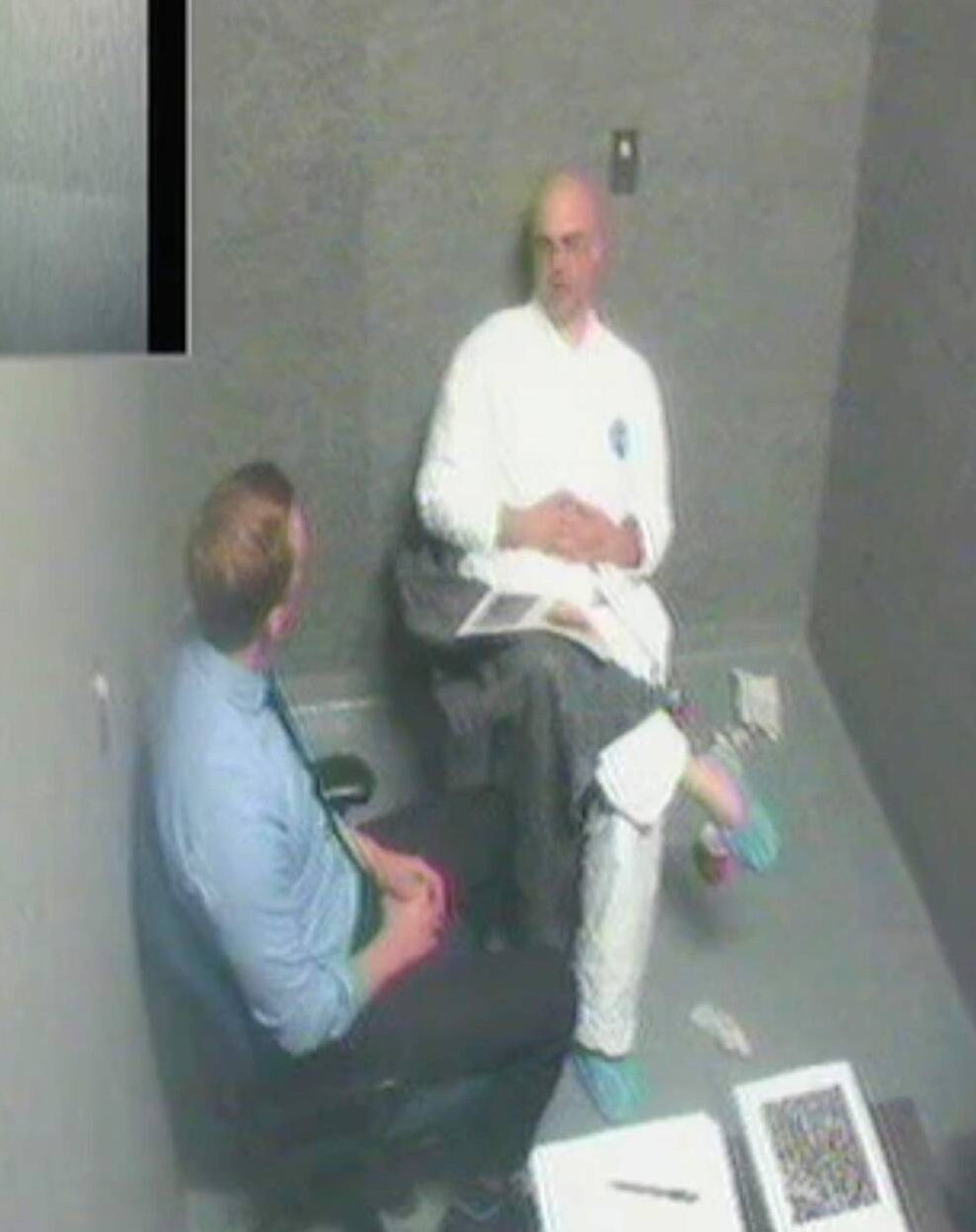
In December 2022, homicide detectives laid three additional charges of first-degree murder connected to the other victims.
In his interview with police, Skibicki admitted he had strangled or drowned the four victims in his McKay Avenue suite and had sex with their bodies. He discarded their remains in nearby garbage bins. Skibicki has said he dismembered Contois and Myran.
He later told two psychiatrists he had heard voices that directed him to kill his victims, but made no such assertions during his lengthy police interview.
During the trial, Joyal said Skibicki would have had to be sexually aroused to assault the dead victims in the way he described, something that was at odds with his claims of delusion.
Harris and Myran’s remains were put in a garbage bin behind a business on Henderson Highway. The bin’s contents were collected by a truck and emptied at Prairie Green Landfill, north of Winnipeg, on May 16, 2022.
About a month after Contois’s remains were discovered, investigators learned Harris and Myran’s remains were likely at Prairie Green. An area where their remains might be located was sealed off.
Police decided not to search the site, concluding it would be too dangerous and difficult because of the large volume of waste, including toxic material, that had been dumped and compressed.
RUTH BONNEVILLE / FREE PRESS FILES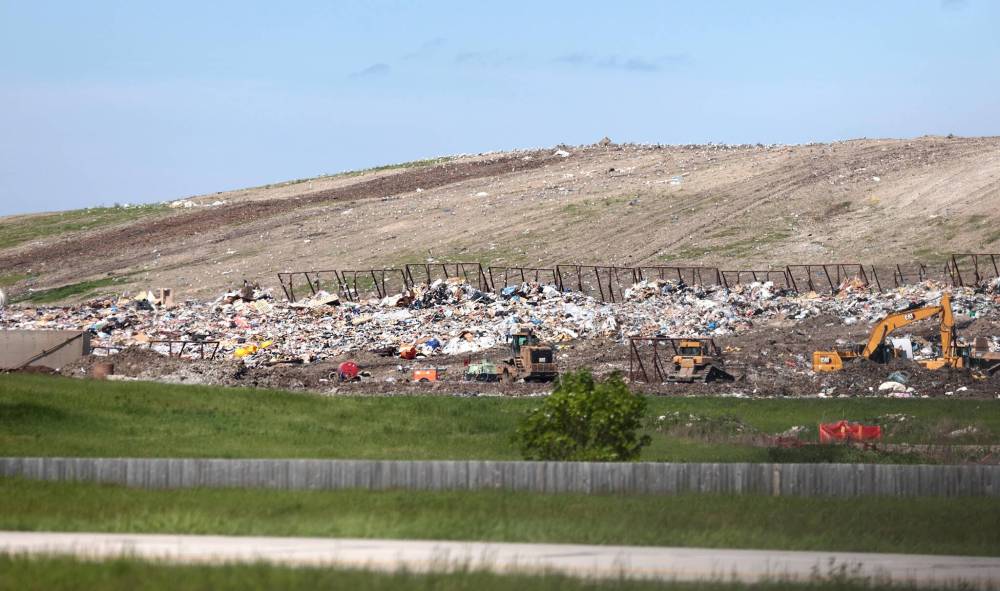
The decision not to search the landfill sparked widespread protests led by families of the victims.
The federal government eventually funded studies that concluded such a widescale search was feasible.
In July 2023, then-Progressive Conservative premier Heather Stefanson said her government would not support a search because it would put workers at risk without a guarantee of success.
The Tories promoted the decision on billboards and newspaper ads during the summer election campaign, drawing condemnation from the Harris and Myran families.
After the fall election, NDP Premier Wab Kinew put up $20 million for the search, as did the federal government. The excavation and manual search is expected to begin this fall.
— with files from Malak Abas
erik.pindera@freepress.mb.ca


Erik Pindera is a reporter for the Free Press, mostly focusing on crime and justice. The born-and-bred Winnipegger attended Red River College Polytechnic, wrote for the community newspaper in Kenora, Ont. and reported on television and radio in Winnipeg before joining the Free Press in 2020. Read more about Erik.
Every piece of reporting Erik produces is reviewed by an editing team before it is posted online or published in print — part of the Free Press‘s tradition, since 1872, of producing reliable independent journalism. Read more about Free Press’s history and mandate, and learn how our newsroom operates.
Our newsroom depends on a growing audience of readers to power our journalism. If you are not a paid reader, please consider becoming a subscriber.
Our newsroom depends on its audience of readers to power our journalism. Thank you for your support.
Related Articles
Family members heave sigh of relief after guilty verdict
























History
Updated on Thursday, July 11, 2024 4:40 PM CDT: Adds reaction, more information on verdict.