Building a city to keep the next generation here
Read this article for free:
or
Already have an account? Log in here »
To continue reading, please subscribe:
Digital Subscription
One year of digital access for only $1.44 a week*
- Enjoy unlimited reading on winnipegfreepress.com
- Read the E-Edition, our digital replica newspaper
- Access News Break, our award-winning app
- Play interactive puzzles
*Billed as $5.77 plus GST every four weeks. After 52 weeks, price increases to the regular rate of $19.95 plus GST every four weeks. Offer available to new and qualified returning subscribers only. Cancel any time.
To continue reading, please subscribe:
Add Free Press access to your Brandon Sun subscription for only an additional
$1 for the first 4 weeks*
- Enjoy unlimited reading on winnipegfreepress.com
- Read the E-Edition, our digital replica newspaper
- Access News Break, our award-winning app
- Play interactive puzzles
*Your next Brandon Sun subscription payment will increase by $1.00 and you will be charged $17.95 plus GST for four weeks. After four weeks, your payment will increase to $24.95 plus GST every four weeks.
Read unlimited articles for free today:
or
Already have an account? Log in here »
Hey there, time traveller!
This article was published 30/09/2024 (751 days ago), so information in it may no longer be current.
When the Jets play a road game in another Canadian city, the familiar “True North” chant can always be heard loud and clear as ex-pat Winnipeggers celebrate their former hometown.
The chant is an expression of pride from those who have moved away, but its prevalence might also be an indication that Winnipeg is losing a different competition against other Canadian cities — the battle to attract and retain its young people.
Every year Winnipeg loses thousands of people to other cities, many of them young, educated adults looking to establish their roots elsewhere. The inability of Winnipeg to retain its young people has always been a problem, but in the face of changing demographics, it’s an issue that has today become even more pressing.
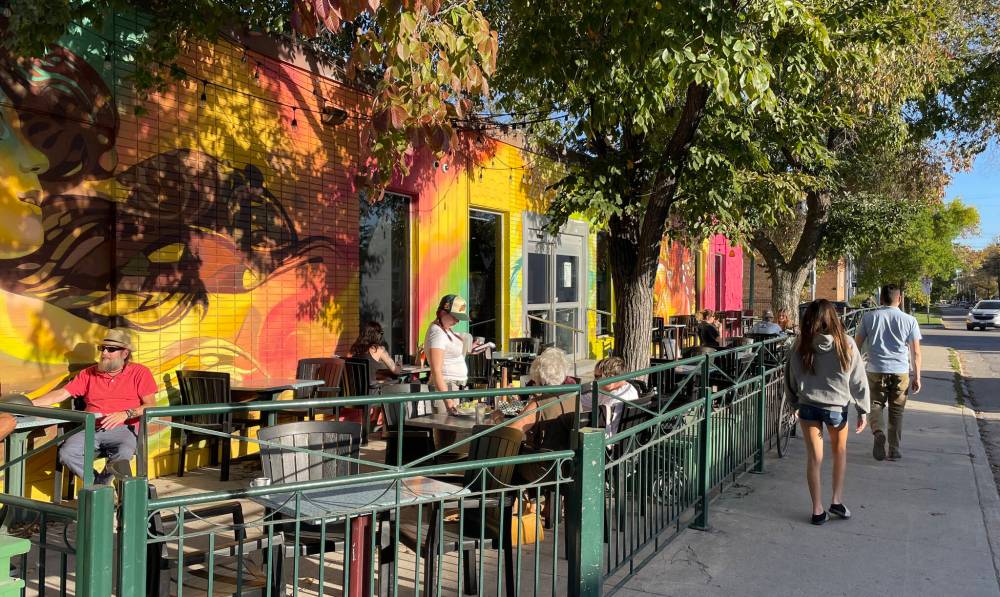
Brent Bellamy
Winnipeg’s young people want a different kind of city than their parents.
Our country is aging quickly. Fifty years ago, the median age in Canada was 25 years old, today it’s 41. This demographic shift is making young people more important to cities than ever before, needed to backfill an aging workforce and drive social vitality and economic innovation in our communities.
Young people have grown up in an interconnected, technology-driven world. Their digital fluency and focus on social and environmental priorities make them a key demographic in the knowledge-based economy that creates modern, prosperous cities.
The Manitoba Chambers of Commerce and Canada West Foundation recently released an important study called, ‘Finding Their Place: Manitoba youth mobility.’ It took an in-depth look at why young people leave Winnipeg and Manitoba.
As expected, many of the conclusions focused on jobs and economic opportunity in bigger centres, but the study revealed a fascinating and often overlooked factor that deserves much more public attention. A large percentage of young people consider vibrancy and urban quality a key factor in their desire to move to other Canadian cities.
The study showed that almost 80 per cent of young people in Winnipeg would consider moving to another Canadian city if it offered a higher quality of life. This was the same percentage as those who would consider economic factors.
When the study looked deeper into what defined quality of life for young people, the answers were not larger backyards, more big box stores, or less vehicle traffic, it was the ability to live a socially connected urban lifestyle.
The most important factor that was identified by 53 per cent of all respondents was a desire to live in a walkable neighbourhood.
Across North America, today’s young adults have consistently demonstrated a generational shift toward urban living with a greater preference for diverse, higher density communities, generally closer to the city centre, with shops, restaurants, services, entertainment, employment, and education within walkable access from their home.
Many young people in Winnipeg are no different.
“We have largely been using the priorities of older generations to guide policy, which has created an overwhelmingly suburban and vehicle-dependent city.”
The next most desirable factors that young people are looking for in the city they choose to call home, followed this urbanist trend.
Easy access to urban parks ranked second, and high-quality public transportation was third. Almost 20 per cent identified much-maligned bike lanes as a top quality-of-life factor when considering a move to another city.
These findings are backed up by real world evidence in Winnipeg. Compared to the city average, almost twice as many young adults live in walkable, urban neighbourhoods such as Osborne Village, Corydon-Earl Grey and Broadway-Assiniboine.
Residents in these areas use public transit almost twice as much as the city average and walk or bike to work three to four times more often than average — seven times more than those living in suburban neighbourhoods like North Kildonan or Linden Woods.
The top destinations for Winnipeg’s young people are Vancouver, Calgary, and Toronto, together attracting more than all other cities combined.
Despite housing costs being far higher in those cities, young people are attracted to the socially connected, urban lifestyle they offer. Something that is largely unavailable to them in Winnipeg.
If we want to slow the exodus of our young people to other Canadian cities, we must begin by asking ourselves, who are we building our city for?
The answer to this question should define the lens through which we view our city-building decisions. We have largely been using the priorities of older generations to guide policy, which has created an overwhelmingly suburban and vehicle-dependent city, offering fewer urban lifestyle options that are attractive to many younger people.
The study clearly describes what many young people are looking for, unfortunately, building that type of city often meets with resistance and opposition from older generations.
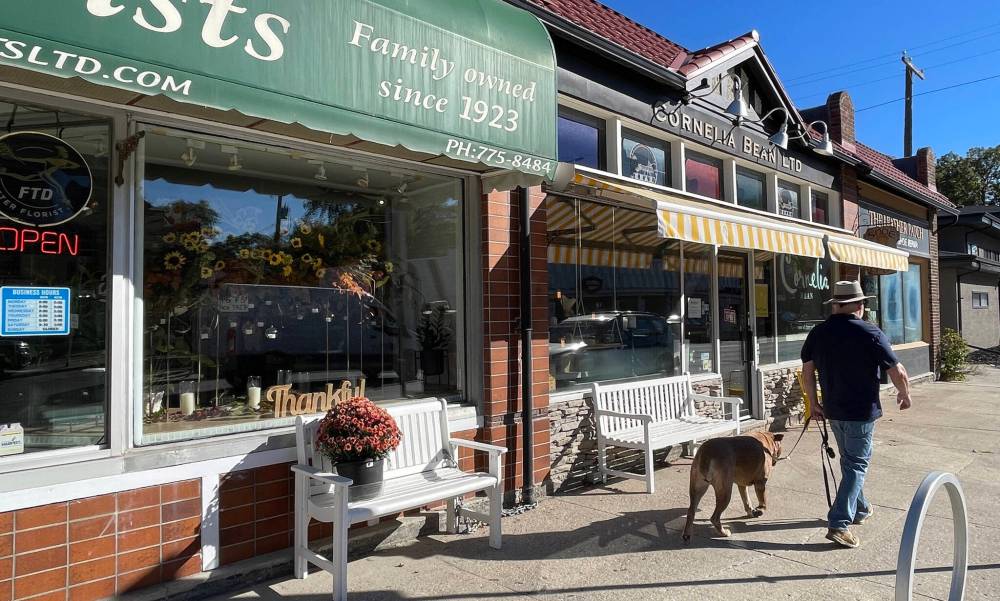
Brent Bellamy
A walkable neighbourhood is important.
When we prioritize our residential streets for vehicle traffic, oppose bike lanes, fight reduced speed limits, and traffic calming measures that help create more connected, urban, and walkable neighbourhoods, we are rejecting the type of city that many young people want.

When homeowners protest higher density and mixed-use infill development in mature neighbourhoods, they are fighting against the ability for young people to access to the communities they want to live in and are pushing them to other cities where they can find those lifestyle opportunities.
When we contemplate spending three-quarters of a billion dollars to expand Kenaston Boulevard for cars, we might consider that Winnipeg will soon be the only city of Canada’s ten largest without light rail rapid transit.
Understanding that we compete against these cities for our young people, we might instead prioritize mobility investments that are more attractive to the next generations.
If we want our children and grandchildren to choose Winnipeg as the place they call home, we must begin by building a city that responds to their priorities and dreams, not only to those of their parents and grandparents.
Brent Bellamy is creative director at Number Ten Architectural Group.

Brent Bellamy is creative director for Number Ten Architectural Group.
Our newsroom depends on a growing audience of readers to power our journalism. If you are not a paid reader, please consider becoming a subscriber.
Our newsroom depends on its audience of readers to power our journalism. Thank you for your support.
Related Articles
Perception key to retaining Manitoba youth: report








History
Updated on Tuesday, October 1, 2024 4:33 PM CDT: Formatting