Our city shouldn’t shy away from embracing big ideas
Read this article for free:
or
Already have an account? Log in here »
To continue reading, please subscribe:

Digital Subscription
One year of digital access for only $205*
- Enjoy unlimited reading on winnipegfreepress.com
- Read the E-Edition, our digital replica newspaper
- Access News Break, our award-winning app
- Play interactive puzzles
*First annual payment billed as $205.00 + GST for one year. This annual subscription will automatically renew at $233.00 + GST every 52 weeks (10% off the regular annual price of $259.35). Offer available to new and qualified returning subscribers only. Cancel any time.
To continue reading, please subscribe:
Add Free Press access to your Brandon Sun subscription for only an additional
$1 for the first 4 weeks*
- Enjoy unlimited reading on winnipegfreepress.com
- Read the E-Edition, our digital replica newspaper
- Access News Break, our award-winning app
- Play interactive puzzles
*Your next Brandon Sun subscription payment will increase by $1.00 and you will be charged $17.95 plus GST for four weeks. After four weeks, your payment will increase to $24.95 plus GST every four weeks.
Read unlimited articles for free today:
or
Already have an account? Log in here »
Hey there, time traveller!
This article was published 27/10/2024 (707 days ago), so information in it may no longer be current.
If you sat down to design a modern city of a million people, you wouldn’t start by putting a giant rail yard in the centre, with its radiating web of train tracks that forever require building, maintaining and replacing bridges and underpasses to cross them.
Of course, we don’t have the luxury of designing Winnipeg from scratch, and the presence of the trains has long been a reality in our city — but just because something is, doesn’t mean it must forever be.
For decades, we have dreamed about relocating Winnipeg’s railways, and for just as long, we have balked at how much it might cost.
In 1970, a formal study was completed to finally put some hard numbers to the idea. The plan was approved by city council but never acted upon because it was deemed too expensive. The cost was $75 million — proving the best time to implement a big idea is yesterday, and the second-best time is today.
The best time to implement a big idea is yesterday, and the second-best time is today.
Understanding this, Manitoba’s provincial government recently announced it has tapped former federal cabinet minister Lloyd Axworthy to lead a new rail relocation study. Axworthy has long been recognized as a man of vision, unafraid of daunting challenges, ideal for the job.
There will be no surprise when his study reveals rail relocation will be wildly expensive and will take a very long time.
Many will shoot daggers at the ideas, and it will be easier to do nothing, but we live in a city that built an entirely new riverbed to protect us from flooding.
At the time it was the second-largest earth-moving project in human history, behind only the Panama Canal. We were courageous then; we can be again.
We don’t have to look any further than our own downtown to see how a bold vision for an industrial rail yard can be transformational in a community. The Forks has gone from being a polluted wasteland to a public crown jewel in Western Canada and the social heart of our city.
North America is filled with examples of cities that stared into the face of a big idea with seemingly insurmountable obstacles, and instead of flinching, embraced a transformational vision.
Most of these plans took decades to implement, faced opposition, changes, setbacks, failures and cost overruns, but all have redefined their cities forever.
Toronto: Railway Lands
The Railway Lands in Toronto were a massive downtown rail yard, the size of Winnipeg’s, that defined the city for almost a century.
Anyone living there in the 1960s wouldn’t believe a heavily polluted industrial area almost as big as the downtown itself could ever become a sparkling foreground to the city’s modern postcard image.
SPENCER COLBY / THE CANADIAN PRESS FILES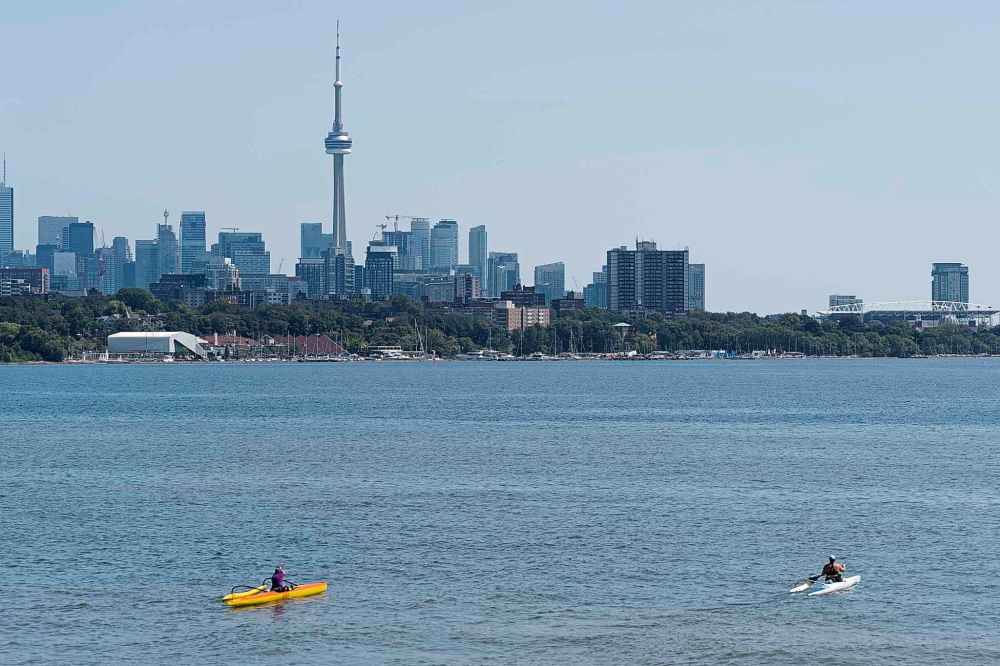
When the railways decided to become more efficient and amalgamate into a shared facility on the edge of the city, an ambitious redevelopment plan was created. The CN Tower stood alone for more than 10 years as a remnant of that plan’s failure.
After several decades, stumbling through many other failed plans, the area has emerged as a forest of soaring glass skyscrapers, sports and cultural buildings, and two urban neighbourhoods that are home to more than 40,000 people, with many thousands more to come.
Vancouver: False Creek
A similar story can be told in Vancouver, where, for almost a century, the inlet of False Creek was a giant, sprawling and polluted industrial site in the heart of the city. It was home to large rail yards, iron works, manufacturing plants, sawmills and shipping docks.
In the early 1970s, the city realized the potential of the land and embarked on a sweeping and ambitious project to purchase, expropriate and relocate industries for redevelopment.
PWL PARTNERSHIP LANDSCAPE ARCHITECTS The Olympic Village neighbourhood in False Creek. Once a polluted industrial area in the heart of Vancouver, False Creek has been transformed into a cosmopolitan district.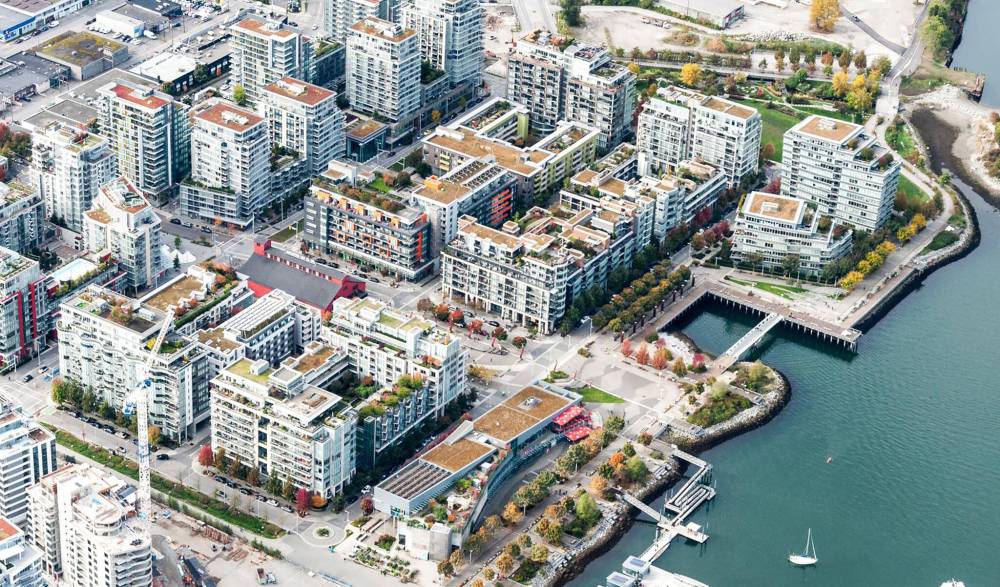
First used as the site for Expo 86, the land has been transformed into a cosmopolitan urban district. This includes the former Olympic Village, which is today a visionary modern neighbourhood of mid-rise buildings, celebrated as one of the most environmentally sustainable communities in the world.
Standing on the site 50 years ago, its future would have seemed impossible, but today it’s just as impossible to imagine Vancouver without False Creek — its seawall, parkland, glistening residential buildings and the tourism magnet of Granville Island.
Sacramento: rail yard redevelopment
Sacramento can serve as an inspiring current model for Winnipeg. The California capital is in the process of redeveloping an urban rail yard, once known as the largest industrial complex west of the Mississippi.
Remediation of contaminated soil has taken almost 20 years, but with that now complete, it has become America’s largest infill development project.
When finished, the site will have 12,000 new residential homes — along with parks, offices, retail, hotels, sports and cultural buildings — in a development that will double the size of Sacramento’s downtown.
A courageous decision made a generation ago is beginning to come to life, and it will forever redefine the city.
Decisions affect generations to come
Winnipeg’s rail relocation study will likely reveal smaller moves with valuable impacts, such as moving a spur line or closing a smaller yard to create redevelopment opportunities.
These will be important to pursue, but we shouldn’t be afraid of embracing bigger dreams the way other cities — and we, ourselves — have done in the past.
Imagine vibrant new urban neighbourhoods that heal historic divides, create jobs, affordable housing, economic opportunity, sustainable growth and improved quality of life.
Imagine vibrant new urban neighbourhoods that heal historic divides, create jobs, affordable housing, economic opportunity, sustainable growth and improved quality of life.
Ribbons of green space unfurling throughout the city, linking communities and creating public spaces that brings people together. Walking paths, bike lanes, light rail transit corridors, all creating a healthy and connected new city. These are the opportunities in front of us.
Axworthy’s conclusions will be daunting, but our city needs a big idea, a new trajectory, one that isn’t for us, but for our children and grandchildren, and their children and grandchildren.

Brent Bellamy is creative director at Number Ten Architectural Group.

Brent Bellamy is creative director for Number Ten Architectural Group.
Our newsroom depends on a growing audience of readers to power our journalism. If you are not a paid reader, please consider becoming a subscriber.
Our newsroom depends on its audience of readers to power our journalism. Thank you for your support.
Related Articles
Moving rails out of the city — another study









History
Updated on Sunday, October 27, 2024 6:53 PM CDT: Cutline fixed.