Steinbach Mounties first in Manitoba to wear body cameras Launch part of effort to foster trust: commanding officer
Read this article for free:
or
Already have an account? Log in here »
To continue reading, please subscribe:

Digital Subscription
One year of digital access for only $205*
- Enjoy unlimited reading on winnipegfreepress.com
- Read the E-Edition, our digital replica newspaper
- Access News Break, our award-winning app
- Play interactive puzzles
*First annual payment billed as $205.00 + GST for one year. This annual subscription will automatically renew at $233.00 + GST every 52 weeks (10% off the regular annual price of $259.35). Offer available to new and qualified returning subscribers only. Cancel any time.
To continue reading, please subscribe:
Add Free Press access to your Brandon Sun subscription for only an additional
$1 for the first 4 weeks*
- Enjoy unlimited reading on winnipegfreepress.com
- Read the E-Edition, our digital replica newspaper
- Access News Break, our award-winning app
- Play interactive puzzles
*Your next Brandon Sun subscription payment will increase by $1.00 and you will be charged $17.95 plus GST for four weeks. After four weeks, your payment will increase to $24.95 plus GST every four weeks.
Read unlimited articles for free today:
or
Already have an account? Log in here »
Hey there, time traveller!
This article was published 20/11/2024 (685 days ago), so information in it may no longer be current.
Manitoba RCMP have pledged every front-line Mountie will be equipped with body-worn cameras within 18 months, beginning with officers in Steinbach, who will wear the devices when they step on shift Friday.
The news is part of a national rollout announced last week that has drawn mixed reviews.
Defence lawyers, police unions and the former head of the provincial police watchdog expressed praise for the program, calling it a beneficial tool. Others, including a professor who has researched such programs elsewhere in North America, were skeptical.
“There’s been a long call for the actions of police within this province, and across Canada, to be more transparent and accountable,” Manitoba RCMP assistant commissioner Scott McMurchy said Wednesday, speaking from division headquarters on Portage Avenue.
“Today’s launch, it truly demonstrates our commitment to enhancing the trust between Manitoba RCMP and the communities that we proudly serve throughout the province.”
MIKE DEAL / FREE PRESS Manitoba RCMP detachments will begin using body cameras province-wide within 18 months. The first to roll them out will be Portage la Prairie, Amaranth and Treherne.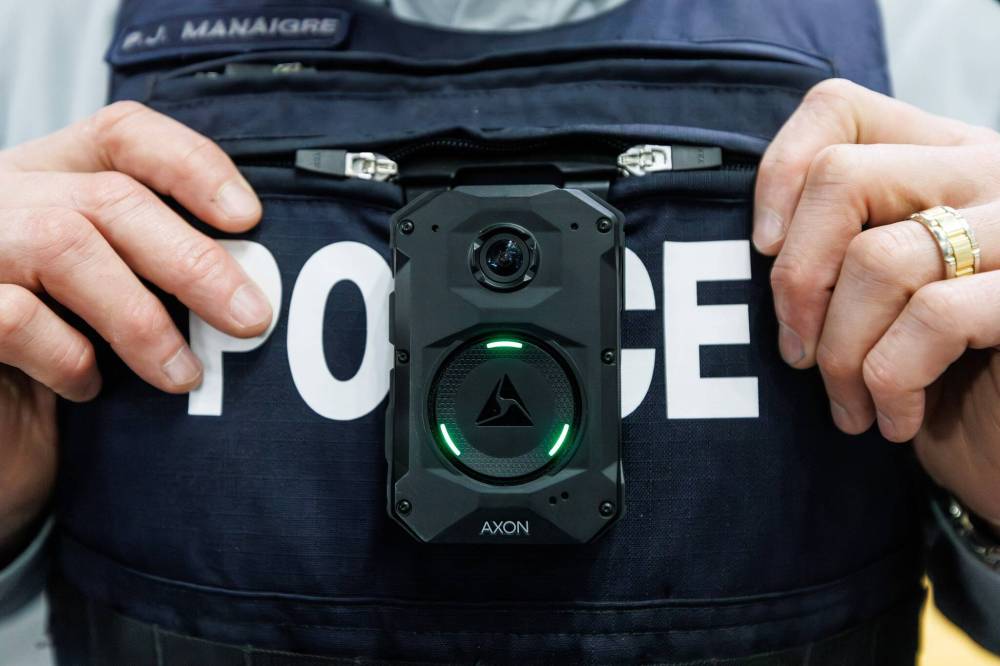
The Amaranth, Portage la Prairie and Treherne detachments will receive the devices on Dec. 4. The East St. Paul, Grand Marais and Selkirk detachments will receive them on Jan. 7. The St-Pierre-Jolys detachment will receive them on Jan. 22.
It is expected that more than 490 Manitoba RCMP officers who work in 44 detachments will be equipped with the cameras by April. All other detachments throughout the province will receive cameras over the next 18 months.
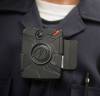
Police demonstrated the cameras, which are mounted to officers’ chests and record audio and video within a 160-degree field of view. The device flashes green when it is not activated and red once it begins recording.
Cost puts cams out of frame for police
The Winnipeg Police Service has considered body cameras for years but cost has always been a roadblock.
In 2021, a funding proposal was shot down at city hall. At the time, the cost of more than 1,300 cameras for Winnipeg officers was estimated at $7 million, while the annual operating cost, including digital video storage and staff, was pegged at about $4 million.
Coun. Markus Chambers, chair of the Winnipeg Police Board, said Wednesday the city continues to evaluate the potential of body cameras but the price remains an issue.
The Winnipeg Police Service has considered body cameras for years but cost has always been a roadblock.
In 2021, a funding proposal was shot down at city hall. At the time, the cost of more than 1,300 cameras for Winnipeg officers was estimated at $7 million, while the annual operating cost, including digital video storage and staff, was pegged at about $4 million.
Coun. Markus Chambers, chair of the Winnipeg Police Board, said Wednesday the city continues to evaluate the potential of body cameras but the price remains an issue.
“While we recognize the significant benefits that (body worn cameras) can provide in increasing public trust and improving policing practices, we also acknowledge that there are other financial priorities within the service that must be addressed,” Chambers said in an email.
The province previously signalled it might be willing to provide some funding support for body camera programs, but the “responsibility for purchasing the cameras rests with the City of Winnipeg,” Justice Minister Matt Wiebe said Wednesday.
”We will continue discussing with law enforcement and municipalities about these and other tools to keep Manitobans safe,” he said.
The Winnipeg Police Association, which represents more than 1,400 officers and 450 civilian members working for city police, did not respond to a request for comment Wednesday.
City police declined to comment.
As per police protocol, Mounties will be required to turn the devices on when they respond to a call, interact with the public or record a statement. The camera will store the footage until the officer returns to their detachment, where they upload it to a browser-based server that’s only accessible by police.
The RCMP stressed recordings cannot be edited, and officers will not be permitted to delete their own videos.
Christopher Schneider, a sociology professor at Brandon University, said he doubts the cameras will yield the benefits expressed by police.
Schneider, who studies policing and technology, said data on similar programs in other jurisdictions shows mixed results.
In some studies they have reduced police use-of-force encounters, while in others the numbers increase; the same is true about public complaints involving officers, he said.
“We have no way to measure, one way or the other, if body-worn cameras actually do lead to transparency or accountability,” Schneider said. “That money could be better invested elsewhere.”
The federal government pledged $238.5 million over six years and $50 million in ongoing funding for the cameras, which are provided by Axon, a U.S.-based weapons and technology company, through a subscription service.
When the rollout is complete, all 674 of front-line RCMP officers will wear the cameras, which cost around $3,000 each.
Schneider said body cameras used elsewhere rarely result in punitive measures. He questioned how RCMP will discipline officers who intentionally tamper with, or fail to activate, their device.
McMurchy said that such actions would be tantamount to violating the RCMP code of conduct.
“Depending on the nature and gravity of the situation, it may result in an… investigation,” McMurchy said.
MIKE DEAL / FREE PRESS RCMP media relations officer, Sgt. Paul Manaigre, discusses the body cameras at D Division headquarters Wednesday.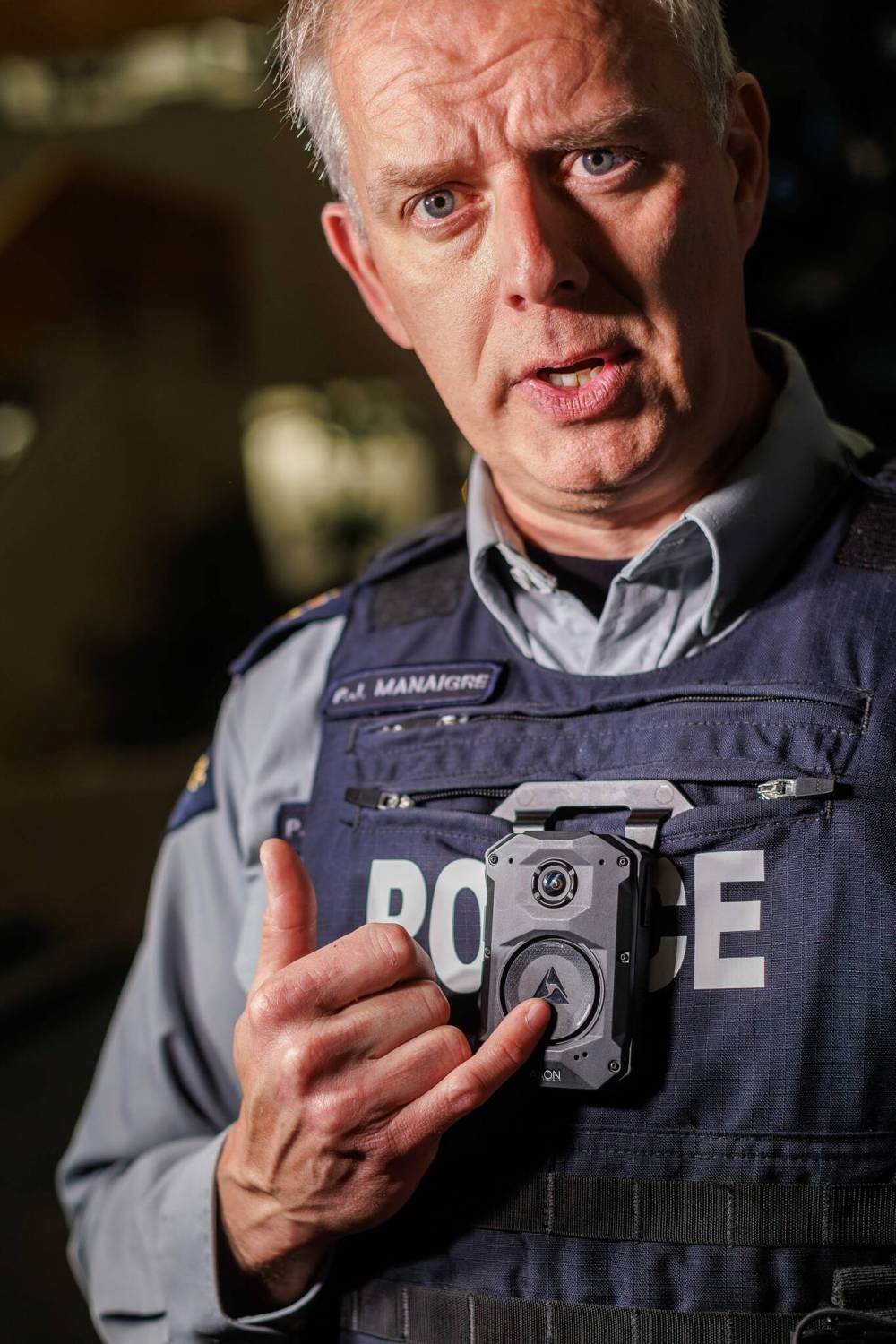
The senior officer noted the front-line officer who records the footage, and their supervisor, are the only people immediately permitted to access it. In some instances, it may be shared with other police units for investigative purposes or during court proceedings, McMurchy said.
Police will have some discretion on whether recordings will be released publicly, provided that disclosure complies with privacy legislation, he said.
“It would depend on a case-by-case basis,” he said. “If there was interest really from the public and the RCMP as an organization to display that video, then we would work through that.”
In most instances, members of the media and the public will have to file a freedom of information request to access footage. Such requests are often plagued by long delays and can be rejected or heavily redacted.
“Canadians can expect not to see body-worn camera footage in Canada,” Schneider said, explaining federal privacy laws would generally restrict access.
Schneider urged police to proactively disclose instances of officer misconduct recorded on video as a way of building trust in the program.
Zane Tessler, the former head of the Independent Investigation Unit of Manitoba, disagreed with Schneider’s assessment, saying the introduction of body cameras “can only be viewed as a good thing.”
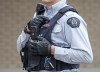
SERGE GOUIN / RCMP Mounties will be required to turn the devices on when they respond to a call, interact with the public or record a statement. The camera will store the footage until the officer returns to their detachment, where they upload it to a server.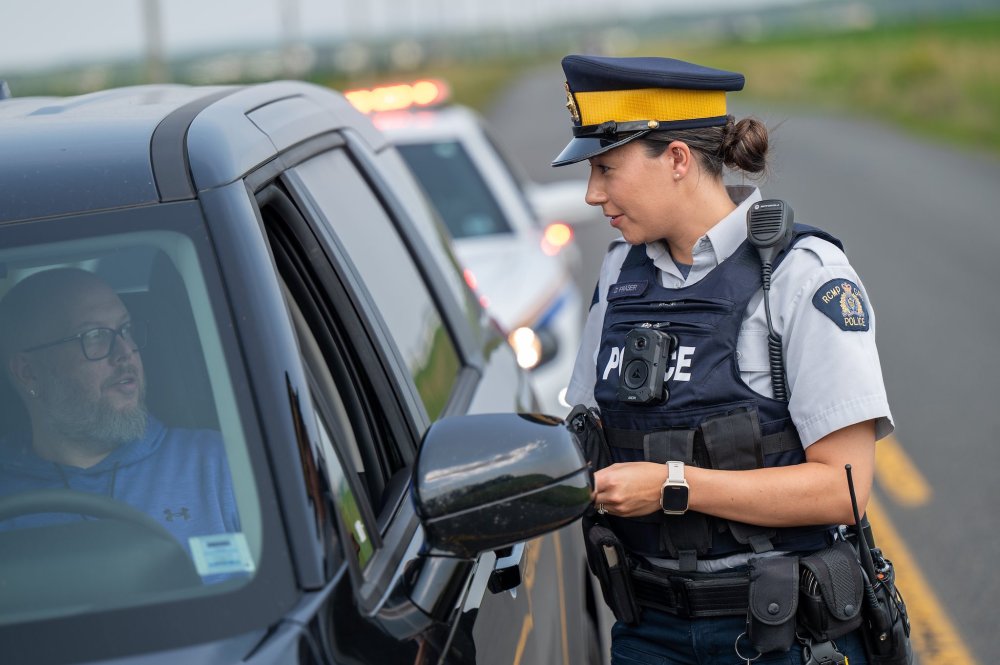
Tessler is a former criminal defence lawyer and Crown attorney who was as the IIU’s civilian director for around a decade. He was responsible for establishing policies, regulations and hiring investigators for the independent agency, which reviews all serious incidents involving police.
“It’s a long time in coming. I’ve always been a major proponent of body-worn cameras,” Tessler said.
“The positives certainly have to outweigh the negatives… services across the country (have introduced body cameras), I think to the betterment of themselves and to the public.”
Tessler said body-worn cameras will not resolve all issues in policing, but could provide the evidence needed to exonerate or discipline officers.
He noted the time between when a use-of-force incident or public complaint occurs and when it is formally reported could present a challenge for investigators, who will have to locate the relevant footage.
Police have said the length of time each video is retained will vary from 30 days to more than two years
Chris Gamby, spokesman for the Criminal Defence Lawyers Association of Manitoba, agreed camera use by RCMP will benefit people involved in the justice system.

“Generally, our association thinks this is a step in the right direction. It’s going to give us more evidence than we otherwise would have,” he said. “Typically now, interactions between the police and an individual or group of people are down to what people remember.”
Gamby said, at best, the cameras will provide an unbiased account of police interactions that will assist the courts in understanding what occurred.
“I think, by and large, we do have good police officers in our country and in our city. I think this is just another thing that is going to require them to maintain a high standard of professionalism.”
The National Police Federation, which represents around 20,000 Mounties across Canada, said it supports the introduction of body cameras.
“For years, we have been involved in negotiations to get the necessary funding and policies in place and fully support the national rollout of this initiative,” president and chief executive officer Brian Sauvé said in a statement.
“RCMP members and all police have become very familiar with public scrutiny. We believe that these cameras will allow for increased transparency and trust between our members and the people they serve.”
tyler.searle@freepress.mb.ca

Tyler Searle is a multimedia producer who writes for the Free Press’s city desk. A graduate of Red River College Polytechnic’s creative communications program, he wrote for the Stonewall Teulon Tribune, Selkirk Record and Express Weekly News before joining the paper in 2022. Read more about Tyler.
Every piece of reporting Tyler produces is reviewed by an editing team before it is posted online or published in print — part of the Free Press‘s tradition, since 1872, of producing reliable independent journalism. Read more about Free Press’s history and mandate, and learn how our newsroom operates.
Our newsroom depends on a growing audience of readers to power our journalism. If you are not a paid reader, please consider becoming a subscriber.
Our newsroom depends on its audience of readers to power our journalism. Thank you for your support.
Related Articles
Body cams: a step in the right direction

History
Updated on Wednesday, November 20, 2024 2:50 PM CST: Replaces photo
Updated on Wednesday, November 20, 2024 7:12 PM CST: Adds photos, details