Code white data no longer tracked in Manitoba hospitals Nurses union blasts province, says info on violent, aggressive incidents ‘would be invaluable’
Read this article for free:
or
Already have an account? Log in here »
To continue reading, please subscribe:

Digital Subscription
One year of digital access for only $205*
- Enjoy unlimited reading on winnipegfreepress.com
- Read the E-Edition, our digital replica newspaper
- Access News Break, our award-winning app
- Play interactive puzzles
*First annual payment billed as $205.00 + GST for one year. This annual subscription will automatically renew at $233.00 + GST every 52 weeks (10% off the regular annual price of $259.35). Offer available to new and qualified returning subscribers only. Cancel any time.
To continue reading, please subscribe:
Add Free Press access to your Brandon Sun subscription for only an additional
$1 for the first 4 weeks*
- Enjoy unlimited reading on winnipegfreepress.com
- Read the E-Edition, our digital replica newspaper
- Access News Break, our award-winning app
- Play interactive puzzles
*Your next Brandon Sun subscription payment will increase by $1.00 and you will be charged $17.95 plus GST for four weeks. After four weeks, your payment will increase to $24.95 plus GST every four weeks.
Read unlimited articles for free today:
or
Already have an account? Log in here »
Hey there, time traveller!
This article was published 24/02/2025 (571 days ago), so information in it may no longer be current.
The province no longer tracks the emergency protocol used to alert health-care staff of violent or aggressive incidents inside Manitoba hospitals.
The unannounced move comes after the Free Press reported on a surge in code white incidents in some Winnipeg hospitals in 2019.
A code white, triggered when health-care workers or security guards are confronted with violent or aggressive persons and need help to de-escalate the situation, were on the rise in three city hospitals in 2017 and 2018, the Free Press reported in 2019.
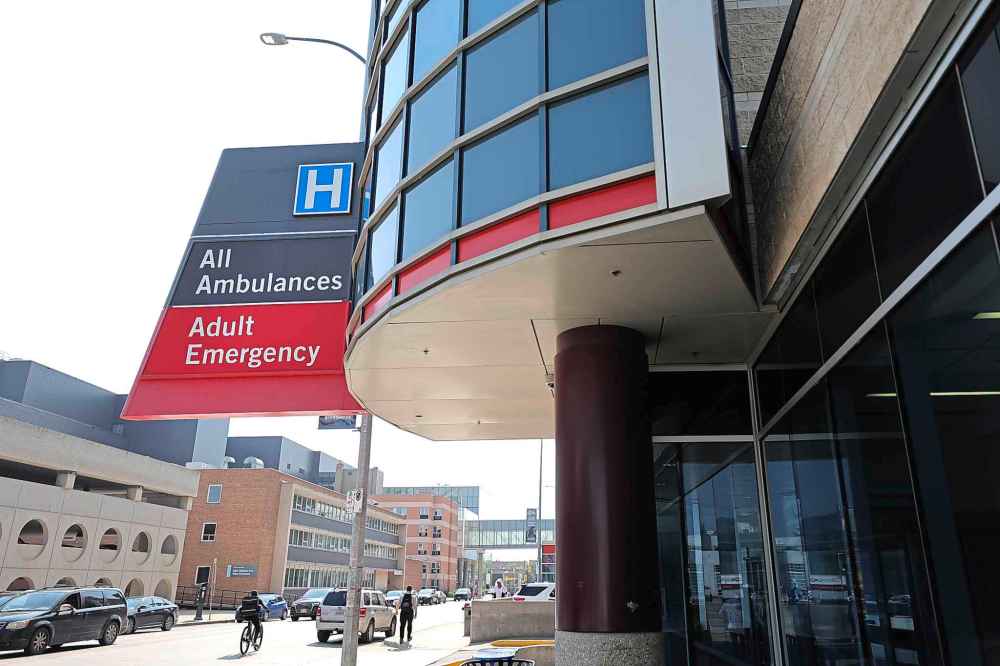
A recent freedom-of-information request for data on code white calls from 2019 onward said the records do not exist.
Shared Health’s access and privacy officer, Tiffany Dewan Reimer, said Monday previous code white data was gathered using a different tracking method, was not consistent and may not have been accurate.
Shared Health and the Winnipeg Regional Health Authority are developing a new tracking system and algorithm that will capture accurate code white data in the future, Dewan Reimer said in an email.
According to statistics released by the WRHA in 2019, Health Sciences Centre recorded 501 code whites in 2018. Grace Hospital and Victoria General Hospital registered 325 and 339 code whites respectively.
The biggest spike in code whites came at Victoria hospital: a 47 per cent increase in 2018, after registering 230 the year before. HSC and Grace registered increases of five per cent and seven per cent, respectively.
The WRHA has standardized emergency codes for various potential scenarios in hospitals and health-care facilities including bomb threats, fires, an external influx of patients due to a disaster, abductions and missing patients or residents.
Darlene Jackson, president of the Manitoba Nurses Union was not aware code white data wasn’t being tracked and said the data is critical in developing safety strategies in hospitals.
“That data would be invaluable because we know that violence is escalating in all our facilities. We absolutely know that,” she said. “That’s absolutely shameful.”
“That data would be invaluable because we know that violence is escalating in all our facilities.”–MNU President Darlene Jackson
Jackson said she has heard from members that code white is called multiple times a day at hospitals like HSC. She said the lack of tracking equates to a lack of transparency from the NDP government.
“This is also just an example of the lack of value that employers and government place on front-line health-care workers,” Jackson said.
Not all violent incidents result in a code white call if the situation can be de-escalated without additional resources.
Health Minister Uzoma Asagwara said the province is open to tracking the hospital data again to help respond to the increase in violent incidents.
When working as a psychiatric nurse, Asagwara called code whites for a host of reasons related to patient and staff safety, but said not all incidents were violent.
While the minister called code whites a useful tool if staff need backup when dealing with a patient, Asagwara said the province is taking a tailored approach to improve health care by hiring more workers to relieve pressure on the system and installing weapons scanners at Manitoba’s biggest hospital.
A recent document from the Canadian Institute for Health Information reported HSC as the worst-performing hospital in Canada and recommended, among other things, it bolster safety measures to improve working conditions.
Earlier this month, HSC made AI-powered weapon scanners a permanent fixture at three of its entrances after piloting the devices at the downtown campus.


Prior to their installation, a security guard in HSC’s ER was stabbed by a patient in February 2024.
Last year, HSC brought in institutional safety officers after the nurses union filed a grievance against Shared Health following violence and theft at or near the campus.
Since then, safety officers have been hired to work at St. Boniface Hospital, Victoria General Hospital, Brandon Regional Health Centre and Selkirk Mental Health Centre. Jackson has called for the safety officers to be placed at rural hospitals, where she says violence is just as prevalent.
On Christmas Eve, a man pointed a gun at staff in Thompson’s general hospital and fired off one round in the chapel. No one was hurt.
nicole.buffie@freepress.mb.ca

Nicole Buffie
Multimedia producer
Nicole Buffie is a reporter for the Free Press city desk. Born and bred in Winnipeg, Nicole graduated from Red River College’s Creative Communications program in 2020 and worked as a reporter throughout Manitoba before joining the Free Press newsroom as a multimedia producer in 2023. Read more about Nicole.
Every piece of reporting Nicole produces is reviewed by an editing team before it is posted online or published in print — part of the Free Press‘s tradition, since 1872, of producing reliable independent journalism. Read more about Free Press’s history and mandate, and learn how our newsroom operates.
Our newsroom depends on a growing audience of readers to power our journalism. If you are not a paid reader, please consider becoming a subscriber.
Our newsroom depends on its audience of readers to power our journalism. Thank you for your support.
Related Articles
Report sparks calls for more proactive health system