Behaviour, not breed Winnipeg Humane Society, activist pushing for updated city rules on dangerous dogs
Read this article for free:
or
Already have an account? Log in here »
To continue reading, please subscribe:

Digital Subscription
One year of digital access for only $205*
- Enjoy unlimited reading on winnipegfreepress.com
- Read the E-Edition, our digital replica newspaper
- Access News Break, our award-winning app
- Play interactive puzzles
*First annual payment billed as $205.00 + GST for one year. This annual subscription will automatically renew at $233.00 + GST every 52 weeks (10% off the regular annual price of $259.35). Offer available to new and qualified returning subscribers only. Cancel any time.
To continue reading, please subscribe:
Add Free Press access to your Brandon Sun subscription for only an additional
$1 for the first 4 weeks*
- Enjoy unlimited reading on winnipegfreepress.com
- Read the E-Edition, our digital replica newspaper
- Access News Break, our award-winning app
- Play interactive puzzles
*Your next Brandon Sun subscription payment will increase by $1.00 and you will be charged $17.95 plus GST for four weeks. After four weeks, your payment will increase to $24.95 plus GST every four weeks.
Read unlimited articles for free today:
or
Already have an account? Log in here »
Hey there, time traveller!
This article was published 02/04/2025 (532 days ago), so information in it may no longer be current.
Melissa Diamond doesn’t want anyone to experience the stress she did when her dog was targeted for looking “dangerous.”
In 2016, Diamond received a letter from the City of Winnipeg’s Animal Services telling her she needed to have her English mastiff mix, Lily, in for a breed evaluation.
Someone had called to complain her dog was one of three breeds banned within city limits.
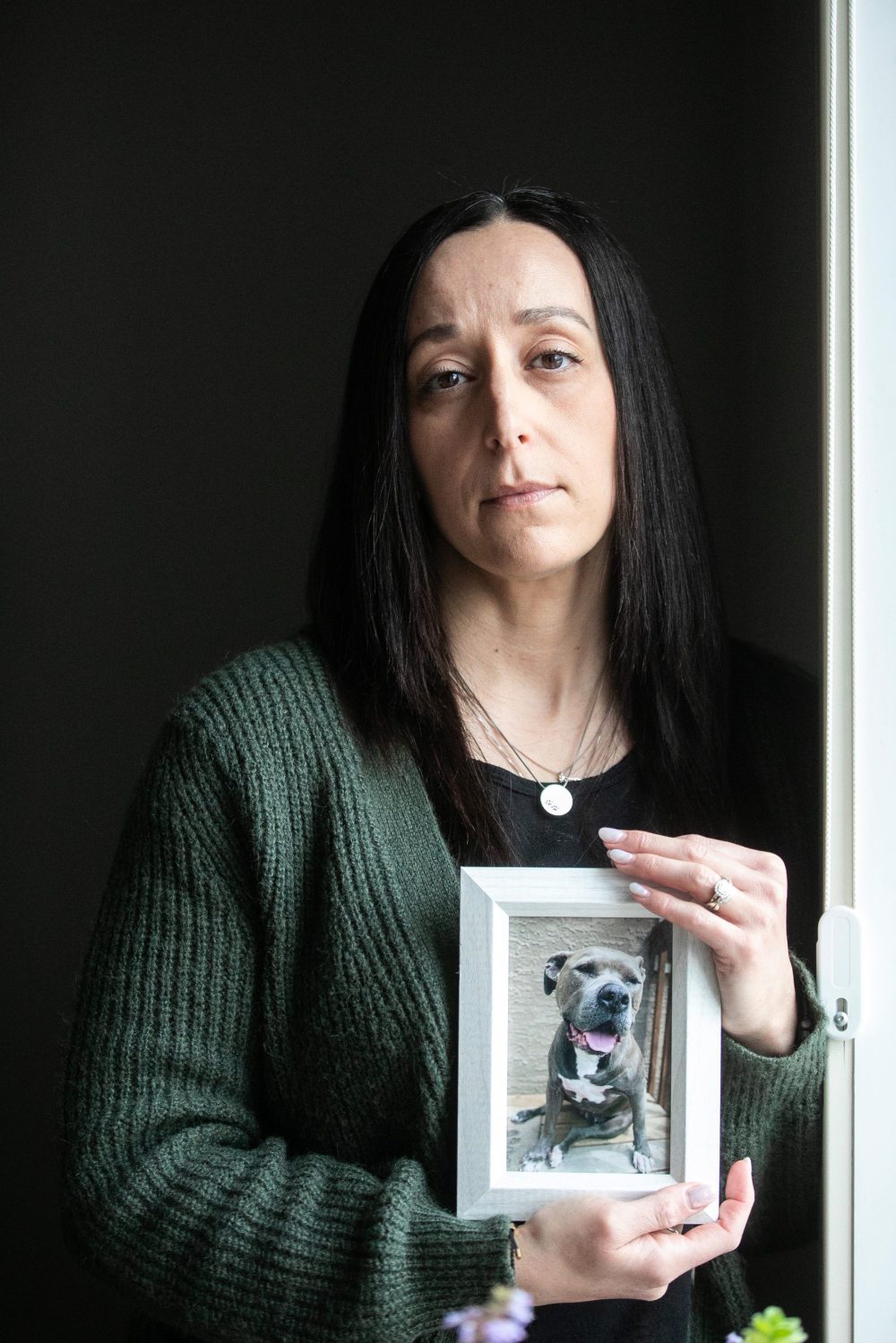
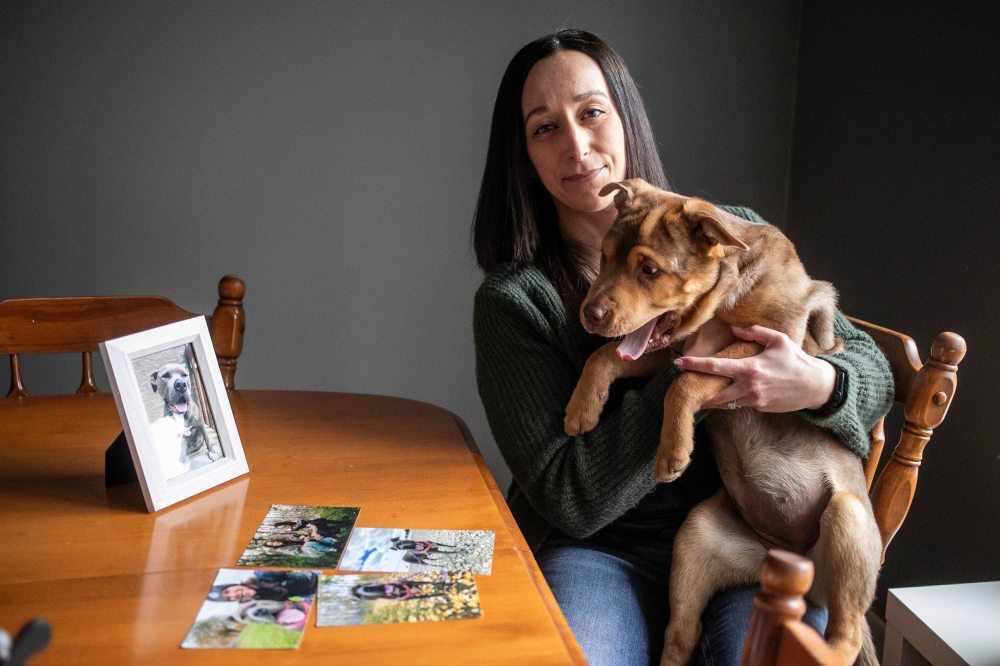
“We didn’t really know anything about pit bulls, other than stereotypical things. We just knew that we were adopting a cute puppy,” Diamond said. “She was super great.”
After an evaluation that compared Lily to breed standards — and a consideration to move outside Winnipeg in order to keep her dog — the city determined Diamond’s pup was not on the banned-breed list.
Though the dog has since died, Diamond says she has had enough of city council’s outdated policies on owning specific breeds.
“That terror, that panic, that anxiety that somebody’s just going to come into your home and take your dog.… We were super lucky that day, but we know a lot of people that haven’t been that lucky,” she said.
Diamond, who advocates on behalf of the group End Breed Specific Legislation Manitoba, and the Winnipeg Humane Society are calling on councillors to repeal the city’s outdated “pit bull” ban and replace it with breed-neutral legislation that designates dogs as dangerous on a case-by-case basis.
Since 1990, American pit bull terriers, American Staffordshire terriers, Staffordshire bull terriers and predominant mixes of those breeds, have not been allowed as pets in the city.
In 2022 council narrowly voted against ending the municipal breed ban, but approved new rules for owners of at-risk and dangerous dogs to help shift the focus from breed to behaviour.
Krista Boryskavich, director of animal advocacy and legal and government affairs for the WHS, said the city’s existing dangerous dog designation already provides a framework to evaluate and manage dogs based on their behaviour, making breed-specific bans unnecessary.
“We feel very strongly that the city already has the tools in its bylaw to deal with an animal that might be aggressive or have a behaviour incident without having to ban a whole class of dogs,” she said.
In 2022 when council voted against the ban’s repeal, former mayor Brian Bowman said the ban was imposed after an attack, and he did not want to be responsible for increasing the number of pit bull-type dogs within city limits.
According to city data there were 383 dog bites reported to 311 last year. So far in 2025, 88 bites have been reported.
In 2022 Coun. Matt Allard voted in favour of changing the city’s bylaw to one of a breed-neutral approach and says he still supports the change today.
“There are now renewed calls to allow licensing for a specific breed currently restricted under the rules council kept in place,” Allard (St. Boniface) said in an emailed statement. “This aligns with the evidence-based, behaviour-focused principles I supported then, suggesting it’s time to potentially reconsider council’s previous decision.”
One dog owner wants to see the ban remain intact.
“Keep them out of the city,” said the owner, who declined to give their name, while walking a shih tzu at Bonnycastle Dog Park.
“If dogs like that are off leash and they run up to a much smaller dog and attack it? There’s no way that dog is surviving.”
Outside city limits, with the exception of select rural municipality bylaws, there are no regulations for owning specific breeds.
Ontario and Quebec have provincewide pit bull bans. New Brunswick, Nova Scotia and Newfoundland and Labrador largely allow pit bulls, with the exception of a few municipalities.
If a dog is designated as dangerous by the City of Winnipeg, Animal Services can impose conditions, such as that it wear a muzzle in public or be confined to the owner’s property, unable to visit dog parks or dog daycares.

Diamond said if the city already has the necessary tools to control dogs it deems dangerous, it should be using them across the board and not just for a few breeds.
“People with pit bulls who train them and give them an amazing life are being punished, but if a golden retriever bit somebody, we don’t care because it’s a golden retriever,” she said.
In May 2024 a yorkipoo puppy was mauled to death by a husky at Bonnycastle park. The owner of the husky told the Free Press Animal Services said they’d have to prove their dog was not dangerous.
In 2021 a permitted Siberian husky fatally attacked two small dogs at a canine daycare — an animal the city later labelled a dangerous dog.
nicole.buffie@freepress.mb.ca

Nicole Buffie
Multimedia producer
Nicole Buffie is a reporter for the Free Press city desk. Born and bred in Winnipeg, Nicole graduated from Red River College’s Creative Communications program in 2020 and worked as a reporter throughout Manitoba before joining the Free Press newsroom as a multimedia producer in 2023. Read more about Nicole.
Every piece of reporting Nicole produces is reviewed by an editing team before it is posted online or published in print — part of the Free Press‘s tradition, since 1872, of producing reliable independent journalism. Read more about Free Press’s history and mandate, and learn how our newsroom operates.
Our newsroom depends on a growing audience of readers to power our journalism. If you are not a paid reader, please consider becoming a subscriber.
Our newsroom depends on its audience of readers to power our journalism. Thank you for your support.
History
Updated on Wednesday, April 2, 2025 7:23 PM CDT: Adds photos
Updated on Wednesday, April 2, 2025 8:43 PM CDT: Adds information to cutline
Updated on Thursday, April 3, 2025 9:25 AM CDT: Changes headline, adds subheadline
Updated on Thursday, April 3, 2025 9:32 AM CDT: Adjusts background photo