

Data on violence in Manitoba schools released
54 per cent of surveyed teachers say they were threatened or injured in 2023-2024

Advertisement
Read this article for free:
or
Already have an account? Log in here »
To continue reading, please subscribe:
Digital Subscription
One year of digital access for only $1.44 a week*
- Enjoy unlimited reading on winnipegfreepress.com
- Read the E-Edition, our digital replica newspaper
- Access News Break, our award-winning app
- Play interactive puzzles
*Billed as $5.77 plus GST every four weeks. After 52 weeks, price increases to the regular rate of $19.95 plus GST every four weeks. Offer available to new and qualified returning subscribers only. Cancel any time.
To continue reading, please subscribe:
Add Free Press access to your Brandon Sun subscription for only an additional
$1 for the first 4 weeks*
- Enjoy unlimited reading on winnipegfreepress.com
- Read the E-Edition, our digital replica newspaper
- Access News Break, our award-winning app
- Play interactive puzzles
*Your next Brandon Sun subscription payment will increase by $1.00 and you will be charged $17.95 plus GST for four weeks. After four weeks, your payment will increase to $24.95 plus GST every four weeks.
Read unlimited articles for free today:
or
Already have an account? Log in here »
Hey there, time traveller!
This article was published 09/01/2026 (284 days ago), so information in it may no longer be current.
A new study suggests that one in two teachers in Manitoba is experiencing violence on the job.
“It is, unfortunately, not shocking — it should be, but it’s not,” resource teacher Julie Braaksma said about the findings of her doctoral research project.
“Hopefully, it’s a wake-up call for employers.”
CHERYL HNATIUK / FREE PRESS files
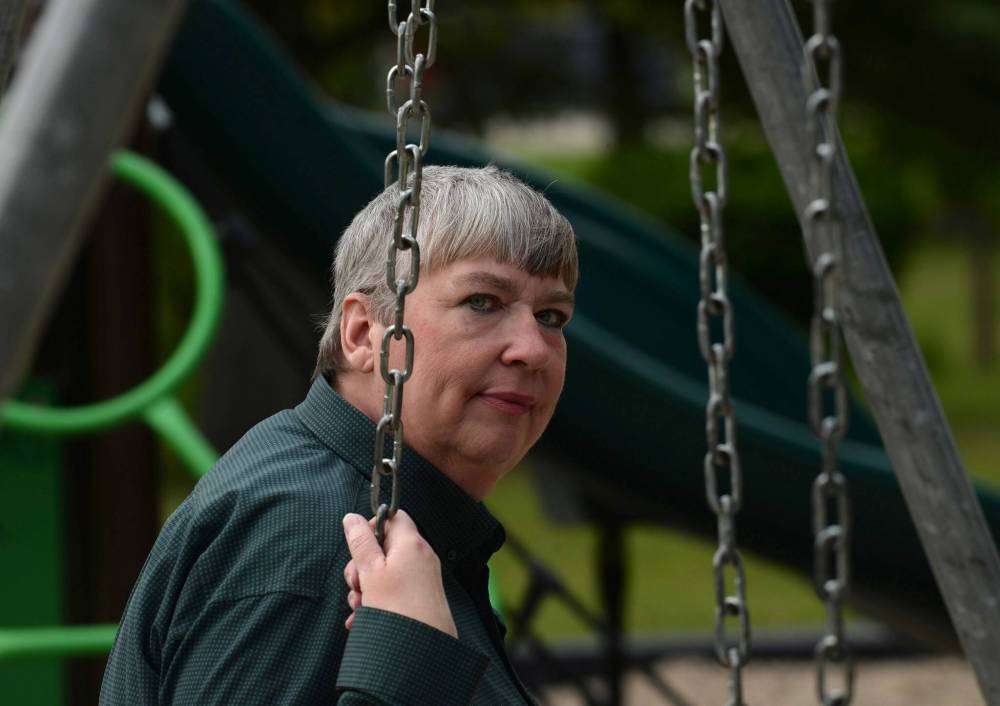
Julie Braaksma, a resource teacher in the Brandon School Division, researched student on staff violence in Manitoba schools for her PhD thesis, surveying 191 colleagues across 22 public school divisions about heath and safety in their workplaces.
Concerned about how often she’s been subject to verbal and physical attacks, Braaksma designed her PhD in organizational leadership to determine whether she was an outlier.
The researcher, who has been a certified teacher in this province since 2011, surveyed 191 colleagues this spring about health and safety in their workplaces.
Her findings confirm what many teachers have long suspected is a widespread problem in their profession.
Fifty-four per cent of teachers reported they had been threatened or injured with physical force on at least one occasion during the 2023-24 school year.
Fifteen per cent of those surveyed said they experienced more than 20 violent incidents over the 10-month period.
A third of affected teachers took time off work to recover.
“We keep hearing ‘we don’t have enough teachers, we’re losing teachers’ — well, now this explains it,” Braaksma said.
The researcher noted that 51 per cent of teachers reported they were grappling with a medium to high level of burnout.
Students were the most common perpetrator, whether it was related to uttering threats or committing violent acts against teachers.
Respondents flagged parents as the most common source of harassment, which encompasses verbal insults and intimidating emails.
Braaksma’s online survey was circulated in May. It was approved by Chicago’s Adler University, where she obtained her PhD late last year.
She found teachers via social media, word-of-mouth and union leaders who agreed to circulate the survey to their members in Garden Valley, Turtle Mountain and Portage la Prairie.
The participants, 43 per cent of whom identified themselves as elementary school teachers, hailed from 22 different public school divisions.
Braaksma didn’t find that members of minority groups or their level of teaching experience impacted participants’ vulnerability to violence.
In fact, she said there were few predictive factors, although she found it interesting that multi-age classroom teachers appear to be experiencing more violence than their colleagues.
The top reason why violence is increasing is because there’s an increased number of students with high needs being integrated into mainstream classrooms, respondents said.
Nearly 60 per cent of teachers identified a shift in inclusion as the No. 1 contributor.
Just under 14 per cent suggested limited support for students with high needs, such as behavioural specialists, was primarily to blame.
The Manitoba Teachers’ Society continues to advocate for smaller class sizes and adequate funding so students have the resources they need, said its president.
“How can your needs be met in a class of 30 students when a teacher can’t have time with individual students on a daily basis?” Lillian Klausen said.
The union leader, who represents 17,000 public school teachers, said Braaksma’s findings echo the union’s internal data.
Klausen noted that evacuations are not uncommon to respond to student outbursts while more members have started equipping themselves with protective arm guards on a daily basis.
The union has a new working group that is studying violence and brainstorming recommendations.
Braaksma created a list of 13 recommendations for school leaders, ranging from capping elementary classes at 15 students to locking school doors during the day.

She is calling for a more consistent application of consequences for all community members who initiate violence, investigations into all incidents and robust record keeping.
She believes all teachers should receive non-violent crisis intervention training and be taught to plan, adapt and incorporate the different learning needs of neurodiverse students.
At the same time, she said it’s critical teachers become “strong self-advocates.”
They must find time to report incidents, as well as near-misses, and demand they be briefed on incoming students who have a history of violence, she said.
maggie.macintosh@freepress.mb.ca
Maggie Macintosh
Education reporter
Maggie Macintosh reports on education for the Free Press. Originally from Hamilton, Ont., she first reported for the Free Press in 2017. Read more about Maggie.
Funding for the Free Press education reporter comes from the Government of Canada through the Local Journalism Initiative.
Every piece of reporting Maggie produces is reviewed by an editing team before it is posted online or published in print — part of the Free Press‘s tradition, since 1872, of producing reliable independent journalism. Read more about Free Press’s history and mandate, and learn how our newsroom operates.
Our newsroom depends on a growing audience of readers to power our journalism. If you are not a paid reader, please consider becoming a subscriber.
Our newsroom depends on its audience of readers to power our journalism. Thank you for your support.
Maggie Macintosh
Education reporter
Maggie Macintosh reports on education for the Free Press. Originally from Hamilton, Ont., she first reported for the Free Press in 2017. Read more about Maggie.
Funding for the Free Press education reporter comes from the Government of Canada through the Local Journalism Initiative.
Every piece of reporting Maggie produces is reviewed by an editing team before it is posted online or published in print — part of the Free Press‘s tradition, since 1872, of producing reliable independent journalism. Read more about Free Press’s history and mandate, and learn how our newsroom operates.
Our newsroom depends on a growing audience of readers to power our journalism. If you are not a paid reader, please consider becoming a subscriber.
Our newsroom depends on its audience of readers to power our journalism. Thank you for your support.
Related Articles
Child and youth care specialists can make schools safer, association says


Advertisement Advertise With Us
Advertisement Advertise With Us