

Hydro finds shotgun pellet in broken line that cut power, devastated Pimicikamak

Advertisement
Read this article for free:
or
Already have an account? Log in here »
To continue reading, please subscribe:

Digital Subscription
One year of digital access for only $205*
- Enjoy unlimited reading on winnipegfreepress.com
- Read the E-Edition, our digital replica newspaper
- Access News Break, our award-winning app
- Play interactive puzzles
*First annual payment billed as $205.00 + GST for one year. This annual subscription will automatically renew at $233.00 + GST every 52 weeks (10% off the regular annual price of $259.35). Offer available to new and qualified returning subscribers only. Cancel any time.
To continue reading, please subscribe:
Add Free Press access to your Brandon Sun subscription for only an additional
$1 for the first 4 weeks*
- Enjoy unlimited reading on winnipegfreepress.com
- Read the E-Edition, our digital replica newspaper
- Access News Break, our award-winning app
- Play interactive puzzles
*Your next Brandon Sun subscription payment will increase by $1.00 and you will be charged $17.95 plus GST for four weeks. After four weeks, your payment will increase to $24.95 plus GST every four weeks.
Read unlimited articles for free today:
or
Already have an account? Log in here »
Hey there, time traveller!
This article was published 19/01/2026 (231 days ago), so information in it may no longer be current.
At least one shotgun pellet was found in a power line that broke last month and plunged a northern First Nation into a days-long outage and water crisis.
Manitoba Hydro said pellets were also found in aerial marker balls that were attached to the line to warn aircraft pilots near the communities of Pimicikamak Cree Nation and Cross Lake.
The Crown corporation said it’s not known if the pellets caused the line to break, with the definitive cause still under investigation.
SUPPLIED One of multiple marker balls damaged by shotgun pellets that were salvaged from a hydro line in Pimicikamak Cree Nation. The line broke, resulting in a long power outage. It has not been determined whether damage from gunshots was a factor in the outage.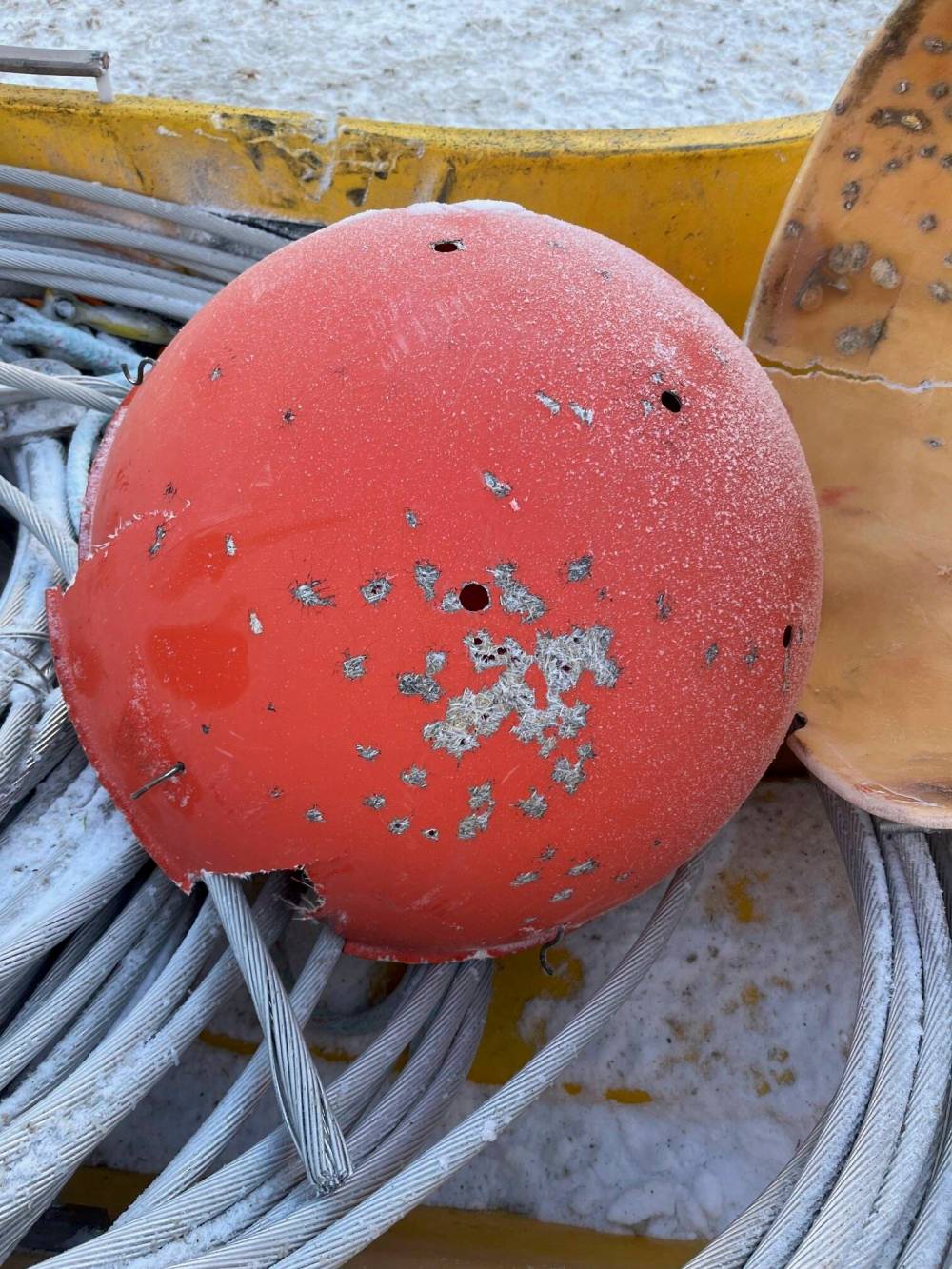
“All we can say is the line had the pellet in it, and such damage can cause outages and create safety risks for both the public and Manitoba Hydro employees,” spokesman Peter Chura said.
The pellets were found within the last week after the broken section, which crossed the Nelson River in a remote area, was recovered and inspected, Hydro said.
The line and markers were supported by poles that are 26 metres tall. It was unclear when the shotgun damage occurred.
“Out of an abundance of caution,” Hydro workers used a drone and high-resolution camera to inspect three other sections that cross water along the 22-kilometre transmission line, Chura said.
They found pellet damage to aerial marker balls in all three locations, he said. The line in those three sections has not yet been inspected for possible damage because it is live, but it will eventually be examined in detail.
Hydro doesn’t believe there is a risk of another power outage in the immediate future. Chura said staff will replace the three spans as a precaution.
“All we can say is the line had the pellet in it, and such damage can cause outages and create safety risks for both the public and Manitoba Hydro employees.”
The work will require a temporary power outage lasting a few hours, he said. A date has not been set. Chura said Hydro informed Pimicikamak Chief David Monias on Monday morning.
Monias said the outage happened on “an aging, neglected” power line.
“Until Manitoba Hydro conducts a proper hands-on investigation rather than a flyover, any claim about the cause is premature and distracts from the real issue of chronic infrastructure failure,” he wrote in a text message to the Free Press.
In a statement later provided by Manitoba Keewatinowi Okimakanak Inc., which represents northern First Nations, Monias said the “rush” to replace entire sections of the transmission line makes clear how vulnerable the infrastructure is.
“What is clear is that decades of under-investment in northern and First Nations infrastructure continue to put our people at risk, and this outage is another consequence of that reality,” he said.
About 7,000 people live in Pimicikamak, located about 750 kilometres north of Winnipeg.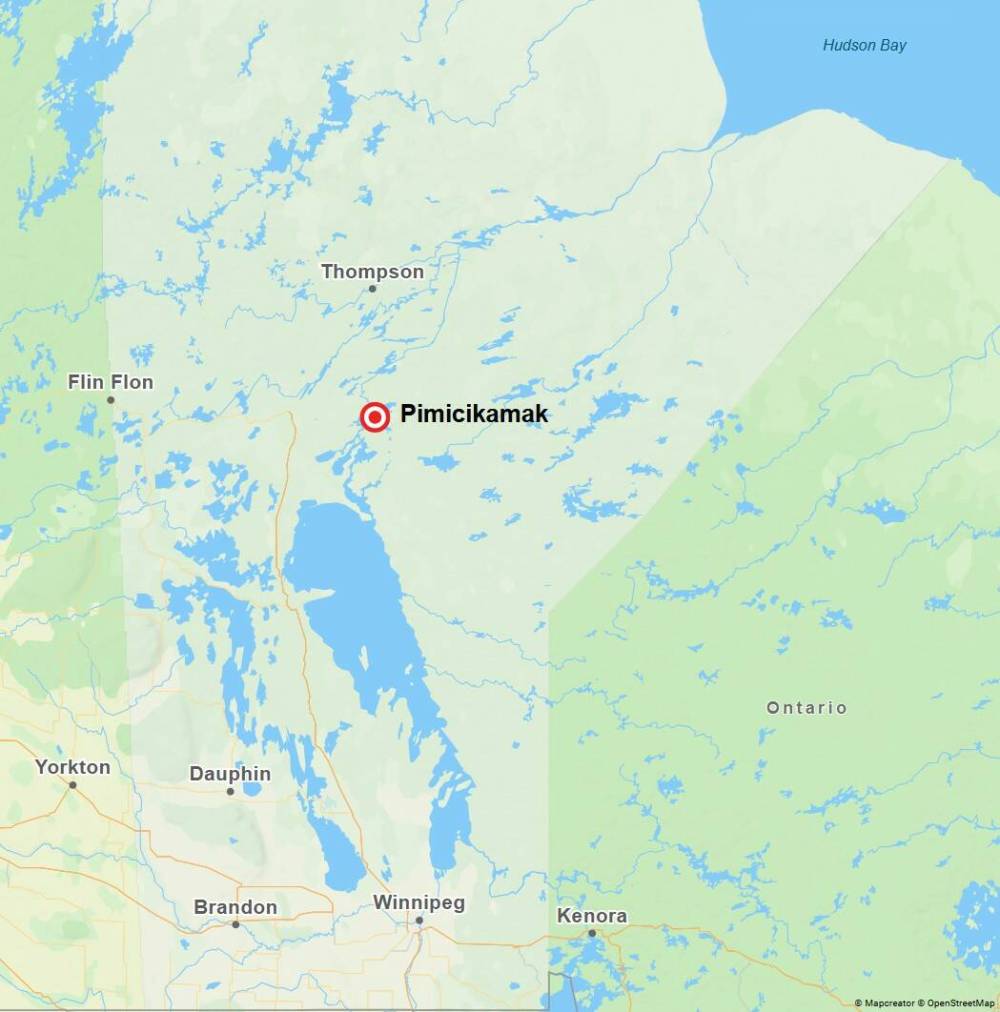
Monias repeated a call to move the line next to a highway for better access.
First Nations leaders previously said the outage and aftermath raised questions about whether the Crown is meeting its obligations to Pimicikamak under the Northern Flood Agreement.
The line snapped Dec. 28, cutting power to Pimicikamak’s roughly 7,000 residents and about 500 people in the incorporated community of Cross Lake. Power was fully restored Jan. 2, following repairs.
Monias has said about 4,000 Pimicikamak residents left the community during and after the outage. Water leaked into homes after pipes froze and burst.
The Canadian Armed Forces was brought in to help fix Pimicikamak’s water and sewage plants. Monias has said it will take months to complete repairs to homes.
Chura said he cannot comment on the potential reason or reasons the aerial markers and line were damaged by gunfire because it would be speculation.
Last month, police near Sault Ste. Marie, Ont., said they believed electrical poles and insulators were repeatedly shot at for target practice, causing about $220,000 in damage.
“Decades of under-investment in northern and First Nations infrastructure continue to put our people at risk.”
Manitoba Hydro is still calculating the cost of repairing the broken line near Pimicikamak and Cross Lake. The line, which runs between Jenpeg and Cross Lake, traverses Crown and reserve land.
Crews will be directed to look for damage to aerial marker balls during future line patrols throughout Manitoba, Chura said.
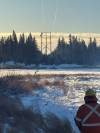
MANITOBA HYDRO Hydro workers spotted the downed power line over the Nelson River about 10 kilometres from Pimicikamak Cree Nation, while flying over in a helicopter.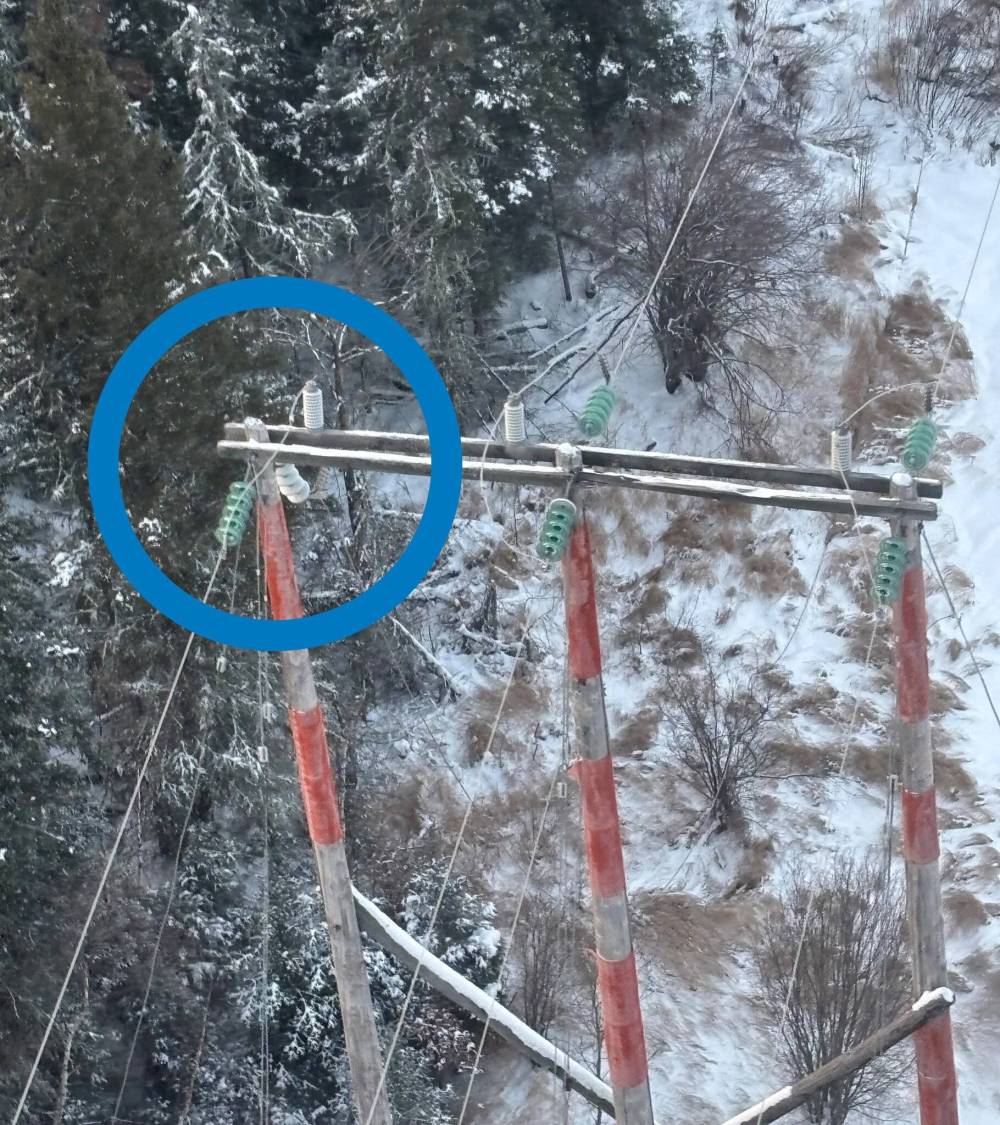
Cross Lake Mayor Bob Smith didn’t know pellets were found in the markers and power line until he spoke to a reporter.
“Most people, when you go out hunting, everyone’s made aware you don’t shoot at structures of Hydro or telephone lines, or anything like that,” he said.
Even though it’s not known if the pellets caused the break, Chura said Hydro decided to share the information as part of “an important public advisory,” following the discovery.
The Crown corporation asked hunters and firearm “enthusiasts” not to take aim at its equipment, and to use caution when shooting at birds and other game around power lines, substations and other electric or natural gas facilities.
The utility made similar appeals after people shot at equipment, including insulators and transformers in the past, Chura said.
Manitoba RCMP spokesman Kevin Engstrom said the Cross Lake detachment is not aware of any gun-related calls in the area of the power line. There is no ongoing investigation, he said.
“These aren’t hunters. These are criminals.”
Premier Wab Kinew declined to comment, while speaking to reporters at an unrelated event.
Chris Heald, a senior policy analyst with the Manitoba Wildlife Federation, said ethical hunters do not shoot at anything but their target.
“These aren’t hunters. These are criminals,” he said of people who shoot at Hydro infrastructure. “We expect people who are doing these activities to be held to the full extent of the law.”
MWF, Pimicikamak, other First Nations and the province have been involved in recent disputes related to moose hunting grounds and licences.
CAF spokesman Capt. Jonathan Farlam said a technical engineering assessment report, which identified deficiencies of critical infrastructure, has been given to Pimicikamak. It will be followed by a report with recommendations.
“These reports will help the community navigate the next steps to remediate damaged infrastructure,” Farlam wrote in an email. He said 10 CAF members are in the community.
— With files from Scott Billeck
chris.kitching@freepress.mb.ca
Chris Kitching is a general assignment reporter at the Free Press. He began his newspaper career in 2001, with stops in Winnipeg, Toronto and London, England, along the way. After returning to Winnipeg, he joined the Free Press in 2021, and now covers a little bit of everything for the newspaper. Read more about Chris.
Every piece of reporting Chris produces is reviewed by an editing team before it is posted online or published in print — part of the Free Press‘s tradition, since 1872, of producing reliable independent journalism. Read more about Free Press’s history and mandate, and learn how our newsroom operates.
Our newsroom depends on a growing audience of readers to power our journalism. If you are not a paid reader, please consider becoming a subscriber.
Our newsroom depends on its audience of readers to power our journalism. Thank you for your support.
Chris Kitching is a general assignment reporter at the Free Press. He began his newspaper career in 2001, with stops in Winnipeg, Toronto and London, England, along the way. After returning to Winnipeg, he joined the Free Press in 2021, and now covers a little bit of everything for the newspaper. Read more about Chris.
Every piece of reporting Chris produces is reviewed by an editing team before it is posted online or published in print — part of the Free Press‘s tradition, since 1872, of producing reliable independent journalism. Read more about Free Press’s history and mandate, and learn how our newsroom operates.
Our newsroom depends on a growing audience of readers to power our journalism. If you are not a paid reader, please consider becoming a subscriber.
Our newsroom depends on its audience of readers to power our journalism. Thank you for your support.
Related Articles
Manitoba First Nation urges province to address hotel space for evacuees








Advertisement Advertise With Us
Advertisement Advertise With Us
History
Updated on Monday, January 19, 2026 1:29 PM CST: Adds photo; revises headline, lede
Updated on Monday, January 19, 2026 5:28 PM CST: Adds photos, map
Updated on Monday, January 19, 2026 5:59 PM CST: Adds quotes