

Response to Pimicikamak’s four-day outage an improvement, sadly

Advertisement
Read this article for free:
or
Already have an account? Log in here »
To continue reading, please subscribe:
Digital Subscription
One year of digital access for only $1.44 a week*
- Enjoy unlimited reading on winnipegfreepress.com
- Read the E-Edition, our digital replica newspaper
- Access News Break, our award-winning app
- Play interactive puzzles
*Billed as $5.77 plus GST every four weeks. After 52 weeks, price increases to the regular rate of $19.95 plus GST every four weeks. Offer available to new and qualified returning subscribers only. Cancel any time.
To continue reading, please subscribe:
Add Free Press access to your Brandon Sun subscription for only an additional
$1 for the first 4 weeks*
- Enjoy unlimited reading on winnipegfreepress.com
- Read the E-Edition, our digital replica newspaper
- Access News Break, our award-winning app
- Play interactive puzzles
*Your next Brandon Sun subscription payment will increase by $1.00 and you will be charged $17.95 plus GST for four weeks. After four weeks, your payment will increase to $24.95 plus GST every four weeks.
Read unlimited articles for free today:
or
Already have an account? Log in here »
Hey there, time traveller!
This article was published 02/01/2026 (297 days ago), so information in it may no longer be current.
It’s been no happy new year for Pimicikamak Cree Nation.
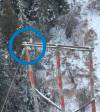
On Dec. 28, power went out in the northern Manitoba First Nation, about 500 kilometres north of Winnipeg, after the power lines crossing the Nelson River snapped due to extremely cold temperatures.
For four days, temperatures dropped to -30 C. Pimicikamak citizens began to evacuate unofficially — until an official state of emergency was called.

NIC ADAM / FREE PRESS FILES
Chief David Monias of Pimicikamak Cree Nation, left, called for military assistance after the power went out in the northern Manitoba First Nation.
Things then became desperate.
Pimicikamak Chief David Monias called for military assistance. Council members and citizens posted cries for help to reporters and on social media.
After nearly 1,400 of the community’s 7,000 citizens had left and public pressure mounted on Manitoba Hydro officials to fix the issue, by Thursday most homes in the First Nation, also known as Cross Lake, had power again.
Like in most First Nations, however, one emergency sparks several others.
In Pimicikamak’s case, frozen homes have turned into houses with broken and burst pipes, sewage system backups, and long-term problems like mould, cracks, and leaks.
This is not to mention the pain and suffering of returning to a disaster area, waiting for compensation for hotel and evacuation costs, and the realization that another emergency is one extreme weather event away.
For virtually every citizen in Pimicikamak, it’s been a frustrating, angering, and very challenging start to this new year.
The brutal reality is this has been one of Manitoba Hydro’s better responses to a crisis in a Manitoba First Nation.
Almost immediately after outage began, Hydro officials sent a 300-kilowatt generator from Thompson to help power the community’s water treatment plant and joined with Indigenous Services Canada and the Canadian Red Cross to send additional generators and assist with the arrival of evacuees in towns and in Winnipeg.
Four days is unacceptable to deal with any electricity crisis — what happened in Pimicikamak would never be tolerated elsewhere — but it’s a positive step in a very problematic story.
This week’s effort by Manitoba Hydro almost made one forget the months several northern First Nations communities had to wait when power line poles burnt down from wildfires or the numerous times over the decades that lines have frozen, broken, or simply stopped working — and nothing was done for weeks.
Literally every northern First Nation in Manitoba has or has had an issue with Manitoba Hydro electricity and some communities, like Berens River, Little Grand Rapids, Pauingassi, and Poplar River, are synonymous with their struggles.
These issues are going to increase with climate change, too.
And things are surely going to be a whole lot more challenging now.
It’s well known that Manitoba Hydro is in deep financial trouble.
The Crown corporation is expecting to post a $409 million loss in 2025, raising its debt to more than $25 billion.
The loss is primarily due to the drought conditions across the Lake Winnipeg watershed, which has resulted in a water level of 712 feet — what the Public Utility Board said was the “second lowest level in 112 years” and a financial deterioration of “more than $625 million.”
On top of this, Premier Wab Kinew’s government stubbornly committed to a rate freeze for Hydro customers and maintained it until this week, when rates went up four per cent on an “interim” basis.
This is much less than the multiple 3.5 per cent hikes over three years that Manitoba Hydro says it needs to deal with crumbling infrastructure and increase generating capacity.
Speaking of new projects, Hydro officials have also committed to building multiple megawatt gas-burning turbines in Brandon and partnering on Indigenous-led renewable energy projects.
The spending doesn’t stop there. As reported last summer, Hydro approved a fifteen per cent on-average salary increase for employees from 2023 to 2024 (costing $67 million).
I’m no economist, but huge financial losses on top of radical cost increases are a disaster waiting to happen — so it’s perhaps unsurprising that Manitoba Hydro board chair Ben Graham resigned last month.
While lauded by Finance Minister Adrien Sala as “stabilizing” the corporation and “advancing reconciliation,” it’s hard to not see Graham as jumping off a sinking ship.

Which brings me back to Pimicikamak.
Replacing Graham is former Treaty Relations Commissioner of Manitoba, business and educational leader, and member of Opaskwayak Cree Nation, Jamie Wilson.
Wilson’s first order of business was to deal with the crisis at Pimicikamak Cree Nation, a community he knows, has worked with, and has cultural connections with.
Regardless of any close ties, though, that emergency took four days to deal with — an improvement, but a sad one at best.
niigaan.sinclair@freepress.mb.ca
Niigaan Sinclair is Anishinaabe from Peguis First Nation and a professor in the Department of Indigenous Studies at the University of Manitoba. He’s been a columnist for the Free Press since 2018. Read more about Niigaan.
Every piece of writing Niigaan produces is reviewed by an editing team before it is posted online or published in print — part of the Free Press‘s tradition, since 1872, of producing reliable independent journalism. Read more about Free Press’s history and mandate, and learn how our newsroom operates.
Our newsroom depends on a growing audience of readers to power our journalism. If you are not a paid reader, please consider becoming a subscriber.
Our newsroom depends on its audience of readers to power our journalism. Thank you for your support.
Niigaan Sinclair is Anishinaabe from Peguis First Nation and a professor in the Department of Indigenous Studies at the University of Manitoba. He’s been a columnist for the Free Press since 2018. Read more about Niigaan.
Every piece of writing Niigaan produces is reviewed by an editing team before it is posted online or published in print — part of the Free Press‘s tradition, since 1872, of producing reliable independent journalism. Read more about Free Press’s history and mandate, and learn how our newsroom operates.
Our newsroom depends on a growing audience of readers to power our journalism. If you are not a paid reader, please consider becoming a subscriber.
Our newsroom depends on its audience of readers to power our journalism. Thank you for your support.
Related Articles
Damage estimates spiral as Pimicikamak tries to recover from power outage, deep freeze









Advertisement Advertise With Us
Advertisement Advertise With Us