Without key GPS data, transit plan lacked direction Tech problems meant city ill-equipped to make necessary adjustments to new network
Read this article for free:
or
Already have an account? Log in here »
To continue reading, please subscribe:

Digital Subscription
One year of digital access for only $205*
- Enjoy unlimited reading on winnipegfreepress.com
- Read the E-Edition, our digital replica newspaper
- Access News Break, our award-winning app
- Play interactive puzzles
*First annual payment billed as $205.00 + GST for one year. This annual subscription will automatically renew at $233.00 + GST every 52 weeks (10% off the regular annual price of $259.35). Offer available to new and qualified returning subscribers only. Cancel any time.
To continue reading, please subscribe:
Add Free Press access to your Brandon Sun subscription for only an additional
$1 for the first 4 weeks*
- Enjoy unlimited reading on winnipegfreepress.com
- Read the E-Edition, our digital replica newspaper
- Access News Break, our award-winning app
- Play interactive puzzles
*Your next Brandon Sun subscription payment will increase by $1.00 and you will be charged $17.95 plus GST for four weeks. After four weeks, your payment will increase to $24.95 plus GST every four weeks.
Read unlimited articles for free today:
or
Already have an account? Log in here »
Hey there, time traveller!
This article was published 04/02/2026 (224 days ago), so information in it may no longer be current.
For the first six months after Winnipeg Transit’s $20.4-million network overhaul, city officials had little information to assess how well the new system was working.
The city’s data had been plagued by a faulty GPS tracking system that left major gaps in the first four months of ridership and performance numbers, which prevented Winnipeg transit from making significant adjustments to the network.
Flaws in the vision meant to rekindle the city’s relationship with transit have been widely reported — ridership is down, service hours are shorter and passengers are so underwhelmed, some users, in rare cases, have reportedly bought cars for the first time. Instead of encouraging more Winnipeggers onto the bus, the system appears to be driving users away.
The Free Press/Narwhal set out to understand when and why ridership was lagging. While the independent analysis showed declines on weeknights and weekends are far steeper than previously reported, transit officials warned the city’s publicly available figures are unreliable.
MIKAELA MACKENZIE / FREE PRESS FILES Ridership is lagging on Winnipeg Transit.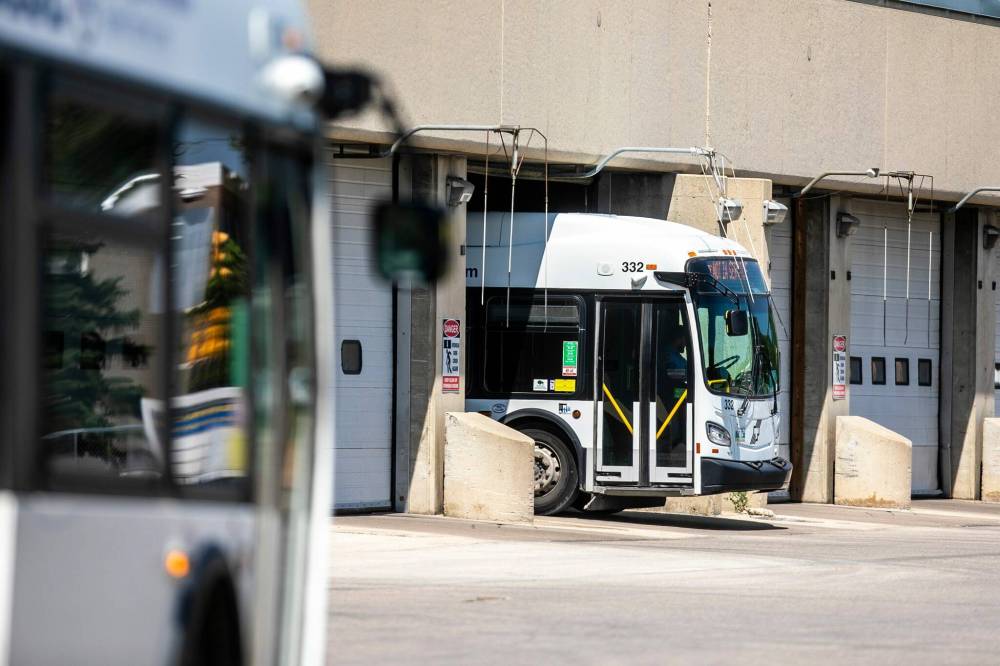
The city’s own data analysis, which estimates daily ridership based on sensors installed on about 20 per cent of the buses, shows the average weekday passengers dropped nearly 14 per cent this fall compared to a year ago, and is expected to result in a $8.5-million hit to fare revenue this year.
Bjorn Radstrom, manager of service development for Winnipeg Transit, said the problem with transit’s GPS system — which was not resolved until early November — meant the city was missing reliable information from September and October, the busiest months of the year, leaving him “leery to draw any solid conclusions” from the numbers.
“The GPS problem has tied our hands far more than people realize,” Radstrom said.
The lack of information is problematic, particularly during the early stages of an overhaul, Orly Linovski, an associate professor of city planning at the University of Manitoba, said.
“It’s impossible to make evidence-informed decisions if we don’t have the evidence,” Linovski said.
Passenger counts are one of several metrics transit planners use to evaluate whether the network is working as intended, identify problem areas and make future adjustments. In the wake of what Winnipeg Mayor Scott Gillingham had called the “most significant change to transit” in the city’s history, a lack of reliable ridership numbers and on-time performance data made planning decisions more challenging, Radstrom said.
Still, “we do know ridership has dropped,” he said. “There’s no question.”
“We do know ridership has dropped. There’s no question.”
Between September and December 2025, approximately 178,500 people boarded a bus every weekday, down 14 per cent from just over 207,000 the year prior.
But according to the Free Press/Narwhal analysis, ridership appears to decline more steeply after students and rush-hour commuters get home. Passenger counts decreased 23 per cent during the evening hours (6:30-10:30 p.m.), while nighttime ridership (after 10:30 p.m.) dropped nearly 40 per cent.
Weekend drops were even more dramatic, prompting surprise from Radstrom. While he later confirmed the Free Press/Narwhal’s calculations were correct based on the publicly available passenger counts, he stressed the city’s data was unreliable.
The city only sampled about half the number of trips it normally would on Saturdays and Sundays, meaning the counts are more likely to be inaccurate, he explained, and are based almost exclusively on November and December, when ridership starts a seasonal tail-off.
Based on data from the tap-to-ride (Peggo) fare system and ticket sales, Winnipeg Transit calculated ridership dropped 22 per cent on Saturdays and 18 per cent on Sundays. Those drops are each about 50 percentage points lower than the numbers in the city’s publicly available database — further demonstrating a marked disparity between datasets.
As part of the network redesign, transit reduced late-night operating hours. As a result, the Free Press/Narwhal analysis found, the number of nighttime bus trips across the city dropped 22 per cent on weekday evenings and nearly 50 per cent on weekday nights. The nighttime service cuts were widely criticized by riders, prompting the city to extend hours for its on-demand service. In the spring, it plans to juggle some route schedules to extend service until after midnight.
“We wanted to start doing this in September with the summer data, but we didn’t have it because of GPS problems,” he said. “We also wanted to start doing it earlier with fall data, but we didn’t have it.”
JOHN WOODS / FREE PRESS FILES Bjorn Radstrom, Winnipeg Transit’s manager of service development
It’s only in recent weeks Radstrom and other planners have been able to “dig in” and plan adjustments for spring. Radstrom said transit wants to “demonstrate some actual progress” when April’s schedule is released, and will be able to “do a few really good things … but not as much as if we’d had all the data for the full amount of time we wanted it.”
On Wednesday, transit delivered an unplanned verbal report to the public works committee acknowledging the GPS issues have now been resolved to within one per cent of baseline error levels.
Linovski said the city needs more than just numbers to assess how well the new network is performing.
“(Ridership data) gives us no information about why people are taking transit or not taking transit. It gives us no information about what their experience is like on transit,” she said, suggesting surveying users and non-users would help form a clearer picture.
“Service really needs to improve if you’re going to switch people over to transit.”
A 2018 study by the Canadian Urban Transit Association has determined a 10 per cent increase in hours a bus is on the road (called vehicle revenue hours) leads to a 10 per cent increase in ridership. The association also found that a 10 per cent increase to operating budgets translates to a 5.5 per cent increase in revenue hours, even when the costs of labour, fuel and maintenance are factored in.
Despite steadily increasing its operating budget and allocating more property tax dollars to Winnipeg transit since 2020, it is underfunded compared to agencies across the country.

In late January, James Van Gerwen, president of Amalgamated Transit Union Local 1505, which represents transit operators, was one of several public advocacy group representatives to call on the province to increase climate funding in its upcoming budget. Van Gerwen advocated specifically for the province to restore a 50-50 transit funding partnership with the City of Winnipeg that was cut in 2016.
Since then, the Manitoba government has provided about $42 million to Winnipeg Transit every year. But as transit’s operating budget has grown, the province’s share of the costs has shrunk to just 15 per cent.
Van Gerwen is confident “the ridership will be there” with a properly funded system that can commit to expanded service, more safety and more reliability.
Radstrom is on the same page. He expected some people to stop riding the bus as service changed, but that ridership would recover as new users realized there is “better, more frequent service closer to them,” he said.
A healthier budget will allow him to implement the changes needed to make the system convenient for more riders, he said.
julia-simone.rutgers@freepress.mb.ca

Julia-Simone Rutgers is an investigative reporter who joined the Free Press in 2020. Read more about Julia-Simone.
Every piece of reporting Julia-Simone produces is reviewed by an editing team before it is posted online or published in print — part of the Free Press‘s tradition, since 1872, of producing reliable independent journalism. Read more about Free Press’s history and mandate, and learn how our newsroom operates.
Our newsroom depends on a growing audience of readers to power our journalism. If you are not a paid reader, please consider becoming a subscriber.
Our newsroom depends on its audience of readers to power our journalism. Thank you for your support.
Related Articles
Fewer newcomers, bus network overhaul blamed for ridership drop