

Palestinian Canadian stories belong
Advertisement
Read this article for free:
or
Already have an account? Log in here »
To continue reading, please subscribe:

Digital Subscription
One year of digital access for only $205*
- Enjoy unlimited reading on winnipegfreepress.com
- Read the E-Edition, our digital replica newspaper
- Access News Break, our award-winning app
- Play interactive puzzles
*First annual payment billed as $205.00 + GST for one year. This annual subscription will automatically renew at $233.00 + GST every 52 weeks (10% off the regular annual price of $259.35). Offer available to new and qualified returning subscribers only. Cancel any time.
To continue reading, please subscribe:
Add Free Press access to your Brandon Sun subscription for only an additional
$1 for the first 4 weeks*
- Enjoy unlimited reading on winnipegfreepress.com
- Read the E-Edition, our digital replica newspaper
- Access News Break, our award-winning app
- Play interactive puzzles
*Your next Brandon Sun subscription payment will increase by $1.00 and you will be charged $17.95 plus GST for four weeks. After four weeks, your payment will increase to $24.95 plus GST every four weeks.
Read unlimited articles for free today:
or
Already have an account? Log in here »
In June, the Canadian Museum for Human Rights opened a small exhibit focused on the human rights impacts of the forced displacement of Palestinians: infringements on their rights to life, education, equality, movement, and more.
Palestine Uprooted: Nakba Past and Present shares stories, memories and artifacts of Palestinian Canadians. It is on display in our Rights Today gallery, and that placement is intentional. It is a story unfolding before our eyes, demanding our attention.
The exhibit is also a reminder that behind every headline there are real people we must approach with empathy. Unfortunately, much of the coverage and commentary has failed to do that, often omitting Palestinian voices entirely.
Some of the dialogue, both critical and supportive, has contributed to the very things we need to resist — the dehumanization of one another, focusing on entrenched positions over dialogue and understanding.
When opening a new exhibit, every museum makes choices about which histories to examine, whose experiences to centre. The question is not whether choices are made. The question is what framework guides them.
Palestine Uprooted is guided by our mandate and our very name — to be for human rights, to promote reflection and dialogue, to broaden our shared understanding of human rights and inspire people to take action to protect them. In this exhibit, this means encountering Palestinians as worthy of sharing their experiences in their own voices.
Our mandate does not just permit us to engage with politically charged human rights stories. It requires us to. These are the moments when having a national museum for human rights — accountable to the public but curatorially independent — is most important.
Our fidelity must always be to our mandate and the principles of human rights — to the banner that hangs in the museum of Article 1 of the Universal Declaration of Human Rights, proclaiming that we are all born free and equal in dignity and rights.
We have heard the criticism from some members of the Jewish community that because the exhibit doesn’t speak to their experiences, it is flawed or even hateful.
These are stories of Palestinian Canadians. They belong in our collective memory. Nothing about the way these stories are shared justifies the human rights violations that Jewish people continue to experience. The museum dedicates significant gallery space and education programming to those stories and issues, including combatting antisemitism — and we are committed to doing more. The pain and fear that Jewish Canadians are feeling in the face of rising antisemitism is shared by many communities who themselves are also targets of hate, including my own.
This museum can hold stories of both Palestinian Canadians and Jewish Canadians. They are not competing truths. Every story we share builds towards the same message — we must protect and defend human rights for everyone, everywhere. That a violation of anyone’s human rights calls for a collective response. We ask visitors to engage with all the stories shared in our galleries, including these important stories from Palestinian Canadians.
That approach is present in the exhibit itself. The design features tatreez, traditional Palestinian embroidery. Carefully placed stitches form patterns that carry cultural, familial and historical meaning. Human rights understanding is built in a similar way — through many voices, memories and histories.
The exhibit also features Think of Others, by Palestinian poet Mahmoud Darwish, projected on floor-to-ceiling banners. It frames the exhibit as an invitation to look beyond ourselves, to consider those whose humanity is too often pushed out of view.
The violation of the rights of Palestinians is not a matter of opinion; it is documented and it is ongoing. The broader conflict from which it emerges is complex, with violations of human rights committed against both Israelis and Palestinians.
A museum is one of the few places we can sit with those truths without being required to immediately resolve them. It is a place we can undertake the difficult work of trying to understand people with whom we might not agree, and an opportunity for all Canadians to seek empathy and understanding for experiences that are not our own.
There are people who believe this exhibit should not exist in its current form, and others who believe it is long overdue. There are people who feel it says too much, and others who feel it doesn’t say enough. We will listen to every one of those voices.
But we will never lose our resolve to continue the difficult, sometimes contested, and often controversial work of building understanding about human rights.
Isha Khan is the CEO of the Canadian Museum for Human Rights.
Related Articles
CMHR trustees should stay in their mandated lane, Palestinian organization president says after report reveals divide over exhibition content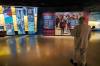
Advertisement Advertise With Us
Advertisement Advertise With Us