Provincial budget includes free transit passes for youths in Winnipeg, three other cities
Read this article for free:
or
Already have an account? Log in here »
To continue reading, please subscribe:

Digital Subscription
One year of digital access for only $205*
- Enjoy unlimited reading on winnipegfreepress.com
- Read the E-Edition, our digital replica newspaper
- Access News Break, our award-winning app
- Play interactive puzzles
*First annual payment billed as $205.00 + GST for one year. This annual subscription will automatically renew at $233.00 + GST every 52 weeks (10% off the regular annual price of $259.35). Offer available to new and qualified returning subscribers only. Cancel any time.
To continue reading, please subscribe:
Add Free Press access to your Brandon Sun subscription for only an additional
$1 for the first 4 weeks*
- Enjoy unlimited reading on winnipegfreepress.com
- Read the E-Edition, our digital replica newspaper
- Access News Break, our award-winning app
- Play interactive puzzles
*Your next Brandon Sun subscription payment will increase by $1.00 and you will be charged $17.95 plus GST for four weeks. After four weeks, your payment will increase to $24.95 plus GST every four weeks.
Read unlimited articles for free today:
or
Already have an account? Log in here »
Hey there, time traveller!
This article was published 23/03/2026 (193 days ago), so information in it may no longer be current.
Manitoba’s NDP government will make it more affordable for youths as young as 12 to get to school, jobs and activities with free transit passes.
The details will be announced in Tuesday’s budget.
“We have money set aside in the budget to work with municipalities to cover the cost of transit for high school-aged youth,” a spokesperson for the province said Monday.
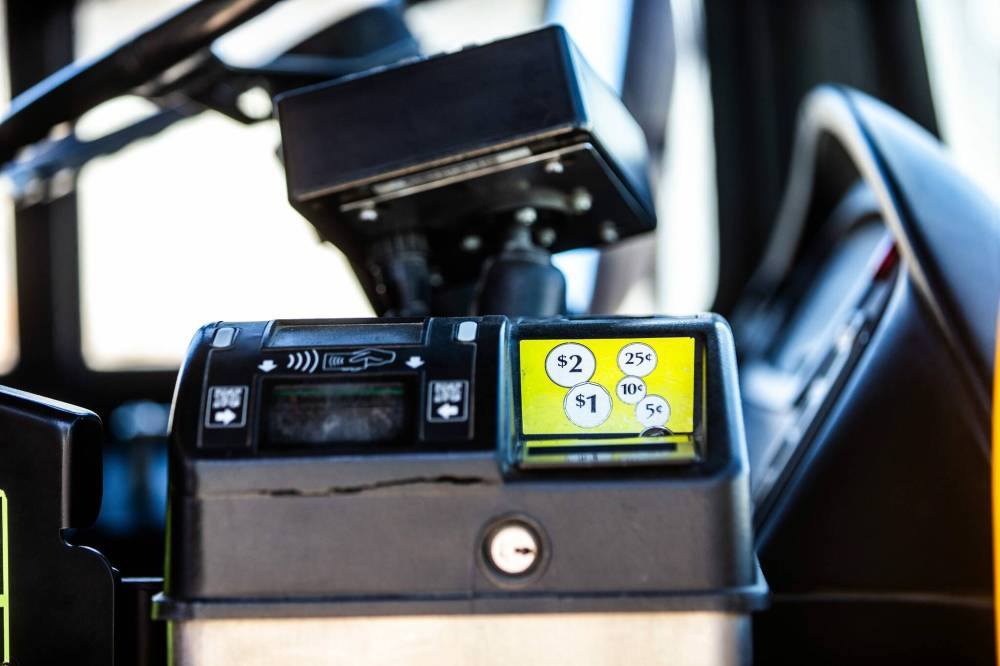
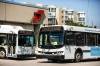
Winnipeg and three other municipalities in the province — Brandon, Selkirk and Flin Flon — offer fixed-route public transit.
“The rollout and delivery will look different depending on the city,” the spokesperson said.
The plan is expected to cost $10 million.
A single Winnipeg Transit youth fare — riders 16 and under and high school students 17-21 with a GoCARD and photo ID shown to the driver when boarding — is $2.95 and a monthly bus pass is $88.55. An adult fare is $3.45 and a monthly adult pass is $119.35.
Children aged 11 and under are able to ride free when accompanied by a fare-paying customer.
“I think it’s a great idea,” said Bram Strain, president and CEO of the Manitoba Business Council and co-chair of the Premier’s Business and Jobs Council’s green committee.
“It creates a bus-riding culture for youth which, hopefully, will continue on as they move into commuting to work. It should help increase the amount of riders, which obviously adds to security — a full bus is a secure bus.”
Winnipeg Transit data shows ridership remains below 2019 pre-pandemic levels.
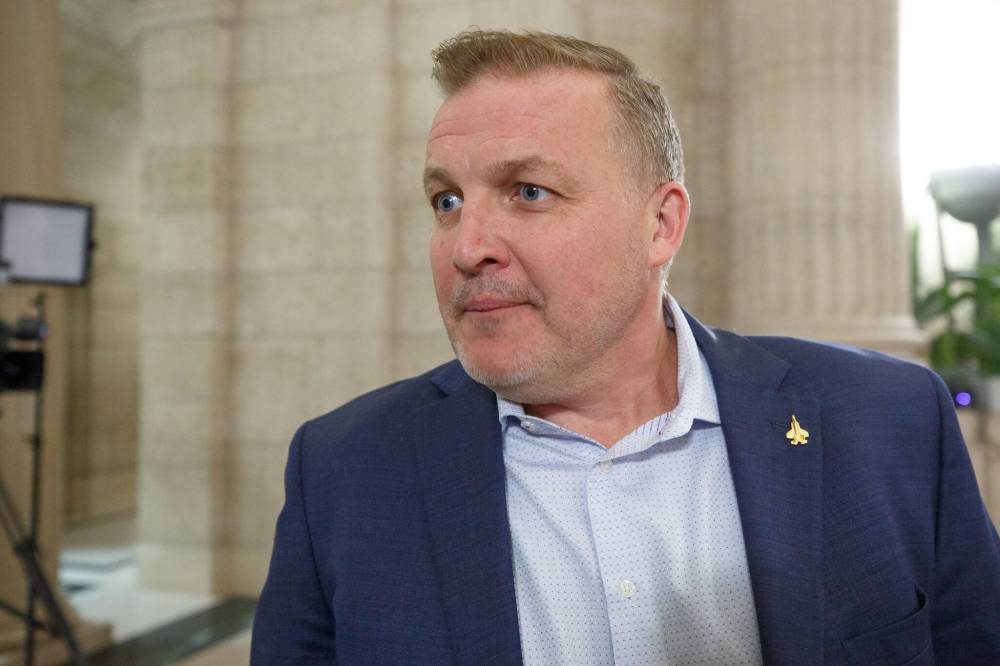
Strain said he expects the province may announce more funding for transit security in Tuesday’s budget.
“I think it will also help youth enter the workforce because it gives them an ability to get to and from their employment with a system that they know, trust and understand,” he said.
In January, Manitoba’s youth (aged 15 to 24) unemployment rate was 14.1 per cent, a 2.5 per cent increase from December, the province’s labour force survey said.
Strain said he’ll be watching for an uptick in ridership, workforce participation and school attendance. Fewer cars means less wear and tear on the roads and benefits the environment, he said.
Winnipeg School Division superintendent Matt Henderson welcomed the news, which he hopes will make it easier for students to attend class.
“One of the obstacles that we constantly hear… is always around transportation,” Henderson said. “Transportation is a significant barrier and does contribute to kids missing school.”
High schools in the city sometimes provide transit tokens for teens in need, but the economic burden of doing that for every student would be too much for the division to bear, Henderson said.
The change will reduce the strain on families, particularly those with multiple children who rely on the transit service, he added.
Henderson said he was not aware of the new transit funding before the Free Press contacted him for comment Monday.
“If this is the case that the province has put some funds away for this, that would be very much welcome by the division, but also our families,” he said.
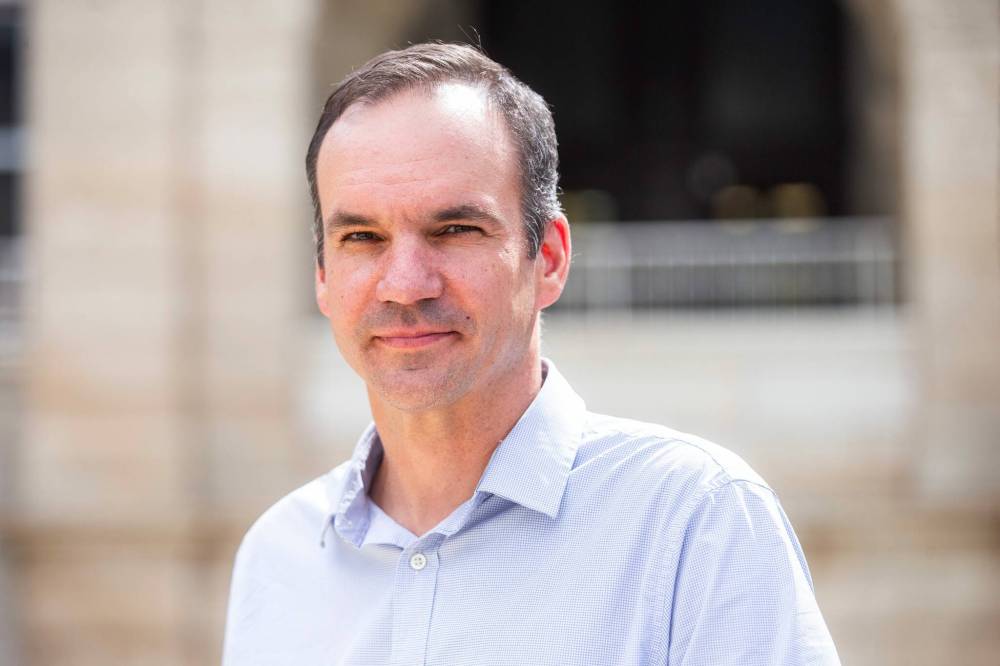
Providing free transit for youth is timely, University of Winnipeg economics professor Phillip Cyrenne said.
“Households are under lots of stress right now,” Cyrenne said. “Lots of people are struggling.”
Families are dealing with rising food costs, Manitoba Hydro rates and education property taxes, he noted.
The province has two ways of dealing with affordability challenges— by providing tax relief, usually at the lower end of the income spectrum, or by increasing services, he said.
“This government seems interested in providing services and spending.”
“What would the average person prefer — more money in their pocket, or more services?” he said. “This government seems interested in providing services and spending.”
Last Friday, Finance Minister Adrien Sala announced more funding for child care, and Justice Minister Matt Wiebe announced $14 million more for Manitoba Justice correctional services. The province has also pledged more money for cardiac care and affordability measures.
Cyrenne said he sees an “intergenerational tension” right now that’s influencing policy. Older, more established Manitobans are on firmer financial ground than younger people struggling with high housing and living costs, trying to gain an economic foothold.
“We have to start thinking, how can policy be directed toward helping young people getting started?” said Cyrenne, who considers himself an “older” Manitoban. Helping high school-aged youth with transit may fit the bill, he said.
“My sense is probably high school students are still dependent on family.”
It’s also a way of helping transit systems that have been underfunded, said Cyrenne. Spending on transit systems isn’t popular with taxpayers who don’t use it and don’t see it as a way to reduce traffic congestion and greenhouse gases, he said.
“With better transit you take traffic off the road, and it’s better social policy.”
Covering transit fares for high school-aged kids comes at a time when Manitoba is projecting a $1.6 billion deficit — more than double what the 2025 budget expected.
Premier Wab Kinew has signalled recently that Manitoba’s deficit will be less than $1.6 billion and that the province is on track to balance its books by the next election, due to take place by Oct. 5, 2027.
“Presumably their revenues are pretty flat and expenses haven’t been cut. In terms of the projection of a lower deficit — either expenditures are lower or revenues are higher,” Cyrenne said.
“Canada’s economy has not grown in any substantive sense. We’re close to — if not in — a recession.”
carol.sanders@freepress.mb.ca

Carol Sanders
Legislature reporter
Carol Sanders is a reporter at the Free Press legislature bureau. The former general assignment reporter and copy editor joined the paper in 1997. Read more about Carol.
Every piece of reporting Carol produces is reviewed by an editing team before it is posted online or published in print — part of the Free Press‘s tradition, since 1872, of producing reliable independent journalism. Read more about Free Press’s history and mandate, and learn how our newsroom operates.
Our newsroom depends on a growing audience of readers to power our journalism. If you are not a paid reader, please consider becoming a subscriber.
Our newsroom depends on its audience of readers to power our journalism. Thank you for your support.
Related Articles
Manitoba budget expands tax exemption on food items, aims to cut deficit





History
Updated on Monday, March 23, 2026 6:01 PM CDT: Fixes typo.
Updated on Wednesday, March 25, 2026 10:27 AM CDT: Corrects that it will be Winnipeg and three cities; removes reference to Thompson