Shared Health lacks data to predict future staffing needs Provincial health authority has no ‘responsive records’ for workforce modelling
Read this article for free:
or
Already have an account? Log in here »
To continue reading, please subscribe:

Digital Subscription
One year of digital access for only $205*
- Enjoy unlimited reading on winnipegfreepress.com
- Read the E-Edition, our digital replica newspaper
- Access News Break, our award-winning app
- Play interactive puzzles
*First annual payment billed as $205.00 + GST for one year. This annual subscription will automatically renew at $233.00 + GST every 52 weeks (10% off the regular annual price of $259.35). Offer available to new and qualified returning subscribers only. Cancel any time.
To continue reading, please subscribe:
Add Free Press access to your Brandon Sun subscription for only an additional
$1 for the first 4 weeks*
- Enjoy unlimited reading on winnipegfreepress.com
- Read the E-Edition, our digital replica newspaper
- Access News Break, our award-winning app
- Play interactive puzzles
*Your next Brandon Sun subscription payment will increase by $1.00 and you will be charged $17.95 plus GST for four weeks. After four weeks, your payment will increase to $24.95 plus GST every four weeks.
Read unlimited articles for free today:
or
Already have an account? Log in here »
Hey there, time traveller!
This article was published 02/04/2026 (186 days ago), so information in it may no longer be current.
Shared Health — which is tasked with planning future health-care staffing requirements in Manitoba— has no “responsive records” to show workforce modelling or a forecast of future staffing needs.
That lack of data, the result of a freedom of information request, perpetuates labour shortages and harms patients, critics say.
Noah Schulz, provincial director of the Manitoba Health Coalition, deemed Shared Health’s response to the request “really frustrating.”

“They say, ‘We are working on a HHR plan.’ That should be already done,” he said.
Shared Health’s answer to the request extends to forecasted service use for medical, support, nursing and allied-health positions. Such roles include occupational therapists, pharmacists, midwives, various nursing professions, family physicians, diagnostic imaging technologists and health-care aides, among others.
“The public body is working on developing a HHR (health human resource) plan, however (we) do not have an approved workforce modelling,” Shared Health’s freedom of information response says.
That’s simply not good enough, a union leader said.
“Government … they put out net new numbers for health-care staff. Those numbers are absolutely meaningless without a workforce plan to measure it against,” said Jason Linklater, president of the Manitoba Association of Health Care Professionals (MAHCP).
It’s hard to know how many health-care professionals the province will need without a guide, Linklater added.
Shared Health was established in 2018. It is mandated to develop a provincial health human resources plan under the Health System Governance and Accountability Act.
Creating and implementing the plan is part of Shared Health’s 2025-30 strategy.
“That should be already done.”
The MAHCP pushed for such a plan ahead of the province’s 2024 and 2025 budgets. (British Columbia and Alberta have allied health workforce plans.)
Ideally, Manitoba’s plan would include current vacancies and turnover rates, forecasted staffing requirements and a review of training programs, including graduate retention, Linklater said.
Shared Health is compiling and analyzing data on current and future requirements of Manitoba’s health workforce. It already works with the provincial government to analyze population data and public health needs, a Shared Health spokesperson wrote in a statement.
Health Minister Uzoma Asagwara echoed the organization Thursday.
“The reality of it is … workforce planning for over 55,000 people over hundreds of different roles is incredibly complex work. There is workforce planning happening across the board … (and) there’s not a one-size-fits-all approach,” Asagwara said.
The Manitoba government expects an overarching health human resource plan from Shared Health. The plan should include training, recruitment and retention strategies, Asagwara said.
Data collection is ongoing and is used to inform government funding and policy decisions, Asagwara said.
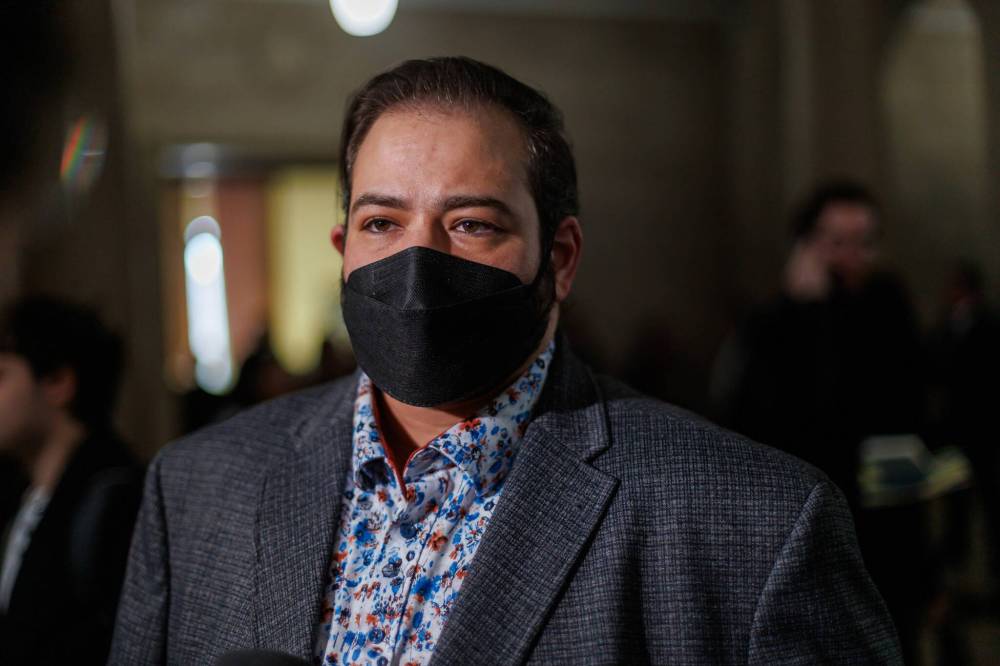
MIKE DEAL / FREE PRESS FILES
Noah Schulz, provincial director of the Manitoba Health Coalition, said a health human resources plan should have already been done.
Still, having a holistic, public and long-term plan for health-care staffing is necessary, advocates argued.
“It’s sometimes harder to take the long view in the election cycle, but it’s what’s needed for good policy. If we want to be serious about retention, as well as recruitment, we have to have that long-term view,” Schulz said.
Schulz has clocked vacancy rate increases within some professions and shared data the Manitoba Health Coalition received via a freedom of information request: Shared Health technologist and technical assistant vacancies rose from 18.8 per cent in December 2023 to 19.8 per cent in December 2025.
“The numbers are not where they need to be for patients to feel secure,” Schulz said.
Mid-career nurses are leaving, which is “very worrying” because they’re taking knowledge and experience with them, said Darlene Jackson, president of the Manitoba Nurses Union.
Earlier this week, the CBC reported that for every 100 public-sector nurses the province gained between April 2024 and May 2025, about 57 nurses left. CBC gathered its information through a freedom of information request.
(Shared Health didn’t confirm the numbers, but said they reflect movement “over a defined period” and don’t represent a simple loss.)
“Workforce planning for over 55,000 people over hundreds of different roles is incredibly complex work.”
Jackson pointed to nurses’ workloads and disillusionment over the care they can provide in the system they’re given. A health human resources plan should involve educators, including nursing schools, she said.
“Retention is a huge, huge issue,” said Sonia Udod, a University of Manitoba professor who is studying nursing retention.
Mentorship, showing value to employees and increasing the visibility of nurse managers are all important steps to keeping people from leaving, she said.
“I don’t think there is a quick fix to anything,” Udod added.
Doctors Manitoba does its own workforce projections. Manitoba needs at least 240 more doctors to match the Canadian average, a spokesperson said.
The Progressive Conservatives announced a health human resource action plan in 2022. It’s unclear whether Shared Health was involved.

The plan was flagged in a health department briefing for the New Democrat government after the 2023 election. Asagwara said key data wasn’t gathered by the PCs, leaving more work to the new party in power.

MIKE DEAL / FREE PRESS FILES
Health Minister Uzoma Asagwara said the Manitoba government expects an overarching health human resource plan from Shared Health.
“Shared Health was always envisioned as a long-term solution to provide forward-looking planning and reduce the inefficient duplication of services in the health-care system,” Tory leader Obby Khan wrote in a statement.
“Unfortunately, the NDP have shown no interest in tackling that bureaucracy so more resources can be deployed to the front lines.”
— With files from Carol Sanders
gabrielle.piche@winnipegfreepress.com

Gabrielle Piché reports on business for the Free Press. She interned at the Free Press and worked for its sister outlet, Canstar Community News, before entering the business beat in 2021. Read more about Gabrielle.
Every piece of reporting Gabrielle produces is reviewed by an editing team before it is posted online or published in print — part of the Free Press‘s tradition, since 1872, of producing reliable independent journalism. Read more about Free Press’s history and mandate, and learn how our newsroom operates.
Our newsroom depends on a growing audience of readers to power our journalism. If you are not a paid reader, please consider becoming a subscriber.
Our newsroom depends on its audience of readers to power our journalism. Thank you for your support.
Related Articles
Health-care delays tied to five of 16 deaths in annual critical-incident report






History
Updated on Friday, April 3, 2026 4:30 PM CDT: Adds details