

City’s encampment bylaw not intended to end homelessness, but it’s making a difference

Advertisement
Read this article for free:
or
Already have an account? Log in here »
To continue reading, please subscribe:

Digital Subscription
One year of digital access for only $205*
- Enjoy unlimited reading on winnipegfreepress.com
- Read the E-Edition, our digital replica newspaper
- Access News Break, our award-winning app
- Play interactive puzzles
*First annual payment billed as $205.00 + GST for one year. This annual subscription will automatically renew at $233.00 + GST every 52 weeks (10% off the regular annual price of $259.35). Offer available to new and qualified returning subscribers only. Cancel any time.
To continue reading, please subscribe:
Add Free Press access to your Brandon Sun subscription for only an additional
$1 for the first 4 weeks*
- Enjoy unlimited reading on winnipegfreepress.com
- Read the E-Edition, our digital replica newspaper
- Access News Break, our award-winning app
- Play interactive puzzles
*Your next Brandon Sun subscription payment will increase by $1.00 and you will be charged $17.95 plus GST for four weeks. After four weeks, your payment will increase to $24.95 plus GST every four weeks.
Read unlimited articles for free today:
or
Already have an account? Log in here »
When Winnipeg city council approved restrictions on homeless encampments near schools, daycares, parks, recreation centres and seniors housing, critics warned it would simply push vulnerable people from one location to another without solving the underlying problem.
There was some truth to that concern.
Homelessness cannot be regulated away with a bylaw. People living in tents do not disappear because a municipality declares certain locations off limits.
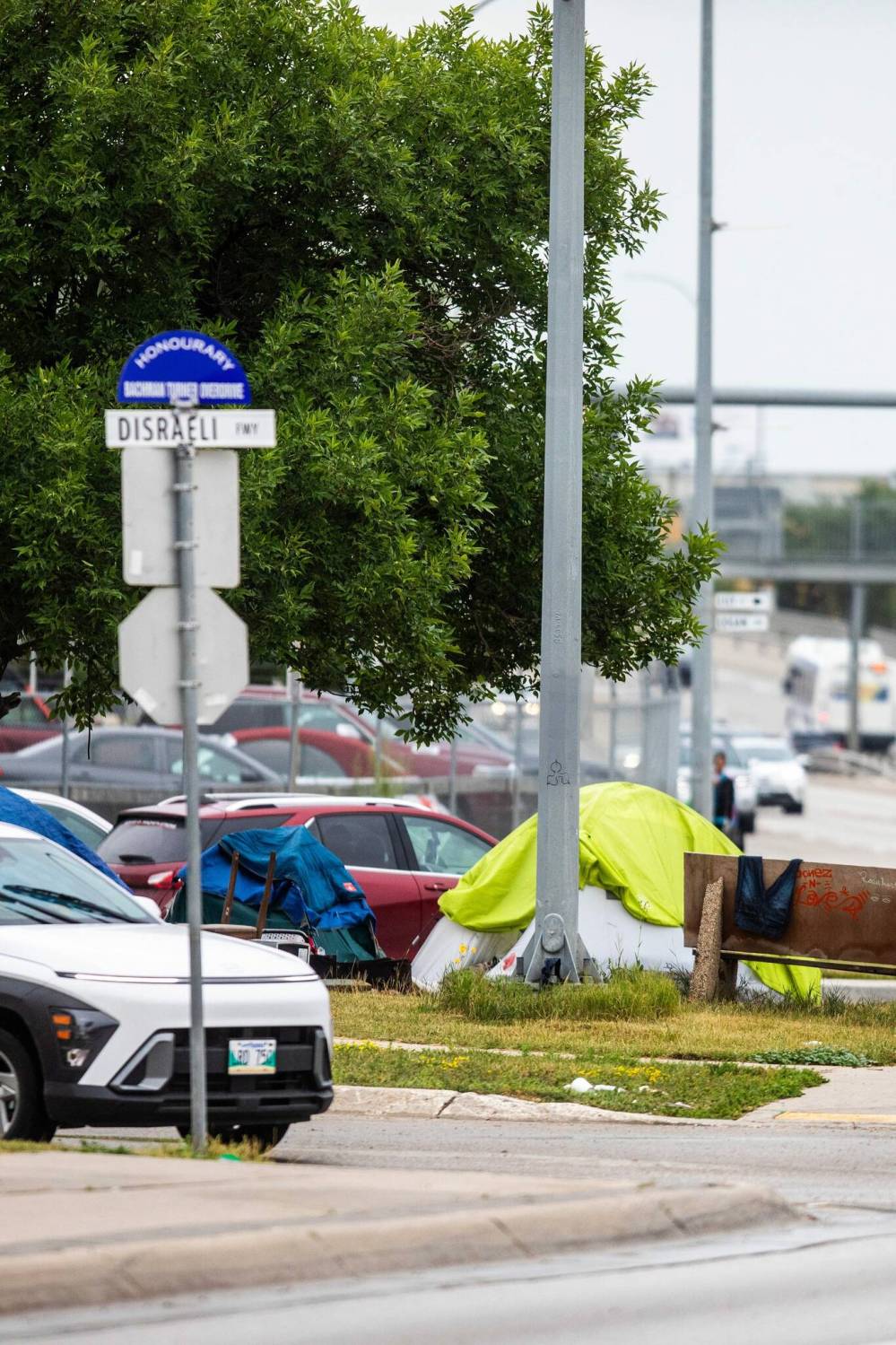
MIKAELA MACKENZIE / FREE PRESS FILES
Allowing encampments to grow unchecked beside schools and playgrounds was never a sustainable option and the city was right to act, Tom Brodbeck writes.
Many individuals struggling with homelessness face complex challenges involving mental illness, addictions, poverty and a severe lack of affordable housing. A bylaw does nothing to address those root causes.
But acknowledging those realities should not prevent us from recognizing another truth: the city was right to act.
The primary responsibility of municipal government is to ensure public spaces remain safe and accessible for everyone. That includes children attending school, families visiting parks, seniors living in nearby housing complexes and residents using recreation facilities.
Allowing encampments to grow unchecked beside schools and playgrounds was never a sustainable option.
The latest numbers presented to city council suggest the situation has improved significantly since the bylaw came into effect last November.
According to city officials, there are currently 62 encampments housing approximately 120 people. Last August, before the crackdown began, roughly 700 people were estimated to be living in about 100 encampments across Winnipeg.
No one should pretend the reduction can be attributed entirely to the bylaw. Even city officials acknowledge multiple factors are at play.
Siloam Mission’s overnight shelter continues to provide beds for hundreds of people each night. The province’s Your Way Home housing strategy has helped more than 200 people secure and maintain housing. Outreach efforts by community organizations have also played an important role.
Nevertheless, it is difficult to ignore the fact that encampment numbers have fallen dramatically since the restrictions were introduced.
While critics argue the policy merely displaced people, the evidence suggests at least some individuals have moved into shelters or housing rather than simply relocating to another campsite.
Even advocates who oppose the bylaw acknowledge that more people have entered housing through provincial initiatives. That is a positive development that deserves recognition. Every person who leaves homelessness behind represents a success story.
Of course, concerns remain.
Main Street Project reports that more individuals are now sleeping in doorways, heating vents, back lanes and other locations that would not be classified as encampments. Others may be living in vehicles or bus shelters.
That’s troubling and highlights the fact that homelessness remains a major crisis in Winnipeg.
But those realities do not automatically mean the bylaw has failed.
The question isn’t whether homelessness still exists. Clearly it does, at elevated levels.
The question is whether encampments should be permitted beside elementary schools, daycare centres and playgrounds where children spend their days.
The answer is no.
This was always the strongest argument in favour of the restrictions.
Children should be able to use playgrounds and parks safely. Recreation centres and public spaces should remain welcoming and accessible to everyone.
That isn’t a controversial position. It’s common sense.
The unfortunate reality is that some encampments generate safety concerns, including fires, discarded needles, human waste and criminal activity. Not every encampment experiences these issues, but enough do that municipalities cannot simply ignore them.
Opponents of the bylaw sometimes frame the debate as a choice between compassion and enforcement.
It isn’t.
A city can be compassionate while also establishing reasonable boundaries about where encampments can and cannot exist.
In fact, compassion without boundaries often serves nobody well. Leaving people indefinitely in tents exposed to harsh weather, violence, addiction and deteriorating health conditions is not a humane long-term strategy.
What Winnipeg needs now is not a repeal of the bylaw but a renewed commitment to addressing homelessness itself.
The province must continue expanding supportive housing. More shelter spaces are needed. Mental-health and addictions treatment must become more accessible.
Governments at all levels need to accelerate efforts to build affordable housing and prevent people from becoming homeless in the first place.
The city should also follow through on calls for better data regarding where people go after encampments are cleared. Policymakers need accurate information to evaluate what is working and what isn’t.
But none of that changes the basic reality.

The encampment restrictions were never intended to solve homelessness. They were designed to establish limits on where encampments could be located while governments and service providers pursued longer-term solutions.
Judged by that standard, the policy appears to be achieving its objective.
Far too many people remain homeless in Winnipeg, and much more work lies ahead. Yet protecting children, families and vulnerable seniors from the impacts of encampments located immediately adjacent to schools, daycares and parks was a reasonable and necessary step.
The city made the right decision. Now governments must build on it by ensuring more people have somewhere better to go than a tent.
tom.brodbeck@freepress.mb.ca
Tom Brodbeck is an award-winning author and columnist with over 30 years experience in print media. He joined the Free Press in 2019. Born and raised in Montreal, Tom graduated from the University of Manitoba in 1993 with a Bachelor of Arts degree in economics and commerce. Read more about Tom.
Tom provides commentary and analysis on political and related issues at the municipal, provincial and federal level. His columns are built on research and coverage of local events. The Free Press’s editing team reviews Tom’s columns before they are posted online or published in print – part of the Free Press’s tradition, since 1872, of producing reliable independent journalism. Read more about Free Press’s history and mandate, and learn how our newsroom operates.
Our newsroom depends on a growing audience of readers to power our journalism. If you are not a paid reader, please consider becoming a subscriber.
Our newsroom depends on its audience of readers to power our journalism. Thank you for your support.
Tom Brodbeck is an award-winning author and columnist with over 30 years experience in print media. He joined the Free Press in 2019. Born and raised in Montreal, Tom graduated from the University of Manitoba in 1993 with a Bachelor of Arts degree in economics and commerce. Read more about Tom.
Tom provides commentary and analysis on political and related issues at the municipal, provincial and federal level. His columns are built on research and coverage of local events. The Free Press’s editing team reviews Tom’s columns before they are posted online or published in print – part of the Free Press’s tradition, since 1872, of producing reliable independent journalism. Read more about Free Press’s history and mandate, and learn how our newsroom operates.
Our newsroom depends on a growing audience of readers to power our journalism. If you are not a paid reader, please consider becoming a subscriber.
Our newsroom depends on its audience of readers to power our journalism. Thank you for your support.
Related Articles
Groups say city’s camp ban hurts homeless; mayor says ban stays

Advertisement Advertise With Us
Advertisement Advertise With Us