

Manitoba makes strides on poverty, but EIA rates must increase: report

Advertisement
Read this article for free:
or
Already have an account? Log in here »
To continue reading, please subscribe:

Digital Subscription
One year of digital access for only $205*
- Enjoy unlimited reading on winnipegfreepress.com
- Read the E-Edition, our digital replica newspaper
- Access News Break, our award-winning app
- Play interactive puzzles
*First annual payment billed as $205.00 + GST for one year. This annual subscription will automatically renew at $233.00 + GST every 52 weeks (10% off the regular annual price of $259.35). Offer available to new and qualified returning subscribers only. Cancel any time.
To continue reading, please subscribe:
Add Free Press access to your Brandon Sun subscription for only an additional
$1 for the first 4 weeks*
- Enjoy unlimited reading on winnipegfreepress.com
- Read the E-Edition, our digital replica newspaper
- Access News Break, our award-winning app
- Play interactive puzzles
*Your next Brandon Sun subscription payment will increase by $1.00 and you will be charged $17.95 plus GST for four weeks. After four weeks, your payment will increase to $24.95 plus GST every four weeks.
Read unlimited articles for free today:
or
Already have an account? Log in here »
When Jayline Bursey gets her monthly Employment and Income Assistance cheque, it’s gone almost immediately.
After paying $1,000 for rent, she has $300 for food and bills. She relies on a monthly food hamper because she can’t afford grocery store prices.
“Everything is so high up in price,” she said. “When I do go to the store, I live off the cheapest chicken nuggets and the cheapest soup.”
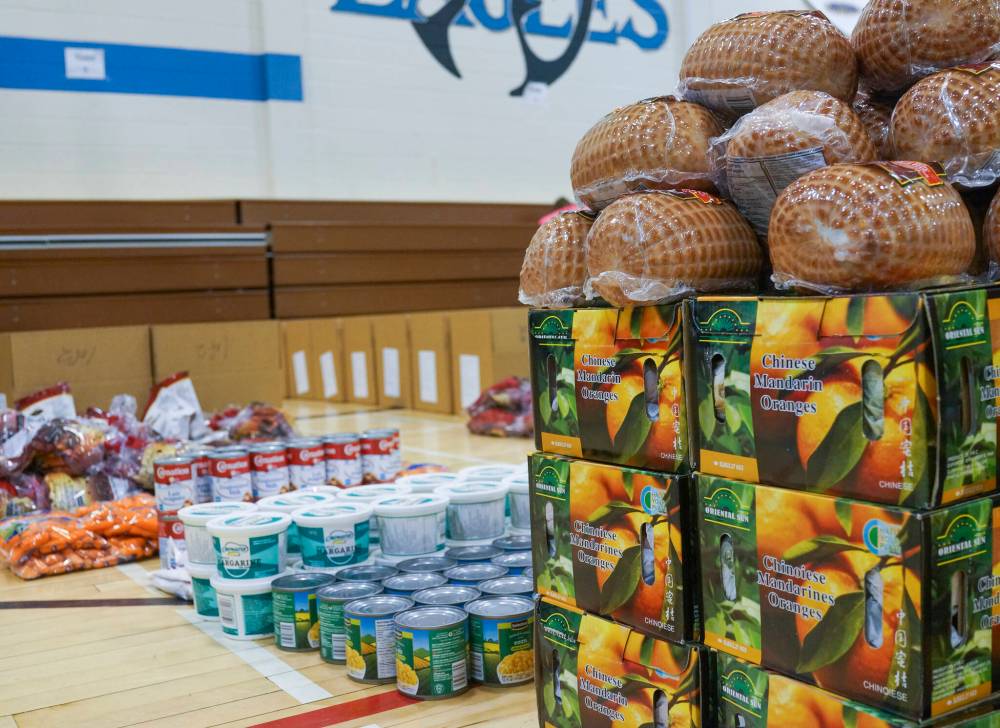
SUPPLIED FILE PHOTO
Food Banks Canada’s latest poverty report card shows Manitoba has made strides on the poverty front, but there is still work to be done.
A new report says EIA and rent assist programs need to change to address increased poverty rates and food bank use.
Food Banks Canada’s latest poverty report card shows Manitoba has made strides on the poverty front, but there is still work to be done.
Manitoba is one of the few provinces that improved its grade over the past two years, jumping to a C- in 2026, up from a D- in 2024. Overall, Canada scored a D+ on the report card.
The document shows Manitoba had reductions in both severe and moderate impoverishment, and data shows reductions in financial hardship and an improved capacity for Manitobans to afford basic necessities. However, financial insecurity is still a pressing issue owing, in part, to EIA programs.
“The government’s fourth consecutive freeze of Employment and Income Assistance rates is a serious regression that prevents the province from improving their grade,” the report states. “The absence of any increase in core income assistance, combined with reduced housing commitments, means that Manitoba’s most vulnerable residents are materially worse off than they were last year.”
In terms of Canada’s employment insurance program, the report says it doesn’t fit the evolving workforce. Part-time work and gig work are becoming more frequent, and employment insurance eligibility requirements make the assistance program difficult to access.
EI pays about 55 per cent of the average insurable weekly earnings, but irregular hours, multiple jobs and contract work make qualifying for it more difficult, even for people who have consistent jobs, the report states.
To improve poverty rates in Manitoba, the report calls for increased and indexed EIA rates, a provincial food security strategy and and enhanced rent assist program.
Bursey, 42, who is on disability, is not eligible for rent assist, but if she were, she would have more money for food and other necessities.
“Or, put the rent down more and the food cost down more,” she said. “(The government) needs to help people out somehow.”
The Food Banks Canada report shows 33 per cent of respondents in Manitoba spend more than 30 per cent of their income on housing, and 51 per cent of government support recipients say rates are insufficient to keep up with the rising cost of living.
Natalie Wiebe, a program manager at SEED Winnipeg, an organization that provides financial services to low-income Manitobans, says their clients who receive social assistance cannot afford their basic needs.
“EIA rates keep people living in poverty, but now I think it’s just kind of exacerbated by this increased cost of living,” she said. “People are going into debt trying to meet their basic needs while receiving our social assistance programs.”
Some clients have gone into arrears on their Manitoba Hydro bills because current rates don’t cover their monthly expenses.
Wiebe supports the call for expanded EIA eligibility and better rent assist rates. She also suggested the province’s residential renters credit needs to be expanded to include people who receive social assistance. She would also like rent assist rates to rise to 100 per cent of the median market rate.
Currently, Manitoba pays out 70 per cent of the median rate to rent assist clients.
The majority of Harvest Manitoba clients are on social assistance, but there’s an emerging trend in which full-time workers with families are accessing food banks, said Meaghan Erbus, Harvest Manitoba’s vice-president of advocacy and stakeholder relations.
Harvest has a record high of more than 60,000 monthly food bank users.
“In terms of the advocacy recommendations that we have been sort of advocating for over the last year, is increase EIA benefits and make housing more affordable, and then employment and education opportunities,” she said.

In January the NDP government revealed its poverty reduction strategy, which targets youth leaving the child welfare system, seniors, and children under five.
Critics have said the plan doesn’t go far enough and leaves out groups of people.
Next month, the federal GST credit will be replaced by a groceries and essentials benefit. Quarterly payments will increase by 25 per cent for those who are eligible, and a one-time top up is expected to be paid out to recipients beginning June 5.
— with files from The Canadian Press
nicole.buffie@freepress.mb.ca
Nicole Buffie
Multimedia producer
Nicole Buffie is a reporter for the Free Press city desk. Born and bred in Winnipeg, Nicole graduated from Red River College’s Creative Communications program in 2020 and worked as a reporter throughout Manitoba before joining the Free Press newsroom as a multimedia producer in 2023. Read more about Nicole.
Every piece of reporting Nicole produces is reviewed by an editing team before it is posted online or published in print — part of the Free Press‘s tradition, since 1872, of producing reliable independent journalism. Read more about Free Press’s history and mandate, and learn how our newsroom operates.
Our newsroom depends on a growing audience of readers to power our journalism. If you are not a paid reader, please consider becoming a subscriber.
Our newsroom depends on its audience of readers to power our journalism. Thank you for your support.
Nicole Buffie
Multimedia producer
Nicole Buffie is a reporter for the Free Press city desk. Born and bred in Winnipeg, Nicole graduated from Red River College’s Creative Communications program in 2020 and worked as a reporter throughout Manitoba before joining the Free Press newsroom as a multimedia producer in 2023. Read more about Nicole.
Every piece of reporting Nicole produces is reviewed by an editing team before it is posted online or published in print — part of the Free Press‘s tradition, since 1872, of producing reliable independent journalism. Read more about Free Press’s history and mandate, and learn how our newsroom operates.
Our newsroom depends on a growing audience of readers to power our journalism. If you are not a paid reader, please consider becoming a subscriber.
Our newsroom depends on its audience of readers to power our journalism. Thank you for your support.
Related Articles
Manitoba government unveils findings of grocery price study
Advertisement Advertise With Us
Advertisement Advertise With Us
History
Updated on Tuesday, June 2, 2026 10:05 AM CDT: Corrects that Meaghan Erbus is Harvest Manitoba’s vice-president of advocacy and stakeholder relations