

Nursing job yet to be filled, but supervised consumption site will open this month: Kinew

Advertisement
Read this article for free:
or
Already have an account? Log in here »
To continue reading, please subscribe:

Digital Subscription
One year of digital access for only $205*
- Enjoy unlimited reading on winnipegfreepress.com
- Read the E-Edition, our digital replica newspaper
- Access News Break, our award-winning app
- Play interactive puzzles
*First annual payment billed as $205.00 + GST for one year. This annual subscription will automatically renew at $233.00 + GST every 52 weeks (10% off the regular annual price of $259.35). Offer available to new and qualified returning subscribers only. Cancel any time.
To continue reading, please subscribe:
Add Free Press access to your Brandon Sun subscription for only an additional
$1 for the first 4 weeks*
- Enjoy unlimited reading on winnipegfreepress.com
- Read the E-Edition, our digital replica newspaper
- Access News Break, our award-winning app
- Play interactive puzzles
*Your next Brandon Sun subscription payment will increase by $1.00 and you will be charged $17.95 plus GST for four weeks. After four weeks, your payment will increase to $24.95 plus GST every four weeks.
Read unlimited articles for free today:
or
Already have an account? Log in here »
Manitoba’s premier expressed confidence Thursday that the province’s first supervised consumption site will open this month, even though at least one nursing position hasn’t been filled.
“This month it’ll open,” Wab Kinew said, referring to the 366 Henry Ave. location.
The province received approval from Health Canada for the Indigenous-led site last month. However, a recent job posting by the Aboriginal Health and Wellness Centre of Winnipeg, Inc., which will operate the facility, suggests key staffing positions are still being filled.
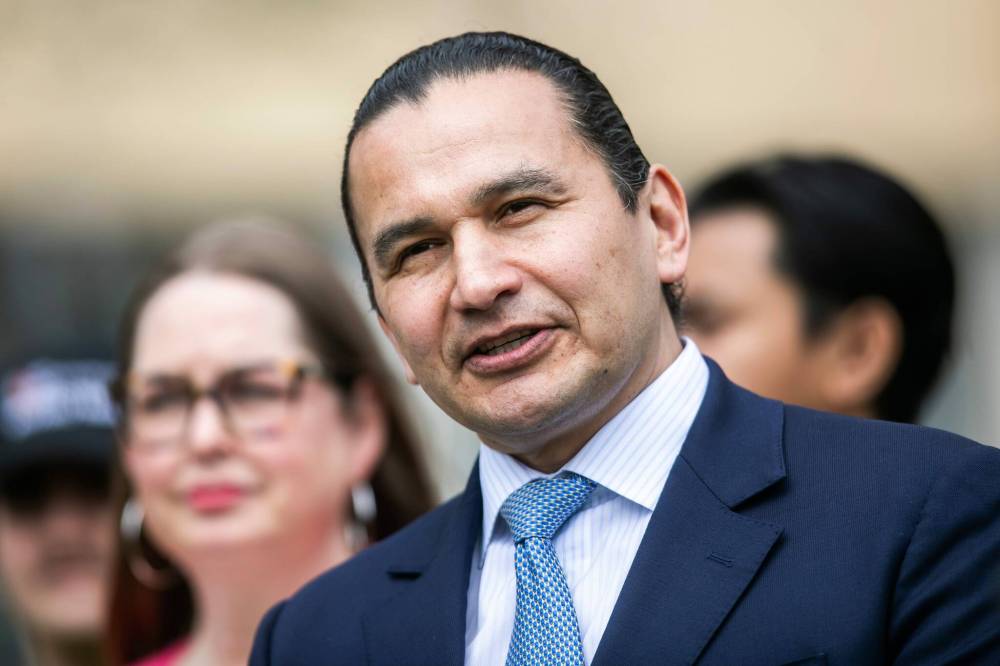
MIKAELA MACKENZIE / FREE PRESS FILES
Premier Wab Kinew ruled out a safer-supply program as the province’s first supervised consumption site prepares to open.
The posting advertises a Nurse 3 position beginning June 29 and running through March 31, 2027, with a “high likelihood of extension.”
The province has previously said the site will initially operate from a parking lot location before moving indoors in 2027. It is expected to provide services Tuesday through Saturday from 11 a.m. to 6:45 p.m.
Winnipeg’s drug toxicity crisis continues to intensify, with overdose calls placing increasing strain on emergency responders and community organizations.
Consumption sites allow people to use illegal substances under the supervision of health workers who can immediately respond to overdoses, alleviating some of that pressure. In addition, such facilities test street drugs for toxicity and provide health and social supports.
Kinew said his government is prepared to try new approaches to keep pace with the situation, but ruled out one option that some harm-reduction advocates have pondered: a safer-supply program that would provide regulated alternatives to toxic street drugs.
The premier pointed to other jurisdictions that have adopted safe-supply programs only to face significant public backlash over concerns about street disorder.
“Anything that we do here in Manitoba has to be sustainable,” he said, noting the government has been working on other fronts, including the new Disraeli Freeway 72-hour detox centre and the provincial Your Way Home strategy to end chronic homelessness.
“All of these things haven’t been without their controversy or legal challenges or things along the way,” Kinew said. “But my sense is if we were to even consider safe supply… Manitobans would be up in arms and they would not support it.
“And then what you’re going to see is the political pendulum’s going the other direction, and then all of a sudden, even the things that are less controversial today and are helping people, like, let’s say clean needles, those get taken off the toolbox.”
Kinew said any response to the crisis must carry broad public support.
“Whatever we do has to bring people along so that we can make sure that effort is sustainable over the long term,” he said.
The comments come as new data shows opioid-related calls have overtaken alcohol-related calls for service in Winnipeg for the first time.
During the first five months of 2026, Winnipeg Fire Paramedic Service crews responded to 2,447 opioid-related incidents, compared with 2,004 alcohol-related calls. During the same period in 2025, crews responded to 1,089 opioid-related calls and 1,792 alcohol-related calls.
The sharpest increase came in April, when opioid calls exceeded alcohol-related calls by 380. WFPS data shows crews responded to 810 opioid patients that month alone — more than triple the number recorded in April 2025.
In response, the province announced more than $1 million in new funding this week aimed at reducing pressure on front-line responders and improving overdose care.
The funding includes $802,000 for a three-month pilot project scheduled to begin this month that will deploy a dedicated, around-the-clock, two-person paramedic team to respond to overdose calls in high-demand areas, including Winnipeg’s downtown core.
The province will also spend $150,000 on approximately 20 oxygen delivery devices to be managed by Main Street Project and another $100,000 on first-aid and overdose response training delivered through St. John Ambulance and Manitoba Harm Reduction Network.
Outreach organizations say those measures are welcome, but many front-line workers continue to struggle under the weight of the crisis.

Staff are increasingly performing duties they never expected to take on, including administering opioid overdose-reversing naloxone and performing CPR while responding to repeated overdoses.
“We really need to consider that we need a different type of response,” Main Street Project executive director Jamil Mahmood said. “If the system is not responding in a good way to the needs that we’re seeing in the community, then what does that mean for the likelihood of successful treatment and recovery?”
Kinew said his government remains open to new ideas, and said if they’re “legit,” the province will support them.
He added that despite not calling a public health emergency, the province is working with the federal government on mental health and addictions, and said there will be announcements to come.
scott.billeck@freepress.mb.ca
Scott Billeck is a general assignment reporter for the Free Press. A Creative Communications graduate from Red River College, Scott has more than a decade’s worth of experience covering hockey, football and global pandemics. He joined the Free Press in 2024. Read more about Scott.
Every piece of reporting Scott produces is reviewed by an editing team before it is posted online or published in print — part of the Free Press‘s tradition, since 1872, of producing reliable independent journalism. Read more about Free Press’s history and mandate, and learn how our newsroom operates.
Our newsroom depends on a growing audience of readers to power our journalism. If you are not a paid reader, please consider becoming a subscriber.
Our newsroom depends on its audience of readers to power our journalism. Thank you for your support.
Scott Billeck is a general assignment reporter for the Free Press. A Creative Communications graduate from Red River College, Scott has more than a decade’s worth of experience covering hockey, football and global pandemics. He joined the Free Press in 2024. Read more about Scott.
Every piece of reporting Scott produces is reviewed by an editing team before it is posted online or published in print — part of the Free Press‘s tradition, since 1872, of producing reliable independent journalism. Read more about Free Press’s history and mandate, and learn how our newsroom operates.
Our newsroom depends on a growing audience of readers to power our journalism. If you are not a paid reader, please consider becoming a subscriber.
Our newsroom depends on its audience of readers to power our journalism. Thank you for your support.
Related Articles
Temporary supervised drug consumption site will begin operations in June, addictions minister says




Advertisement Advertise With Us
Advertisement Advertise With Us
History
Updated on Thursday, June 4, 2026 6:35 PM CDT: Updates photo