

Steinbach ER nurses ask for triage help as wait-averse Winnipeg patients strain hospital capacity

Advertisement
Read this article for free:
or
Already have an account? Log in here »
To continue reading, please subscribe:

Digital Subscription
One year of digital access for only $205*
- Enjoy unlimited reading on winnipegfreepress.com
- Read the E-Edition, our digital replica newspaper
- Access News Break, our award-winning app
- Play interactive puzzles
*First annual payment billed as $205.00 + GST for one year. This annual subscription will automatically renew at $233.00 + GST every 52 weeks (10% off the regular annual price of $259.35). Offer available to new and qualified returning subscribers only. Cancel any time.
To continue reading, please subscribe:
Add Free Press access to your Brandon Sun subscription for only an additional
$1 for the first 4 weeks*
- Enjoy unlimited reading on winnipegfreepress.com
- Read the E-Edition, our digital replica newspaper
- Access News Break, our award-winning app
- Play interactive puzzles
*Your next Brandon Sun subscription payment will increase by $1.00 and you will be charged $17.95 plus GST for four weeks. After four weeks, your payment will increase to $24.95 plus GST every four weeks.
Read unlimited articles for free today:
or
Already have an account? Log in here »
Nurses at Bethesda Regional Health Centre in Steinbach have called on the regional health authority and provincial government to hire an extra triage nurse for the emergency department as increased visits from Winnipeggers stress the rural hospital.
Forty nurses from the hospital’s emergency department signed an open letter stating because of the current staffing ratio, nurses are witnessing “excessive and unacceptable safety risks on a daily basis.”
“(Nurses) constantly fear for the safety of our patients and community,” said the July 28 letter, addressed to Premier Wab Kinew, Health Minister Uzoma Asagwara, Southern Health-Sante Sud interim CEO Dana Human and the health authority’s board chair, Adam Monteith.
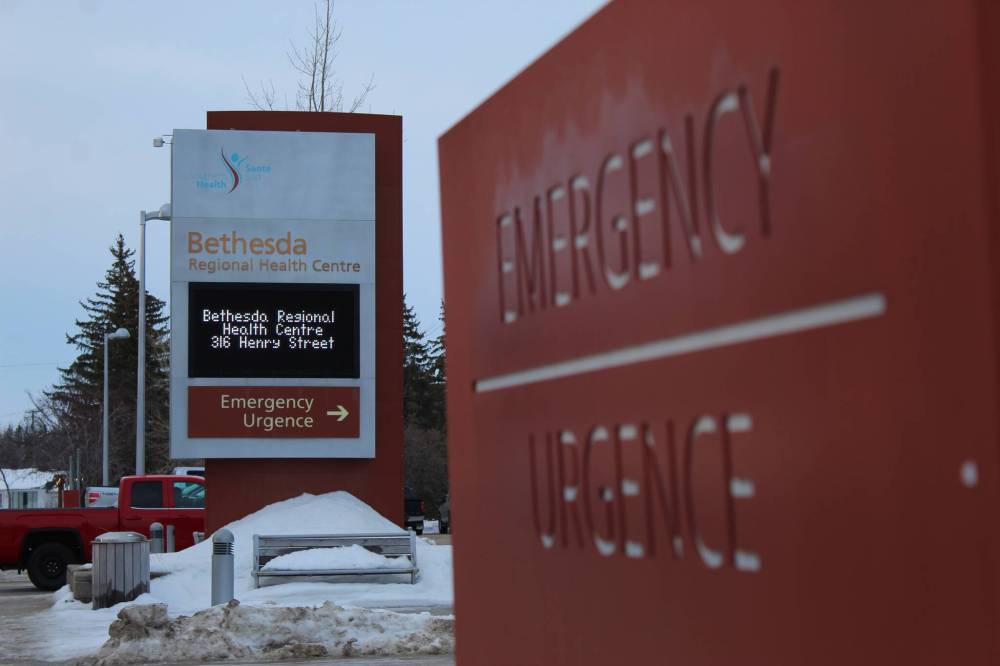
JORDAN ROSS / CARILLON FILES
Forty nurses from Steinbach’s Bethesda Regional Health Centre emergency department signed an open letter that calls out safety concerns created by chronic understaffing.
It is common for patients at the hospital to wait more than an hour before being seen by a triage nurse after they arrive, and eight hours before their conditions are reassessed, the letter states, adding the emergency department’s sole triage nurse can be responsible for up to 30 patients at a time.
Manitoba Nurses Union president Darlene Jackson said some rural hospitals, including Bethesda, are experiencing an influx of ER patients from Winnipeg — approximately 60 kilometres away — attempting to avoid lengthy wait times at the city’s three ERs.
The rural hospitals aren’t equipped to handle the patient surge, Jackson said.
“There’s just no possible way one person can do it all,” she said.
Triage nurses are responsible for assessing the severity of incoming patients’ conditions, determining the urgency with which they need to be treated. The nurses are also required to reassess waiting patients to see if their conditions have changed.
Jackson said the situation leaves patients at risk of falling through the cracks raises the chances of critical incidents occurring.
“We’ve had deaths in our emergency rooms,” she said. “That reassessment is very important because that gives you an idea when someone is getting sicker in your waiting room and needs to be seen sooner.”
The province’s latest critical incident reports state there were 16 deaths and 43 major injuries between April 1 and Sept. 30, 2025. Some critical incidents were a result of patients experiencing gaps in care or delays in assessments or treatments.
Bethesda nurses have submitted staffing workload forms and safety reports detailing near-misses in the waiting-room and triage areas of the emergency department, the letter states, adding the issue has been taken to hospital management several times for more than a year but the concerns have been met with “excuses, blaming, and nescient advice.”
The hospital recently conducted a month-long trial with a second triage nurse in the department. According to the open letter, staff reported that on days that the shift was filled it improved safety, yet there has been no further communication about whether a second triage nurse will be hired permanently.
“As emergency department nurses, we understand that the nature of our job is unpredictable; that there will be ebbs and flows in the volume and acuity that we treat. What we are facing is a crisis where we are just managing at baseline, and not able to compensate or recover when faced with any crisis or influx,” the letter says.
Jackson says based on the letter and conversations with nurses, the workers are not meeting Canadian Triage and Acuity Scale guidelines, a standardized scale used in emergency departments to prioritize care based on a patient’s acuity level.
CTAS levels 1 through 5 range from someone needing constant care to someone needing a reassessment every two hours.
The Free Press sent a list of questions about the letter and request for another triage nurse to Southern Health Tuesday morning, but an unnamed spokesperson said in an email the health authority would not be able to answer them by the end of the day.
Southern Health had a 25 per cent nurse vacancy rate in January, according to data provided by the union last month.
In June the province released a report put forth by the Manitoba Nurse-Patient Ratio subcommittee, which laid out minimum staffing ratios in all areas of hospital and long-term care facilities.
The recommendations included guidelines for the number of triage nurses that should be stationed in emergency departments based on the number of annual patient visits. For Bethesda’s emergency room, the report recommends one triage nurse and one additional nurse during peak times, with a minimum of one additional nurse dedicated to reassessing patients in the waiting room.

Bethesda sees between 15,000 and 25,000 visits annually.
The health minister was not made available for an interview. An emailed statement attributed to Asagwara said the department was recently made aware of the nurses’ concerns and has been working with the regional authority to assess its needs.
The province will be exploring options to address the challenges raised, including adding more nurses, Asagwara’s statement said.
In early June the health minister did not have a timeline for implementing minimum staffing levels recommended by the provincial subcommittee, and said the implementation task force will look at the committee’s recommendations and then figure out how best to deliver on the commitment.
nicole.buffie@freepress.mb.ca
Nicole Buffie
Multimedia producer
Nicole Buffie is a reporter for the Free Press city desk. Born and bred in Winnipeg, Nicole graduated from Red River College’s Creative Communications program in 2020 and worked as a reporter throughout Manitoba before joining the Free Press newsroom as a multimedia producer in 2023. Read more about Nicole.
Every piece of reporting Nicole produces is reviewed by an editing team before it is posted online or published in print — part of the Free Press‘s tradition, since 1872, of producing reliable independent journalism. Read more about Free Press’s history and mandate, and learn how our newsroom operates.
Our newsroom depends on a growing audience of readers to power our journalism. If you are not a paid reader, please consider becoming a subscriber.
Our newsroom depends on its audience of readers to power our journalism. Thank you for your support.
Nicole Buffie
Multimedia producer
Nicole Buffie is a reporter for the Free Press city desk. Born and bred in Winnipeg, Nicole graduated from Red River College’s Creative Communications program in 2020 and worked as a reporter throughout Manitoba before joining the Free Press newsroom as a multimedia producer in 2023. Read more about Nicole.
Every piece of reporting Nicole produces is reviewed by an editing team before it is posted online or published in print — part of the Free Press‘s tradition, since 1872, of producing reliable independent journalism. Read more about Free Press’s history and mandate, and learn how our newsroom operates.
Our newsroom depends on a growing audience of readers to power our journalism. If you are not a paid reader, please consider becoming a subscriber.
Our newsroom depends on its audience of readers to power our journalism. Thank you for your support.
Related Articles
Winnipeggers hoping for shorter waits in rural ERs delay care for all, Selkirk nurse says

Advertisement Advertise With Us
Advertisement Advertise With Us