

Physical activity ‘for every single child’
Manitoba announces phys-ed curriculum overhaul; students must show up to gym class to graduate high school

Advertisement
Read this article for free:
or
Already have an account? Log in here »
To continue reading, please subscribe:

Digital Subscription
One year of digital access for only $205*
- Enjoy unlimited reading on winnipegfreepress.com
- Read the E-Edition, our digital replica newspaper
- Access News Break, our award-winning app
- Play interactive puzzles
*First annual payment billed as $205.00 + GST for one year. This annual subscription will automatically renew at $233.00 + GST every 52 weeks (10% off the regular annual price of $259.35). Offer available to new and qualified returning subscribers only. Cancel any time.
To continue reading, please subscribe:
Add Free Press access to your Brandon Sun subscription for only an additional
$1 for the first 4 weeks*
- Enjoy unlimited reading on winnipegfreepress.com
- Read the E-Edition, our digital replica newspaper
- Access News Break, our award-winning app
- Play interactive puzzles
*Your next Brandon Sun subscription payment will increase by $1.00 and you will be charged $17.95 plus GST for four weeks. After four weeks, your payment will increase to $24.95 plus GST every four weeks.
Read unlimited articles for free today:
or
Already have an account? Log in here »
Manitoba is overhauling phys-ed class and requiring all high school students to regularly work up a sweat on school grounds to graduate.
Premier Wab Kinew announced on Thursday that a new curriculum is being piloted across the kindergarten to Grade 12 system this fall.
Changes to phys-ed and health education — which apply to all grades, but Grade 11 and 12 students, in particular — will ensure these mandatory subjects are delivered entirely in-person, starting in the 2028-29 school year.
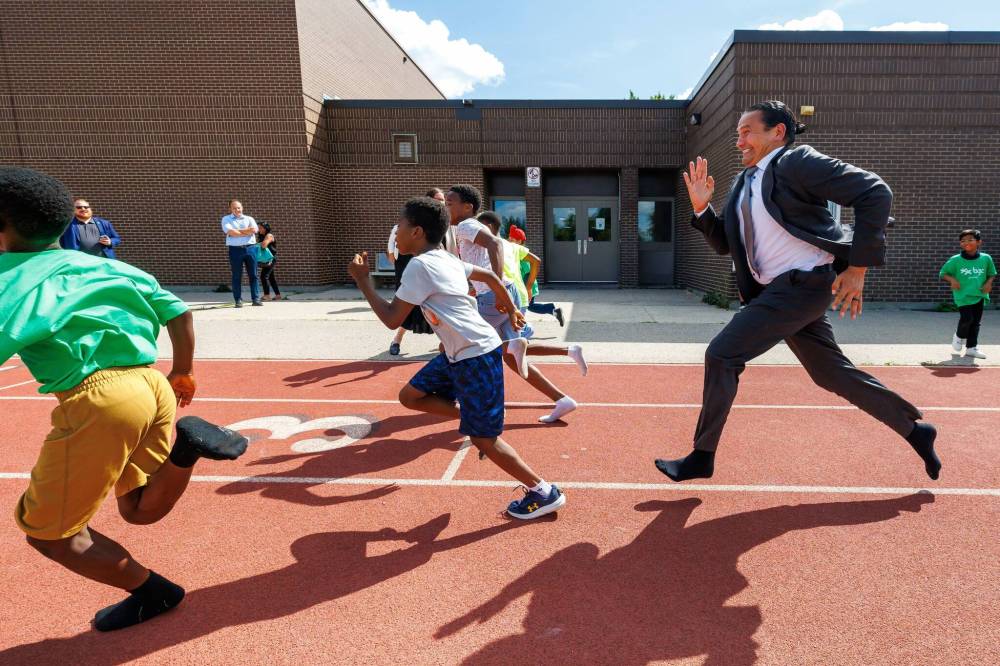
The policy is called “Every Body, Every Day.”
“When we talk about health in Manitoba, this is a category where, unfortunately, we’ve been the leader in too many negative areas,” Kinew told a news conference at Victor Mager School in St. Vital.
“Areas like the prevalence of juvenile diabetes, even child mortality. This curriculum is going to make Manitoba a leader across the country. We are going to have the highest standard for making sure that kids are active.”
Manitoba is already an outlier in Canada in that phys-ed and health classes are compulsory in all levels.
Final-year courses are delivered in a range of formats, with in-class time ranging from 25 per cent to 100 per cent. Teens have long had the option to exercise independently and submit their hours to obtain a credit after Grade 10.
Cyril Indome said the set-up encourages students to explore different activities that schools can’t always offer, such as hiking and swimming, to build healthy habits outside the classroom.
“It’s very difficult to hold students accountable for (what they put on their independent study sheets),” said the former phys-ed teacher who is now a high school principal in Pinawa.
He touted his team’s approach to promoting exercise by taking students outside regularly to row, ice-fish and get exposed to exercise outside of traditional sports.
Indome said he looks forward to reading the renewed curriculum because there have been many changes, including the release of a new national food guide, since the last update.
Education Minister Tracy Schmidt said new K-12 course content and outcomes will be published before Sept. 8.
“The habits that we teach our kids today, the narratives that we tell them around what it means to be healthy are the foundations of what our province will look like 25 years from now,” she said. “The message of this curriculum is that physical activity and healthy living are for everyone, for every single child.”
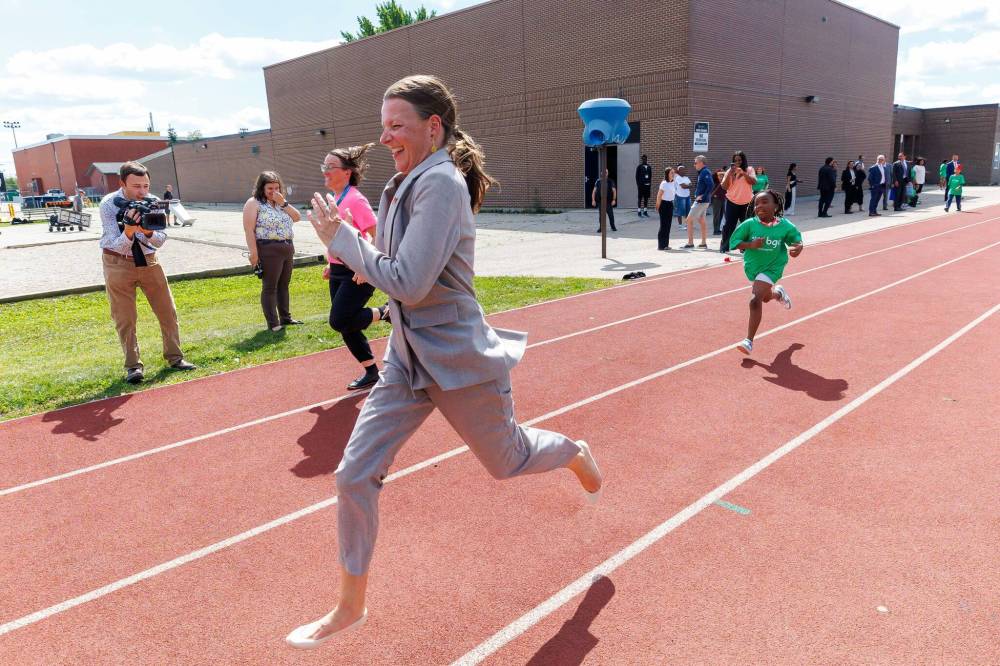
More than two dozen schools have signed up to test out the curriculum whose central message is, in the minister’s words, “physical activity and healthy living are for everyone.”
Schmidt and Kinew, along with Dr. Brent Roussin, Manitoba’s chief provincial public health officer, gave an overview of their contents on Thursday.
Officials spoke about a new emphasis on nutrition, sleeping habits and wearing helmets on e-bikes, as well as explicit discussions about social media and online bullying.
The curriculum also explores health risks associated with sedentary behaviours, screen time and sugary drinks, they said.
Kinew told reporters soft drinks cause “more damage to Manitoba” than alcohol and methamphetamine.
Yussuff Darasimi, 16, said phys-ed is one of her favourite subjects at Dakota Collegiate because it provides a break from desk work and helps her burn off energy.
The Grade 11 student said she loves playing basketball, but she’s worried making all high schoolers attend class to workout may encourage some kids to skip class. The status quo gave students flexibility, she said.
Speaking at a podium set up on a school playground, with Yussuff and other students playing soccer in the background, the premier acknowledged some students will be nervous about the changes.
“We are going to change gym to work for you, too,” Kinew said.
“We’ve got to include everybody, and what does that mean? If there’s a barrier to gym class, if a student doesn’t want to get changed for gym class, then let’s not make them get changed.”
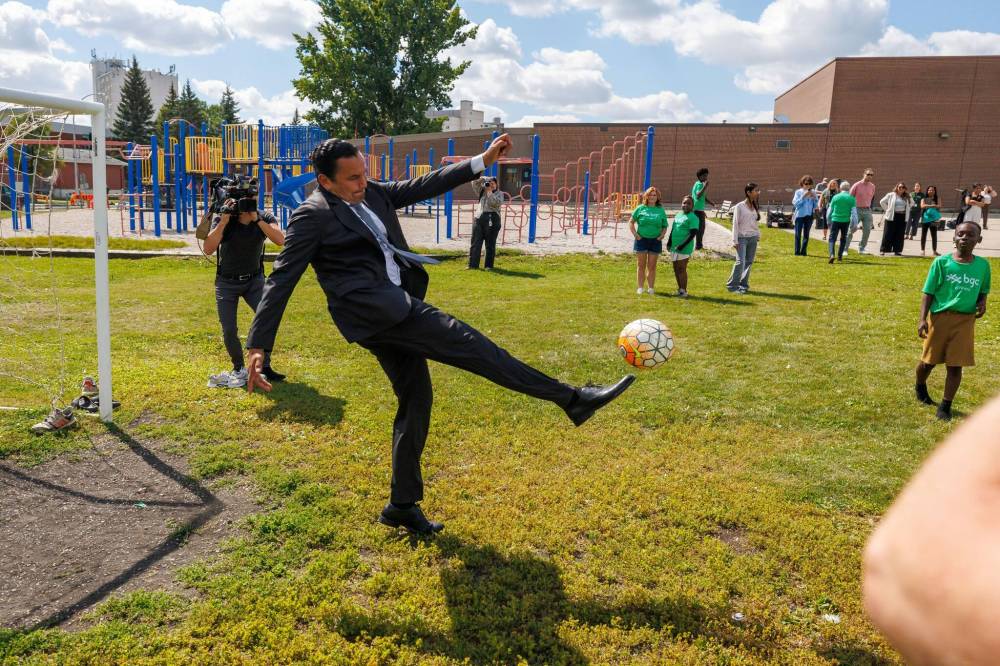
He said students will no longer be able to submit a doctor’s note to get out of phys-ed, but there will be flexibility to accommodate different skills, abilities and health concerns.
Manitoba Teachers’ Society president Lillian Klausen noted that pilot participants don’t have much prep time.
At the same time, Klausen said teachers are relieved to hear the “long-time-in-the-making” curriculum is finally coming out.
The Physical and Health Educators of Manitoba, one of the union’s affiliate groups, has endorsed the rollout.
PC education critic Wayne Ewasko flagged concerns about the logistics of expanding full-time programs when many schools are strapped for space.
“Where are they going to hold these classes? Where are they going to put these students?” said Ewasko, who worked as a guidance counsellor before he joined the Progressive Conservative caucus.
“We’re a couple of days away from September. All the scheduling has been done already.”
The Manitoba Commission on Kindergarten to Grade 12 Education, established in 2019, collected feedback about status quo curriculum from teachers, parents and members of the public.
One of its 75 recommendations called on the province to replace its requirement that all Grade 11 and 12 students complete phys-ed.
The commission called for “new and more rigorous” credits instead of the current pass-or-fail model.
Students should learn about “the concept of a healthy mind, body and lifestyle” and life skills, including financial management, nutrition, entrepreneurialism, employability and parenting, the panel said.
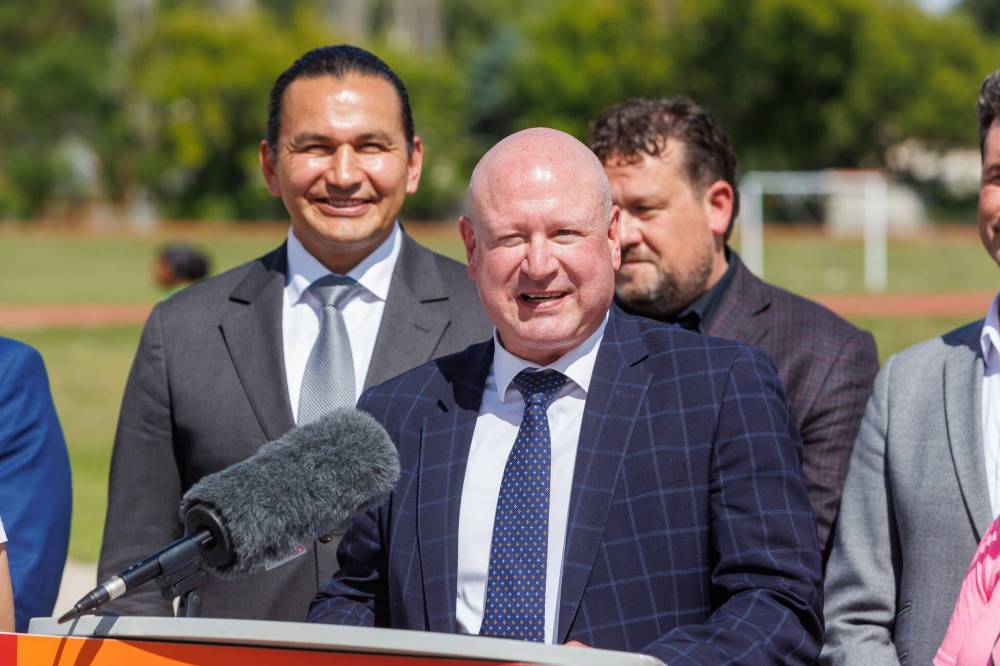
MIKE DEAL / FREE PRESS
Dr. Brent Roussin, chief provincial public health officer, speaks during Thursday's announcement.The final report sparked outcry among phys-ed teachers when it was released in March 2021, about a year later than scheduled owing to COVID-19 disruptions.
Dr. Alon Altman, president of Doctors Manitoba, endorsed the province’s plan to require older students to engage in more physical activitiy on-site throughout the school year.

“Manitoba’s doctors support more physical activity and health education for students at all levels,” Altman said in a statement.
“Especially as we see more and more young people spending more time on their screens and less time being active.”
The Kinew government indicated it has yet to decide if Grade 11 and 12 phys-ed will continue to be graded on a pass or fail basis or percentages will be introduced for the revamped courses.
— with files from Chris Kitching
maggie.macintosh@freepress.mb.ca
Maggie Macintosh
Education reporter
Maggie Macintosh reports on education for the Free Press. Originally from Hamilton, Ont., she first reported for the Free Press in 2017. Read more about Maggie.
Funding for the Free Press education reporter comes from the Government of Canada through the Local Journalism Initiative.
Every piece of reporting Maggie produces is reviewed by an editing team before it is posted online or published in print — part of the Free Press‘s tradition, since 1872, of producing reliable independent journalism. Read more about Free Press’s history and mandate, and learn how our newsroom operates.
Our newsroom depends on a growing audience of readers to power our journalism. If you are not a paid reader, please consider becoming a subscriber.
Our newsroom depends on its audience of readers to power our journalism. Thank you for your support.
Maggie Macintosh
Education reporter
Maggie Macintosh reports on education for the Free Press. Originally from Hamilton, Ont., she first reported for the Free Press in 2017. Read more about Maggie.
Funding for the Free Press education reporter comes from the Government of Canada through the Local Journalism Initiative.
Every piece of reporting Maggie produces is reviewed by an editing team before it is posted online or published in print — part of the Free Press‘s tradition, since 1872, of producing reliable independent journalism. Read more about Free Press’s history and mandate, and learn how our newsroom operates.
Our newsroom depends on a growing audience of readers to power our journalism. If you are not a paid reader, please consider becoming a subscriber.
Our newsroom depends on its audience of readers to power our journalism. Thank you for your support.
Related Articles
Brandon resident‘s volunteer journey grounded in giving kids sport opportunities
Advertisement Advertise With Us
Advertisement Advertise With Us
History
Updated on Thursday, August 27, 2026 2:00 PM CDT: Adds quotes from news conference, changes headline and deck
Updated on Thursday, August 27, 2026 6:47 PM CDT: Adds details, photos.
Updated on Thursday, August 27, 2026 6:55 PM CDT: Formatting