Renewed spirit and life $21-M revamp expands, modernizes Indigenous treatment centre

Don Robinson knows first-hand that many people don’t get sober by themselves.

Read this article for free:


or

Already have an account? Log in here »

To continue reading, please subscribe:

Subscribe and receive a limited-edition Free Press branded hat or tote.

Digital Subscription

One year of digital access for only $205*

  • Enjoy unlimited reading on winnipegfreepress.com
  • Read the E-Edition, our digital replica newspaper
  • Access News Break, our award-winning app
  • Play interactive puzzles

*First annual payment billed as $205.00 + GST for one year. This annual subscription will automatically renew at $233.00 + GST every 52 weeks (10% off the regular annual price of $259.35). Offer available to new and qualified returning subscribers only. Cancel any time.

To continue reading, please subscribe:

Add Free Press access to your Brandon Sun subscription for only an additional

$1 for the first 4 weeks*

  • Enjoy unlimited reading on winnipegfreepress.com
  • Read the E-Edition, our digital replica newspaper
  • Access News Break, our award-winning app
  • Play interactive puzzles
Start now

*Your next Brandon Sun subscription payment will increase by $1.00 and you will be charged $17.95 plus GST for four weeks. After four weeks, your payment will increase to $24.95 plus GST every four weeks.

Don Robinson knows first-hand that many people don’t get sober by themselves.

In late June 1984, Robinson downed his last drink. His recovery began at Pritchard House in Winnipeg’s North End, a 22-bed treatment facility run by the Native Addictions Council of Manitoba.

“I didn’t get sober by myself,” said Robinson, a member of Bunibonibee Cree Nation who now works in grief and trauma counselling and traditional knowledge as an elder at Ka Ni Kanichihk Inc.
MIKAELA MACKENZIE / FREE PRESS 
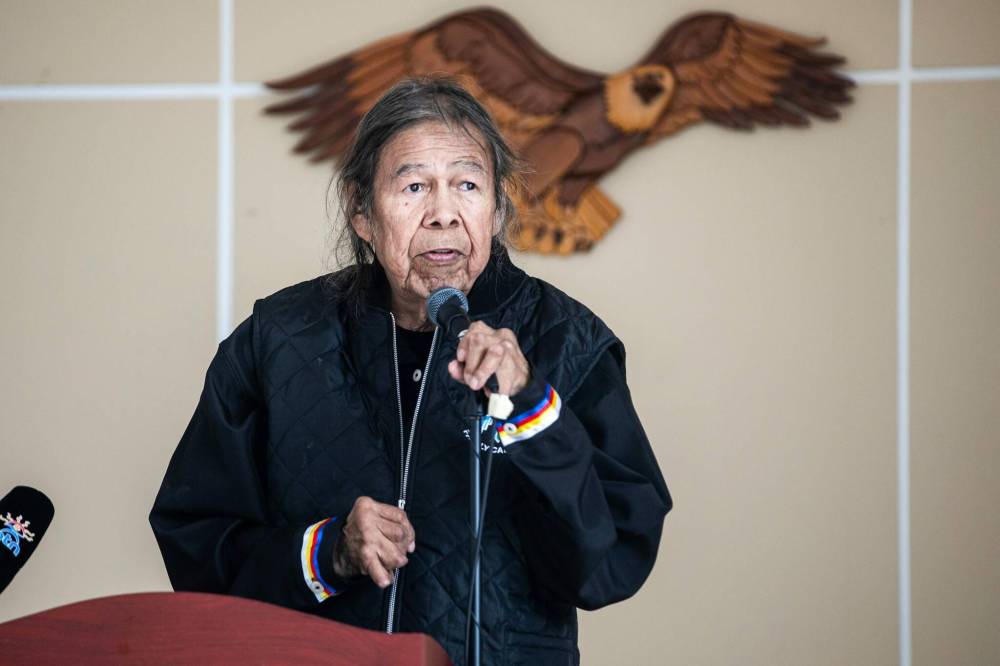
Don Robinson, who is 42 years sober, speaks at the grand re-opening ceremony for the Native Addictions Council of Manitoba's renovated space on Salter Street Tuesday.
MIKAELA MACKENZIE / FREE PRESS

Don Robinson, who is 42 years sober, speaks at the grand re-opening ceremony for the Native Addictions Council of Manitoba's renovated space on Salter Street Tuesday.

More than four decades later, Robinson was back at the council on Monday, crowded into a room at its newly renovated treatment centre at 160 Salter St. — a place he once turned to for help and where he helps others now.

“Part of my sobriety is giving back, giving 12-step talks,” Robinson said. “I tell them, ‘In order to sober up, you need to start a new life. That old life doesn’t work anymore. You have to start a new life. The addiction took you. To start a new life you have to start fresh, you got to start not using. You have to detox your mind… your body.’”

The organization celebrated the reopening of the Salter Street facility Monday following a redevelopment funded largely by the federal government, which contributed $21 million.
MIKAELA MACKENZIE / FREE PRESS 
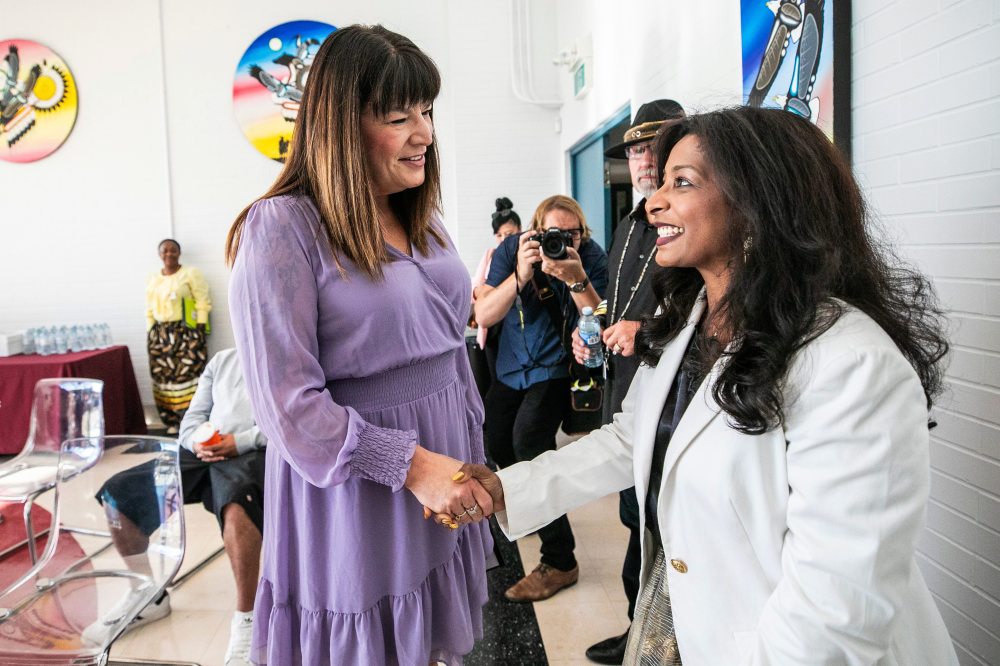
Manitoba's Housing, Addictions and Homelessness Minister Bernadette Smith, left, with Native Addictions Council of Manitoba executive director Sandra Malcolm.
MIKAELA MACKENZIE / FREE PRESS

Manitoba's Housing, Addictions and Homelessness Minister Bernadette Smith, left, with Native Addictions Council of Manitoba executive director Sandra Malcolm. "These renovations mean renewed spirit and renewed life," Malcolm says.

The revamped centre has more than double the group’s residential treatment capacity: to 22 beds from 10 beds.

“These renovations mean renewed spirit and renewed life, where people have an opportunity to come and continue their healing journey,” said executive director Sandra Malcolm.

The century-old building has been updated with green technology that provides 70 per cent fuel reduction savings, over 30 per cent reduction on energy build costs and a reduction of 95 per cent greenhouse gas and CO2 emissions, said Tyler Clegg, president of Parkwest Projects Ltd.
MIKAELA MACKENZIE / FREE PRESS 
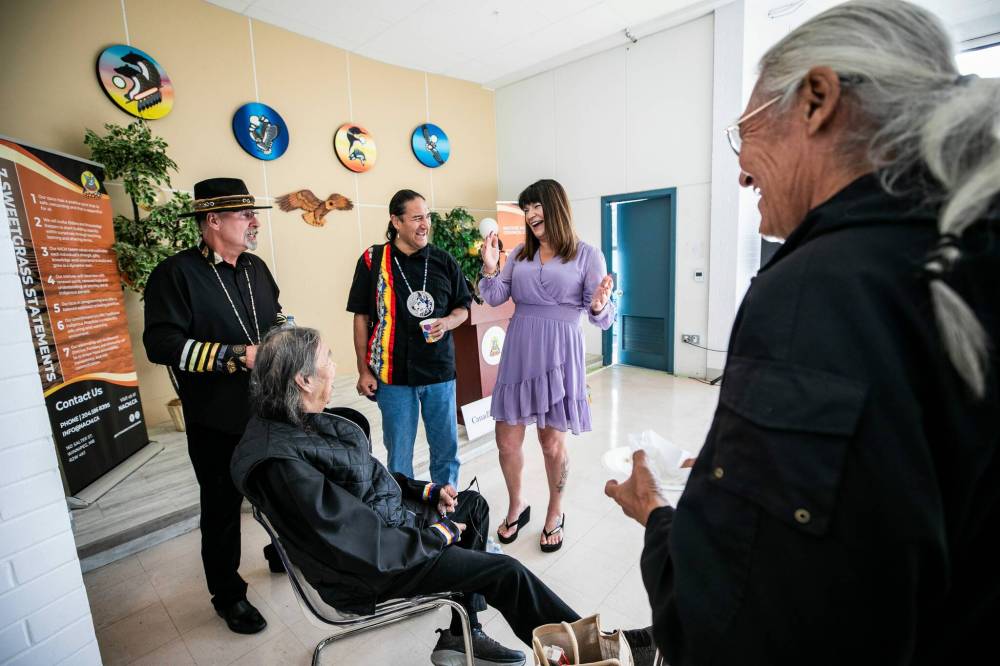
Housing, Addictions and Homelessness Minister Bernadette Smith (centre) chats with Don Robinson (seated), Perry Williams (standing, left) and Parry Francois (standing, centre) during Tuesday's event.
MIKAELA MACKENZIE / FREE PRESS

Housing, Addictions and Homelessness Minister Bernadette Smith (centre) chats with Don Robinson (seated), Perry Williams (standing, left) and Parry Francois (standing, centre) during Tuesday's event.

Other improvements include life safety measures, including a new fire alarm and sprinkler system, new and upgraded mechanical systems, a new heating and cooling system, and amenities such as improved accessibility, gender-neutral and accessible washrooms and a new elevator, which replaced the second-oldest elevator in the province.

“These renovations mean renewed spirit and renewed life, where people have an opportunity to come and continue their healing journey.”

Clegg said new furniture was still arriving, paid for by the grant from the federal government. Dufresne Furniture and Appliance donated bed frames and mattresses.

The organization was founded in 1972 as the Native Alcoholism Council of Manitoba and initially operated from an office garage before moving to 865 Main St.

A year later, the United Church of Canada donated the use of a home at 456 Pritchard Ave. There, the council established the Pritchard House residential treatment program, the first Indigenous-run treatment centre of its kind in Canada.
MIKAELA MACKENZIE / FREE PRESS 
The organization that is now the Native Addictions Council of Manitoba was founded in 1972 and first operated from an office garage.
MIKAELA MACKENZIE / FREE PRESS

The organization that is now the Native Addictions Council of Manitoba was founded in 1972 and first operated from an office garage.

It moved to 160 Salter St. in 1984. A decade later, as illicit drug use became increasingly prevalent, the organization adopted its current name.

In 2000, it became the first treatment centre in Manitoba to be accredited by Accreditation Canada as a health-service provider. It celebrated its 50th anniversary in 2022, a year before Ottawa announced funding for the redevelopment.
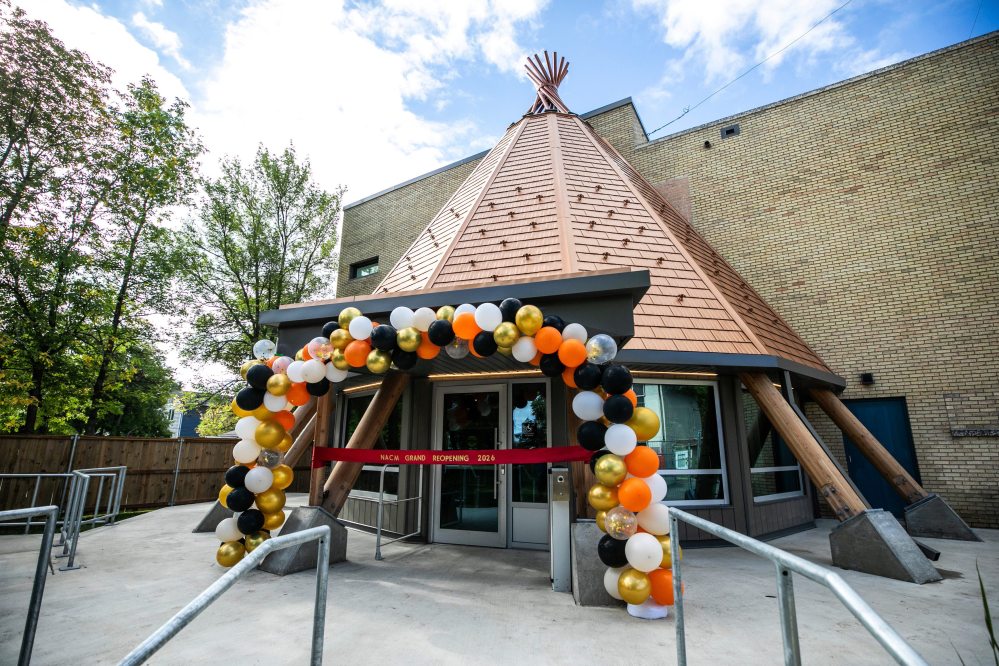
MIKAELA MACKENZIE / FREE PRESS 
The Pritchard House residential treatment program, the first Indigenous-run treatment centre of its kind in Canada, has been operating since 1973. It's been in its existing Salter Street location since 1984.
MIKAELA MACKENZIE / FREE PRESS

The Pritchard House residential treatment program, the first Indigenous-run treatment centre of its kind in Canada, has been operating since 1973. It's been in its existing Salter Street location since 1984.

Today, it runs a six-week residential healing program that combines traditional Indigenous practices with self-discovery and empowerment. The focus is to heal trauma and addiction through love, strength and power. Many of their clients come from northern communities.
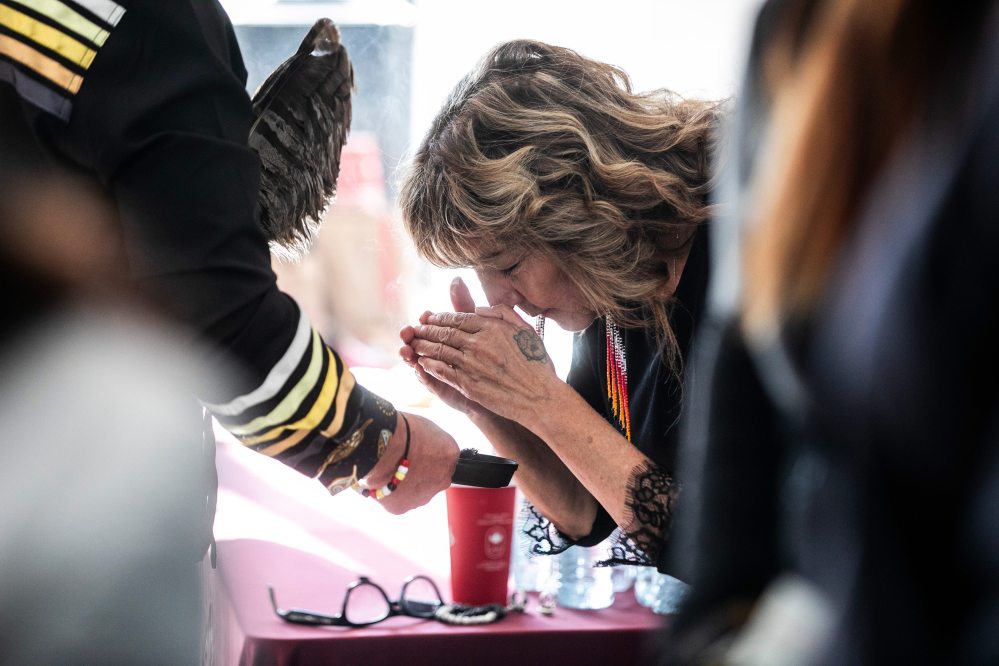
MIKAELA MACKENZIE / FREE PRESS 
Board chairwoman Bernice Thorassie smudges during Tuesday's grand re-opening ceremony.
MIKAELA MACKENZIE / FREE PRESS

Board chairwoman Bernice Thorassie smudges during Tuesday's grand re-opening ceremony.

Those who complete the residential program can move into a five-week recovery and follow-up day program designed to strengthen coping skills, self-awareness and communication, while helping participants better understand grief and loss.

Among its recent graduates is Dewayne Ballantyne, who completed the residential program while it temporarily operated at 1970 Main St. during construction.
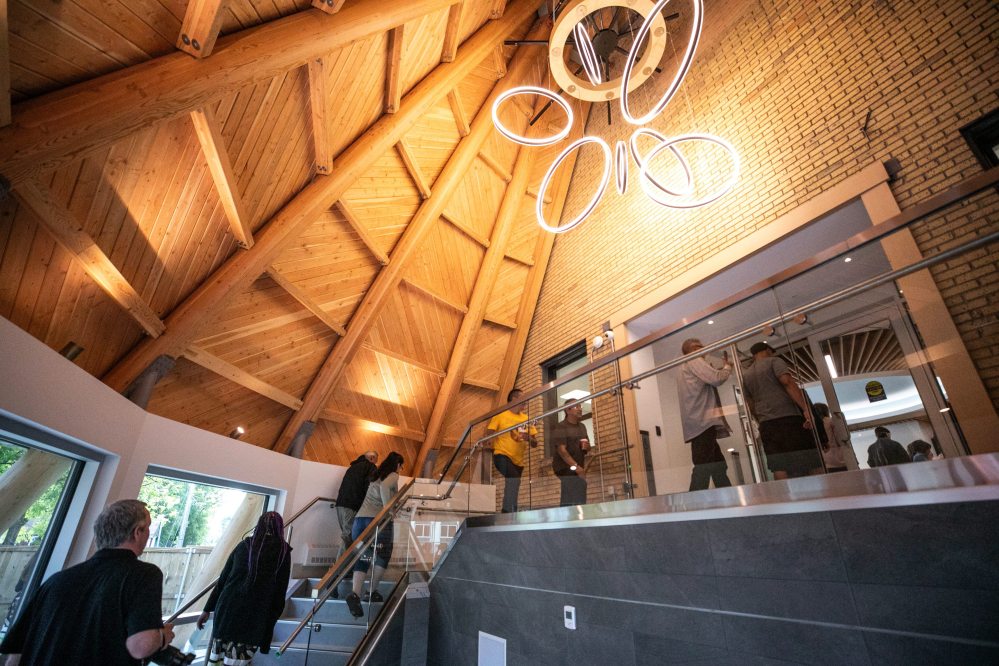
MIKAELA MACKENZIE / FREE PRESS 
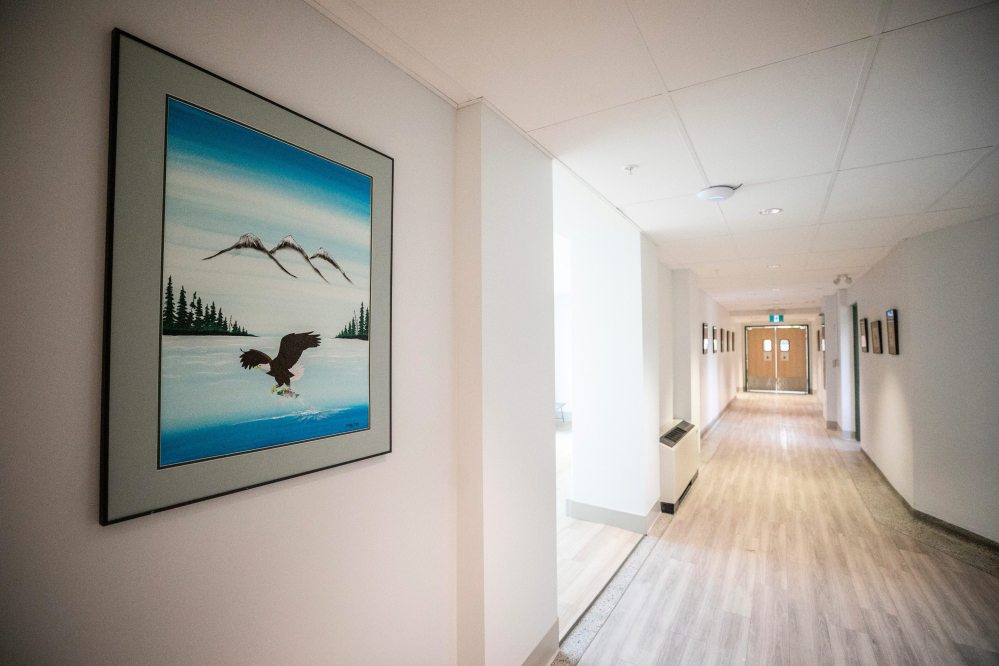
The renovations include a new fire alarm and sprinkler system, a new heating and cooling system, accessible washrooms and energy efficient upgrades.
MIKAELA MACKENZIE / FREE PRESS

The renovations include a new fire alarm and sprinkler system, a new heating and cooling system, accessible washrooms and energy efficient upgrades.

“When I first walked in, I was nervous and anxious, but the moment I stepped in, I knew this was the place to be,” Ballantyne said. “They welcomed me with open arms, nothing but love. I felt safe. Born and raised in the North End, and coming here, it felt safe.

Ballantyne said his time in the program taught him about his triggers and boundaries and helped him reconnect to his culture.

“I used to be in the culture back in the day, but I lost touch,” he said. “I learned to deal with my emotions… they were a roller-coaster. NACM gave me the tools to learn to heal and learn a healthy way, and gave my that spark to reconnect with my culture.

scott.billeck@freepress.mb.ca

Scott Billeck

Scott Billeck
Reporter

Scott Billeck is a general assignment reporter for the Free Press. A Creative Communications graduate from Red River College, Scott has more than a decade’s worth of experience covering hockey, football and global pandemics. He joined the Free Press in 2024.  Read more about Scott.

Every piece of reporting Scott produces is reviewed by an editing team before it is posted online or published in print — part of the Free Press‘s tradition, since 1872, of producing reliable independent journalism. Read more about Free Press’s history and mandate, and learn how our newsroom operates.


Our newsroom depends on a growing audience of readers to power our journalism. If you are not a paid reader, please consider becoming a subscriber.

Our newsroom depends on its audience of readers to power our journalism. Thank you for your support.


Report Error Submit a Tip

More Stories

Jets vets weigh in on franchise goalie Hellebuyck not reporting to training camp

Mike McIntyre 7 minute read Preview

Jets vets weigh in on franchise goalie Hellebuyck not reporting to training camp

Mike McIntyre 7 minute read Thursday, Sep. 17, 2026

Hockey is the ultimate team sport, where it’s supposed to be about the crest on your chest rather than the name on your back.

So how is Connor Hellebuyck’s trade request and subsequent training camp strike playing out inside the Winnipeg Jets locker room — particularly among other core players he’s gone to battle with over the years?

“Obviously the news is heartbreaking,” Jets forward Kyle Connor said Thursday.

“It feels like we had such a special group here and for whatever reason — I can’t speak to the reason until we hear from the man, I’m not going to speculate on what it is but I know that a lot of guys in that room that are heartbroken.”

Read
Thursday, Sep. 17, 2026

Jets GM insists club’s not working under any deadline in netminder’s trade request

Mike McIntyre 7 minute read Preview

Jets GM insists club’s not working under any deadline in netminder’s trade request

Mike McIntyre 7 minute read Thursday, Sep. 17, 2026

Connor Hellebuyck and his family were subject to so much post-Olympic vitriol that both the Winnipeg Jets security team and even police had to get involved.

Read
Thursday, Sep. 17, 2026

American Hostage stars recall warmth of Winnipeggers during brutal winter

Randall King 7 minute read Preview

American Hostage stars recall warmth of Winnipeggers during brutal winter

Randall King 7 minute read Yesterday at 6:13 PM CDT

TORONTO — When you stream the eight-part series American Hostage, a sense of familiarity may strike.

That’s because the show was shot in Winnipeg — especially in the Exchange District — from November of last year to the beginning of February, with Winnipeg portraying Indianapolis circa 1977.

The whole world seemed to be watching that midwest American city that year as a hostage crisis unfolded involving one Tony Kiritsis, an angry man who goes ballistic when a mortgage brokerage was poised to foreclose on property he had dreamed of developing into a shopping centre.

Kiritsis kidnapped his mortgage broker, Richard Hall, wiring a shotgun to the back of his head, and demanded a public airing of his grievances, with the reluctant help of popular radio broadcaster Fred Heckman.

Read
Yesterday at 6:13 PM CDT

A life’s story: activist, educator, organizer knew the true meaning of community

Janine LeGal 8 minute read Preview

A life’s story: activist, educator, organizer knew the true meaning of community

Janine LeGal 8 minute read 3:00 AM CDT

Somewhere between a love for sharing stories and a love of community connections, Michael (Mike) Maunder lived his life. Giving voice to people and neighbourhoods was a passion for the natural-born community organizer.

An author, teacher and principal, Maunder lived in a one-bedroom apartment in West Broadway and devoted himself to community development, education and neighbourhood renewal.

He maintained a connection with Augustine United Church, whose commitment to social justice he appreciated, volunteered at the Sandy-Saulteaux Spiritual Centre, and found comfort in a Buddhist prayer community.

Maunder died on July 15 at the age of 80.

Read
3:00 AM CDT

Klein has burned bridges with PM, Gillingham says

Joyanne Pursaga 3 minute read Preview

Klein has burned bridges with PM, Gillingham says

Joyanne Pursaga 3 minute read Yesterday at 5:51 PM CDT

One mayoral candidate accused another of writing a column so critical it could compromise his ability to work with the federal government.

Read
Yesterday at 5:51 PM CDT

Kinew delivered what most of us wanted; now we’ll have to deal with the consequences

Dan Lett 5 minute read Preview

Kinew delivered what most of us wanted; now we’ll have to deal with the consequences

Dan Lett 5 minute read Updated: Yesterday at 8:43 AM CDT

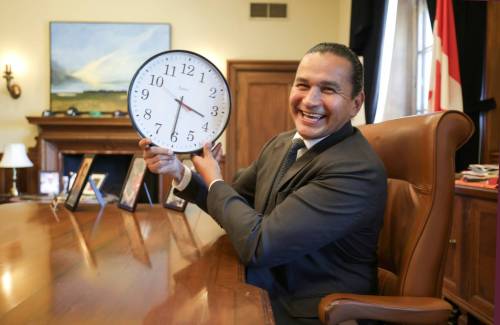
Premier Wab Kinew has decided to adopt permanent daylight savings time, which means a permanent end to the spring forward, fall back tradition of adjusting our clocks. And absolutely no one is surprised.

Read
Updated: Yesterday at 8:43 AM CDT