Woodford Reserve tried to undermine unionization effort at its Kentucky distillery, judge rules
Advertisement
Read this article for free:
or
Already have an account? Log in here »
To continue reading, please subscribe:

Digital Subscription
One year of digital access for only $205*
- Enjoy unlimited reading on winnipegfreepress.com
- Read the E-Edition, our digital replica newspaper
- Access News Break, our award-winning app
- Play interactive puzzles
*First annual payment billed as $205.00 + GST for one year. This annual subscription will automatically renew at $233.00 + GST every 52 weeks (10% off the regular annual price of $259.35). Offer available to new and qualified returning subscribers only. Cancel any time.
To continue reading, please subscribe:
Add Free Press access to your Brandon Sun subscription for only an additional
$1 for the first 4 weeks*
- Enjoy unlimited reading on winnipegfreepress.com
- Read the E-Edition, our digital replica newspaper
- Access News Break, our award-winning app
- Play interactive puzzles
*Your next Brandon Sun subscription payment will increase by $1.00 and you will be charged $17.95 plus GST for four weeks. After four weeks, your payment will increase to $24.95 plus GST every four weeks.
Read unlimited articles for free today:
or
Already have an account? Log in here »
Hey there, time traveller!
This article was published 10/04/2024 (901 days ago), so information in it may no longer be current.
Woodford Reserve undermined unionization efforts at its Kentucky distillery by awarding pay raises, relaxing its vacation policy and handing out bottles of whiskey to workers before a vote on whether to unionize, a federal judge ruled.
The sweeteners the prominent bourbon maker offered to workers were timed to influence the outcome of the unionization vote, Andrew S. Gollin, an administrative law judge with the National Labor Relations Board, wrote in his decision Monday.
The 2022 unionization effort failed, but Gollin set aside the election results and said Woodford Reserve and its parent company should recognize and bargain with a local Teamsters union. Woodford Reserve is part of spirits giant Brown-Forman Corp., based in Louisville, Kentucky.
“Overall, the timing and circumstances surrounding these actions are more than sufficient to infer unlawful motivation,” Gollin wrote in his decision.
The company said it took each of the actions in question for legitimate business reasons that were unrelated to the union campaign. But the judge disagreed, saying the company engaged in unfair labor practices in violation of the National Labor Relations Act. The company failed to prove that the pay raise, relaxed vacation policy and whiskey giveaway would have occurred in the absence of the union campaign, he said.
Brown-Forman said it is reviewing the ruling and determining its next steps. The judge’s order can be appealed to the NLRB. The decision also was significant because it was the second administrative law judge bargaining order since the NLRB set a new framework for union elections last year, said Kayla Blado, a spokeswoman for the board.
Joe Lance, vice president and business agent for Teamsters Local 651, said the judge made the “right call.”
“This is a clear cut example of unlawful interference in what should have been a free and fair election,” Lance said in a statement. “We hope this serves as a deterrent to other employers, who will hopefully think twice before they violate federal labor laws.”
Episodes of labor unrest have occurred in recent years in Kentucky’s renowned bourbon industry, including strikes that involved prominent producers including Jim Beam, Four Roses and Heaven Hill.
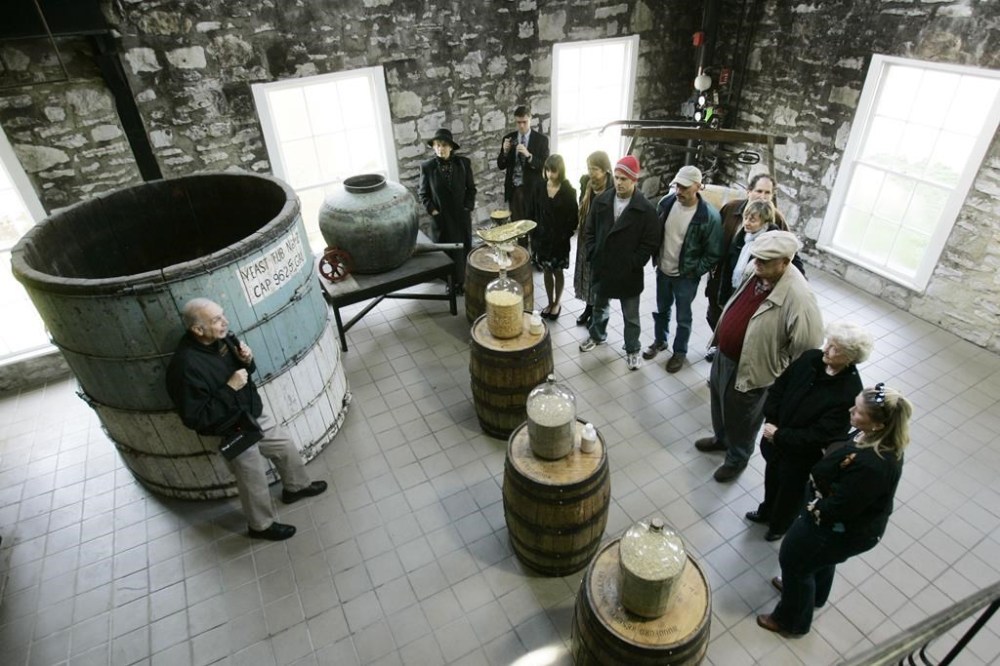
The union-organizing campaign at Woodford Reserve began in August 2022 at the historic distillery in the heart of Kentucky’s picturesque bluegrass region. The primary motivation was to seek higher wages.
Ahead of the election, distillery managers told employees they would receive a $4 per hour across-the-board pay raise. Workers started seeing the increase on their paychecks about a week before the election. Once the pay raise was announced, employee interest in the union waned, the judge noted.
Woodford also changed its merit raise and vacation policies and then handed out a bottle of its Double Oaked whiskey, valued at around $30, to each production employee a week before the election.

Once the election took place, the tally showed 14 votes in favor of unionization and 45 against.
The union responded by filing an unfair labor practice charge. After the pay raise, one employee told a union organizer that he was taking “the bribe” and was no longer supporting the union, the judge noted. Another employee indicated he was taking the raise and “backing down.” The company said the pay increase was meant to deal with worker retention and recruitment issues.
Woodford had given a $1 per hour, across-the-board wage increase earlier in the year. Interest in organizing a union grew after that as employees viewed the increase as inadequate, the judge noted.
The decision to relax merit pay and vacation policies was due to a change in human resources leadership, the company said. And gifting a bottle of whiskey was nothing more than a morale booster routinely given to Woodford employees for a variety of reasons, including meeting production goals, it said.
The judge saw it differently. He said the wage and vacation actions were meant to undermine support for the union organizing campaign, while the whiskey handout was intended to influence the vote.