‘We can’t police our way out of this’ The shocking violence and staggering financial costs associated with out-of-control retail theft in Winnipeg have triggered a community-wide effort to find a solution to what’s clearly not ‘a victimless crime’
Read this article for free:
or
Already have an account? Log in here »
To continue reading, please subscribe:

Digital Subscription
One year of digital access for only $205*
- Enjoy unlimited reading on winnipegfreepress.com
- Read the E-Edition, our digital replica newspaper
- Access News Break, our award-winning app
- Play interactive puzzles
*First annual payment billed as $205.00 + GST for one year. This annual subscription will automatically renew at $233.00 + GST every 52 weeks (10% off the regular annual price of $259.35). Offer available to new and qualified returning subscribers only. Cancel any time.
To continue reading, please subscribe:
Add Free Press access to your Brandon Sun subscription for only an additional
$1 for the first 4 weeks*
- Enjoy unlimited reading on winnipegfreepress.com
- Read the E-Edition, our digital replica newspaper
- Access News Break, our award-winning app
- Play interactive puzzles
*Your next Brandon Sun subscription payment will increase by $1.00 and you will be charged $17.95 plus GST for four weeks. After four weeks, your payment will increase to $24.95 plus GST every four weeks.
Read unlimited articles for free today:
or
Already have an account? Log in here »
Hey there, time traveller!
This article was published 03/06/2024 (855 days ago), so information in it may no longer be current.
This is the second of a two-part series on shoplifting. In part one, reporter Mike McIntyre examined the growing problem in our community and what’s driving it. Today, he explores possible solutions.
Jennifer McKinnon recognized the signs immediately as she browsed the aisles of Sephora on a day off from work.
A young woman, who appeared to be under the influence, was indiscriminately filling her basket with beauty products at such a rate she didn’t seem to notice what they were.
“I was thinking to myself, ‘OK, how am I going to intervene here?’” McKinnon recalls.

Not wanting to make a scene, she decided a subtle approach was best and calmly explained to the customer she was under suspicion of a potential theft in progress.
“I said, ‘Let me help you. Why don’t I take your items and put them on the counter, and you’re free to continue shopping until you’re ready to pay for them,’” McKinnon says.
“She doubled down and actually went to the counter. She had them ring them all through — $7,800 in product — and right at the moment to pay she was like, ‘Oh, I want to get the rewards points, I don’t have my card. I’m going to go and come back.’”
The jig was up. A significant theft was foiled by McKinnon, who is no ordinary Good Samaritan. She’s the inspector of the Winnipeg Police Service’s major crimes unit, tasked with trying to curtail what has become an epidemic in the city.
Her personal experience is not uncommon. Off-duty officers are trying to thwart thefts while shopping, she says.
“It goes right up to our executive-level management. I’ll come in from days off and they’ll tell me a story about being at this store and this happened and they intervened. So it’s really hitting home.”
Related Articles
Lack of consequences for shoplifting hammers fed-up retailers, feeds $5-billion ‘industry’ in Canada














McKinnon was in the right place at the right time, but that’s more of the exception than the norm.
“We can’t police our way out of this. If I thought that, I’d probably sleep better at night,” she says. “It’s about leveraging partnerships within our communities and working together.”
How to fix the problem is a $200-million question, which is how much experts estimate is swiped by thieves in Manitoba annually.
The rate has been increasing threefold in recent years, with an eye-popping spike in violence, as well. It’s no longer just about desperation. Instead, an element of criminal organization and sophistication is driving the trend.
Here are six questions facing various stakeholders:
How about more enforcement?
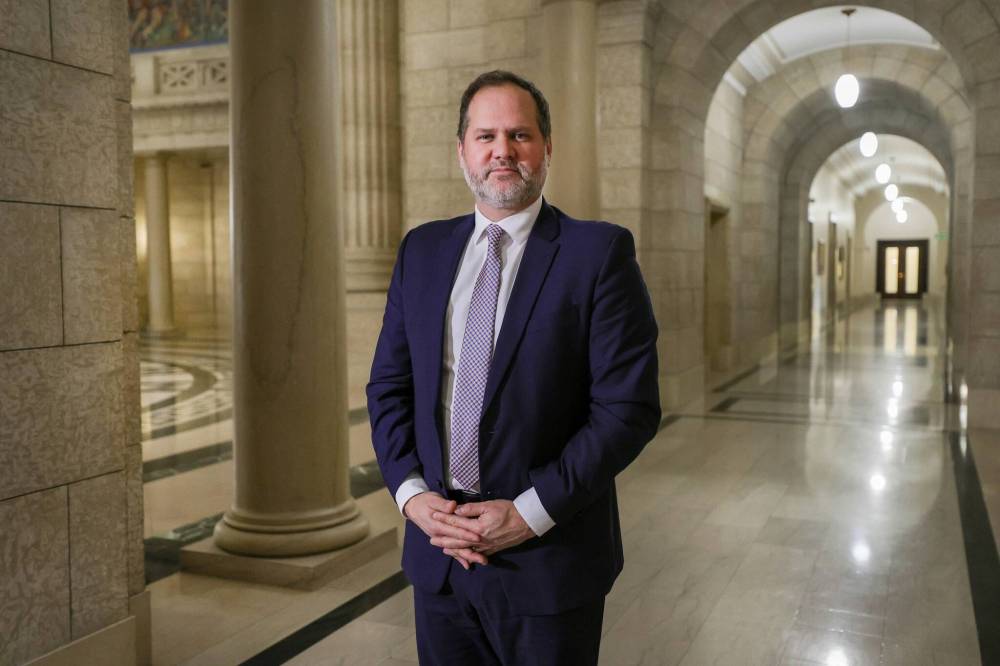
The NDP government announced last week it would fund additional Winnipeg police officers and overtime hours in a bid to combat a spike in shoplifting and other crimes against retailers.
“The message to those who feel they can steal and threaten without consequence is simple: while we’ll be there to offer support and alternatives, if you choose a better path, we will also ensure that there are consequences for your actions,” Justice Minister Matt Wiebe said.
Problem is, that tough talk isn’t backed up with tangible actions.
Officers putting in shifts at big chain stores, including Safeway and Superstore, are often under instruction not to arrest people caught with less than $1,000 in goods in order to contain costs associated with prosecution.
Recovering merchandise and issuing a six-month ban is a more typical route. But that has its flaws. Without charges, a culprit’s name isn’t ending up on a database for tracking.
“You could go to the Fermor Superstore and I could catch you with $900 worth of merchandise, and now you’re banned from there for six months.
“But then (you) could just go to the Kenaston Superstore the next day and there’s no system for (the store) to run or for us to know, ‘Hey, this guy’s already been caught three times at three different Superstores in the city’,” says a veteran police officer who has done paid duty at grocery stores for several years.
“If you get caught once out of five times, and you’re only being barred from the store… really, that one time you got caught is nothing.”

The WPS has tried a “blitz” model that involved targeted operations at high-risk locations. Police have done blitzes over Christmas using undercover officers — for the element of surprise — and during spring break with uniformed officers.
McKinnon says they are not long-term solutions.
“What I find happening is we do them, things go down, but they either move to another area or we see an escalation again,” she says.
The real challenge is going after those who are profiting off the enterprise, similar to how police target drug kingpins.
“The small fish in the pond, those really aren’t our problem when it comes to retail theft. It’s when we get to these situations where it’s more organized. And not in the traditional organized-crime sense, but more of a purposeful, intentional coming in,” says McKinnon.
“I think when you have the organized piece, you have to cut out the person the property is going to, where it’s being sold out either through the front door or online.”
That’s easier said than done.
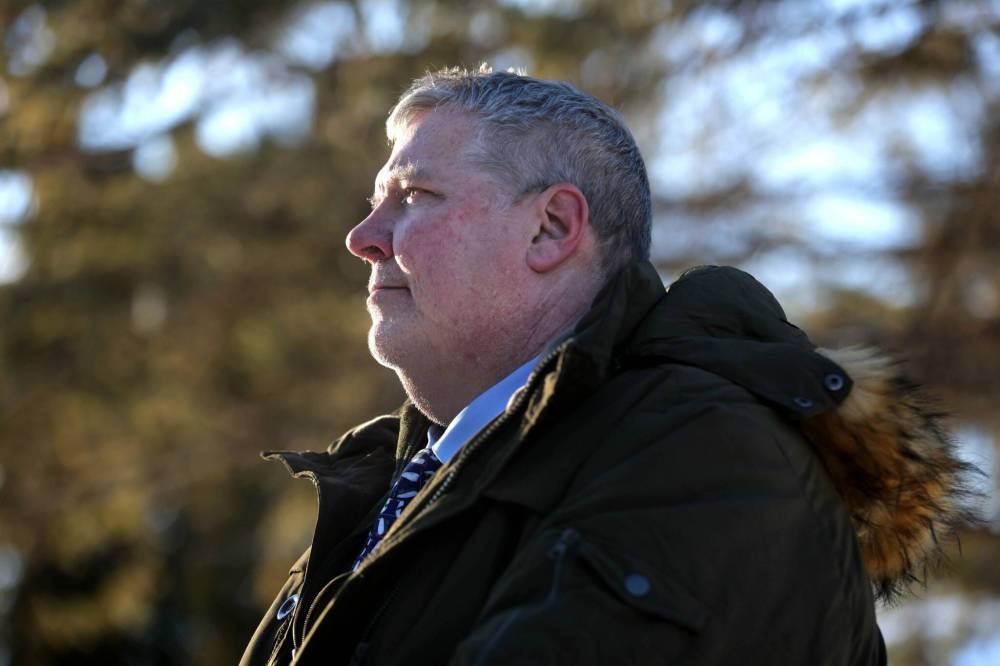
“It’s particularly difficult to get the higher-ups because of this type of crime. Who’s going to report that? And how are you going to find them?” says veteran defence lawyer Chris Sigurdson, who doesn’t recall seeing a shoplifting ringleader make a court appearance.
“If you’re stealing meat, you’re not going to get a much lighter sentence for ratting out the people above you. That’s unfortunate. These people are predators. You’d like to see them pay some sort of price. But the way it’s set up is pretty much impossible.”
How about more consequences?
The most common source of frustration right now among the various stakeholders is the belief criminals are capitalizing on a toothless system.
“Just like when you’re a kid, if there’s no consequences to anything, you’re never going to learn what’s right from wrong,” says the WPS officer who works paid duty.
“Same here; they can push the store and push the police as far as they want and go, ‘Geez, I can get away with this 10 times and nothing happens — this is worth it’.”
A veteran grocery chain store employee once hung a thief on a meat hook in a back room until police arrived. Today that would get him fired and, possibly, charged criminally. It’s strictly hands-off.
“I know why we’re doing that,” he says. “We don’t want to be knifed. I understand the big picture, but nothing is being done to prevent this big picture. I don’t blame the cops, they’ve got enough s—t to do in Winnipeg than deal with people stealing razor blades or meat or sticks of butter.”
“Just like when you’re a kid, if there’s no consequences to anything, you’re never going to learn what’s right from wrong”– Winnipeg police officer
The perception police don’t have the time to deal with incidents distorts the reality, because so much of what is stolen never gets reported, McKinnon says.
“As a police agency, we can’t police what we don’t know,” she says. “We always tell the retailers, ‘Make the reports, contact us, we will investigate, we will respond.’”
Of course, when arrests are made, any punishment doled out by the judicial system is usually minimal — unless significant violence is involved — which puts the crime cycle on repeat.
Rui Rodrigues, the loss-prevention and risk manager with the Retail Council of Canada, recalls a recent case where a Winnipeg thief had approximately 80 existing warrants for similar incidents.
“Even if police do respond, when this gets brought to a Crown (prosecutor), it might get thrown out, when you just invested all this time and effort, since there’s a perception it’s a victimless crime,” he says.
“I know in Winnipeg, they believe if (the theft is over) $1,000… when brought to a Crown the consequences may be more severe and we might actually get some kind of disposition.”
What about the liquor-store solution?
Are shoppers prepared to show personal identification in order to enter a grocery store to buy a loaf of bread or jug of milk?
Not likely. And that’s why mirroring what local Liquor Marts did to stop an alcohol-driven shoplifting crisis is a non-starter.
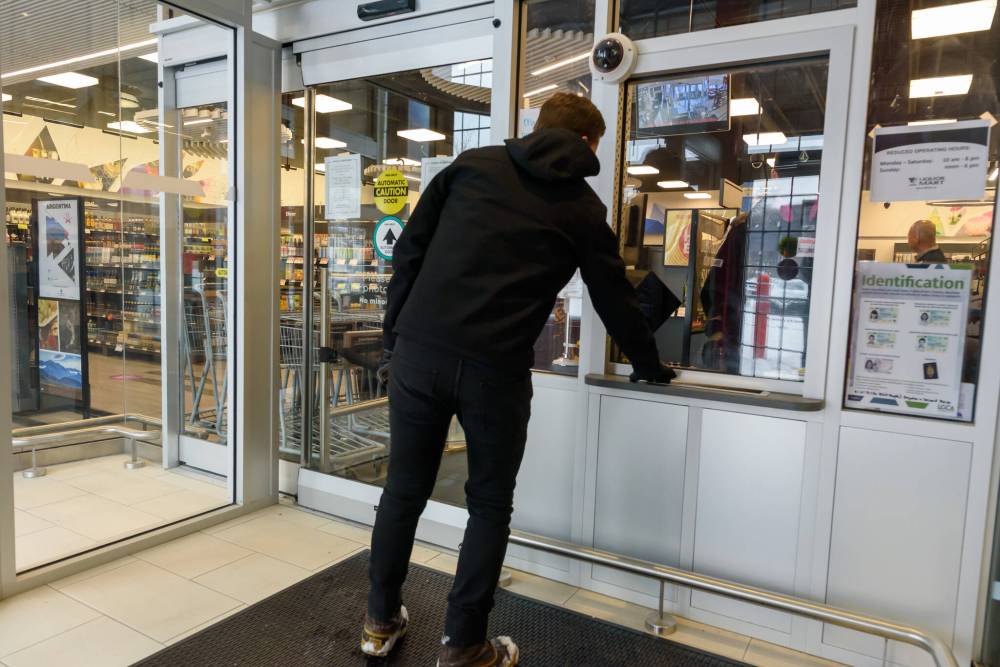
“It was a complete epidemic,” Sigurdson says. “And they shut it down. There’s not a case anymore. It does not happen. It just does not happen.”
Several store owners said that kind of extreme measure would likely cause more harm than good.
“We can’t do it because we’re in a competitive market here in Manitoba. Unless all my competitors do the same thing, if I were to initiate that security, I’d probably be closed within a week,” says Scott Clement of Dakota Family Foods.
“I think it’s great, what the (liquor stores) did. I think that’s awesome. It keeps their staff and their customers safe, and it was getting out of hand there. Unfortunately, we’re in a different type of industry where it just wouldn’t work for us.”
Are retailers trying anything new?
Shoppers are likely noticing changes at retail outlets.
“The store layout has changed. For example, we sell mouthwash here, and stuff that has alcohol in it. We put that behind our customer-service counter, so if someone wants it they can ask us and we’ll sell it to them,” says Kevin Schmidt of Downtown Family Foods.
“Other things, too. Butter and hard cheese that we have, it’s in the fridges close to the customer-service counter, because people would steal that from the store and then resell it, either online or to different businesses downtown, in exchange for — who knows?”
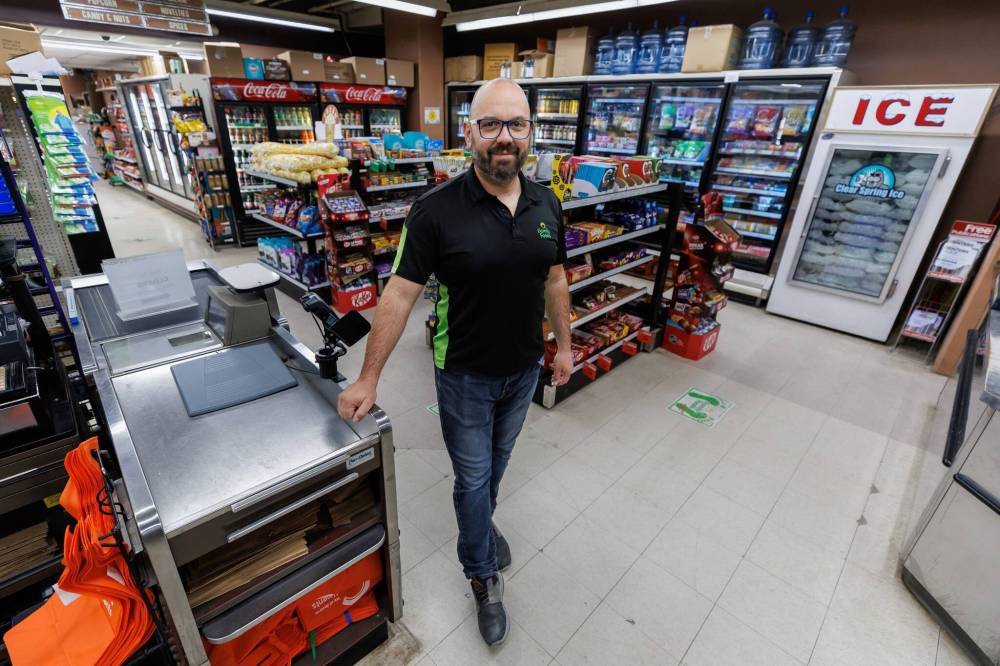
The same for meat, which is a hot commodity on the black market.
“Our meat department is in a higher-visibility area of the store where there’s always people walking around, so it is a little bit easier to catch people who are doing those types of things,” Schmidt says.
“We do our best to make the things that we think are going to be high theft more visible and easier for staff and other people to see happen, as compared to other places.”
McKinnon has noticed some changes recently.
“The ergonomics of the store really play into it. Marshalls and HomeSense and others, they’ll now put their hangers one this way, one that way, one this way, one that way, so you can’t just grab,” she says.
“So there’s things the retailers are actually trying to do…. I meet with retailers personally. It’s conversations and learning and, ‘How do we do that together?’”
Can technology make a difference?
That’s certainly the hope.
“I don’t want to get into specifics, because if you put that information out there they’ll adapt. But I’m going to tell you right now, talking with some of the retailers, there’s some interesting techniques being used,” McKinnon says.
“It’s not a policing situation where we’re going to solve this. The retailers have recognized this and are on board and researching this stuff.”
Rodrigues says measures such as facial recognition, enhanced cameras and the ability to remotely lock shopping carts wheeling out stolen goods have already been incorporated by many in the U.S.
“You have to continue to be innovative, and it’s putting increasing pressure on the vendors,” he says.
What about root causes?
There is no question greed is driving this, as reflected by the sophistication and criminal organization involved. But addiction, homelessness and mental illness continue to play significant roles.
“I don’t think society has yet to comprehend the level of obsession addiction causes, and just the will to live. The need for drugs and alcohol is a living hell,” says Roland Vandal, a former addict-turned-certified recovery coach who now helps operate the Red Road Lodge transitional and supportive housing facility at Main Street and Logan Avenue.

“The thefts are a byproduct of something the government itself has created, being addicted to opioids and alcohol and having to come off it after years is nothing anyone wants to experience.
“The whole problem is living a happy and manageable life without those things.”
Consider this story from the WPS officer who works paid duty at Superstore.
“Out of the maybe 100 people I’ve arrested, I can remember one lady that was down and out and she was stealing birthday things for her daughter — the candles, the napkins — to have a party for her daughter,” he says.
“I felt terrible about it. She wasn’t a woman who had a long record or anything like that. I went and spent $35 and bought the items for her and said, ‘Here, now you can walk out of the store and hold your head high, make sure your daughter has a birthday.’
“She was just in tears, she was so thankful. Could she have been playing me? I guess she could. But it just resonated with me.”
The longtime grocery chain store employee has witnessed theft committed by people from all walks of life and says it truly is a “social problem.”
“It’s gotten so out of hand, and people have gotten so disenchanted, I don’t know if it will ever stop,” he says. “Right now, it’s as bad as it can get, and I don’t know that there’s the political will out there to fix it.”
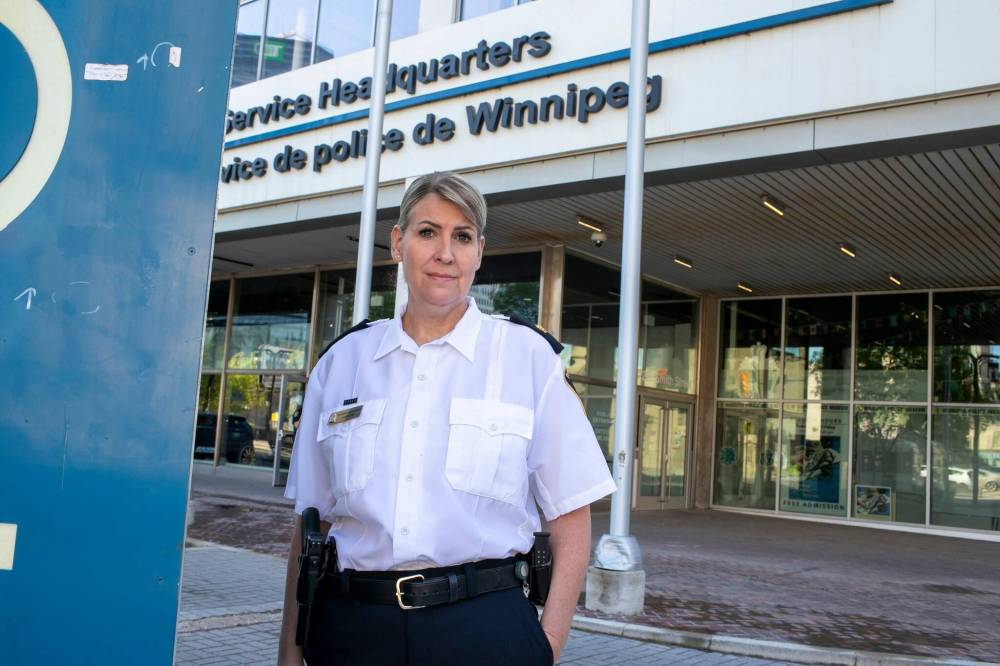
Based on her personal and professional experience, McKinnon believes that is changing.
“Everyone is working on this. We’ve got really good people putting efforts in. The key to this is partnerships and community resources. If it’s food insecurity, housing insecurity, we need to be able to get those people connected. And we need resources that are community-based to start addressing some of that with some of these people,” she says.
“If it‘s addictions, we need those people identified and help to come in. If it’s straight up that this is easy and I can make money off this, then we need to deal with that.
“This is not going away. Do we have a ton of officers to throw at this? We don’t. But we’ve had a lot of people step up to the table to help us out.”
mike.mcintyre@freepress.mb.ca
X: @mikemcintyrewpg

Mike McIntyre is a sports reporter whose primary role is covering the Winnipeg Jets. After graduating from the Creative Communications program at Red River College in 1995, he spent two years gaining experience at the Winnipeg Sun before joining the Free Press in 1997, where he served on the crime and justice beat until 2016. Read more about Mike.
Every piece of reporting Mike produces is reviewed by an editing team before it is posted online or published in print — part of the Free Press‘s tradition, since 1872, of producing reliable independent journalism. Read more about Free Press’s history and mandate, and learn how our newsroom operates.
Our newsroom depends on a growing audience of readers to power our journalism. If you are not a paid reader, please consider becoming a subscriber.
Our newsroom depends on its audience of readers to power our journalism. Thank you for your support.
History
Updated on Monday, June 3, 2024 1:20 PM CDT: Changes tile photo