Oil, gas pipeline oversight gaps in spotlight Manitoba hints at ‘regulatory changes’ in wake of March shutdown of fuel link
Read this article for free:
or
Already have an account? Log in here »
To continue reading, please subscribe:

Digital Subscription
One year of digital access for only $205*
- Enjoy unlimited reading on winnipegfreepress.com
- Read the E-Edition, our digital replica newspaper
- Access News Break, our award-winning app
- Play interactive puzzles
*First annual payment billed as $205.00 + GST for one year. This annual subscription will automatically renew at $233.00 + GST every 52 weeks (10% off the regular annual price of $259.35). Offer available to new and qualified returning subscribers only. Cancel any time.
To continue reading, please subscribe:
Add Free Press access to your Brandon Sun subscription for only an additional
$1 for the first 4 weeks*
- Enjoy unlimited reading on winnipegfreepress.com
- Read the E-Edition, our digital replica newspaper
- Access News Break, our award-winning app
- Play interactive puzzles
*Your next Brandon Sun subscription payment will increase by $1.00 and you will be charged $17.95 plus GST for four weeks. After four weeks, your payment will increase to $24.95 plus GST every four weeks.
Read unlimited articles for free today:
or
Already have an account? Log in here »
Hey there, time traveller!
This article was published 10/07/2024 (795 days ago), so information in it may no longer be current.
Manitoba has fallen behind neighbouring provinces in taking steps to safeguard against environmental risks relating to the oil and gas industry, despite numerous calls at national and provincial levels for better oversight practices.
Both Saskatchewan and Ontario ramped up regulatory oversight and improved transparency following critical auditor general reports that flagged significant issues, including infrequent inspections, poor documentation of monitoring and enforcement activities, a lack of staff resources and inadequate public reporting.
Those provinces previously relied heavily on the industry regulating itself, a practice still followed in Manitoba — and one that raises alarm bells among experts.
Tyler Clarke / Brandon Sun files A pump jack west of Virden. The province of Manitoba has three petroleum inspectors on staff to monitor more than 4,000 producing wells and 5,000 kilometres of active pipelines.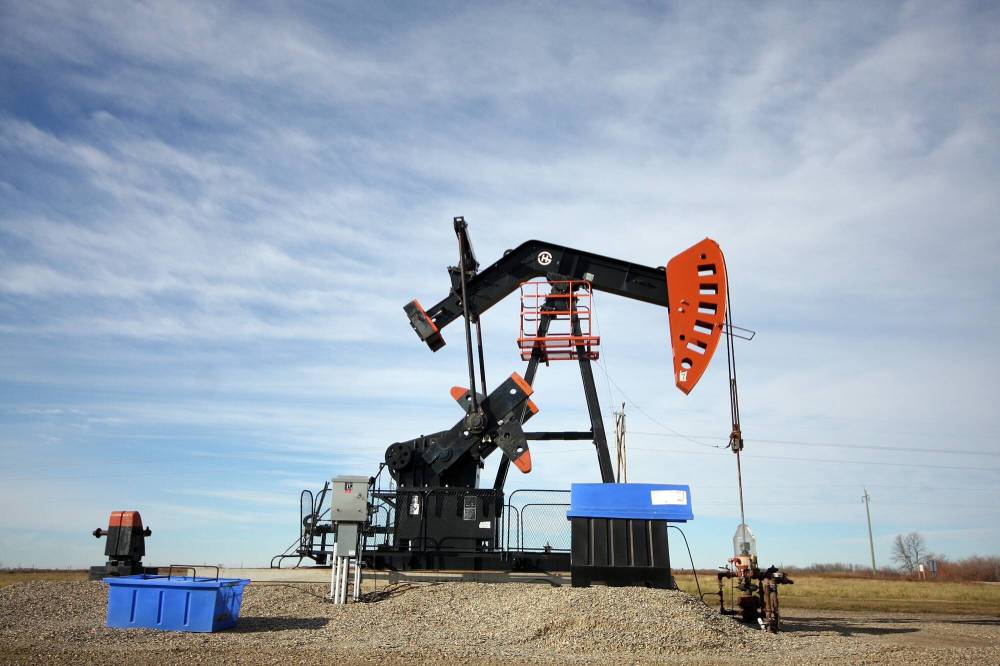
“Effective regulatory oversight … is important to reducing the risk of company non-compliance and to protecting the safety of Canadians and the environment,” Canada’s auditor general wrote in a 2015 review of federal pipeline management.
In the wake of a major Imperial Oil fuel pipeline shutdown for preventative repairs in March — coupled with dwindling staffing numbers and inspections — Manitoba’s government said it’s aware of gaps in how it monitors provincially regulated oil and gas pipelines.
“This Imperial Oil incident has really highlighted some of the gaps, perhaps, in governmental oversight,” Environment and Climate Change Minister Tracy Schmidt said in a recent interview.
More than 6.5 million litres of oil and related fluids have spilled from Manitoba’s 5,000-kilometre pipeline network in the last 16 years, but no fines have been issued. The province has conducted just 13 documented inspections in five years.
The province plans to add more inspectors and Economic Development, Investment, Trade and Natural Resources Minister Jamie Moses has hinted his government may pursue “regulatory changes” in the future.
“With the safety of Manitobans in mind and the safety of the environment in mind, we want to make sure that we hold industry to the highest standards, make sure that we’re working more proactively with them and ensure that we’re increasing our oversight and inspections,” he said.
Increased scrutiny
The growth of Canada’s oilsands through the 2000s and early 2010s, punctuated by a handful of high-profile spills, led to increased public scrutiny of the oil and gas industry — and new attention from auditors.
The federal auditor general led the charge with a review of dangerous goods transportation — including oil and gas pipelines — in 2011. Canada’s Energy Regulator (then called the National Energy Board) is responsible for more than 70,000 km of cross-country pipelines and conducts inspections and enforcement. The auditor found the federal monitoring program was generally “sound” but lacked consistent documentation of monitoring activities and rarely followed up on companies with deficient operations.
Saskatchewan’s provincial auditor followed with a damning review of pipeline oversight practices a year later, ultimately finding the government “did not have effective processes” to regulate what was at the time a 90,000-km pipeline network. (Saskatchewan now has more than 100,000 km of pipelines.)
“There are requirements under this legislation that are not being acted upon,” Bonnie Lysyk, then Saskatchewan’s auditor, said. “Failure to regulate pipelines effectively could harm people or the environment.”
Alberta’s sprawling oilsands had a sour record of two pipeline spills per day for nearly 40 years when provincial politicians called for an audit of the Alberta Energy Regulator, which was eventually conducted in 2015.
Later, Lysyk — appointed auditor general for Ontario in 2013 — delivered a scathing review of the Technical Standards and Safety Authority that oversees 110,000 km of Ontario pipelines.
“Despite risk of soil and water contamination and two oil pipeline leaks that occurred in 2013, the (authority) does not inspect pipelines but instead relies on the pipeline operators to conduct their own inspections,” she said in the 2018 report.
Frank Gunn / The Canadian Press Files In 2018 Ontario auditor general Bonnie Lysyk delivered a scathing review of the Technical Standards and Safety Authority that oversees 110,000 km of Ontario pipelines.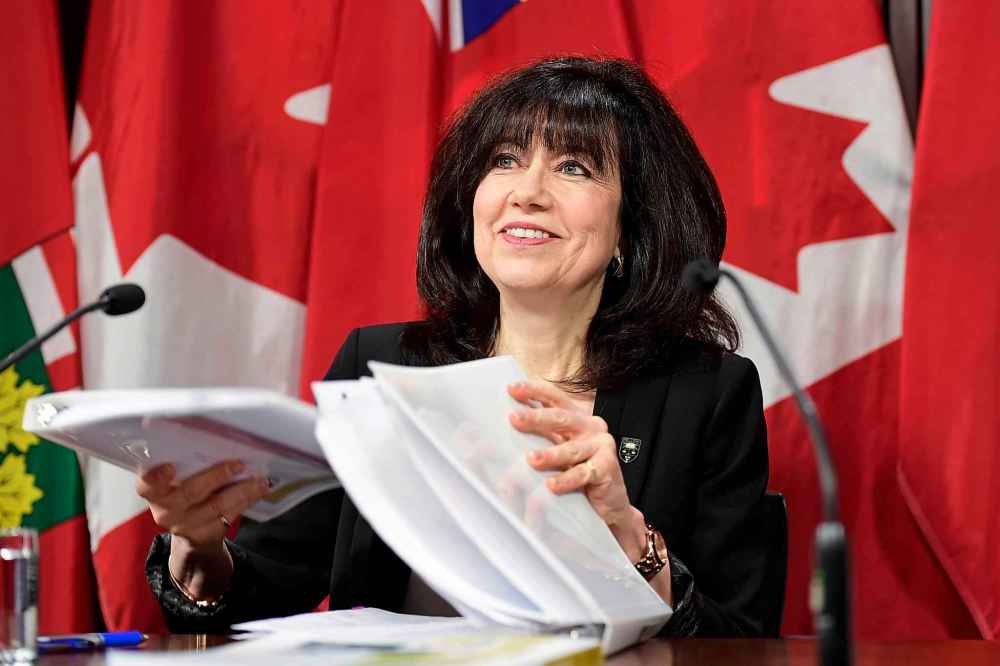
“The (authority’s) own current oversight processes are not fully effective in ensuring public safety.”
While recommendations to each regulatory body varied, auditors found similar deficiencies across jurisdictions — particularly when it came to inspections, documentation and public transparency.
Auditors recommended collecting more detailed and consistent information from industry to keep track of their pipeline operations. Ontario, Saskatchewan and the Canada Energy Regulator were also urged to provide more data — including spill reports, monitoring activities and enforcement updates — to the public.
Manitoba relies on many of the same practices highlighted in those reports, but has never undertaken a similar review.
“We’re dealing with some particularly old (regulatory) frameworks that have significant identified deficiencies,” University of Winnipeg pipeline oversight expert Prof. Patricia Fitzpatrick said.
Oversight overhaul
For many years, Saskatchewan’s pipeline regulations closely mirrored Manitoba’s: the responsibility for inspections fell to an understaffed provincial department, where inspectors regularly reviewed reports provided by oil and gas companies but rarely inspected sites.
Lysyk made five recommendations to improve Saskatchewan’s pipeline oversight, including developing written policy for evaluating compliance with pipeline regulations and assessing the resources needed to properly fulfill the department’s mandate.
The gaps in Saskatchewan’s oversight system would not come into sharp focus until a Husky Energy pipeline ruptured two years later, spilling more than 200,000 litres of crude oil into the North Saskatchewan River.
“This is the most significant (environmental) incident that’s ever happened in this province,” Saskatchewan Crown prosecutor Matt Miazga said when Husky Energy later agreed to pay nearly $4 million in fines.
The spill was attributed to riverbank shifting (the same stress that led Imperial Oil to shutter the Winnipeg Products Pipeline in March). Municipal drinking water intakes were shut down for months; James Smith Cree Nation and Little Pine First Nation reported fish spawning beds contaminated.
Chris Gareau / The Carillion Files A major Imperial Oil fuel pipeline was shutdown for preventative repairs in March. Environment Minister Tracy Schmidt said this incident highlighted some of the gaps in governmental oversight.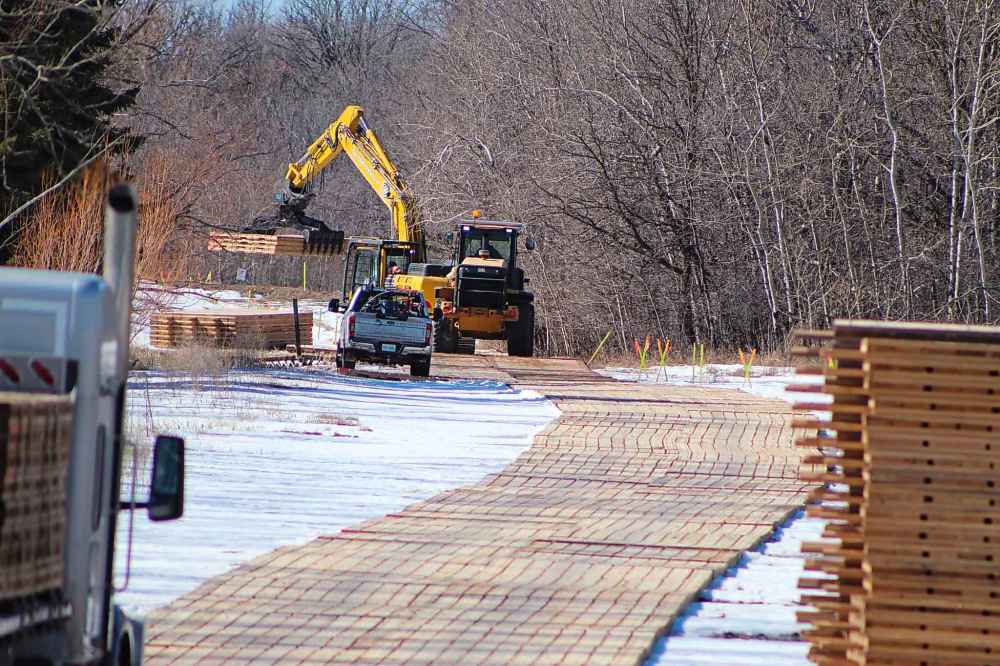
“We no longer fish in the river. We no longer trap on or near reserve lands. We no longer farm on or near reserve lands,” Little Pine Chief Wayne Semaganis said during legal proceedings. “We no longer drink water drawn from reserve lands.”
In the years that followed, Saskatchewan invested in strengthening its inspection, investigation, penalty and audit powers, according to a 2020 news release that said the province had “fully addressed” all of the auditor’s pipeline safety recommendations.
Other jurisdictions have strengthened oversight in response to the audit reports, moving toward the national standard set by Alberta and British Columbia’s energy regulators.
As Fitzpatrick explains, Alberta, B.C. and the Canada Energy Regulator use a risk-based management system where inspectors look into pipelines on a periodic basis, informed by factors including compliance history, pipeline sensitivity and location.
While Fitzpatrick isn’t convinced this approach is a “best” practice, it is an improved approach.
Unlike other jurisdictions, Alberta’s auditor general found the regulator was “adequately performing its function of overseeing pipeline safety and reliability” and had “well-functioning systems” to regulate its pipelines.
The Alberta Energy Regulator oversees more pipelines than any other Canadian jurisdiction with more than 440,000 km — enough to cross Canada 59 times.
Its 70 field inspectors conduct an average of more than 1,400 pipeline inspections annually.
Ontario’s audit report pointed to the Alberta system as an example of industry best practices. Saskatchewan adopted a similar policy in the wake of the Husky Energy spill.
“All Canadians should benefit from the same level of protection from the risk of spills, regardless of which province they live in.”–Alan Andrews
According to Alan Andrews, an environmental lawyer working with Vancouver based non-profit Ecojustice, British Columbia’s energy regulator takes a similar approach, and has started to crack down on high-risk companies with more frequent inspections and escalating fines.
“All Canadians should benefit from the same level of protection from the risk of spills, regardless of which province they live in,” Andrews said.
Regulators need to be “properly armed with the powers and expertise and capacity they need to get the job done,” Andrews said, adding they need to be independent from industry.
He added staff need to conduct “inspections, monitoring, enforcement and, crucially, issue fines that are at least equivalent to the damage that has been done.”
Limited staff
In Manitoba, there are few inspectors — and few inspections of pipelines.
Manitoba has one active petroleum inspectors — and is in the process of hiring two more — to oversee more than 4,000 producing wells and 5,000 km of active pipelines.
There were just 13 formal pipeline inspections in the last five years. Public information about spills, monitoring and enforcement is inconsistent, if accessible at all.
Despite policies that lead to limited inspection capacity, formal documentation and public reporting of spills and incidents, Manitoba’s auditor general has not conducted any review of pipeline oversight.
In an interview, Tyson Shtykalo said he is aware of work other auditors have done with respect to pipeline oversight, but has not identified it as a priority at this time.
Shtykalo’s office aims to conduct five performance audits, which look at anything from regulations to the efficacy of the work of government and publicly funded organizations, each year. With limited resources and a steady list of financial audits that must be done annually, Shtykalo said his office chooses audits that will have the most significant public impact.
“We want to make sure that the work we’re doing is spread across the public sector,” Shtykalo said. “And then an important consideration is … if we devote the time and resources to a project or an audit, that the ultimate report and recommendations we make are adding value to the public assembly.”
julia-simone.rutgers@freepress.mb.ca

Julia-Simone Rutgers is the Manitoba environment reporter for the Free Press and The Narwhal. She joined the Free Press in 2020, after completing a journalism degree at the University of King’s College in Halifax, and took on the environment beat in 2022. Read more about Julia-Simone.
Julia-Simone’s role is part of a partnership with The Narwhal, funded by the Winnipeg Foundation. Every piece of reporting Julia-Simone produces is reviewed by an editing team before it is posted online or published in print — part of the Free Press‘s tradition, since 1872, of producing reliable independent journalism. Read more about Free Press’s history and mandate, and learn how our newsroom operates.
Our newsroom depends on a growing audience of readers to power our journalism. If you are not a paid reader, please consider becoming a subscriber.
Our newsroom depends on its audience of readers to power our journalism. Thank you for your support.
Related Articles
Millions of litres of oil spilled, zero provincial fines or penalties


History
Updated on Thursday, July 11, 2024 11:59 AM CDT: Clarifies number of active petroleum inspectors.