

Negotiating turbulent waters of year ahead
International and interprovincial trade, federal investment levels among top topics of Manitoba business community leadership concern for ‘high-stakes, consequential’ 2026

Advertisement
Read this article for free:
or
Already have an account? Log in here »
To continue reading, please subscribe:
Digital Subscription
One year of digital access for only $1.44 a week*
- Enjoy unlimited reading on winnipegfreepress.com
- Read the E-Edition, our digital replica newspaper
- Access News Break, our award-winning app
- Play interactive puzzles
*Billed as $5.77 plus GST every four weeks. After 52 weeks, price increases to the regular rate of $19.95 plus GST every four weeks. Offer available to new and qualified returning subscribers only. Cancel any time.
To continue reading, please subscribe:
Add Free Press access to your Brandon Sun subscription for only an additional
$1 for the first 4 weeks*
- Enjoy unlimited reading on winnipegfreepress.com
- Read the E-Edition, our digital replica newspaper
- Access News Break, our award-winning app
- Play interactive puzzles
*Your next Brandon Sun subscription payment will increase by $1.00 and you will be charged $17.95 plus GST for four weeks. After four weeks, your payment will increase to $24.95 plus GST every four weeks.
Read unlimited articles for free today:
or
Already have an account? Log in here »
Hey there, time traveller!
This article was published 29/12/2025 (296 days ago), so information in it may no longer be current.
One feeling — uncertainty — plagued Manitoba’s business crowd in 2025.
The year was coloured by tariffs, calls for national unity and moves to diversify trade. Companies have laid off staff and paused investments amid geopolitical tensions.
A continent-wide free trade agreement is up for renegotiation in 2026. Political power could shift south of the border. Meantime, major Canadian infrastructure projects continue to hold centre stage.
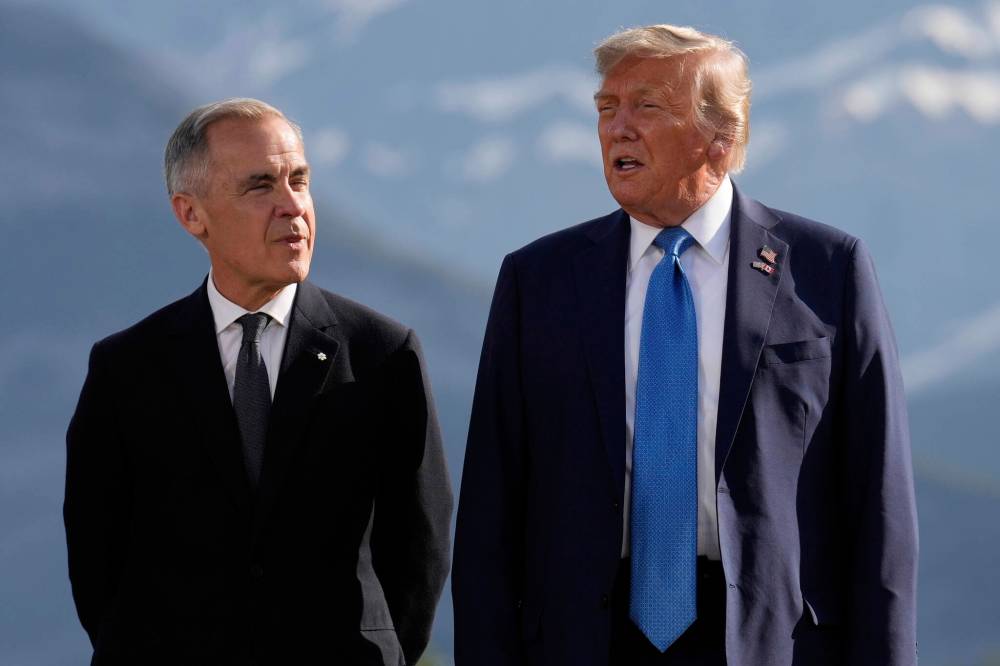
“We are entering a very high-stakes, consequential year,” said Richard Madan, Manitoba’s trade representative in Washington, D.C.
The Free Press asked a handful of business and economics experts what they’re watching for next year. The answers came largely in unison.
Canada-United States-Mexico Agreement review
Currently, a majority of Canada’s exports — roughly 85 per cent — are shielded from U.S. tariffs by the Canada-United States-Mexico Agreement on trade. (Manitoba exports some $18 billion in goods to the U.S. annually.)
CUSMA is “foundational to our economy,” said Loren Remillard, president of the Winnipeg Chamber of Commerce.
“If that all of a sudden vanishes, we have to start really digging into some questions that we haven’t had to deal with since the 1980s pre-NAFTA (North American Free Trade Agreement).”
July 2026 marks the start of a previously scheduled CUSMA review.
Negotiations may end in a renewed deal for 16 years, a complete withdrawal or something in between, where CUSMA will be reviewed annually. If one country withdraws, it could lead to bilateral agreements.
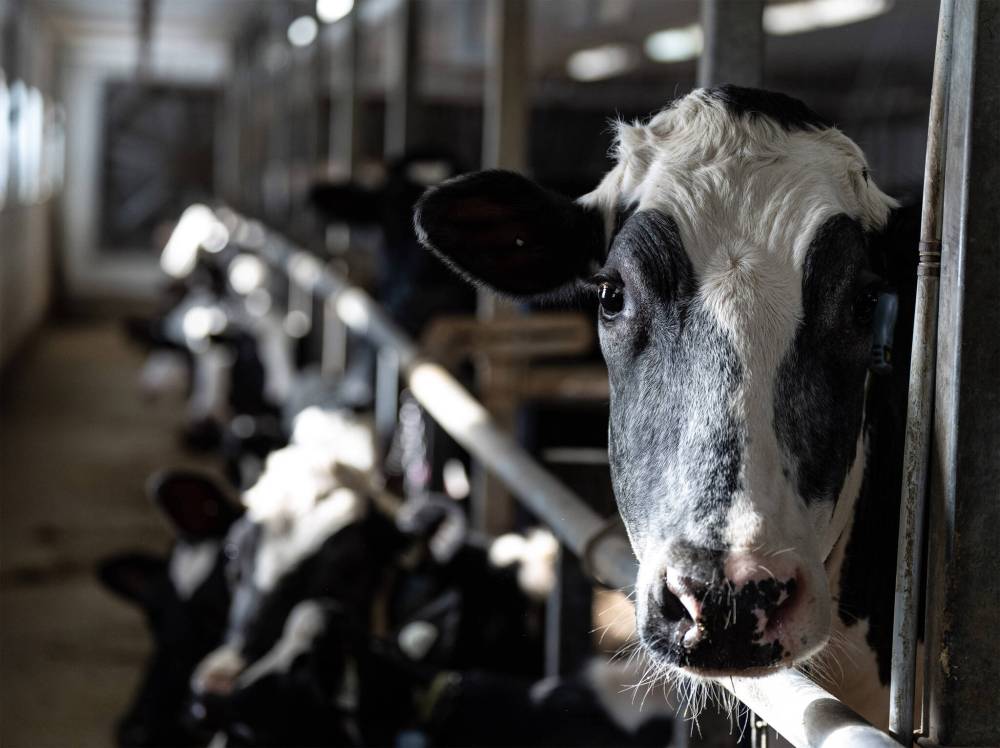
Sticking points have already come up: for example, the U.S. wants to change Canada’s dairy supply management system. (Manitoba counts around 240 dairy producers and 11 processing plants.)
Canada also hasn’t signed a separate trade deal with the United States on its fentanyl-driven tariffs (levied this year using the flow of illegal drugs as justification).
“I’m feeling optimistic that Canada and Manitoba’s relationship with the U.S. will start finding more allies,” said Madan, who was announced as Manitoba’s U.S. trade representative in June. “That tension slowly seems to be dissipating.”
The mood is changing as lawmakers recognize trade relationships between Manitoba and their home states, Madan continued.
Political power could shift further after the U.S. mid-term elections, largely held in November. For now, exports of Manitoba steel and aluminum, wood products like kitchen cabinets, medium- and heavy-duty vehicles and buses continue to be hit by tariffs.
The Canadian Manufacturers & Exporters will push the Manitoba government for a manufacturing-focused tax incentive, grants and other funding as tariffs persist into the new year, said Jillian Einarson, CME’s head of government relations for the Prairies.
More federal investment
An expanded Port of Churchill and more housing — nationally — are on federal bureaucrats’ radars.
Still, don’t expect a drastic rise in Manitoba construction in the near-term, said economist Fletcher Baragar.
“The federal initiative … depends crucially, in many ways, on a lot of private sector funding,” said Baragar, a University of Manitoba economics professor. “I haven’t seen any signs yet that the private sector is poised to … make that funding commitment.”
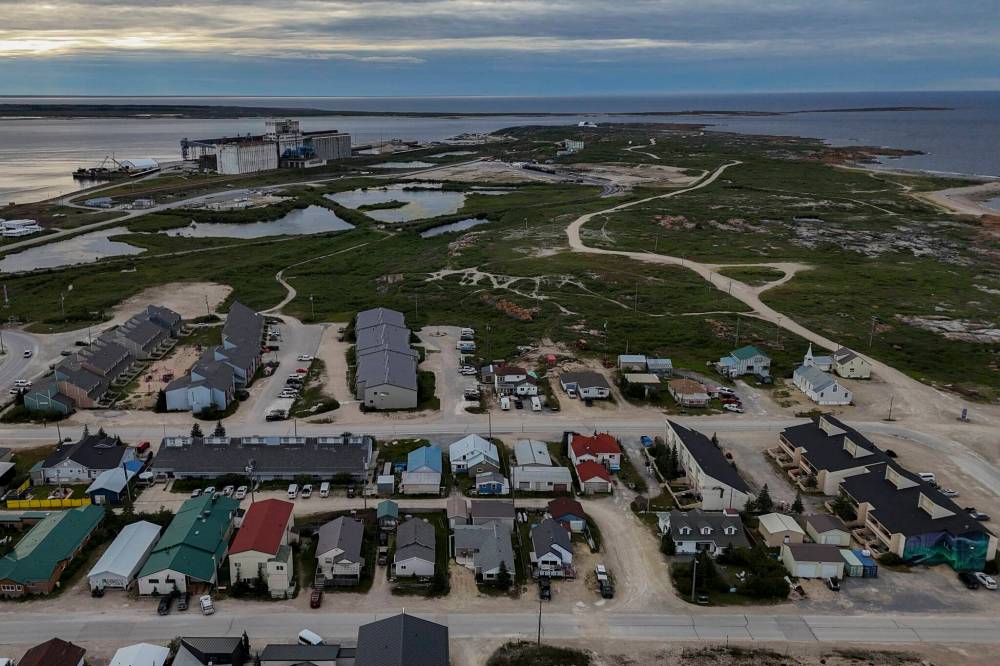
Ottawa’s latest budget pegs the Port of Churchill Plus project at “an earlier stage and (requiring) further development.”
A business development team has been reviewing the file. The feds have pledged $180 million over five years for the northern Manitoba port and railway; politicians have touted the port as a gateway to trade with Europe and a boon for Indigenous and provincial economies.
The federal budget also tabs $7.3 billion for Build Canada Homes, a new agency mandated to bolster house construction, and shares plans to increase defence procurement.
“How does Winnipeg and Manitoba seize the opportunity of defence procurement?” said Remillard. He flagged the sector as one of increasing opportunity for Manitoba firms next year.
The Winnipeg chamber, Manitoba Chambers of Commerce and other business-focused groups have been discussing how to increase advocacy on Parliament Hill. A “Manitoba day” in Ottawa is being considered.
Building trade beyond U.S.
The Manitoba Chambers of Commerce aims to send a local delegation to Western Canada before next summer. Its goal: build new trade relationships.
This month, Alberta Chambers of Commerce representatives visited Winnipeg — with a fleet of entrepreneurs and economic development officers — to pursue the same agenda.
New deals can take years to cement.
“That trading relationship with the U.S. is not as stable as it had been,” said Chuck Davidson, president of the Manitoba chambers group. “We need to start exploring other countries and other opportunities. Government is always well-placed to help support.”
The Manitoba chambers is seeking federal funding. It’s following a model similar to the Alberta chambers’ trip, Davidson said.
Meanwhile, business owners continue to eye markets such as Europe. A delegation of European ambassadors visited Winnipeg to explore new trade in April; Prime Minister Mark Carney has set a goal of doubling non-U.S. exports over the next decade.
He’s signalled interest in growing ties with China. Manitoba farmers have been squeezed this year by Chinese tariffs on canola and pork.
Navigating provincial deficit
Manitoba will need to raise its revenue to diminish its projected $1.6 billion deficit. This could lead to tax system adjustments, Baragar said.
“The 2026 budget of the province will be a very interesting one,” he said. “I think in some ways, it’s going to have to be a bit more realistic than some of the optimism that was evident in last year’s budget.”
Government could raise personal and business taxes to address its deficit — a concerning thought, said Remillard.
Public budget consultations begin in February.
Seeking more energy
Earlier this year, the province proposed a $3-billion combustion turbine facility in Westman, and Manitoba Hydro released a 10-year development plan outlining an additional 1,760 megawatts of grid capacity.
“Even with those announcements, there is still some anxiety within the business community,” Remillard said. “Any expansion plans — will there be the required energy there?”

Manitoba Hydro forecasts a “sustained winter peak capacity deficit” by 2029-30, it wrote in a filing to the Public Utilities Board. It’s faced drought — and lost millions of dollars — in three of the last four years.
Meantime, Premier Wab Kinew has said Manitoba will see servers and data centres in the future.
A small data centre can use up to 25 million litres of water annually for cooling, according to the president of the Canada Water Agency.
“We’ve got some big question marks around the energy needed to fuel Manitoba’s growth in 2026,” Remillard said.
Pressing play on economic development strategies
Manitoba released economic development and innovation strategies in 2025. Lagging productivity and data sovereignty were among the highlighted topics.
In 2024, the province published a critical minerals roadmap.
“It’s time to start actioning a lot of these elements,” Davidson said. “When you look at the financial picture of the province, you see the size of deficit they’re dealing with — the only way to get out of that is going to be growing the economy.”
Businesses continue to face crime, higher operating costs and a need to be more productive, Remillard noted. Artificial intelligence integration will continue in 2026, he said.
Culture change at city hall?
Winnipeg Mayor Scott Gillingham promised a “more responsive” city hall with a new chief administrative officer. City permits are regularly a sore spot for local entrepreneurs.
Councillors approved Joseph Dunford as the new CAO in June. Remillard said he’ll be watching for a culture change in the new year.
gabrielle.piche@winnipegfreepress.com
Gabrielle Piché reports on business for the Free Press. She interned at the Free Press and worked for its sister outlet, Canstar Community News, before entering the business beat in 2021. Read more about Gabrielle.
Every piece of reporting Gabrielle produces is reviewed by an editing team before it is posted online or published in print — part of the Free Press‘s tradition, since 1872, of producing reliable independent journalism. Read more about Free Press’s history and mandate, and learn how our newsroom operates.
Our newsroom depends on a growing audience of readers to power our journalism. If you are not a paid reader, please consider becoming a subscriber.
Our newsroom depends on its audience of readers to power our journalism. Thank you for your support.
Gabrielle Piché reports on business for the Free Press. She interned at the Free Press and worked for its sister outlet, Canstar Community News, before entering the business beat in 2021. Read more about Gabrielle.
Every piece of reporting Gabrielle produces is reviewed by an editing team before it is posted online or published in print — part of the Free Press‘s tradition, since 1872, of producing reliable independent journalism. Read more about Free Press’s history and mandate, and learn how our newsroom operates.
Our newsroom depends on a growing audience of readers to power our journalism. If you are not a paid reader, please consider becoming a subscriber.
Our newsroom depends on its audience of readers to power our journalism. Thank you for your support.
Related Articles
Hope or hype? Carbon-capture facility eyed for southwestern Manitoba; critics say its tech is under-researched







Advertisement Advertise With Us
Advertisement Advertise With Us