‘Irreversible’: No easy fix for water fouled by gas driller
Advertisement
Read this article for free:
or
Already have an account? Log in here »
To continue reading, please subscribe:

Digital Subscription
One year of digital access for only $205*
- Enjoy unlimited reading on winnipegfreepress.com
- Read the E-Edition, our digital replica newspaper
- Access News Break, our award-winning app
- Play interactive puzzles
*First annual payment billed as $205.00 + GST for one year. This annual subscription will automatically renew at $233.00 + GST every 52 weeks (10% off the regular annual price of $259.35). Offer available to new and qualified returning subscribers only. Cancel any time.
To continue reading, please subscribe:
Add Free Press access to your Brandon Sun subscription for only an additional
$1 for the first 4 weeks*
- Enjoy unlimited reading on winnipegfreepress.com
- Read the E-Edition, our digital replica newspaper
- Access News Break, our award-winning app
- Play interactive puzzles
*Your next Brandon Sun subscription payment will increase by $1.00 and you will be charged $17.95 plus GST for four weeks. After four weeks, your payment will increase to $24.95 plus GST every four weeks.
Read unlimited articles for free today:
or
Already have an account? Log in here »
Hey there, time traveller!
This article was published 18/02/2022 (1672 days ago), so information in it may no longer be current.
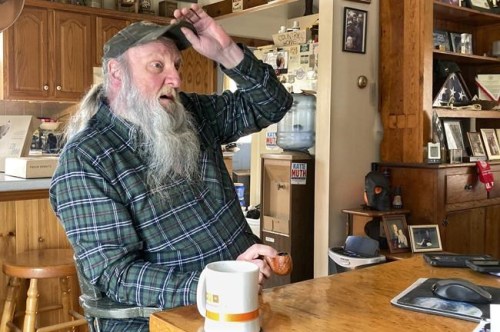
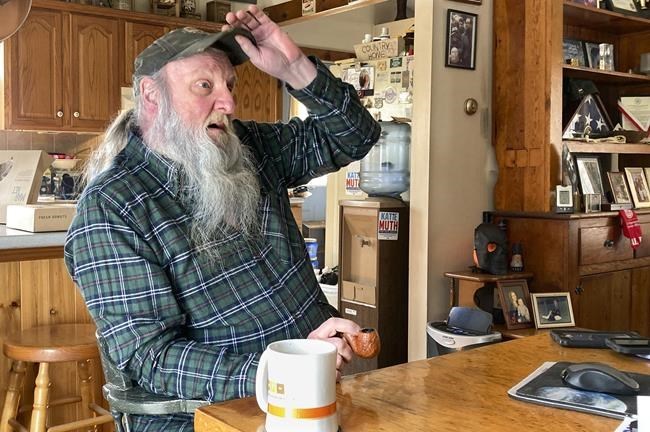
DIMOCK, Pa. (AP) — Meeting with a man whose well water has been polluted for years, officials in the Pennsylvania attorney general’s office asked him whether he’d consider accepting a treatment system from the gas driller charged with fouling his aquifer.
Not a chance, Ray Kemble told them.
“Are you going to drink and bathe in it?” Kemble asked the prosecutor and her colleague, a special agent. “Are you two going to come here and live in this house on that system for a month and use that water?”
The officials demurred.
One of the best-known pollution cases ever to emerge from the U.S. drilling and fracking boom has entered a difficult new phase as prosecutors pursue criminal charges against Pennsylvania’s most prolific gas driller — and push for a settlement they say could yield more significant benefits for affected homeowners than a conviction.
But the option prosecutors recently discussed has put them at odds with some residents who reject individual water treatment systems as inadequate and unworkable. These residents want to be hooked up to public water — itself a controversial idea in their rural community, one that state environmental officials talked up more than a decade ago but ultimately abandoned.
The pushback from residents who have been fighting for clean water since the second Bush administration illustrates the delicacy of the attorney general’s task in Dimock, a place synonymous with the fracking debate, where acrimony and distrust are the default after nearly 14 years of bad water and broken promises to fix it.
It was an exploding water well that first aroused public attention in the previously anonymous patchwork of homes and farms about 150 miles (240 kilometers) north of Philadelphia. Around that time, residents began reporting their well water was making them sick with symptoms including vomiting, dizziness and rashes.
Anti-drilling celebrities and documentary filmmakers descended, calling Dimock an example of natural gas industry malfeasance in the nation’s No. 2 gas-producing state. Industry backers, meanwhile, touted the economic benefits of cheap gas and accused green groups of greatly exaggerating the threat.
The hoopla eventually died down, but Dimock’s water remained polluted. Fresh contamination cases have been reported as recently as December.
The state’s criminal case against the driller dates to 2020, when Attorney General Josh Shapiro — a Democrat now running for governor — charged Texas-based Cabot Oil & Gas with violating the law by allowing methane from the company’s faulty gas wells to escape into drinking-water aquifers in Dimock and nearby communities.
Shapiro’s office ordered water testing at dozens of homes. In December, prosecutors and company officials met with residents individually to go over the results. It was then that prosecutors raised the idea of water treatment systems as a way to resolve the charges against Cabot, now known as Coterra Energy Inc.
Shapiro’s spokesperson, Jacklin Rhoads, declined to answer questions about the “existence or substance of any discussions” connected to the case but said the state’s criminal environmental laws offer “limited tools” for holding polluters accountable. The penalty for a conviction under the state’s Clean Streams Law is a maximum $50,000 fine for each violation.
“While a settlement has the potential to deliver more for victims than the penalties of a guilty verdict, our goal is to resolve the case — through trial or through settlement — in a way that maximizes the restoration and protection of clean water for residents,” Rhoads said.
A company spokesperson declined to comment, citing the “active legal matter.” The company has long defended its record and denied responsibility for the contamination of Dimock’s groundwater.
At Kemble’s home, officials in the attorney general’s office warned him that putting Cabot on trial was not a sure thing. An audio recording of the December meeting was obtained by The Associated Press.
“If it goes to trial, all bets are off,” Justus Brambley IV, a supervisory special agent, told Kemble, who has long been one of Cabot’s fiercest critics. “If we can get Cabot to commit to correcting the issue — being the water — then we’re better not to go to trial.”
Rebecca Franz, Brambley’s colleague and chief deputy attorney general in the attorney general’s environmental crimes section, said prosecutors wanted to resolve the case in a way that would finally fix residents’ water.
“The best path forward,” she said, according to the recording, could involve “some sort of system that would be approved by an independent consultant, to make sure that it’s actually something that’s going to function and it’s going to work.”
Kemble panned the idea. He said Pennsylvania needed to follow through on its 2010 promise to force Cabot to connect the affected residents’ houses to public water. State environmental officials had announced the $12 million plan to great fanfare, only to discard it months later under legal threat from Cabot and local officials, who called it a boondoggle and threatened to sue to block it. Defeated, regulators arranged for Cabot to pay for individual water filtration systems instead.
“So from your perspective, is it water line or nothing?” Brambley asked Kemble.
“Water line or nothing,” Kemble said.
___
Two months after that conversation, it’s not clear whether water systems are still under consideration. But Kemble had his reasons for being skeptical of the idea.
After dropping its plan for the water line, the Pennsylvania Department of Environmental Protection, which had concluded that Cabot Oil & Gas polluted Dimock’s groundwater, negotiated a settlement with the company. Cabot agreed to provide each resident who wanted one with a treatment system, along with a monetary award equal to twice the tax value of their home.
The agreement, struck without residents’ input or consent, infuriated those who had made it clear they did not trust Cabot with their water. But many residents took the money — and the treatment systems.
Joe Nally installed and maintained dozens of these systems for Cabot and other drilling companies. Some worked well, others were prone to breaking down, and all needed constant attention — at great expense — to keep them running, he said. The filters, for example, tended to clog quickly, and a single system could go through $200 to $300 worth of filters every week at a minimum, he said.
“It was absolutely a maintenance issue with them,” said Nally, who left the industry years ago. Because the groundwater quality was highly variable, he said, the systems “got tweaked a lot from the blueprints. Things plugged up and things just didn’t work. Some of those systems were $40,000 worth of equipment sitting in the yard just placating the homeowner, because they weren’t doing anything for their well water.”
The system Cabot installed at Tim and Deb Maye’s house now sits, disused, in a large shed outside their home.
Handwritten logs show hundreds of visits by contractors over the years as the elaborate setup of tanks, filters and control panels repeatedly broke down, leaked and failed to remove bacteria. At one point, most of the equipment was ripped out and replaced.
“I am very sorry for all you have had to go through,” a geologist with the state environmental department wrote in a 2014 email to the Mayes.
Eventually, though, the DEP walked away from the couple — and allowed Cabot to do the same. Regulators told the Mayes that they were on the hook for repairs and maintenance and that their settlement money should be used to pay for it.
Scott Perry, the state’s chief oil and gas regulator, even told DEP staffers to ignore the Mayes’ ongoing and frequent complaints about their water supply, saying the matter had been settled, according to a 2017 letter he sent to the couple.
The couple said they never agreed to take responsibility for the system’s operation. Moreover, they had grown tired of the twice-a-week maintenance visits for a system that never seemed to work properly.
“It was just a nightmare,” Tim Maye said.
Two weeks after Cabot stopped paying for upkeep, the system broke down again, the Mayes said. They opted to let it go and use their untreated well water for bathing and flushing toilets, and bottled water for everything else.
“This was supposed to be our forever home,” said Deb Maye, who had moved with her family to Dimock to escape the traffic and bustle of the Philadelphia suburbs. “And the DEP and the gas company ruined it.”
Until Feb. 11, when he left state employment, Perry was a DEP deputy secretary and longtime head of the agency’s oil and gas division. He acknowledged in a late January interview that treatment systems “did not work perfectly right out of the gate.” But he said they “absolutely do work,” adding some residents are using them to this day and are satisfied.
“All of the homeowners were provided with two times the value of their home so that they could attend to their drinking water needs in the manner they best see fit. And several of them have chosen to not maintain their systems, and that’s unfortunate,” Perry said.
DEP “did the right thing” in Dimock, he insisted, noting the settlement with Cabot yielded six-figure sums for each resident who took it.
“You know,” Perry said, “you can buy a lot of bottled water, if that’s what you want.”
___
Dimock resident Erik Roos was well aware of the difficulty that some residents had with their treatment systems when he sat down with the attorney general’s office to go over the results of his own water test. Among other things, the test showed Roos’ water was laced with methane. The gas is explosive and can cause asphyxiation at high enough concentrations.
Representatives for Cabot’s corporate successor, Coterra, were also at Roos’ meeting. (Kemble, who lives nearby, had barred the company from his own property, telling prosecutors their attempt to include Coterra was a “slap in the face.”)
The possibility of a water treatment system came up, Roos said, but he has never allowed one to be installed at his house, believing they don’t work well. Once or twice a week, he drives 7 miles (11 kilometers) to an artesian well that supplies water for drinking and cooking.
Roos told state officials he wanted to be connected to a public water line.
“Cabot screwed up the aquifer; they screwed up the water,” Roos said in a phone interview. “I don’t want Cabot getting off. They deserve to pay for a water line.”
DEP officials point out that Coterra remains banned from drilling in a 9-square-mile (23-square-kilometer) area of Dimock because the state says it still has not sufficiently reduced the level of methane in the water. The agency is also investigating fresh reports of tainted wells in Dimock — just outside the moratorium area — and in neighboring communities where Coterra is drilling gas wells.
Perry said the water line his agency once touted as a permanent fix couldn’t have been built, given the political, logistical and legal realities of the day. While some residents wanted public water, he said, others did not.
“I couldn’t fix it. We couldn’t fix it,” said Perry, who said he was unaware that criminal charges had been filed against Cabot until the AP brought it up during an interview. “We did the best we could.”
Now, as a different arm of state government tries to solve the Dimock riddle, the attorney general’s water tests show what prosecutors are up against.
Zacariah Hildenbrand, a Dallas-based biochemist hired by the attorney general’s office, found bacteria lurking in Kemble’s water. In a report Kemble provided to the AP, Hildenbrand wrote the influx of natural gas into Dimock’s aquifer helped create an environment where such bacteria can “survive and proliferate.”
Hildenbrand declined to comment to the AP on the results of his testing in the area. Speaking generally, he said that once a gas drilling operation has contaminated the groundwater, it is permanently changed.
“There’s no putting the genie back in the bottle,” Hildenbrand said in an interview. “You’ve completely changed the ecology of that water. … Those changes are irreversible.”
Perry disagreed. He said that state data shows Dimock’s aquifer is healing, slowly but surely, though he acknowledged that newer cases of methane migration from Coterra’s gas wells have complicated matters.
“It is not permanently impaired,” Perry said of Dimock’s water supply. “We will not allow the oil and gas industry to leave a legacy of polluted groundwater.”
Coterra has drilled more than 130 new gas wells since the attorney general filed charges on June 15, 2020 — more than any other driller in the state — and state inspectors have documented nearly 200 violations at Coterra wells over that time.