

Health minister says Canada can’t rely on U.S. health institutions anymore
Advertisement
Read this article for free:
or
Already have an account? Log in here »
To continue reading, please subscribe:

Digital Subscription
One year of digital access for only $205*
- Enjoy unlimited reading on winnipegfreepress.com
- Read the E-Edition, our digital replica newspaper
- Access News Break, our award-winning app
- Play interactive puzzles
*First annual payment billed as $205.00 + GST for one year. This annual subscription will automatically renew at $233.00 + GST every 52 weeks (10% off the regular annual price of $259.35). Offer available to new and qualified returning subscribers only. Cancel any time.
To continue reading, please subscribe:
Add Free Press access to your Brandon Sun subscription for only an additional
$1 for the first 4 weeks*
- Enjoy unlimited reading on winnipegfreepress.com
- Read the E-Edition, our digital replica newspaper
- Access News Break, our award-winning app
- Play interactive puzzles
*Your next Brandon Sun subscription payment will increase by $1.00 and you will be charged $17.95 plus GST for four weeks. After four weeks, your payment will increase to $24.95 plus GST every four weeks.
Read unlimited articles for free today:
or
Already have an account? Log in here »
Hey there, time traveller!
This article was published 26/12/2025 (277 days ago), so information in it may no longer be current.
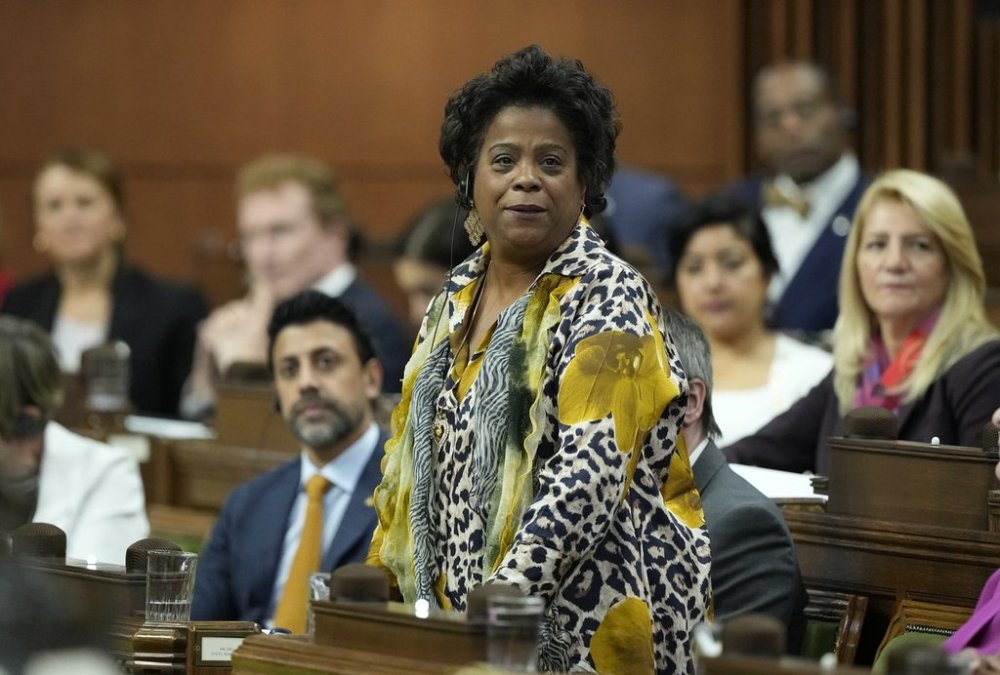
OTTAWA – Canada is used to looking to the United States as a source of health and scientific information, but the federal health minister said that is no longer the case.
“I cannot trust them as a reliable partner, no,” said Health Minister Marjorie Michel in a year-end interview.
Michel added that the U.S. “can be reliable on some stuff,” but pointed to vaccines as an area in which Canada must go its own way.
U.S. President Donald Trump and his administration have made significant changes to health institutions over the last year.
The secretary of Health and Human Services, Robert F. Kennedy Jr., is an anti-vaccine activist. Under his watch, the U.S Centers for Disease Control and Prevention’s website was changed in late November to contradict the well-established scientific conclusion that vaccines do not cause autism.
That change prompted some former CDC officials to say information the agency posts about vaccine safety cannot be trusted.
An advisory panel chosen by Kennedy also recently recommended ending routine hepatitis B vaccines for newborns, and the panel is considering changes to the rest of the childhood vaccine schedule.
The issues with misinformation in the U.S. are “a big preoccupation,” Michel said, and a reason that Canada needs to look to other like-minded countries.
“The good news, I would say, in our case, is at my last federal provincial territorial (health ministers) meeting in October, all provinces agreed to put vaccination in the centre of our communique,” she said.
The statement, agreed to by all participating jurisdictions, noted that “vaccines save lives and health care cost” and said ministers had agreed to co-ordinate actions to build trust and respond to the current measles outbreak.
Canadian researchers have warned about the effects of the politicization of health information in the U.S.
An editorial published in the Canadian Medical Association Journal in July argued the Trump administration is dismantling the country’s public health and research infrastructure.
The administration slashed the budgets of the CDC and the National Institutes of Health, including cutting research into the effects of misinformation.
The article, authored by Shannon Charlebois and Jasmine Pawa, said there is a “crisis of communicable disease” unfolding in North America. It said the Trump administration’s “co-ordinated attacks” on health institutions have “drastically reduced their capacity to collect, interpret, and share data in the service of public health delivery.”
The article noted a rise in rates of several communicable diseases in Canada, including measles.
The Pan American Health Organization revoked Canada’s measles-free status, held since 1998, this fall after an outbreak of the virus continued across a number of provinces for more than a year.
Experts have cited several factors, including cuts to public health funding and a shortage of family doctors, along with misinformation about vaccines. The highly contagious measles virus requires 95 per cent vaccine coverage to maintain population immunity.
Michel said mistrust in vaccines and in public health authorities after the COVID-19 pandemic contributed to the outbreak.
She said there was widespread “misunderstanding” of how vaccines work, coupled with the spread of disinformation on social media, but she believes trust in vaccine science is returning in Canada.
“We have to build back trust,” she said.
This report by The Canadian Press was first published Dec. 26, 2025.
— With files from The Associated Press
Related Articles
'The year that the shoe dropped': How the Canada-U.S. relationship changed in 2025


Advertisement Advertise With Us
Advertisement Advertise With Us