B.C.’s move to end clock changes won’t be without complications
Advertisement
Read this article for free:
or
Already have an account? Log in here »
To continue reading, please subscribe:

Digital Subscription
One year of digital access for only $205*
- Enjoy unlimited reading on winnipegfreepress.com
- Read the E-Edition, our digital replica newspaper
- Access News Break, our award-winning app
- Play interactive puzzles
*First annual payment billed as $205.00 + GST for one year. This annual subscription will automatically renew at $233.00 + GST every 52 weeks (10% off the regular annual price of $259.35). Offer available to new and qualified returning subscribers only. Cancel any time.
To continue reading, please subscribe:
Add Free Press access to your Brandon Sun subscription for only an additional
$1 for the first 4 weeks*
- Enjoy unlimited reading on winnipegfreepress.com
- Read the E-Edition, our digital replica newspaper
- Access News Break, our award-winning app
- Play interactive puzzles
*Your next Brandon Sun subscription payment will increase by $1.00 and you will be charged $17.95 plus GST for four weeks. After four weeks, your payment will increase to $24.95 plus GST every four weeks.
Read unlimited articles for free today:
or
Already have an account? Log in here »
Hey there, time traveller!
This article was published 03/03/2026 (213 days ago), so information in it may no longer be current.
The mayor of Prince George in northern British Columbia is the father of six adult children, who got used to the struggle of getting his kids out of bed on dark winter mornings as they were growing up.
Those days are now behind Simon Yu, but he still has some tips as the province prepares for an end to time changes that will result in even darker winter mornings — stock up on Vitamin D and set plenty of alarms.
British Columbia Premier David Eby announced on Monday that the province will be moving to permanent daylight time, after the clocks move forward for a final time on Sunday.
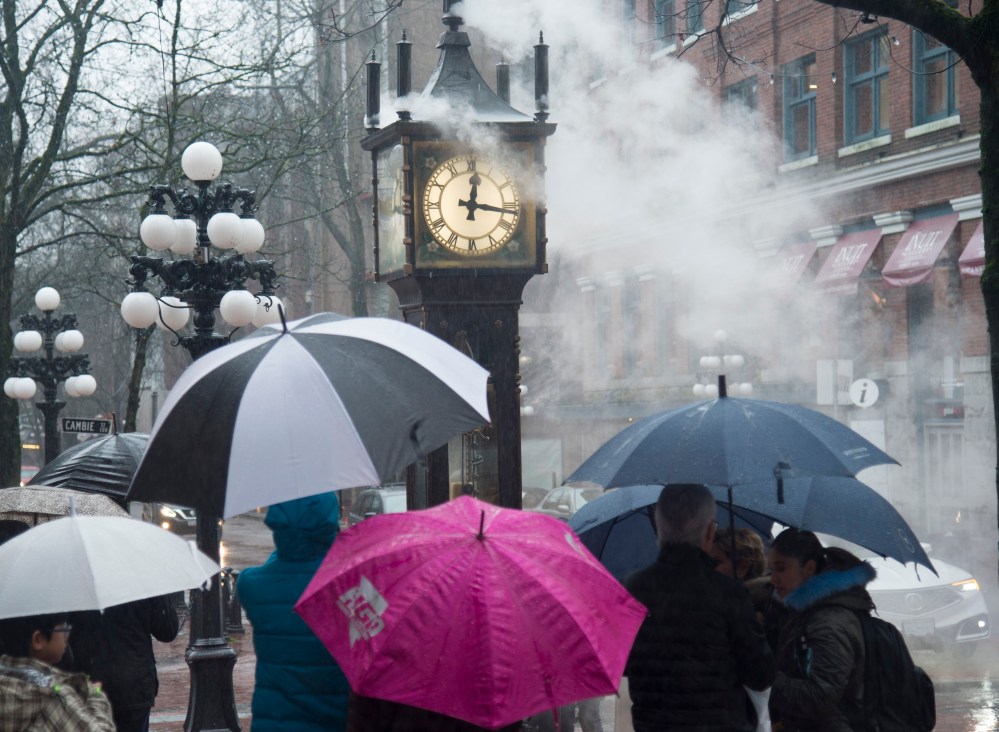
Without the reverting to standard time in November, that will mean sunrises around 9:30 a.m. in Prince George in the depths of winter.
Yu said he was glad Eby “finally made a decision” on an issue that has been debated for decades, and that “once and for all” most British Columbians won’t have to worry about changing their clocks twice a year.
But there will be a trade-off.
“It’s always challenging to get up in the middle of the night,” laughed Yu.
Now a grandfather, he said it was his children’s problem to fight with the darkness and get his eight grandkids ready for school in winter.
“They have to work on this now,” he said.
That is where the Vitamin D and multiple alarms come in, but he is confident fellow northerners will cope.
He said in Prince George, many hockey parents are already waking up in pitch darkness at 5 a.m. to drop their children off at arenas.
While the vast majority of B.C. is now moving to the new year-round Pacific time zone — as opposed to Pacific standard and Pacific daylight time — the situation is complicated by the fact that some parts of the province already use Mountain time.
The rest of B.C. and Alberta will be in sync from November to March, with Alberta remaining an hour ahead from March to November.
Cranbrook, B.C., is among the communities near the Alberta boundary that uses Mountain time. It is pushing for discussions with other local governments in the East Kootenay region to not be included in the B.C.’s new time zone.
The city said in a news release that the issue is whether the change “is not to affect the East Kootenay, meaning the region would remain on Mountain time in sync with Alberta year-around.”
Cranbrook Mayor Wayne Price said the city council wanted to meet with regional government partners “to see if a change is wanted here and to make sure our approach is co-ordinated.”
He said in the release that the announcement from the province “was as much a surprise to council as it was to the rest of the community and the region.”
Point Roberts, the peninsula south of Vancouver that is part of the United States while being entirely physically attached to B.C., will be an hour behind B.C. from November to March, unless U.S. federal laws mandating the biannual time changes are scrapped.
Longtime Point Roberts advocate Brian Calders said Washington state, Oregon, California and B.C. had all been in discussions about adopting permanent daylight time, and he was happy to see Eby finally went ahead and said “let’s do it.”
“We’re hoping Washington and Oregon do the same,” said Calders.
Having a common time zone on both sides of the international border would benefit commerce, Calders said.
He said Point Roberts doesn’t have any big drugstore like London Drugs or Shoppers Drug Mart, so many residents, including himself, travel to Delta in B.C. to find a pharmacy.
He said making appointments in different time zones could be an “exercise for your brain.”
This report by The Canadian Press was first published March 3, 2026.