

Closing gender pay gap, creating national drug program priorities in Liberal budget
Advertisement
Read this article for free:
or
Already have an account? Log in here »
To continue reading, please subscribe:
Monthly Digital Subscription
$1 per week for 24 weeks*
- Enjoy unlimited reading on winnipegfreepress.com
- Read the E-Edition, our digital replica newspaper
- Access News Break, our award-winning app
- Play interactive puzzles
*Billed as $4.00 plus GST every four weeks. After 24 weeks, price increases to the regular rate of $19.95 plus GST every four weeks. Offer available to new and qualified returning subscribers only. Cancel any time.
Monthly Digital Subscription
$4.99/week*
- Enjoy unlimited reading on winnipegfreepress.com
- Read the E-Edition, our digital replica newspaper
- Access News Break, our award-winning app
- Play interactive puzzles
*Billed as $19.95 plus GST every four weeks. Cancel any time.
To continue reading, please subscribe:
Add Free Press access to your Brandon Sun subscription for only an additional
$1 for the first 4 weeks*
*Your next subscription payment will increase by $1.00 and you will be charged $16.99 plus GST for four weeks. After four weeks, your payment will increase to $23.99 plus GST every four weeks.
Read unlimited articles for free today:
or
Already have an account? Log in here »
Hey there, time traveller!
This article was published 27/02/2018 (2944 days ago), so information in it may no longer be current.
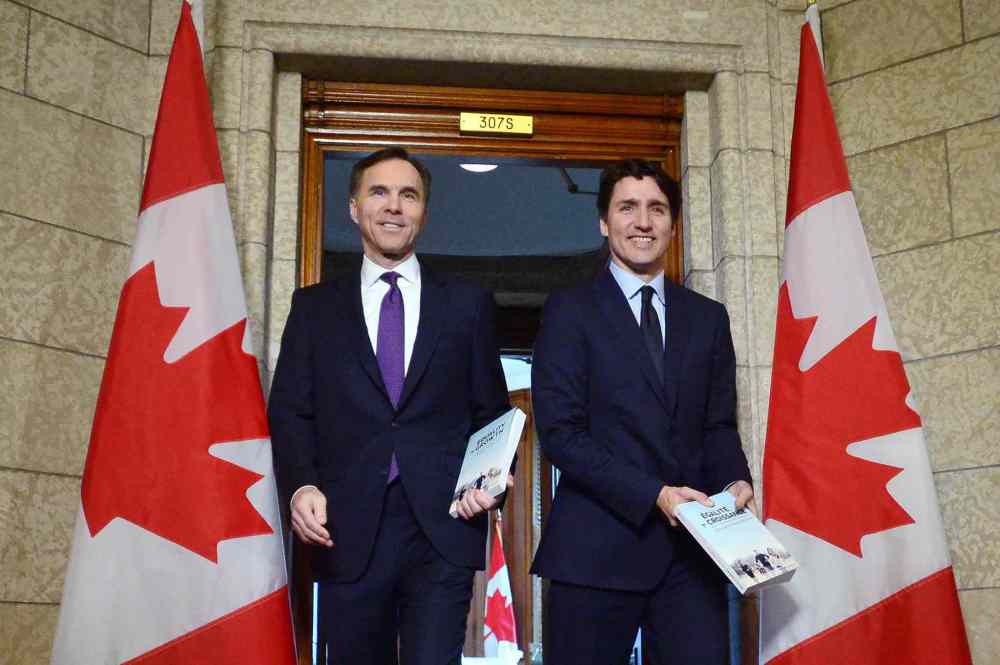
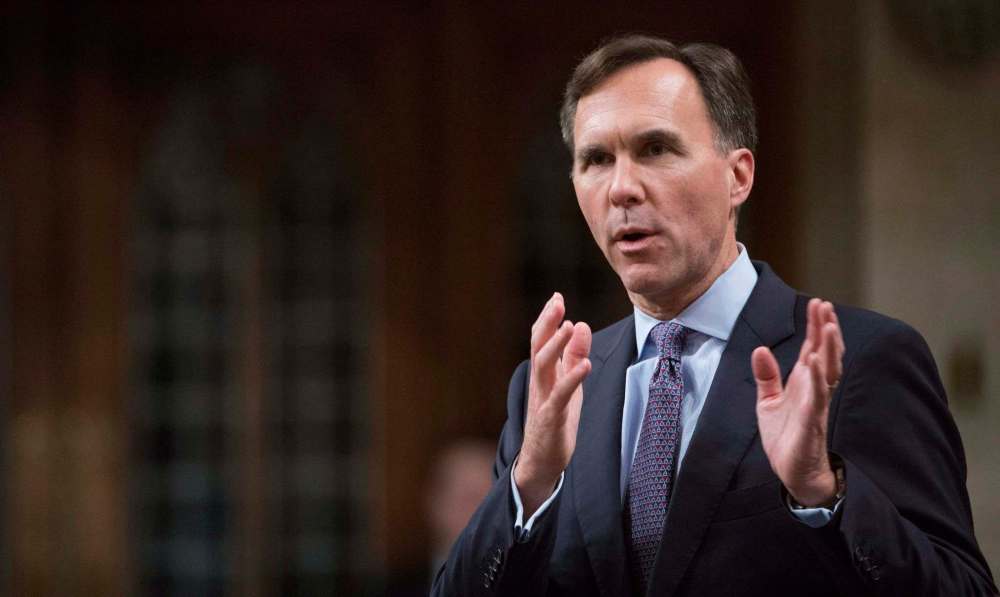
OTTAWA — Federal Finance Minister Bill Morneau unveiled a federal budget Tuesday aimed at getting more women, Indigenous people and youth into the job market, even if it means pushing the country deeper into debt.
“With a strong and growing economy in place, we believe that now is the right time to focus on the deeper challenges that hold our economy, and our people, back,” Morneau told the House of Commons in his budget speech.
The budget aims to bridge the gender pay gap, improve education for Indigenous people, coax more men into taking parental leave and study the viability of subsidized prescription drugs.
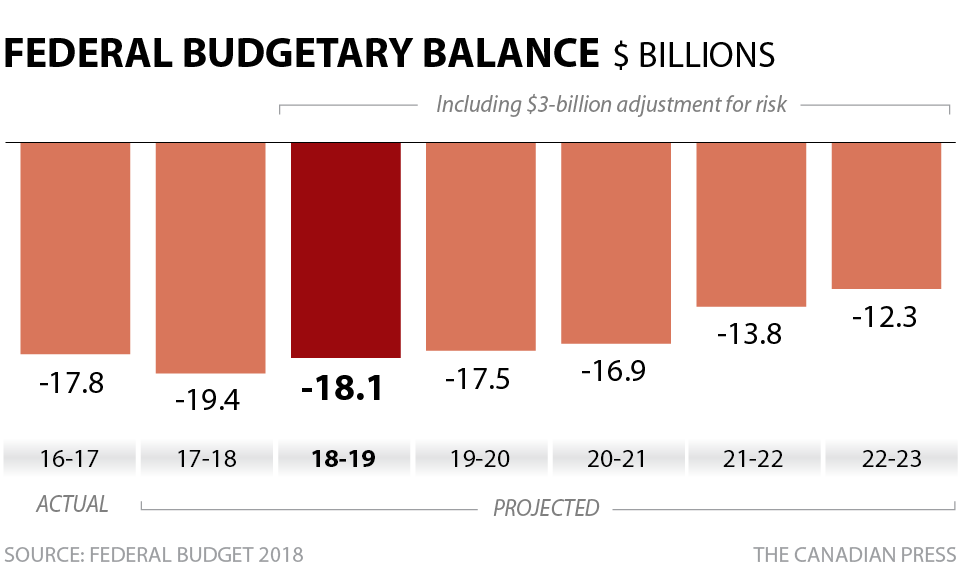
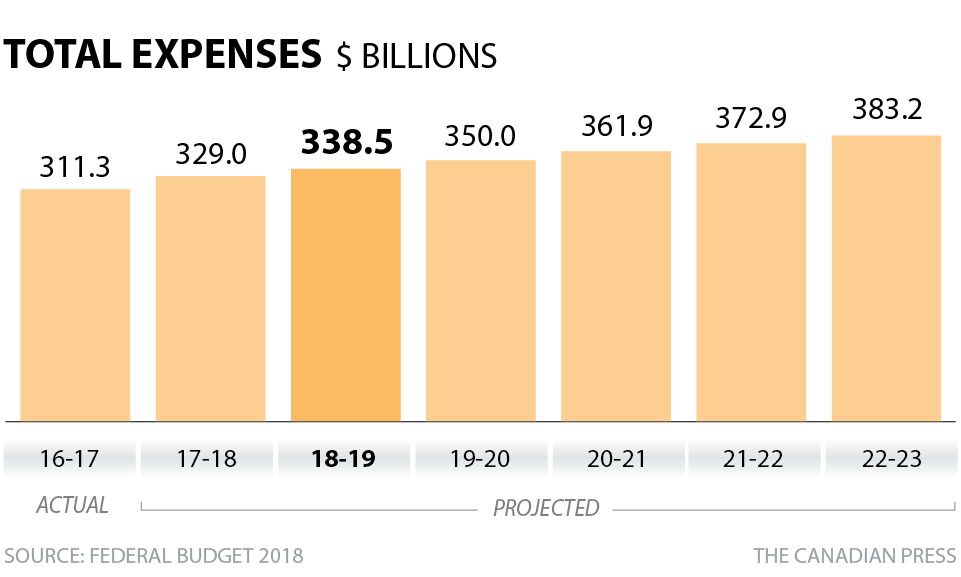
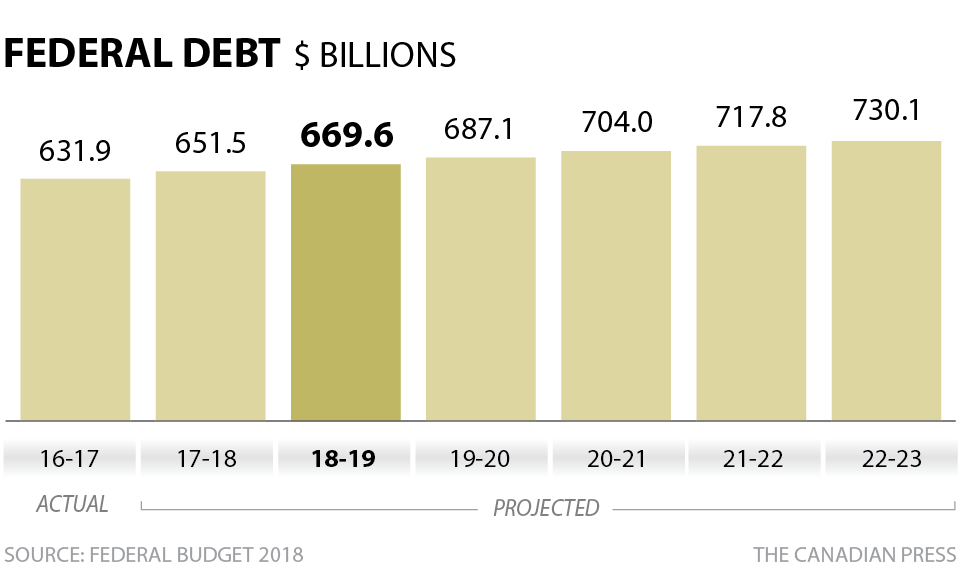
To that end, the Liberals have projected this year’s deficit at $18.1 billion, which should gradually drop over the next five years but there is no timeline for balanced books.
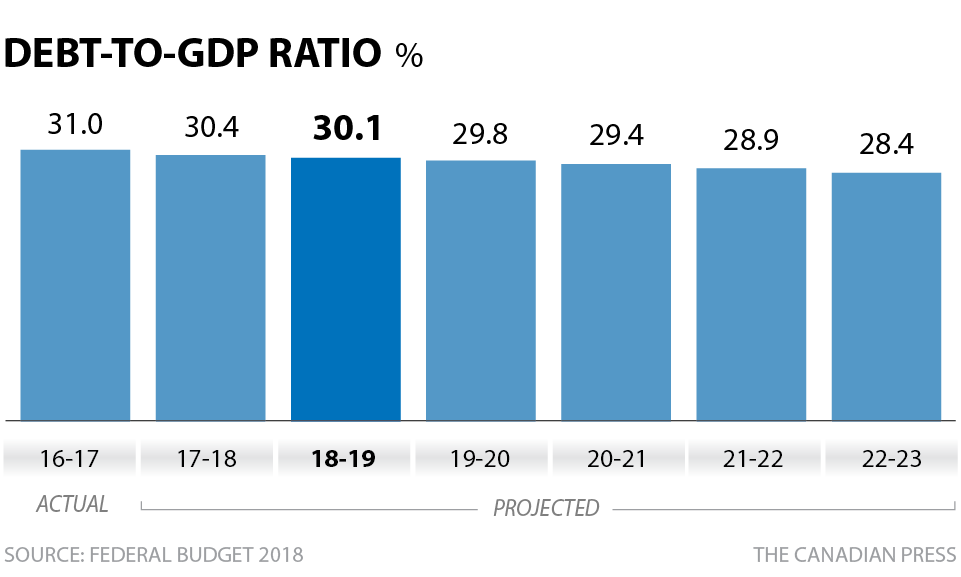
The Liberals’ 2015 election campaign pledged to run $10-billion deficits for three years, followed by a balanced budget in 2019. Instead, Tuesday’s budget doubles down on debt, which Morneau says is about “making sure that every Canadian has a real and fair chance to work, to contribute to our economy, and to succeed.
“This is important not just as a matter of fairness, but as a way to ensure Canada’s long-term growth.”
The government is also implementing "take it or leave it" parental leave of five weeks for spouses of primary caregivers. That means that husbands of women who take maternity leave will be offered five weeks of paternity leave, which they cannot transfer to their spouse.
It means adding an extra five weeks to the existing 35 weeks of parental benefits, which can currently be used in total by just one spouse. The idea is to lower the disproportionate rate of women opting for parental leave, who then fall behind in taking up management roles.
The benefits will cover up to 55 per cent of a parent’s earnings; a similar Quebec policy covers 70 per cent. Ottawa’s plan will cost $1.2 billion over five years.
Budget highlights
Highlights from the federal Liberal budget tabled Tuesday by Finance Minister Bill Morneau
Highlights from the federal Liberal budget tabled Tuesday by Finance Minister Bill Morneau
Pricier smokes
Ottawa will raise the sin tax on tobacco products, amounting to an extra dollar for a carton of 200 cigarettes. That excise tax would rise with annual inflation, instead of every five years, a move Ottawa made last year with beer and wine taxes despite intense corporate lobbying.
Support for news
The Liberals have pledged $50 million over five years to support “local journalism in underserved communities,” and plan to explore new models that would allow private and philanthropic support for “non-profit” journalism, including allowing Canadian newspapers to receive charitable status.
That’s in addition to $172 million over five years (and $42.5 million a year afterward) for the Canada Media Fund to foster the growth of Canadian-produced content like entertainment and arts.
Beefed-up border guards
For the fiscal year starting this spring, border agents will have an extra $173.2 million to deal with the increased number of people seeking asylum in Canada, suggesting the government does not see the uptick reversing long-term in areas like Emerson.
Research money
The National Microbiology Laboratory on Arlington St., which famously developed an Ebola vaccine, is getting an extra $9.4 million over the next five years. The lab already studies animal and human disease, and will add a new Centre for Innovation in Infectious Disease Diagnostics.
It’s part of a $3.2-billion research boost which will help granting councils, Big Data projects and outdated lab facilities.
Opioid help
Ottawa is uncorking $20 million in emergency aid to Manitoba, British Columbia and Alberta combined, “to help these provinces respond to the overwhelming effects of the opioid crisis.” The specifics have yet to be announced.
Though Winnipeg Police have recently highlighted the meth crisis as a more immediate danger for the city, nothing in the Tuesday budget mentions methamphetamine.
Summer gigs
Despite the controversy surrounding the Canada Summer Jobs program’s values statement, the number of placement is set to double by 2020 thanks to $448.5 million over five years.
Tax crackdown
The Liberals are earmarking $90.6 million over five years to track down tax evaders and avoiders, plus $41.9 million over five years and $9.3 million a year thereafter to help Canada’s courts deal with the additional caseload.
– With files from The Canadian Press
dylan.robertson@freepress.mb.ca
Hassan Yussuff, president of the Canadian Labour Congress, said the pay gap is particularly important in the Prairies, with cities such as Winnipeg attracting a disproportionately high amount of young families.
He said the national policy could give provinces the data and popular will to implement their own policies and avoid union grievances. "Finally, we’d be able to close the gap, and it would not be a litigious process," Yussuff said.
The government is elevating Status of Women Canada from an agency within the Heritage Department into its own, full-fledged department that goes beyond leading roundtables and issuing grants for non-profits.
It will now be tasked with eventually closing the gender pay gap in federally regulated workplaces. Nationally, that gap amounts to women making an average 12 cents less per dollar than men.
Ottawa will task federal departments and agencies with targets, mandatory reporting and a new online system that better discloses federal wages and gaps (though the Privacy Act would obscure an individual employee’s salary).
The Liberals hope the changes it makes to the sectors it oversees — such as the military, the Microbiology Lab in Winnipeg and airport security — will prod provinces to follow suit.
The vast majority of workplaces in Manitoba fall under provincial regulation, and the province has not followed Ontario and Quebec in pledging legislation to monitor or reverse the pay gap.
Craig Alexander, the Conference Board of Canada’s chief economist, said the budget is “a very constructive approach” to insulating the country from looming blows caused by the aging baby-boomer generation, by getting more Canadians working.
"I think what the government is struggling with is… the pace of economic growth is going to slow on a trend basis, and the reason why it’s slowing is because of demographics."
Alexander said the government previously tinkered with tax rates to get more revenue out of high earners, and may now find more success by getting more people into the job market.
"I would argue the most effective way to deal with income inequality in Canada is to remove barriers to opportunity," he said.
The budget held off on demands to boost child-care funding, and posted $50 million over five years for journalism upstarts, amid calls by some legacy media for assistance. It does put up funding to get more women into science and trades, and to improve Indigenous education.
Related Articles
Paternity leave only partial solution

The Liberals have uncorked $3.2 billion over five years for Canadian scientists, and another $1.3 billion in that time period to meet a United Nations goal to protect 17 per cent of land and inland waters.
Meanwhile, the government is also forming an "Advisory Council on the Implementation of National Pharmacare," though Morneau said he wasn’t sure whether that would mean a tangible proposal in next year’s budget, or even next October’s election campaign.
The New Democrats have long pushed for a national policy to protect the estimated one in 10 Canadians who can’t afford the drugs they’re prescribed.
Selkirk-area MP James Bezan said Manitoba is still waiting to see tangible results from the Liberals’ past two budgets, such as infrastructure upgrades.
“This is another big-spending budget that is not actually getting any results,” the Tory MP said. “I think it’s extremely high-risk to keep piling on the deficit.”
But Morneau fended off criticisms that the Liberals have broken their pledge to balance the budget by next year.
“We’ve shown to Canadians that making investments in them, making investments to allow more Canadians to be working, has exactly the positive impact that we want it to have,” he told reporters.


dylan.robertson@freepress.mb.ca
History
Updated on Tuesday, February 27, 2018 7:32 PM CST: Final write through