

Paternity leave only partial solution
Advertisement
Read this article for free:
or
Already have an account? Log in here »
To continue reading, please subscribe:

Digital Subscription
One year of digital access for only $205*
- Enjoy unlimited reading on winnipegfreepress.com
- Read the E-Edition, our digital replica newspaper
- Access News Break, our award-winning app
- Play interactive puzzles
*First annual payment billed as $205.00 + GST for one year. This annual subscription will automatically renew at $233.00 + GST every 52 weeks (10% off the regular annual price of $259.35). Offer available to new and qualified returning subscribers only. Cancel any time.
To continue reading, please subscribe:
Add Free Press access to your Brandon Sun subscription for only an additional
$1 for the first 4 weeks*
- Enjoy unlimited reading on winnipegfreepress.com
- Read the E-Edition, our digital replica newspaper
- Access News Break, our award-winning app
- Play interactive puzzles
*Your next Brandon Sun subscription payment will increase by $1.00 and you will be charged $17.95 plus GST for four weeks. After four weeks, your payment will increase to $24.95 plus GST every four weeks.
Read unlimited articles for free today:
or
Already have an account? Log in here »
Hey there, time traveller!
This article was published 05/03/2018 (3111 days ago), so information in it may no longer be current.
Will the new federal budget increase the number of women in the workforce, and address the wage gap? Maybe.
In Canada, maternity-leave benefits are Employment Insurance payments made to mothers who choose not to work owing to pregnancy or having recently given birth. Those benefits, up to 55 per cent of one’s employment income, are only payable to the biological mother, to a maximum of 15 weeks. The remainder of a mother’s salary may be topped up by her employer, depending where she works.
Parental benefits are paid only to the biological, adoptive or legally recognized parents while caring for their newborn or newly adopted children, to a maximum of 35 weeks within the first year of the child’s life.
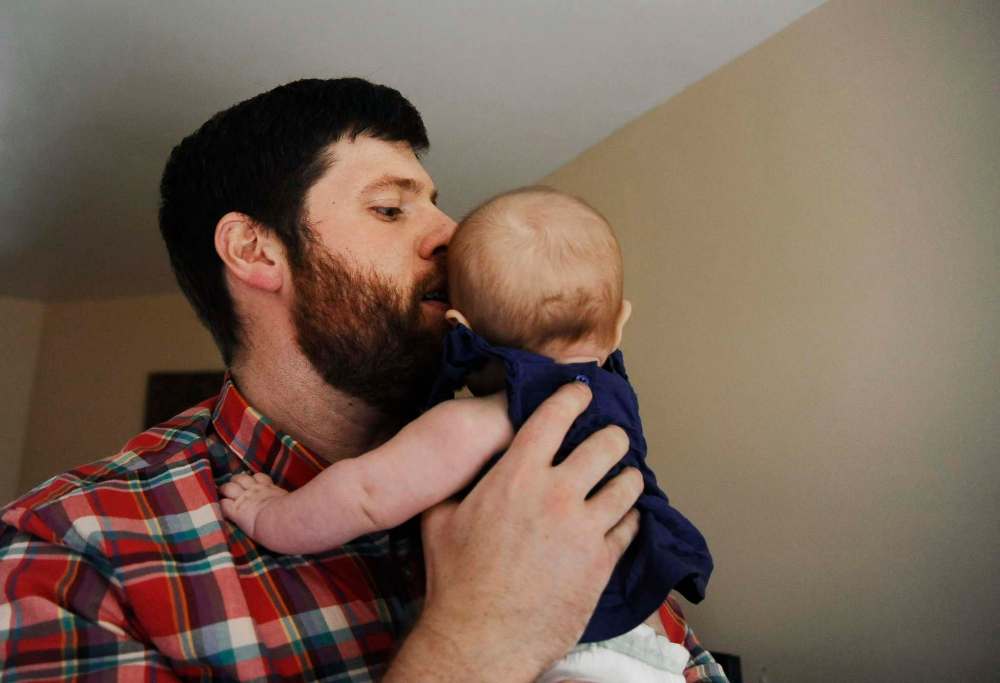
In Canada, a parent is entitled to a year off from work to care for a newborn.
The change in the federal budget announced on Tuesday adds five weeks of paid parental leave for fathers or non-birth parents, including adoptive and same-sex partners,
The Liberals have dubbed it a “use it or lose it” benefit, since it’s not transferable between spouses. The new leave option will become available in June 2019.
Will this have a real effect on the time fathers take away from work to care for newborn children? Perhaps. If so, it could mean women would be freed up somewhat from the perceived role of default caregiver to their newborn children.
But five weeks is not very much in the grand scheme of things, though it can seem an eternity to new parents. As the cliché goes: for parents, the days are long but the years are short.
The importance a country places on early child care and development in what it guarantees varies widely. A 2016 McGill University study found that 188 countries guarantee paid leave of some sort for new mothers; Canada and many European countries stipulate a woman may take one year of unpaid maternity leave.

However, alone among developed nations, in the United States new mothers are only entitled to 12 weeks of unpaid leave from their place of employment. (Before 1993, the U.S. had no guaranteed leave for new parents.)
What this often means is that women are more likely to take time off from work to care for children. That has a cumulative effect on their careers, in seniority, networking and earning power. Canadian women already face a wage gap with men — according to Statistics Canada, in 2015, women were earning 87 cents for every dollar men earned.
A potential five-week leave by a mother’s husband will certainly help two-parent families, but it’s hard to see how it will benefit single parents. If it encourages more fathers to take part in their children’s care while the mother returns to work, it could have a small effect for women advancing in their careers while those men stay home.
However, as important as having time and a degree of financial freedom to devote to parenting is, a greater factor in the wage gap between men and women is the availability of affordable daycare. Statistics Canada data show that the wage gap is higher in metropolitan areas where child-care fees are more expensive.
While the Liberals’ initiative to encourage men to take parental leave is admirable, they should also return to an initiative that was a party platform plank as long ago as 1988: a national public daycare program. That would benefit women, men and single parents, and provide support for a more diverse workforce.
Related Articles
Paternity leave is food for fatherly thought Liberals take economic gamble as budget does little to protect against significant downturn
Advertisement Advertise With Us
Advertisement Advertise With Us