Global Issues
Please review each article prior to use: grade-level applicability and curricular alignment might not be obvious from the headline alone.

Muslim community breaks fast at Grand Iftar to raise funds for people in Sudan, Gaza
4 minute read Preview Monday, Mar. 9, 2026
Australia grants asylum to 5 members of the Iranian women’s soccer team
7 minute read Preview Tuesday, Mar. 10, 2026
AI company Anthropic sues Trump administration seeking to undo ‘supply chain risk’ designation
6 minute read Preview Friday, Apr. 24, 2026
Debate over a foreign spy service for Canada influenced by allies, money: study
7 minute read Preview Friday, Apr. 24, 2026
Farmers again caught in geopolitical crossfire
4 minute read Preview Saturday, Mar. 7, 2026
Show her the money
6 minute read Preview Saturday, Mar. 7, 2026It takes a village to raise AI responsibly
5 minute read Saturday, Mar. 7, 2026Anthropic, maker of the popular Claude artificial intelligence model, has been facing heat from the U.S. government over the ethics of military AI. Due to its safety-first approach, its AI was considered the best and was approved for use on classified military networks. It signed a lucrative contract with the Pentagon and was integrated into military systems. Sounds ominous, for sure.
But the contract specified that the AI could not be used for fully autonomous weapons systems that can kill targets without involving human judgment, and for mass domestic surveillance of Americans. The Pentagon fought back against these restrictions, even though it signed the contract as such, insisting that the AI could be used for “all lawful purposes” and quickly sought to punish Anthropic for not capitulating to its demands.
Anthropic stood by its guardrails, both on principle and contract, standing up against the dangerous use of AI, risking the loss of government contracts and punishment from the autocratic regime. In solidarity, Sam Altman from OpenAI, Google’s AI division (Gemini AI) and others have supported the stand that these guardrails are necessary in a safe and democratic society. It is good news that there are red lines that AI should not cross and that the companies themselves are standing up against them.
But what struck me about this battle was a statement from an Anthropic executive in response to the Pentagon’s demands which read: “Some uses are also simply outside the bounds of what today’s technology can safely and reliably do.” This defence is a clear definition of the limits of their AI model based on a deep understanding of its abilities as the creator of their technology. This becomes apparent when you look at how their model was developed.

Children’s book on Ramadan put back on school shelves
3 minute read Preview Friday, Mar. 6, 2026
Pentagon’s chief tech officer says he clashed with AI company Anthropic over autonomous warfare
5 minute read Preview Friday, Apr. 24, 2026
Supreme Court says asylum seekers entitled to subsidized Quebec daycare
4 minute read Preview Saturday, Mar. 7, 2026
West has long history of vilifying Iran
5 minute read Preview Friday, Mar. 6, 2026
Former Democratic presidents remember the late Rev. Jesse Jackson during final public tribute
6 minute read Preview Saturday, Mar. 7, 2026
Spin Master sees loss, lower revenue in holiday quarter
4 minute read Preview Friday, Apr. 24, 2026
OpenAI agrees to strengthen safeguards following B.C. mass shooting: minister
3 minute read Preview Friday, Apr. 24, 2026
Google settles with Epic Games with offer to lower its app store commissions
4 minute read Preview Friday, Apr. 24, 2026
Province asks public to weigh in on rules for AI
2 minute read Preview Wednesday, Mar. 4, 2026
Carney says Canada, Australia hold ‘rare convening power’ in Parliament speech
5 minute read Preview Wednesday, Mar. 4, 2026Precedent-setting Treaty 1 case wraps up
5 minute read Wednesday, Mar. 4, 2026A precedent-setting trial that wrapped up in Winnipeg’s Court of King’s Bench at the end of February has called for a court to determine, for the first time in 150 years, whether the value of Treaty 1 annuities is subject to an increase after being frozen at $5 per person since 1875.

Local Iranians bittersweet about war
5 minute read Preview Wednesday, Mar. 4, 2026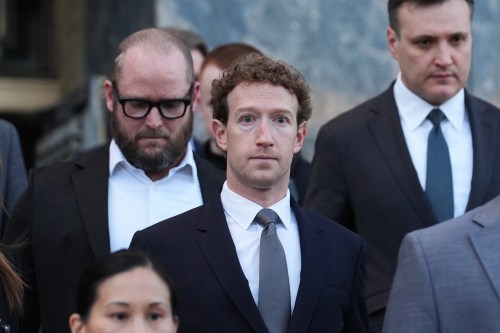
Trial against Meta in New Mexico highlights video depositions by top executives
4 minute read Preview Friday, Apr. 24, 2026
The sidelines: perhaps the safest place to be
4 minute read Preview Tuesday, Mar. 3, 2026
End the ban: France backs return of intellectually disabled athletes to Winter Paralympics
6 minute read Preview Tuesday, Mar. 24, 2026
Where things stand after the US and Israeli strikes on Iran
6 minute read Preview Monday, Mar. 2, 2026