Global Issues
Please review each article prior to use: grade-level applicability and curricular alignment might not be obvious from the headline alone.
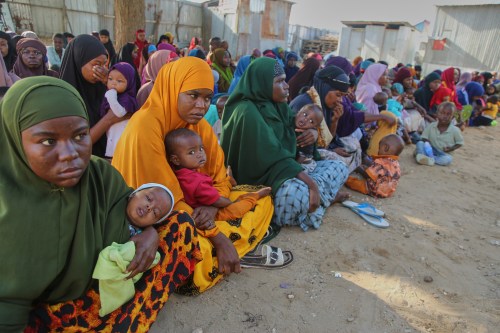
Somalia faces another hunger crisis and the UN food agency head says it has far less funds to help
5 minute read Preview Saturday, Sep. 12, 2026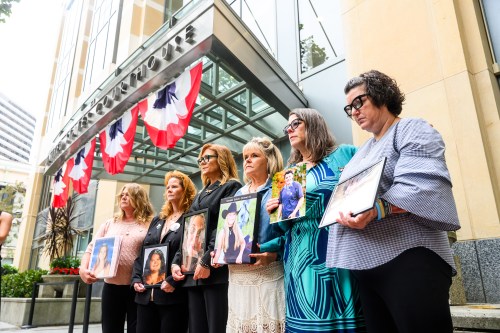
In Meta’s trial, families of social media victims see a pivotal moment for online safety
5 minute read Preview Wednesday, Sep. 9, 2026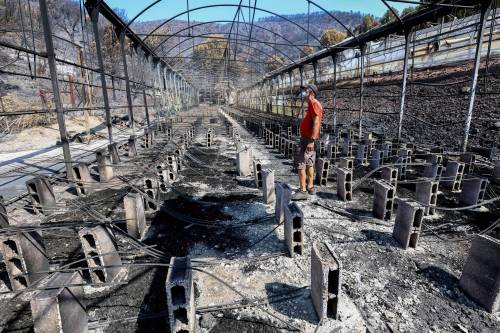
A grand jeté of climate-change denial
5 minute read Preview Tuesday, Aug. 18, 2026The moral courage of public dissent
5 minute read Tuesday, Aug. 18, 2026As a non-Jewish Canadian, I have watched our public conversation about Israel and Palestine become increasingly polarized. One feature of that debate has particularly caught my attention—not the disagreements themselves, but the moral courage required of Jewish Canadians who publicly dissent from influential voices within their own community.
Ironically, many non-Jewish Canadians who may have little familiarity with Jewish history assume that disagreement is somehow un-Jewish. The opposite is true. Debate has been central to Jewish intellectual life for centuries. The Talmud itself preserves arguments rather than erasing them.
To outsiders, minority communities can easily appear to speak with one voice. In Canada, organizations such as the Centre for Israel and Jewish Affairs (CIJA), Jewish Federations of Canada (UIA) and B’nai Brith are often perceived as representing the Jewish perspective on Israel and antisemitism. They undoubtedly represent many Canadian Jews. But they do not represent them all.
There are also Jewish organizations and individuals — including Independent Jewish Voices Canada, the United Jewish People’s Order, the recently formed Jewish Faculty Network and others — who reject the notion that any single institution or political perspective can define what it means to speak as a Jew in Canada. They frequently offer perspectives that differ from those advanced by many established Jewish organizations about Israel; defend the importance of free expression on university campuses; and argue that criticism of the actions of the Israeli government should not automatically be equated with antisemitism.

Canada’s social media ban for under-16s likely to face Charter challenge, experts say
5 minute read Preview Tuesday, Sep. 8, 2026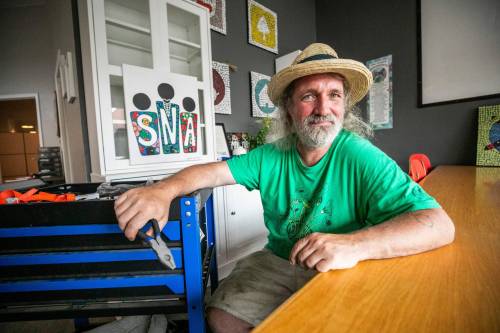
Free fix is in: repair café aims to keep items out of landfills
3 minute read Preview Monday, Aug. 17, 2026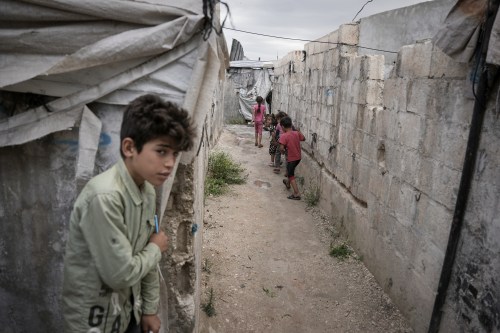
Anti-terrorism measures hindering Muslim charities’ humanitarian efforts: study
7 minute read Preview Monday, Aug. 17, 2026
Ottawa wants to block kids from social media. How would age verification work?
7 minute read Preview Monday, Aug. 17, 2026
Rise of social media reflects rise of self-promotion — to the detriment of genuine storytelling
4 minute read Preview Saturday, Aug. 15, 2026
Human cost of AI bubble outweighs tech’s potential
4 minute read Preview Saturday, Aug. 15, 2026The effects of El Nino on crop prices, production
4 minute read Saturday, Aug. 15, 2026The prospect of a Super El Nino on the horizon has figured prominently in the media, but its impact on farmers depends on which side of the world they live.
As the harvest equipment starts chewing through the first fields of the season here, the phenomenon ranks low on farmers’ worry list.
If anything, warming sea-surface temperatures in the central Pacific could support higher crop prices due to its impact on production in export competitors such as Australia.
While not a key driver behind the recent rallies that have brightened the price outlook for this year’s harvest, the Super El Nino one of the underlying fundamentals that could help keep prices buoyant through the winter months, says Bruce Burnett, a weather and markets analyst with Glacier Farm Media.
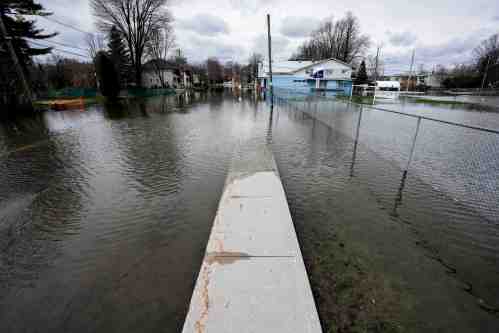
Feds reports progress on climate adaptation but climate groups say it isn’t enough
5 minute read Preview Saturday, Aug. 15, 2026
France’s top court blocks under-15 social media ban, citing constitutional freedoms
2 minute read Preview Saturday, Aug. 15, 2026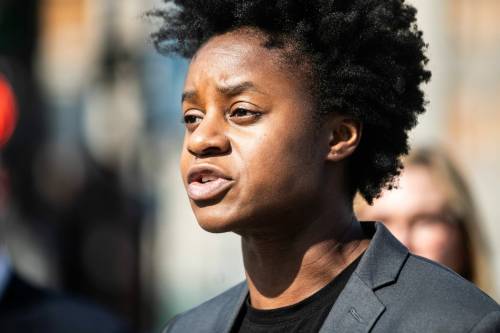
Manitoba supports MAID delay: Asagwara
5 minute read Preview Friday, Aug. 14, 2026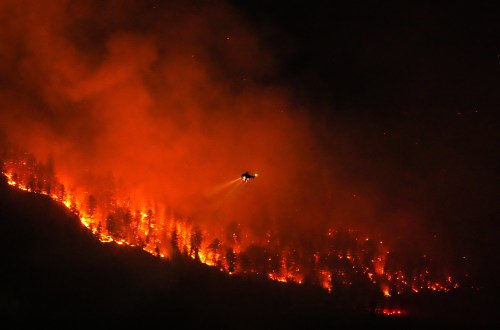
Fact File: Experts douse viral claim that wildfires caused by ‘weather manipulation’
5 minute read Preview Saturday, Sep. 5, 2026
Quiet opening fitting for controversial site
4 minute read Preview Wednesday, Aug. 12, 2026
A Winnipeg home with a mountain view? You won’t find a real one, but AI-generated visual suggests otherwise
6 minute read Preview Tuesday, Aug. 11, 2026
Alberta seeks proposals for gambling addiction services as part of iGaming launch
3 minute read Preview Friday, Sep. 4, 2026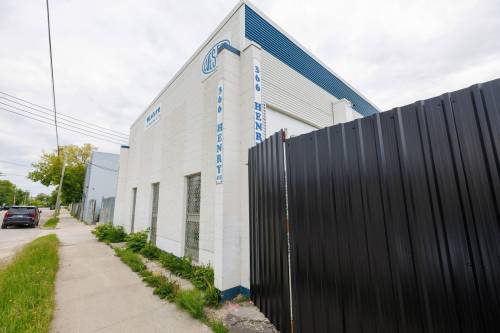
Long-awaited supervised drug consumption site opens quietly after months of loud opposition
11 minute read Preview Tuesday, Aug. 11, 2026In an era of technological access and sheer speed of knowledge transfer, ascertaining “truth” should theoretically be conducted with ease. After all, knowledge has become instantaneously available to us at the mere click of a button.
And yet, deciphering the truth has perhaps never been so indiscernible, contradictory and politicized. For a multiplicity of reasons, learning the truth may be perceptively inconvenient, uncomfortable or even threatening.
Through generating knowledge and new understandings of the world, our most cherished world views may be challenged, potentially uprooting our entire identities and belief systems.
Consequently, being confronted with the truth may yield a myriad of defensive responses, as many of us are simply unwilling to accept such unpleasant realities.
The drugs changed — our systems didn’t
5 minute read Tuesday, Aug. 11, 2026A recovery-oriented system must connect housing, care, public safety and long-term community support.
Around 2016, something changed on Winnipeg’s streets. Methamphetamine became more prevalent. Fentanyl entered the supply. The drugs became more toxic, addiction more relentless and homelessness far more complex.
Our systems, however, largely remained the same.
For years, we have described Winnipeg’s homelessness crisis primarily as a housing problem. There is no question that we need affordable, supportive and transitional housing. But housing is only part of the crisis unfolding on our streets.
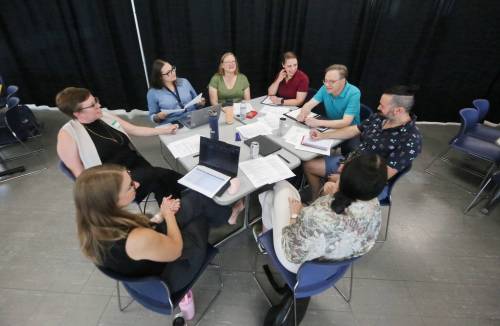
AI fears voiced during public consultation in Brandon
4 minute read Preview Monday, Aug. 10, 2026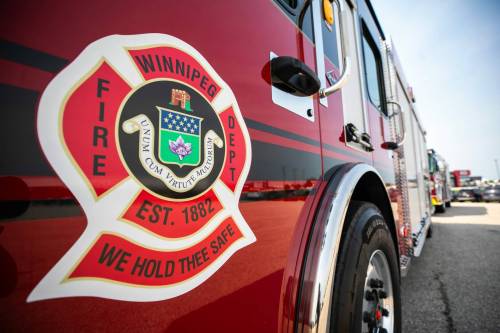
City emergency crews to administer drug that stops opioid withdrawal symptoms
5 minute read Preview Monday, Aug. 10, 2026