Global Issues
Please review each article prior to use: grade-level applicability and curricular alignment might not be obvious from the headline alone.

Cuba pushes through sweeping free-market reforms in biggest economic shift since the revolution
4 minute read Preview Saturday, Jun. 20, 2026
World Refugee Day marked with celebration, reflection
3 minute read Preview Thursday, Jun. 18, 2026
National Science Foundation reverses decision to dismantle oceans-monitoring network after outcry
3 minute read Preview Tuesday, Jun. 23, 2026
Federal Trade Commission sues leading transgender health group
5 minute read Preview Friday, Jun. 19, 2026
Climate change demands action, not hope
4 minute read Preview Wednesday, Jun. 17, 2026Canadians deserve clearer conversation about MAID
4 minute read Wednesday, Jun. 17, 2026When Canada legalized medical assistance in dying in June 2016, the public debate focused largely on one situation: people facing the end of life and suffering intolerably.
For many Canadians, that remains their understanding of the law today.
But Canada’s MAID framework has evolved significantly since then. In 2021, Parliament expanded the law through Bill C-7, creating two pathways for assisted death. The first pathway applies to people whose natural death is imminent and expected soon (reasonably foreseeable).
The second — known as “Track 2” — allows separate access to MAID for individuals with disabilities who are not dying.
Families shouldn’t have to fight this hard for help
4 minute read Wednesday, Jun. 17, 2026Receiving a diagnosis is the first of many hard steps in the lifetimes of young people who live with disabilities and their families.
What comes next for many families in Manitoba who have a child with a disability is often a harsh reality, plagued by uncertainty, further delays, difficult decisions, gaps in service, and difficulties accessing even the most basic support for their children.
Manitoba’s children’s disability services system has skilled, knowledgable, and supportive service providers. However, resources are scarce and case workers are stretched too thin. As a result, children with disabilities and their families are left with nowhere to turn for support and resources.
The Manitoba Advocate for Children and Youth (MACY) released Bridging the Gap: Achieving Substantive Equality for Children with Disabilities in Manitoba in 2021. The report outlined nine clear recommendations to improve access to services. Almost all those recommendations remain unfulfilled.

CMHR rejects Jewish organization’s allegations of foreign interference in exhibit about Palestinians
4 minute read Preview Tuesday, Jun. 16, 2026
MPs urge action to undercut ‘manosphere’ by tackling anti-women ideology
4 minute read Preview Wednesday, Jul. 8, 2026
Minister says ‘lost Canadians’ must prove link to Canada in each generation
6 minute read Preview Wednesday, Jun. 17, 2026
Ottawa’s new surveillance pricing rules not likely to take effect before 2028
4 minute read Preview Wednesday, Jul. 8, 2026
Ebola stretches weakened global aid system
5 minute read Preview Tuesday, Jun. 16, 2026
New First Nations water bill changes mention of ‘right’ to clean water access
4 minute read Preview Tuesday, Jul. 7, 2026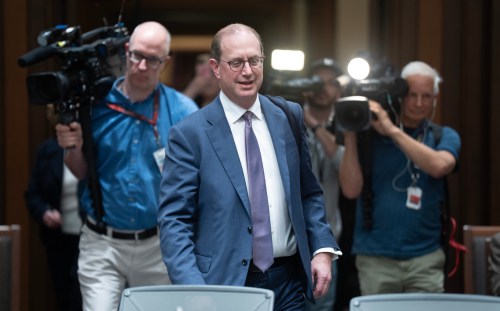
‘It’s all going to be OK’: Canada’s U.S. ambassador tries to ease CUSMA anxiety
4 minute read Preview Tuesday, Jun. 16, 2026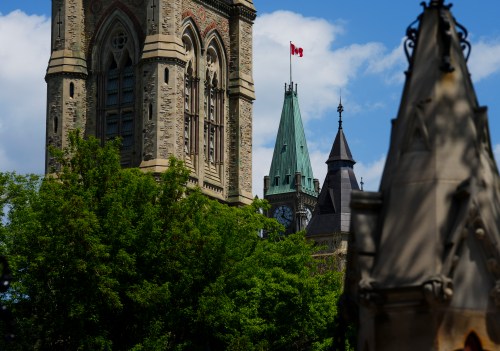
Ottawa introduces privacy bill covering children’s data, right to request deletion
4 minute read Preview Tuesday, Jul. 7, 2026
Manitoba’s role in a distant Ebola outbreak
5 minute read Preview Monday, Jun. 15, 2026
Taking Pride in what’s been built
4 minute read Preview Monday, Jun. 15, 2026Halting social media harm requires national solution
5 minute read Saturday, Jun. 13, 2026THE federal Liberal government’s proposed legislation to ban or restrict social media access for children under 16 appears to be a sensible approach to one of the most difficult public policy challenges of the digital age.
Whether Canadians ultimately support a ban, limited restrictions or exemptions for platforms that can demonstrate adequate safeguards, one thing is becoming increasingly clear: if governments are going to regulate children’s access to social media, it makes far more sense to do it at the federal level than through a patchwork of provincial laws.
That’s particularly relevant in Manitoba, where the provincial government has been exploring its own options to restrict social media use among young people.
The intentions are understandable. Parents, educators, health-care professionals and policymakers are becoming increasingly alarmed about the effects social media is having on many children and teenagers.

New UFO files describe spinning discs, glowing orbs and one object shaped like a potato
5 minute read Preview Tuesday, Jun. 23, 2026
Winkler hosts first LGBTTQ+ celebration Saturday
6 minute read Preview Friday, Jun. 12, 2026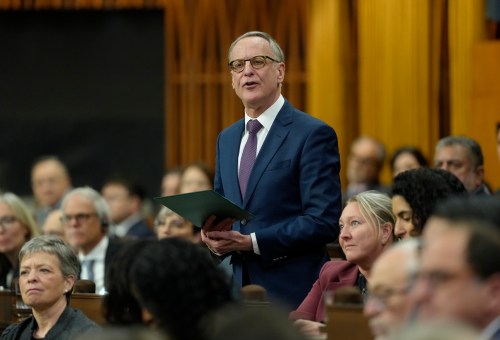
Ottawa moves to tighten rules barring forced labour products from Canada
6 minute read Preview Sunday, Jun. 14, 2026
As UFOs go mainstream, the jury is out on what the existence of alien life might mean for religion
6 minute read Preview Sunday, Jun. 14, 2026
Carney announces new intelligence exchange agreement with France
6 minute read Preview Sunday, Jun. 14, 2026