Information Communication Technology
Please review each article prior to use: grade-level applicability and curricular alignment might not be obvious from the headline alone.

Rise of computer program Lean has changed the field of mathematics — and how we assess the truth
5 minute read Preview Saturday, Aug. 8, 2026
Can federal legislation effectively rein in social media’s opaque algorithms and deceptive design features?
12 minute read Preview Friday, Aug. 7, 2026
Some US adults are using AI for financial guidance but few trust it, Gallup poll finds
4 minute read Preview Monday, Aug. 10, 2026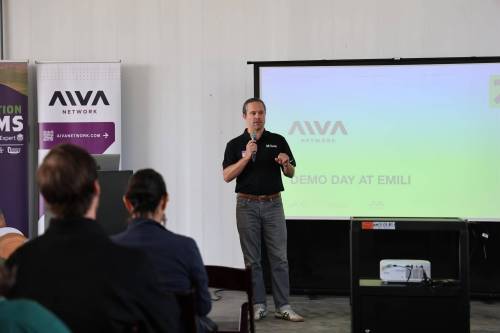
California tech company sees Manitoba as strategic gateway to dairy market
4 minute read Preview Thursday, Aug. 6, 2026
Court orders Instagram and Facebook’s Meta to pay $567M to address kids’ mental health online
5 minute read Preview Saturday, Aug. 29, 2026
Environment Canada upgrade expected to improve dangerous weather warnings after June storm alert barrage
6 minute read Preview Thursday, Aug. 6, 2026
Winnipeg artist RYAN AD's ambitions growing as work reaches Paris
4 minute read Preview Thursday, Aug. 6, 2026
Even AI has to watch its diet
4 minute read Preview Wednesday, Aug. 5, 2026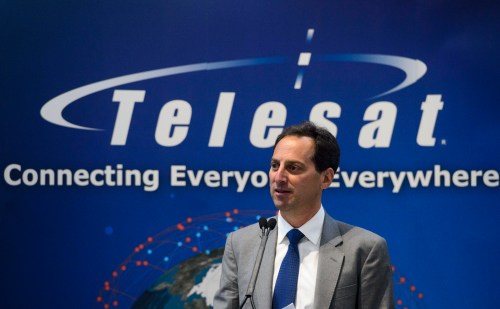
Ottawa awards Telesat $2.3B Arctic military satellite contract
4 minute read Preview Saturday, Aug. 29, 2026
Years after the pandemic, MPs are divided on hybrid Parliament rules
6 minute read Preview Wednesday, Aug. 5, 2026Authors fall prey to scam artists and fraudsters
5 minute read Tuesday, Aug. 4, 2026Today’s AI promotion scams aimed at authors attempt to exploit their human vulnerabilities.
Thinking is competitive advantage
4 minute read Saturday, Aug. 1, 2026Artificial Intelligence is set to become one of the greatest productivity tools businesses have ever seen. Ironically, its greatest value comes from rewarding the people who think the best rather than those who simply use it the most.
Every credible AI expert reinforces AI is just another tool. When used properly, it is potentially very powerful and can provide some excellent value — but it is not a holistic solution to every problem your business faces. As AI becomes more efficient, it creates more time for humans to think more deeply and become more capable.
You must maintain the “human in the loop.” Unless thinking and guidance are properly connected, a business can never achieve necessary alignment.
In other words, does the AI tool do what you need it to — or meant it to — in your organization? You will only know if you set an objective, test the tool, review the results and compare them with what you intended to achieve.

FCC chairman defends actions against ABC, says broadcasters must operate ‘in the public interest’
4 minute read Preview Sunday, Aug. 2, 2026
Government wants public input on use of AI
5 minute read Preview Friday, Jul. 31, 2026
Anthropic says its AI models hacked 3 organizations during testing
4 minute read Preview Sunday, Aug. 2, 2026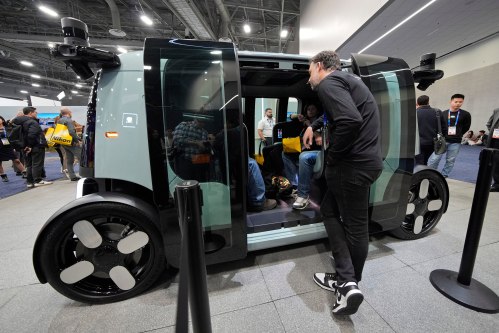
Some robotaxis approved to operate without steering wheels and losing the brake pedal could be next
5 minute read Preview Sunday, Aug. 2, 2026
Bell rolling out new tool to detect and flag spoofed phone calls using AI
2 minute read Preview Saturday, Aug. 1, 2026
Manitoba Innovates seeks to pump up in-person networking as artificial intelligence-created resumés become norm
6 minute read Preview Monday, Jul. 27, 2026
Cultural consultation gives Indigenous stories strength in Netflix’s new Little House on the Prairie
13 minute read Preview Monday, Jul. 27, 2026
Automation reaches new heights on farm
4 minute read Preview Saturday, Jul. 25, 2026
Banks seek to implement AI tools for customers … who love them until they don’t work
6 minute read Preview Saturday, Jul. 25, 2026
Familles en transition: une réflexion sur une transition cruciale
7 minute read Preview Saturday, Jul. 25, 2026
‘Existential’: Community papers struggling to survive amid Canada Post flyer delivery
6 minute read Preview Monday, Aug. 10, 2026