












Scientific Knowledge

Please review each article prior to use: grade-level applicability and curricular alignment might not be obvious from the headline alone.

No Subscription Required

Babies given peanuts, fish, eggs early less likely to become allergic, study affirms

Nicole Ireland, The Canadian Press 4 minute read Preview
No Subscription Required

Babies given peanuts, fish, eggs early less likely to become allergic, study affirms

Nicole Ireland, The Canadian Press 4 minute read Updated: 8:32 AM CST

TORONTO - A new Canadian study says giving babies peanuts, eggs, fish and other common food allergens early and consistently decreases the risk they'll be allergic to them.

Senior author Dr. Derek Chu says researchers analyzed more than 190 food allergy studies from around the world to identify the strongest risk factors in developing food allergies.

Their findings, published Monday in JAMA Pediatrics, found that delaying the introduction of peanut-containing foods until babies were over 12 months old doubled their likelihood of becoming allergic to the nut.

The study showed similar results for fish and eggs.

Read
Updated: 8:32 AM CST

Peanut butter for sale at the Northern store in Fort Smith, N.W.T., on Tuesday, July 22, 2025. THE CANADIAN PRESS/Jeff McIntosh

Peanut butter for sale at the Northern store in Fort Smith, N.W.T., on Tuesday, July 22, 2025. THE CANADIAN PRESS/Jeff McIntosh
No Subscription Required

As men’s health enters the national conversation, advocates call for co-operation

Sarah Ritchie, The Canadian Press 5 minute read Preview
No Subscription Required

As men’s health enters the national conversation, advocates call for co-operation

Sarah Ritchie, The Canadian Press 5 minute read Updated: Yesterday at 7:43 AM CST

OTTAWA - The upcoming launch of a national strategy on men's and boys' health is a positive sign that men's well-being is becoming part of the mainstream conversation in Canada, advocates say — even as they warn that it should not become partisan political fodder.

The Movember Institute of Men's Health and researchers from the University of British Columbia called on the government to launch such a strategy in a report released last summer.

Health Minister Marjorie Michel said she plans to launch a national strategy on men's and boys' health in 2026 by working with colleagues in multiple departments, including Veterans Affairs, Women and Gender Equality and Indigenous Services.

Catherine Corriveau, Movember's director of policy and advocacy, said the government has taken an important first step by acknowledging the problem.

Read
Updated: Yesterday at 7:43 AM CST

Jamil Jivani, Conservative MP for Bowmanville—Oshawa North, is photographed in his constituency office in Bowmanville, on Saturday, May 31, 2025. THE CANADIAN PRESS/Chris Young

Jamil Jivani, Conservative MP for Bowmanville—Oshawa North, is photographed in his constituency office in Bowmanville, on Saturday, May 31, 2025. THE CANADIAN PRESS/Chris Young
No Subscription Required

Driving towards net-zero

Peter Miller 4 minute read Saturday, Feb. 7, 2026

Our province has set its sights on net-zero emissions by 2050. Manitoba’s Path to Net Zero provides a strong start: a clear target, guiding principles and a broad menu of potential actions. But specific action plans were deferred to this spring, leading some to question the sincerity of the commitment.

Indeed, with only 24 years left, Manitoba needs more than a list of projects. It needs durable drivers — mandates, regulations, empowered planning and delivery, innovation and smart economics — that steer every major energy decision toward a just, affordable, low-carbon future.

Right now, those drivers are missing. Here is a checklist (with completion dates) of those that need to be created for the energy sector.

First, regulation: Action 1 (2026): Modernize governing legislation for Manitoba Hydro, Efficiency Manitoba and the Public Utilities Board (PUB) to align mandates with net zero. Letters from a minister are not substitutes for legal mandates adjudicated before the PUB.

No Subscription Required

Bracing for a future global water shortage

Editorial 4 minute read Preview
No Subscription Required

Bracing for a future global water shortage

Editorial 4 minute read Thursday, Feb. 5, 2026

Declaring bankruptcy is by all accounts a painful, traumatic and perhaps even humiliating process.

Read
Thursday, Feb. 5, 2026

Russell Wangersky/Free Press

The world is running short of water.

Russell Wangersky/Free Press
                                The world is running short of water.
No Subscription Required

Manitoba has most measles cases in Canada — and it’s likely much worse, doctors say

Chris Kitching 6 minute read Preview
No Subscription Required

Manitoba has most measles cases in Canada — and it’s likely much worse, doctors say

Chris Kitching 6 minute read Wednesday, Feb. 4, 2026

Manitoba has the country’s highest number of reported measles infections in 2026 — a year after the province’s outbreak began — while a surge brings stronger messaging from the government.

Dr. Davinder Singh, who is Manitoba’s public health lead on measles, said the province is seeing its highest monthly totals since May.

“Unfortunately, we’re seeing an increase in the number of detected or reported cases. We also know the number of cases that are diagnosed are only a relatively small fraction of the true number of cases out in the community,” he said Wednesday.

“We can estimate that there may be about 10 times as many infections as we have that get reported to us or that get detected.”

Read
Wednesday, Feb. 4, 2026

THE CANADIAN PRESS FILES

Manitoba is “upgrading” its messaging to strongly encourage parents of infants between six and 12 months to get an early measles vaccine dose.

THE CANADIAN PRESS FILES
                                Manitoba is “upgrading” its messaging to strongly encourage parents of infants between six and 12 months to get an early measles vaccine dose.
No Subscription Required

First Nation says Hydro misuse of river diversion destroying sturgeon population

Chris Kitching 5 minute read Preview
No Subscription Required

First Nation says Hydro misuse of river diversion destroying sturgeon population

Chris Kitching 5 minute read Thursday, Jan. 22, 2026

A northern First Nation is calling on Manitoba Hydro to alter its use of the Churchill River diversion to protect a lake sturgeon population allegedly decimated by hydroelectric operations.

Tataskweyak Cree Nation Chief Doreen Spence said the culturally significant species is facing extinction on the river system without immediate intervention, 50 years after Manitoba built the diversion to send water to large power generating stations.

“The diversion has artificially altered the flow of the water… so much that the river is barely able to sustain life as it once did,” Spence told reporters in Winnipeg Thursday.

“Manitoba Hydro must operate the diversion in sync with the natural flow regime of the river for the sturgeon to survive.”

Read
Thursday, Jan. 22, 2026

MIKAELA MACKENZIE / FREE PRESS

Tataskweyak Cree Nation Chief Doreen Spence

MIKAELA MACKENZIE / FREE PRESS
                                Tataskweyak Cree Nation Chief Doreen Spence
No Subscription Required

Manitoba enterprise at forefront in bolstering soil structure

Colleen Zacharias 7 minute read Preview
No Subscription Required

Manitoba enterprise at forefront in bolstering soil structure

Colleen Zacharias 7 minute read Saturday, Jan. 17, 2026

Soil health has always been important to anyone who wants to grow plants that flourish but never more so than today. Soil degradation due to drought and extreme weather is a global problem that has a direct link to agricultural productivity and food security.

The status of soil health in Canada is not a concern limited to farmers and backyard gardeners. Scientists, policy makers and researchers are recommending urgent action to protect soils to safeguard the future of our food production.

In June 2024, following an 18-month study of soil conditions in Canada, the Standing Senate Committee on Agriculture and Forestry released the report Critical Ground: Why Soil is Essential to Canada’s Economic, Environmental, Human and Social Health. The report, which is based on testimony from more than 150 experts, concluded that soil in our country is at risk, with implications for food production, climate resilience and biodiversity.

Dale Overton takes soil health and its implications for fertility and food production seriously. His company, Overton Environmental Enterprises, manufactures several microbial products for large-scale agriculture as well as for the home gardener. Overton is deeply interested in regenerative farming practices and how biological amendments can benefit soil health, carbon sequestration and soil microbiomes, and boost growth rates and crop yields.

Read
Saturday, Jan. 17, 2026

EcoTea photo

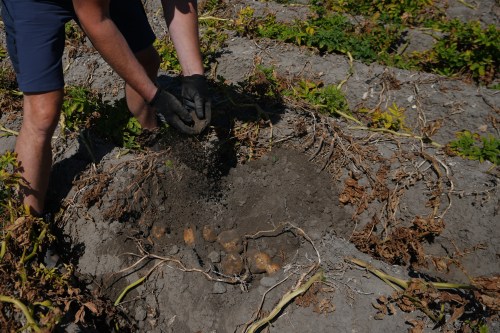
Grown with EcoTea, this healthy potato crop needed less synthetic fertilizer while providing a higher-than-average yield.

EcoTea photo
                                Grown with EcoTea, this healthy potato crop needed less synthetic fertilizer while providing a higher-than-average yield.
No Subscription Required

Body’s cellular makeup leads to big, existential questions

Reviewed by Seyward Goodhand 4 minute read Preview
No Subscription Required

Body’s cellular makeup leads to big, existential questions

Reviewed by Seyward Goodhand 4 minute read Saturday, Jan. 3, 2026

French science journalist and author Lise Barnéoud’s first book Hidden Guests is a fascinating, well-researched, atmospheric book on micro-chimerism — the presence of genetically distinct cells from one person circulating in another person.

Read
Saturday, Jan. 3, 2026

Hidden Guests

Hidden Guests
No Subscription Required

Animal Nation includes rural and Indigenous people in its portraits of Prairie and northern animals

Conrad Sweatman 4 minute read Preview
No Subscription Required

Animal Nation includes rural and Indigenous people in its portraits of Prairie and northern animals

Conrad Sweatman 4 minute read Friday, Jan. 2, 2026

At first glance, Winnipeg-born producer Jesse Bochner’s seven-part series Animal Nation brings to mind docu-series such as Wild America, Planet Earth and Nature.

Read
Friday, Jan. 2, 2026

APTN

Jesse Bochner’s Animal Nation is a Canada-centric take on the nature-documentary genre and its exciting, poignant dramas.

APTN
                                Jesse Bochner’s Animal Nation is a Canada-centric take on the nature-documentary genre and its exciting, poignant dramas.
No Subscription Required

Skating trail expected to open in time for New Year’s Day activities at The Forks

Nicole Buffie 2 minute read Preview
No Subscription Required

Skating trail expected to open in time for New Year’s Day activities at The Forks

Nicole Buffie 2 minute read Monday, Dec. 29, 2025

Skaters, rejoice: the Nestaweya River Trail at The Forks could be open as early as New Year’s Day, marking one of its earlier openings in recent years.

The port rink on the Assiniboine River and a small section of the the iconic river trail opened on Dec. 31 last year. The earliest recorded opening of the six-kilometre skating trail was Dec. 21, 2013.

“We had a good freeze this year… and we’re hoping for a nice, long season this year,” Adam Dooley, spokesperson for The Forks, said Monday.

Sections of the trail, which snakes along the Red and Assiniboine rivers and meets at The Forks port, have some slush owing to recent snowfall and may take more time to open, Dooley said.

Read
Monday, Dec. 29, 2025

MIKAELA MACKENZIE / FREE PRESS

Kelsey Heide runs a pump as part of a crew flooding the Nestawaya river trail at The Forks on Monday.

MIKAELA MACKENZIE / FREE PRESS
                                Kelsey Heide runs a pump as part of a crew flooding the Nestawaya river trail at The Forks on Monday.
No Subscription Required

Doctor’s orders? ‘Belly laugh at least two to five days a week’

Albert Stumm, The Associated Press 5 minute read Monday, Jan. 19, 2026

Melanin Bee curves her spine like a stretching cat as she lets out a maniacal, forced laugh.

The quick-fire pattern of manufactured giggles —“oh, hoo hoo hoo, eeh, ha ha ha”— soon ripples into genuine laughter, and she giddily kicks her feet.

She’s practicing what she calls Laughasté, a hilarious yoga routine she created that is a descendant of “laughter clubs” that emerged in India in the 1990s. It feels awkward at first, but you fake it till you make it, she said.

“It’s about allowing yourself to be OK with being awkward,” said Bee, a Los Angeles comedian and speaker. “Then you’re going to find some form of silliness within that is going to allow you to laugh involuntarily.”

No Subscription Required

U of M researchers studying whether genetic testing helps zero in on effective mental-health treatment meds

Malak Abas 3 minute read Preview
No Subscription Required

U of M researchers studying whether genetic testing helps zero in on effective mental-health treatment meds

Malak Abas 3 minute read Thursday, Dec. 11, 2025

A team of University of Manitoba researchers is recruiting people seeking mental-health treatment for a study that could take the guesswork out of medication with the help of genetic testing.

The study will offer free pharmacogenomic testing — which predicts how a person may react to medications based on their genetic makeup — to 200 adults who are looking to start a new medication or switch their medication treating a mental-health issue.

“Someone with mental-health conditions, they (try) multiple medications, and sometimes it takes months or years to get to a point where those drugs work for them, or to have less side effects,” said Dr. Abdullah Maruf, the lead investigator on the study and assistant professor in U of M’s College of Pharmacy.

“Pharmacogenomic testing can find out how our body will respond to these kinds of medication.”

Read
Thursday, Dec. 11, 2025

The Associated Press Files

This undated image shows the 46 human chromosomes, where DNA resides and performs its complex functions involved in regulating genetic activity.

The Associated Press Files
                                This undated image shows the 46 human chromosomes, where DNA resides and performs its complex functions involved in regulating genetic activity.
No Subscription Required

Killer whales and dolphins may be helping each other hunt of B.C. coast: new report

Lyndsay Armstrong, The Canadian Press 4 minute read Preview
No Subscription Required

Killer whales and dolphins may be helping each other hunt of B.C. coast: new report

Lyndsay Armstrong, The Canadian Press 4 minute read Saturday, Dec. 20, 2025

HALIFAX - Scientists have found evidence that two unlikely collaborators — killer whales and dolphins — may be helping each other find and feast on salmon off the coast of British Columbia.

Sarah Fortune, an assistant professor in oceanography at Halifax’s Dalhousie University said it would appear the massive fish-eating whales may be working with Pacific white-sided dolphins, which have been spotted eating the salmon chunks the killer whales produce.

She is a co-author of a paper published Thursday in Scientific Reports that found the two species appear to be working together while they forage.

Recordings picked up "this audible crunch as the whale bites down, then you see these fragments of fish that are released,” and then dolphins swim in to eat the pieces, Fortune said.

Read
Saturday, Dec. 20, 2025

A pod of northern resident killer whales travelling together is shown in this undated handout photo. THE CANADIAN PRESS/Handout - University of British Columbia (A.Trites), Dalhousie University (S. Fortune), Hakai Institute (K. Holmes), Leibniz Institute for Zoo and Wildlife Research (X. Cheng) (Mandatory Credit)

A pod of northern resident killer whales travelling together is shown in this undated handout photo. THE CANADIAN PRESS/Handout - University of British Columbia (A.Trites), Dalhousie University (S. Fortune), Hakai Institute (K. Holmes), Leibniz Institute for Zoo and Wildlife Research (X. Cheng) (Mandatory Credit)
No Subscription Required

16,000 fossil footprints in central Bolivia reveal dinosaur behavior

Carlos Guerrero And Isabel Debre, The Associated Press 4 minute read Preview
No Subscription Required

16,000 fossil footprints in central Bolivia reveal dinosaur behavior

Carlos Guerrero And Isabel Debre, The Associated Press 4 minute read Tuesday, Dec. 9, 2025

TORO TORO, Bolivia (AP) — Legend once had it that the huge, three-toed footprints scattered across the central highlands of Bolivia came from supernaturally strong monsters — capable of sinking their claws even into solid stone.

Then scientists came here in the 1960s and dispelled children's fears, determining that the strange footprints in fact belonged to gigantic, two-legged dinosaurs that stomped and splashed over 60 million years ago, in the ancient waterways of what is now Toro Toro, a village and popular national park in the Bolivian Andes.

Now, a team of paleontologists, mostly from California’s Loma Linda University, have discovered and meticulously documented 16,600 such footprints left by theropods, the dinosaur group that includes the Tyrannosaurus rex. Their study, based on six years of regular field visits and published last Wednesday in the peer-reviewed journal PLOS One, reports that this finding represents the highest number of theropod footprints recorded anywhere in the world.

“There’s no place in the world where you have such a big abundance of (theropod) footprints,” said Roberto Biaggi, a co-author of the study led by Spanish paleontologist Raúl Esperante. “We have all these world records at this particular site.”

Read
Tuesday, Dec. 9, 2025

A petrified footprint by a dinosaur is visible in Carreras Pampa in Toro Toro National Park, north of Potosi, Bolivia, Saturday, Dec. 6, 2025. (AP Photo/Juan Karita)

A petrified footprint by a dinosaur is visible in Carreras Pampa in Toro Toro National Park, north of Potosi, Bolivia, Saturday, Dec. 6, 2025. (AP Photo/Juan Karita)
No Subscription Required

Gramma the Galapagos tortoise, oldest resident of San Diego Zoo, dies at about 141

Jaimie Ding, The Associated Press 3 minute read Preview
No Subscription Required

Gramma the Galapagos tortoise, oldest resident of San Diego Zoo, dies at about 141

Jaimie Ding, The Associated Press 3 minute read Tuesday, Nov. 25, 2025

As the world changed around her, Gramma delighted visitors with her sweet, shy personality. She lived through two World Wars and 20 U.S. presidents.

Read
Tuesday, Nov. 25, 2025

This photo provided by the San Diego Zoo Wildlife Alliance shows Gramma, a Galapagos tortoise and the oldest animal at the San Diego Zoo, eating a banana stalk at the San Diego Zoo in San Diego, May 17, 2023. (San Diego Zoo Wildlife Alliance via AP)

This photo provided by the San Diego Zoo Wildlife Alliance shows Gramma, a Galapagos tortoise and the oldest animal at the San Diego Zoo, eating a banana stalk at the San Diego Zoo in San Diego, May 17, 2023. (San Diego Zoo Wildlife Alliance via AP)
No Subscription Required

Autoimmune diseases can strike any part of the body, and mostly affect women. Here’s what to know

Lauran Neergaard, The Associated Press 6 minute read Monday, Nov. 24, 2025

Our immune system has a dark side: It’s supposed to fight off invaders to keep us healthy. But sometimes it turns traitor and attacks our own cells and tissues.

What are called autoimmune diseases can affect just about every part of the body — even the brain — and tens of millions of people. While most common in women, these diseases can strike anyone, adults or children, and they’re on the rise.

New research is raising the prospect of treatments that might do more than tamp down symptoms. Dozens of clinical trials are testing ways to reprogram an out-of-whack immune system. Furthest along is a cancer treatment called CAR-T therapy that's had some promising early successes against lupus, myositis and certain other illnesses. It wipes out immune system B cells — both rogue and normal ones — and the theory is those that grow back are healthier. Other researchers are hunting ways to at least delay brewing autoimmune diseases, spurred by a drug that can buy some time before people show symptoms of Type 1 diabetes.

“This is probably the most exciting time that we’ve ever had to be in autoimmunity,” said Dr. Amit Saxena, a rheumatologist at NYU Langone Health.

No Subscription Required

What happens when your immune system hijacks your brain

Lauran Neergaard And Shelby Lum, The Associated Press 7 minute read Preview
No Subscription Required

What happens when your immune system hijacks your brain

Lauran Neergaard And Shelby Lum, The Associated Press 7 minute read Monday, Nov. 24, 2025

“My year of unraveling” is how a despairing Christy Morrill described nightmarish months when his immune system hijacked his brain.

What’s called autoimmune encephalitis attacks the organ that makes us “us,” and it can appear out of the blue.

Morrill went for a bike ride with friends along the California coast, stopping for lunch, and they noticed nothing wrong. Neither did Morrill until his wife asked how it went — and he'd forgotten. Morrill would get worse before he got better. “Unhinged” and “fighting to see light,” he wrote as delusions set in and holes in his memory grew.

Of all the ways our immune system can run amok and damage the body instead of protecting it, autoimmune encephalitis is one of the most unfathomable. Seemingly healthy people abruptly spiral with confusion, memory loss, seizures, even psychosis.

Read
Monday, Nov. 24, 2025

Christy Morrill, 72, who lost decades of memories to autoimmune encephalitis, holds up a viewfinder with a slide film of himself as a college student, Wednesday, Aug. 20, 2025, at his home in San Carlos, Calif. (AP Photo/David Goldman)

Christy Morrill, 72, who lost decades of memories to autoimmune encephalitis, holds up a viewfinder with a slide film of himself as a college student, Wednesday, Aug. 20, 2025, at his home in San Carlos, Calif. (AP Photo/David Goldman)
No Subscription Required

Author goes far and wide on quest to document all plants native to Manitoba

Colleen Zacharias 7 minute read Preview
No Subscription Required

Author goes far and wide on quest to document all plants native to Manitoba

Colleen Zacharias 7 minute read Saturday, Nov. 15, 2025

When Diana Bizecki Robson was growing up in Saskatoon during the 1970s, she enjoyed riding her bike to parks and riverbanks where she spent hours studying the diversity of wild plants and their pollinators.

After deciding to become a biologist, Bizecki Robson worked for a few years as an environmental consultant which allowed her to conduct plant surveys. But it was when the opportunity to work at the Manitoba Museum came along — in October 2003 — that she could finally pursue the type of field work and research she loves.

Today, Bizecki Robson is the curator of botany at the Manitoba Museum. She oversees a herbarium which holds over 50,000 specimens.

“One of the things I discovered as part of a collection assessment project that I did when I first got here was that the museum did not have a specimen of every single species of plant or fungus or lichen (from this province) in its collection,” said Bizecki Robson.

Read
Saturday, Nov. 15, 2025

Diana Bizecki Robson photo

Diana Bizecki Robson, author of Manitoba Flora and curator of botany at Manitoba Museum, trekked on foot through all sorts of terrain to find and catalogue new plant species.

Diana Bizecki Robson photo
                                Diana Bizecki Robson, author of Manitoba Flora and curator of botany at Manitoba Museum, trekked on foot through all sorts of terrain to find and catalogue new plant species.
No Subscription Required

Rare red auroras dazzle as part of Manitoba light show

Nicole Buffie 3 minute read Preview
No Subscription Required

Rare red auroras dazzle as part of Manitoba light show

Nicole Buffie 3 minute read Thursday, Nov. 13, 2025

Solar storm chasers, rejoice: 2025 was an excellent year for aurora borealis, and the remainder of the year could be just as active.

Read
Thursday, Nov. 13, 2025

Owen Humphreys/ The Associated Press

The aurora borealis glow in the sky over St Mary’s Lighthouse in Whitley Bay on the North East coast, England.

Owen Humphreys/ The Associated Press
                                The aurora borealis glow in the sky over St Mary’s Lighthouse in Whitley Bay on the North East coast, England.
No Subscription Required

How Canada can regain its measles elimination status

Nicole Ireland and Hannah Alberga, The Canadian Press 6 minute read Preview
No Subscription Required

How Canada can regain its measles elimination status

Nicole Ireland and Hannah Alberga, The Canadian Press 6 minute read Wednesday, Nov. 12, 2025

TORONTO - Infectious disease experts say Canada's loss of measles elimination status shows how badly investment is needed in public health, rebuilding vaccine confidence and solving the primary care crisis.

On Monday, the Pan American Health Organization (PAHO) revoked the measles-free status Canada has had since 1998 because an outbreak of the virus across several provinces has lasted for more than a year.

Dawn Bowdish, an immunologist and professor at McMaster University, said cuts to public health funding, the lack of a national vaccine registry and a shortage of family doctors — all while misinformation about vaccines is circulating widely — have contributed to the rise of measles.

"There's no two ways about this. This will take money — a lot of money — and a lot of investment. And it will take a lot of political will," Bowdish said

Read
Wednesday, Nov. 12, 2025

A vial of measles, mumps and rubella vaccine is pictured at the Taber Community Health Centre in Taber, Alta., Monday, July 28, 2025. THE CANADIAN PRESS/Jeff McIntosh

A vial of measles, mumps and rubella vaccine is pictured at the Taber Community Health Centre in Taber, Alta., Monday, July 28, 2025. THE CANADIAN PRESS/Jeff McIntosh
No Subscription Required

City tries to get the most bang for its (sewage) buck

Joyanne Pursaga 4 minute read Preview
No Subscription Required

City tries to get the most bang for its (sewage) buck

Joyanne Pursaga 4 minute read Friday, Nov. 7, 2025

The City of Winnipeg is exploring new ways to reuse its treated sewage sludge.

An expression of interest seeks feedback on the best options and technology available to recycle biosolids, a byproduct of the sewage treatment process. The document notes the treated sludge can be composted, used like a fertilizer, or even be transformed to produce energy.

A massive $3-billion upgrade to the city’s North End sewage treatment plant will add new biosolids facilities that improve the end byproduct, which means the city could soon have more options to reuse it, said Cynthia Wiebe, Winnipeg water and waste’s manager of engineering services.

“The key difference is that there are no pathogens in the (biosolids from the new facility),” said Wiebe.

Read
Friday, Nov. 7, 2025

MIKE DEAL / FREE PRESS FILES

Construction workers continue improvements at Winnipeg’s North End Sewage Treatment Plant. Part of the plant’s $3-billion upgrade will add biosolids facilities that improve the end byproduct.

MIKE DEAL / FREE PRESS FILES
                                Construction workers continue improvements at Winnipeg’s North End Sewage Treatment Plant. Part of the plant’s $3-billion upgrade will add biosolids facilities that improve the end byproduct.
No Subscription Required

Only moratorium can save moose population: MWF

Carol Sanders 4 minute read Preview
No Subscription Required

Only moratorium can save moose population: MWF

Carol Sanders 4 minute read Wednesday, Sep. 24, 2025

The Manitoba Wildlife Federation is calling for a moose-hunt moratorium in two parts of the province after aerial surveys showed “significantly declining” numbers of the animal.

“The populations may never bounce back,” the federation’s Chris Heald said Tuesday.

The advocacy group representing sport hunters and anglers issued a news release calling for the complete closure of the fall moose hunt in Duck Mountain and Porcupine Forest. It follows Manitoba Conservation’s 2023 aerial survey results, which indicate “significantly declining moose populations” in the game-hunting areas in western Manitoba.

It wouldn’t be the first time for a moose conservation closure there. In 2011, licensed and Indigenous hunters supported a full closure of the moose hunt after a 2010 survey the showed moose population had fallen in both areas to 2,471 animals.

Read
Wednesday, Sep. 24, 2025

Jonathan Hayward / THE CANADIAN PRESS FILES

Manitoba Conservation’s 2023 aerial survey indicated “significantly declining moose populations” in game-hunting areas in western Manitoba.

Jonathan Hayward / THE CANADIAN PRESS FILES
                                Manitoba Conservation’s 2023 aerial survey indicated “significantly declining moose populations” in game-hunting areas in western Manitoba.
No Subscription Required

Another subdivision, another city problem

Erna Buffie 5 minute read Preview
No Subscription Required

Another subdivision, another city problem

Erna Buffie 5 minute read Tuesday, Sep. 23, 2025

So, here we go again folks. We just get the protection of the Lemay Forest done and dusted and bingo, there’s another proposed subdivision for 23 homes on two-acre flood plain lots right across the Red River from the Lemay on the old Daman Farm site.

Read
Tuesday, Sep. 23, 2025

MIKAELA MACKENZIE / FREE PRESS

Piles of trees were found cut down in the Lemay Forest before the Manitoba government announced it would expropriate the land for a provincial park.

MIKAELA MACKENZIE / FREE PRESS
                                Piles of trees were found cut down in the Lemay Forest before the Manitoba government announced it would expropriate the land for a provincial park.
No Subscription Required

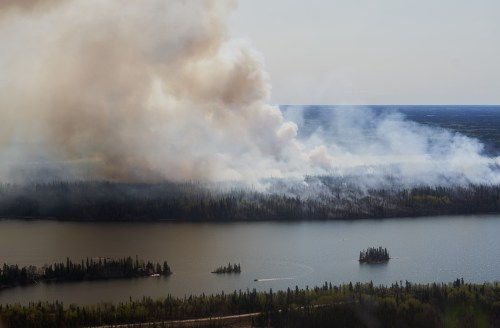
Wildfires and the new normal

Tom Law 5 minute read Tuesday, Sep. 23, 2025

Wildfires like this aren’t normal. Stop trying to normalize them.

“Bring a pair of pants and a sweater to Clear Lake — it’s unseasonably cool because of the wildfires.” That was just one of those meteorological idiosyncrasies, attempting to reach back deep into long-forgotten geography lessons, that may seem obvious to those on the Prairies. But for the outsider, a visitor from Toronto, and indeed a relative newcomer to Canada, it was certainly a shock, and a stark reminder that I would be flying into a province still under a state of emergency, which had until recently been decimated by wildfires. It was also an introduction into what may be considered ‘normal’.

Visiting Manitoba this August was extraordinary — the people most certainly lived up to the “friendly” billing that adorns the licence plates, and the scenery of Riding Mountain National Park was worth the trip alone. However, there were a number of topics of conversation that made me question what I had come to know as accepted wisdom.

Talk about fishing restrictions, Indigenous rights, oil and gas permeated discussions, with healthy, good spirited debates. But for me, the most vexing issue was wildfires. More specifically, the extent of their aftermath, effects, and associated restrictions, have become normalized.