No Subscription Required
Colleen Zacharias
7 minute read
Saturday, Aug. 28, 2021
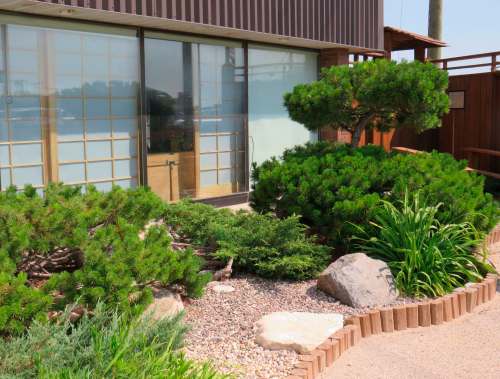
The Japanese Cultural Association of Manitoba, 180 McPhillips St., opened to the public in 1987. The centre offers a wide range of programs which are designed to promote and enhance the understanding of Japanese culture. The centre also serves as the site for a beautiful Japanese garden. Built by Yoshimaru Abe who was born in Japan in 1914 and came to Canada with his family in 1927, the garden is an enduring cultural experience.
Prior to building the garden at the centre, visitors to the Japanese Folklorama exhibit in 1971 and in the years following had the opportunity to see a Japanese garden recreated by Abe. Using moss, rocks, and pieces of wood, Abe recreated an authentic Japanese garden on a concrete arena floor.
A gardener is called niwashi in Japanese. Abe was the distinguished niwashi at the Japanese cultural centre’s garden into his 90’s and was followed by Sam Matsuo, who maintained the garden for 10 years. Both Abe and Matsuo were assisted by dedicated volunteers. Today the niwashi is Raymond Normandeau, who has been involved with the centre for several years as well as in the building of the garden at the Japanese Pavilion at Folklorama. Normandeau will oversee an expansion of the garden at the Japanese Cultural Association — which is slated to begin this fall.
Currently, there are two different areas to the garden. The front garden is a long narrow strip on the outside of the building that faces into a concrete parking lot. The inner garden is an enclosed garden accessed by a short bridge and tall wooden gate. “It is not a pure Japanese garden,” says Normandeau. “It is representative of a Japanese garden. We don’t have the stalwarts of Japanese gardens — bamboo, clipped azaleas, and the black pine which is one of the most popular pine species in a Japanese garden.” But many fine elements of Japanese garden design can indeed be found here.
Read