Social Studies (general)
Please review each article prior to use: grade-level applicability and curricular alignment might not be obvious from the headline alone.

MPI cuts off public parking downtown to prioritize staff mandated to return to office
5 minute read Preview Yesterday at 6:00 AM CDT
Trump says he expects trade war with Canada to end ‘pretty soon’
3 minute read Preview Updated: Yesterday at 4:07 PM CDT
Is the student or the system falling short?
5 minute read Preview Yesterday at 2:00 AM CDTWelcoming newcomers requires co-operation
5 minute read Yesterday at 2:00 AM CDTWhat does it truly mean to welcome someone to Canada? Is saying that newcomers belong here enough, or should we also ensure they have a fair opportunity to create a stable life? In Winnipeg, welcoming immigrants and refugees should involve more than simply opening the door. It should also involve helping people get settled after they arrive.

Seniors’ program closures serve no one
4 minute read Preview Yesterday at 2:00 AM CDT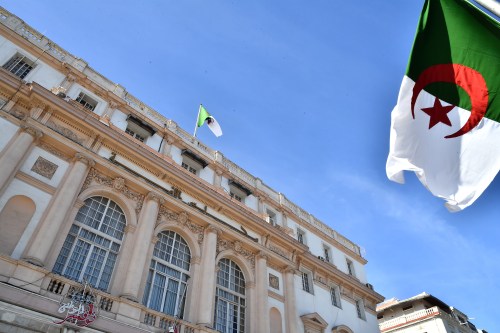
Algeria to send troops to Niger in first foreign deployment in over 50 years
3 minute read Preview Updated: Yesterday at 2:17 PM CDT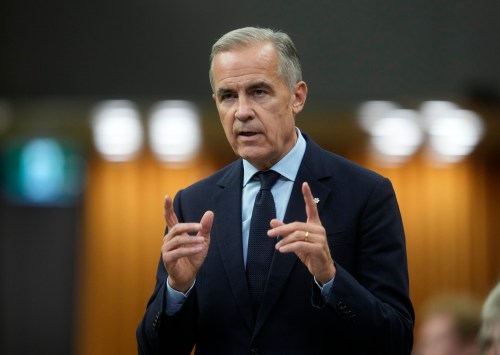
Echoes of Idle No More as Carney set to meet with First Nations
5 minute read Preview Sunday, Oct. 25, 2026
B.C. Conservative’s Lorne Doerkson sets out urgent priorities to govern
7 minute read Preview Updated: Yesterday at 2:12 PM CDT
Air force pays tribute to retiring CC-130H Hercules planes
5 minute read Preview Saturday, Oct. 24, 2026
First Nations prepare for historic meeting with Carney and the premiers
9 minute read Preview Updated: Yesterday at 11:50 AM CDT
Processing potential long way from reality
5 minute read Preview Saturday, Oct. 24, 2026
Alberta: More federalist than you thought
5 minute read Preview Saturday, Oct. 24, 2026Film documents journey of Mennonites who left Manitoba for Paraguay
5 minute read Saturday, Oct. 24, 2026With 18,000 students in 59 government-funded schools, independent schools are playing an increasingly important role in Manitoba.
Many of these schools are religious schools like The King’s School, Dasmesh School, Springs Christian Academy, Mennonite Brethren Collegiate Institute, Beautiful Saviour Lutheran School, Linden Christian School, Steinbach Christian School and IQRA Islamic School.
On its website, the provincial government says it “strongly supports the rights of parents and guardians to choose their child’s education. Parents choose independent schools for reasons such as faith, philosophy of teaching and learning, and tradition.”
This is quite a contrast to 110 years ago. That’s when the province passed the School Attendance Act of 1916 as a way, during wartime, to promote integration and social cohesion.

Down-to-earth diner fuses Filipino flavours, family and fortitude
8 minute read Preview Saturday, Oct. 24, 2026How the city fills its coffers
4 minute read Saturday, Oct. 24, 2026Winnipeg has a serious revenue problem. There is no single solution, and the city operates with fewer revenue tools than provincial or federal governments. But how city hall raises money is a growing concern, alongside the fact that the city faces a structural deficit.
Municipalities have an uphill battle given the technicalities of how property taxes are calculated. Unlike income and sales taxes collected by the province, property tax revenues do not automatically grow with inflation in the economy. To keep up with rising costs and maintain public services at status quo levels, the city needs to increase tax rates each year.
For years, Winnipeg failed to raise property tax rates in line with inflation and population growth, while relying more heavily on frontage levies, user fees and utility revenues. The long property-tax freeze from 1998 through 2011 weakened the city’s revenue base and contributed to underinvestment in services and infrastructure. The 2026 alternative municipal budget by the Manitoba chapter of the Canadian Centre for Policy Alternatives estimates that, after inflation and population growth, city revenue per person in 2025 remained 1.9 per cent below its 2001 level.
This city has partially compensated over the last 15 years by increasing water-and-sewer rates, frontage levies, recreation fees and fines. This increasing reliance on utilities, levies, fees and fines has important equity considerations. One particularly problematic practice is transferring money from the water and sewer utilities into the city’s general revenues.
Decades of support for many local Holocaust survivors
5 minute read Saturday, Oct. 24, 2026In Canada, most Jewish communities recognize two official days, one in January and one in April, to commemorate the victims of the Holocaust and honour those who against all odds managed to survive it. For Adeena Lungen, however, the act of commemorating and honouring has never needed a designated day.
As an about to retire social worker in Winnipeg’s Jewish Child and Family Service’s (JCFS) Holocaust Support Program, Lungen has spent 27 years working with local survivors, providing them with emotional and psychological supports, assisting them with practical matters, helping them age with dignity, and holding space for them to grieve and remember those they lost. She also has created special social and cultural programming for them, including Café Europa, a bi-monthly event that brings survivors together to lunch, learn, enjoy eclectic entertainment, and celebrate Jewish holidays.
Lungen was already familiar with many of the city’s survivor community when she assumed her new role at JCFS.
While her mother Clara had escaped Poland on the last ship to sail from Europe before the outbreak of the Second World War, her father Ben, who lost his mother and two siblings to the Nazis, spent the war years hiding in the Belarus woods with a partisan unit. Years after the war, the couple met, married and made their home in Winnipeg.
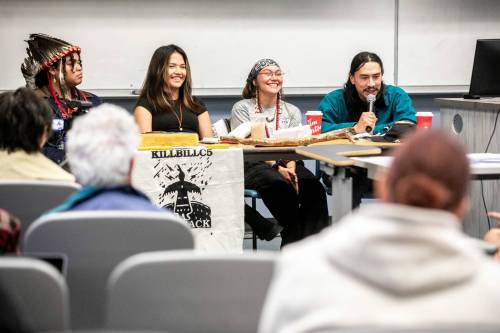
Churchill expansion debated at University of Manitoba forum
6 minute read Preview Friday, Oct. 23, 2026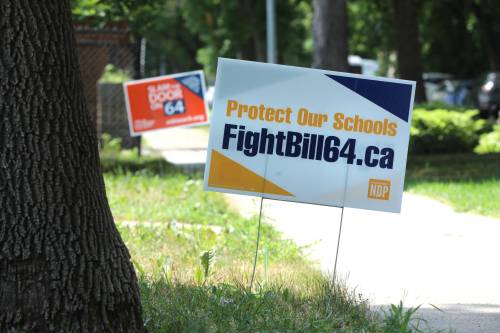
Manitobans once rallied to save elected school boards. Now, voter apathy often wins at the polls
11 minute read Preview Friday, Oct. 23, 2026
Final legal judgment rendered in Canadian Wheat Board saga
4 minute read Preview Friday, Oct. 23, 2026
Addressing poverty best way to reduce crime, majority of city residents say in survey
5 minute read Preview Friday, Oct. 23, 2026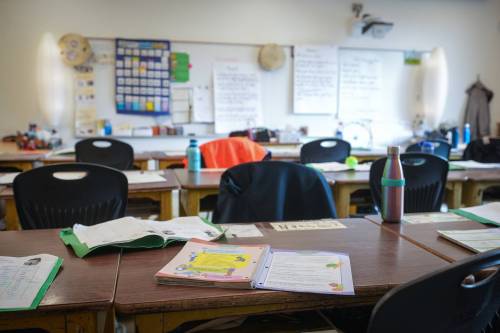
Province orders ban on private teacher-student messaging
4 minute read Preview Friday, Oct. 23, 2026
AI usage is prominent in Winnipeg’s municipal race, and it’s likely here to stay
7 minute read Preview Friday, Oct. 23, 2026
Manitoba to focus on children — and adults — in revamped autism plan
4 minute read Preview Friday, Oct. 23, 2026