Defining Contemporary Canada 1982-Present

Please review each article prior to use: grade-level applicability and curricular alignment might not be obvious from the headline alone.
Manitoba makes strides on poverty, but EIA rates must increase: report

Nicole Buffie 5 minute read Preview

Manitoba makes strides on poverty, but EIA rates must increase: report

Nicole Buffie 5 minute read Tuesday, Jun. 2, 2026

When Jayline Bursey gets her monthly Employment and Income Assistance cheque, it’s gone almost immediately.

Read
Tuesday, Jun. 2, 2026

Federal poll finds nearly half of Canadians think country takes ‘too many immigrants’

David Baxter, The Canadian Press 3 minute read Preview

Federal poll finds nearly half of Canadians think country takes ‘too many immigrants’

David Baxter, The Canadian Press 3 minute read Updated: Yesterday at 12:05 PM CDT

OTTAWA - A survey commissioned by the federal government late last year suggests nearly half of Canadians believe the country is admitting too many immigrants — but the share of respondents who think so has dropped since last year's polling.

The survey found 47 per cent of respondents believe "too many" immigrants are coming to Canada, while 38 per cent say "about the right amount" are coming.

A similar government poll conducted in late 2024 reported 54 per cent of respondents saying that "too many" immigrants were coming to Canada.

The report on the latest poll says the numbers saw little to no movement after respondents were told the government plans to admit 380,000 permanent residents this year.

Read
Updated: Yesterday at 12:05 PM CDT

Peace, justice and bringing this country together

Niigaan Sinclair 5 minute read Preview

Peace, justice and bringing this country together

Niigaan Sinclair 5 minute read Monday, Jun. 1, 2026

From the War of 1812 to today, no one has stood up for this country and worked for unity in this place more than Indigenous Peoples.

Read
Monday, Jun. 1, 2026

Kerry-Lynne Findlay won B.C. Conservative race as most authentic populist: expert

Wolfgang Depner, The Canadian Press 5 minute read Preview

Kerry-Lynne Findlay won B.C. Conservative race as most authentic populist: expert

Wolfgang Depner, The Canadian Press 5 minute read Tuesday, Jun. 2, 2026

VANCOUVER - Kerry-Lynne Findlay won the B.C. Conservative leadership race because she is an "authentic champion" of populism within the broader conservative movement, says an analyst who studies modern conservatism in western countries.

David Black, who teaches political theory at Royal Roads University in Greater Victoria, said Findlay's victory over Caroline Elliott confirms the party's turn toward populism.

"(Findlay) sought to apply purity tests during the debates, as part of her campaign strategy for the leadership, and she won that purity test," Black said. "She was the purest candidate with respect to populist bona fides."

He added that Findlay, unlike Elliott, did not have to perform populism because of her credentials while serving under former Conservative prime minister Stephen Harper and later Pierre Poilievre, the current federal Conservative leader.

Read
Tuesday, Jun. 2, 2026
No Subscription Required

Religion on census needs a rework, group says

John Longhurst 5 minute read Preview
No Subscription Required

Religion on census needs a rework, group says

John Longhurst 5 minute read Saturday, May. 30, 2026

Did you get the long form of the census? If you did, then you are among the 25 per cent of Canadians who had a chance to tell the government about your religious identity.

The federal government has been collecting information about religion in Canada since 1871; it’s one of the oldest efforts to track religion in the world.

Since that time, the religious landscape in Canada has changed a lot. Up until the 1960s, the country was mainly Christian, with small numbers of Jewish, Muslim, Hindu, Sikh and Buddhist Canadians.

The 2026 census lists over 200 religious groups, just over half of them Protestant and Catholic. The rest are from a wide variety of other religious traditions, including six streams of Buddhism, 10 different Jewish groups, seven kinds of Islam and five different forms of Indigenous spirituality. People can also choose from Wiccan, Satanist, Rastafarian and New Age groups, among others.

Read
Saturday, May. 30, 2026
No Subscription Required

New essay collection explores menace of far-right movements in Canada

Reviewed by Joseph Hnatiuk 4 minute read Preview
No Subscription Required

New essay collection explores menace of far-right movements in Canada

Reviewed by Joseph Hnatiuk 4 minute read Saturday, May. 30, 2026

“Democracy is at stake and Canada is not immune to its demise,” states Miriam Edelson, editor of this timely anthology, warning that right-wing extremism, energized by memes and trolls permeating digital spaces, is heralding social and political change and affecting how current generations view the slow, often cumbersome democratic process.

Edelson’s well-researched observations are supported by 18 different contributors comprised of an array of like-minded academics, researchers and concerned activists who collectively alert readers to the extremist messaging that is altering some long-standing expectations of responsible governance.

Edelson’s social activism was honed by personal experiences while living in Toronto and working with the Canadian labour movement, spawning a literary legacy of personal essays and commentaries published by the Toronto Star, Globe & Mail and Literary Review. Her earlier book, My Journey with Jake: A Memoir of Parenting and Disability (2000) remains a poignant reminder that society functions best when individuals share a common purpose of looking out for one another.

In a concise foreword to Confronting the Resurgent Right, University of Manitoba professor and award- winning Free Press columnist Niigaan Sinclair similarly reminds readers that “far right movements built on hate,” like those earlier thrust upon Indigenous people and still targeting Jews, Muslims and other identifiable groups, inexorably lead to “racism, violence, and genocide.”

Read
Saturday, May. 30, 2026

Human rights panel accuses Canada of genocide against Indigenous population

Erika Morris, The Canadian Press 5 minute read Preview

Human rights panel accuses Canada of genocide against Indigenous population

Erika Morris, The Canadian Press 5 minute read Saturday, May. 30, 2026

MONTREAL - An international panel of human rights experts has accused Canada of committing genocide against its Indigenous population after a week of hearings in Montreal.

The Permanent Peoples' Tribunal was mandated to look at missing and disappeared children and unmarked graves at Canada’s residential school sites, as well as the forced sterilization of Indigenous women, through the lens of international law.

The panel of seven judges said Canada historically adopted a series of policies that they deemed were crimes against humanity with genocidal intent, including the residential schools, which were in operation for over 150 years. The last residential school closed in 1996.

Survivors at the hearings held onto each other and wiped away tears as three tribunal members read out the decision.

Read
Saturday, May. 30, 2026

Ruling against Aboriginal title on private land is allowed to stand by high court

Wolfgang Depner and Nono Shen, The Canadian Press 6 minute read Preview

Ruling against Aboriginal title on private land is allowed to stand by high court

Wolfgang Depner and Nono Shen, The Canadian Press 6 minute read Friday, May. 29, 2026

A New Brunswick ruling that Aboriginal title cannot be declared over private land has been allowed to stand by the Supreme Court of Canada, giving British Columbia an avenue to win its appeal in the landmark Cowichan Tribes case, B.C.'s attorney general said Thursday.

Niki Sharma said the high court's refusal to hear an appeal by the Wolastoqey First Nation in the case involving Aboriginal title in New Brunswick gives B.C. a "clear path" for an appeal in the Cowichan case, which has cast doubt on the primacy of private property rights.

"When it's the same legal issues that we are dealing with here, I think that bodes well for our arguments, and the appeals that we are seeking in B.C.," she said.

The mayor of Richmond, B.C., meanwhile said private property owners in the Cowichan Tribes title area should "breathe a little easier" in light of the Supreme Court of Canada's ruling.

Read
Friday, May. 29, 2026
No Subscription Required

The quiet power — and necessity — of Oseredok

Stephen Borys 6 minute read Preview
No Subscription Required

The quiet power — and necessity — of Oseredok

Stephen Borys 6 minute read Thursday, May. 28, 2026

At a moment when Ukraine sits at the centre of global political attention, one of North America’s most important Ukrainian cultural institutions continues to operate quietly in Winnipeg’s Exchange District.

For many Winnipeggers, Oseredok remains one of the city’s hidden treasures — preserving an extraordinary collection of Ukrainian and Ukrainian-Canadian art, artifacts and archives within its five-storey building on Alexander Avenue.

Originally constructed in 1912 as the British and Foreign Bible Society Building and designed by Winnipeg architect William Bruce, the structure itself reflects layers of immigration, faith and history embedded within the city.

Yet few people fully understand its scale and significance.

Read
Thursday, May. 28, 2026

Survivors gather at former residential school site near Brandon

Tessa Adamski 4 minute read Preview

Survivors gather at former residential school site near Brandon

Tessa Adamski 4 minute read Thursday, May. 28, 2026

BRANDON — Marjorie Prince had tears in her eyes as she searched to find her and her brothers’ names among more than 3,000 orange flags pegged in the ground at the site of the former Brandon Indian Residential School.

The flags represent children who never returned home as well as survivors.

The woman from Dakota Tipi First Nation said it was her second time returning to the site since she was taken from her family at seven years old with her three brothers.

She couldn’t recall what year she attended the school or how long she was there.

Read
Thursday, May. 28, 2026

Manitoba leads in protecting human rights

Thomas S. Axworthy 5 minute read Wednesday, May. 27, 2026

It is perhaps little noticed in our province — as we grapple with the cost of living, homelessness and the impending threat of forest fires — that the NDP government of Premier Wab Kinew has emerged as a leading defender of the Charter of Rights and Freedoms, even as the governments of Quebec, Alberta and Saskatchewan are doing their best to weaken it.

Issues of human rights and the role of the Charter were at the forefront of a recent four-day hearing before the Supreme Court of Canada on the legality of Quebec’s secularism law, Bill 21.

The law prohibits public sector employees — including teachers, police officers and government lawyers — from wearing religious symbols such as turbans, crosses, hijabs and yarmulkes while at work. Bill 21 forces religiously observant individuals to choose between their faith and employment in public institutions.

It is a clear violation of Section 2 of the Charter, which guarantees freedom of conscience, religion and association.

Attorney General Sharma says B.C. supports company’s request to reopen Cowichan case

Wolfgang Depner, The Canadian Press 2 minute read Preview

Attorney General Sharma says B.C. supports company’s request to reopen Cowichan case

Wolfgang Depner, The Canadian Press 2 minute read Wednesday, May. 27, 2026

VICTORIA - British Columbia's attorney general says it is rare to reopen a court case as significant as the landmark Cowichan Tribes title decision, but the government supports an effort to do so by the largest private property owner in the title area.

Niki Sharma says Montrose Properties will be able to bring forward details about how it has been affected by the ruling that Aboriginal title is a "senior interest" compared to fee-simple title.

Montrose owns about 120 hectares in the overall title area of 300 hectares granted by the judge, but the court didn't hear from private landowners during the initial case, so the company is asking a B.C. Supreme Court judge in Victoria to reopen the case.

The same judge hearing Montrose's arguments through to Wednesday ruled in August that the Cowichan First Nation has Aboriginal title over the land, that the granting of private titles by government unjustifiably infringed on the nation's title, and that Crown and city titles on the site are defective and invalid.

Read
Wednesday, May. 27, 2026

Manitoba bill would reduce availability of flavoured vapes; one group wants more

Steve Lambert, The Canadian Press 3 minute read Preview

Manitoba bill would reduce availability of flavoured vapes; one group wants more

Steve Lambert, The Canadian Press 3 minute read Wednesday, May. 27, 2026

WINNIPEG - The Manitoba government plans to greatly reduce the number of locations where flavoured vaping products can be sold, but one group says the idea does not go far enough and lags behind efforts in many other provinces.

A bill introduced in the legislature Tuesday would forbid the sale of such products in businesses in urban areas that allow people under 18 to enter. The measure would not apply in rural areas.

The NDP government said the aim is to help reduce the risk that minors might see the products, be enticed by the flavouring, and get hooked.

"We know that (flavoured vapes) is a gateway for kids in particular (to) choosing more significant — like tobacco, cigarettes — substances later on," Health Minister Uzoma Asagwara said.

Read
Wednesday, May. 27, 2026

Manitobans prefer later sunsets in time-change debate: poll

Chris Kitching 4 minute read Preview

Manitobans prefer later sunsets in time-change debate: poll

Chris Kitching 4 minute read Tuesday, May. 26, 2026

A new public opinion poll suggests year-round daylight time is the leading choice among Manitobans, as the provincial government considers ditching twice-annual clock changes.

The survey by Winnipeg-based Prairie Research Associates found roughly three in four Manitobans support an end to seasonal time changes, a move that would lead to the permanent use of standard or daylight time.

“There is a large group of people who say, ‘I don’t care what the change is as long as there is no (seasonal time) change.’ That group was larger than I expected,” PRA partner Nicholas Borodenko said about the survey results.

“The fact that more people are leaning toward wanting to have more summer daylight in the evening was expected.”

Read
Tuesday, May. 26, 2026

Reported Germany-Canada LNG deal would bolster investment case for Ksi Lisims: Eby

Lauren Krugel, The Canadian Press 4 minute read Preview

Reported Germany-Canada LNG deal would bolster investment case for Ksi Lisims: Eby

Lauren Krugel, The Canadian Press 4 minute read Wednesday, May. 27, 2026

A deal to supply Canadian liquefied natural gas to Germany would be a key step toward the partners behind the Ksi Lisims project deciding to go ahead with their $10-billion West Coast plant and export terminal, British Columbia Premier David Eby said Tuesday.

Eby made his remarks after multiple outlets reported German firm SEFE is poised to buy gas shipped from Ksi Lisims and a day before federal Natural Resources Minister Tim Hodgson is scheduled to make an announcement about international energy exports in Vancouver.

The B.C. premier said his government has long been supportive of the project being pursued by the Nisga'a Nation alongside Houston-based Western LNG and Rockies LNG, a group of Canadian natural gas producers. The companies and the First Nation declined to comment on Tuesday.

"We look forward to celebrating the formal announcement of this with the Nisga'a, with the federal government. It's an example of the work we're doing together and we're super proud of it," Eby told reporters after a meeting with western premiers in Kananaskis, Alta.

Read
Wednesday, May. 27, 2026

Inclusion groups sign open letter calling on Ottawa to halt MAID for mental illness

Sarah Ritchie, The Canadian Press 5 minute read Preview

Inclusion groups sign open letter calling on Ottawa to halt MAID for mental illness

Sarah Ritchie, The Canadian Press 5 minute read Wednesday, May. 27, 2026

OTTAWA - Ninety disability advocacy and mental health organizations have signed an open letter urging the federal Liberals to permanently exclude people with mental illness from eligibility for medical assistance in dying.

Inclusion Canada is leading the effort, which includes Disability Without Poverty, the Schizophrenia Society of Canada and the Canadian Mental Health Association.

Under current law, people whose sole underlying condition is a mental illness will become eligible to apply for MAID assessments beginning in March 2027.

The letter, which is addressed to Prime Minister Mark Carney, Health Minister Marjorie Michel and Justice Minister Sean Fraser, says that would be "a significant and misguided expansion."

Read
Wednesday, May. 27, 2026

Anand says Israel’s ‘mistreatment’ of Canadians in flotilla violated UN treaty

Catherine Morrison, The Canadian Press 5 minute read Preview

Anand says Israel’s ‘mistreatment’ of Canadians in flotilla violated UN treaty

Catherine Morrison, The Canadian Press 5 minute read Tuesday, May. 26, 2026

OTTAWA - Israel’s mistreatment of Canadians participating in a flotilla trying to reach Gaza violated the Vienna Convention, Foreign Affairs Minister Anita Anand said Monday.

In a social media post, Anand said she spoke with Israeli Foreign Minister Gideon Sa'ar about the issue on Monday morning.

"I raised that denying Canadian citizens access to consular services while they were detained violates the Vienna Convention and must never happen again," she said. "Canada is providing Israeli authorities with evidence of this mistreatment. We have asked for and expect an independent investigation and those responsible to be held to account."

Twelve Canadians were among 420 people on 41 boats intercepted by Israel on May 18 and 19 as they attempted to bring a symbolic amount of aid to Gaza in the midst of Israeli restrictions.

Read
Tuesday, May. 26, 2026

Carney points to Brexit, warns Alberta separation push could be ‘dangerous bluff’

David Baxter and Nick Murray, The Canadian Press 6 minute read Preview

Carney points to Brexit, warns Alberta separation push could be ‘dangerous bluff’

David Baxter and Nick Murray, The Canadian Press 6 minute read Tuesday, May. 26, 2026

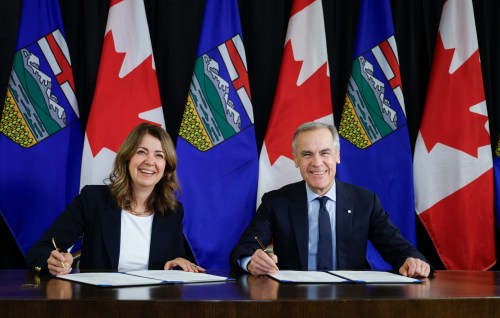
OTTAWA - Prime Minister Mark Carney said Monday the Alberta referendum on separation could be a "dangerous bluff," while Alberta Premier Danielle Smith cautioned it's a decision for Albertans to make, not the federal government.

Carney, who was the governor of the Bank of England during and immediately after the Brexit referendum campaign, warned that people in the United Kingdom are still trying to undo the damage caused by that decision a decade later.

"In these separation issues, it is often advanced that, 'Vote for this and it's a free option. Vote for this and we will strengthen our hand in a future negotiation.' That is a very dangerous bluff," Carney told a news conference in Ottawa on Monday.

Smith said last week her government will pose a question in the referendum planned for October asking Albertans if they think the province should remain part of Canada or should begin the legal process for a separation referendum.

Read
Tuesday, May. 26, 2026

Experts explain how Indigenous rights are a major hurdle for Alberta secession

Fakiha Baig, The Canadian Press 5 minute read Preview

Experts explain how Indigenous rights are a major hurdle for Alberta secession

Fakiha Baig, The Canadian Press 5 minute read Monday, May. 25, 2026

EDMONTON - Political scientists say Indigenous treaty rights represent a significant legal hurdle for separatists in Alberta, and have brought the debate on secession in Canada into unchartered territory.

"This is a new dynamic ... It's creating a lot of uncertainty," said Andrew McDougall, a lawyer and professor in the University of Toronto's political science department, in an interview Saturday.

"There needs to be consultation with Indigenous peoples, the extent to which is unclear," said Andre Lecours, a University of Ottawa professor.

Premier Danielle Smith announced in a televised address on Thursday that an Oct. 19 referendum question will ask Albertans if they want to remain in Canada or start the process to hold a binding referendum on separation.

Read
Monday, May. 25, 2026

Highest proportion of people since 2017 say Canada is on the right track: poll

David Baxter, The Canadian Press 3 minute read Preview

Highest proportion of people since 2017 say Canada is on the right track: poll

David Baxter, The Canadian Press 3 minute read Monday, May. 25, 2026

OTTAWA - The number of Canadians who believe the country is heading in the right direction has hit its highest percentage since 2017, according to a new poll from Abacus Data. 

The poll published Sunday, which can't be assigned a margin of error because it was conducted online, said 47 per cent of people believe Canada is heading in the right direction, while 39 per cent say the country is on the wrong track. 

Meanwhile, the poll suggests 76 per cent of Canadians see the rest of the world as moving in the wrong direction. That figure increases to 80 per cent when the question was about the United States

Pollster David Coletto said that this is reflected by respondents saying they see Canada as a stabilizing force in a turbulent world. 

Read
Monday, May. 25, 2026

‘This country cannot be broken:’ Campaign to keep Alberta in Canada launches

Fakiha Baig, The Canadian Press 4 minute read Preview

‘This country cannot be broken:’ Campaign to keep Alberta in Canada launches

Fakiha Baig, The Canadian Press 4 minute read Monday, May. 25, 2026

EDMONTON - Hundreds of people in red-and-white clothing waved Canadian flags, cheered as honking cars passed by and sang "O Canada" at a launch event for a campaign aiming to stop Alberta from quitting Confederation.

Thomas Lukaszuk, Alberta's former deputy premier, said his Forever Canadian campaign will see him and hundreds of volunteers zigzagging from the province's north to the south in his "Unity Bus" to encourage Albertans to vote for staying in Canada in an October referendum.

"I will be on the road for the next six months, riding in this bus from town to town, campground to campground," he told the crowd outside his campaign's new headquarters in Edmonton's northwest.

"This is definitely the most important vote in the history of this province. This country cannot be broken up by anybody."

Read
Monday, May. 25, 2026

Proponents of solar power push for provincial infrastructure investment to boost grid resilience

Julia-Simone Rutgers 15 minute read Preview

Proponents of solar power push for provincial infrastructure investment to boost grid resilience

Julia-Simone Rutgers 15 minute read Saturday, May. 23, 2026

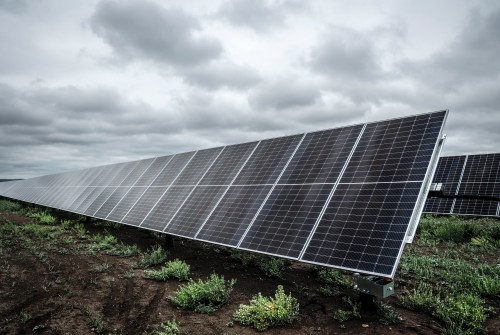
In the early 1970s, licence plates were stamped with the slogan “Sunny Manitoba” — a nod to long summer days, crisp blue winter skies and frequent sun dogs reflecting off of blinding white snow. While the slogan later changed, Manitoba’s ranking as Canada’s second-sunniest province has not.

Despite that sunlit reputation, solar power — one of the most-developed renewable energy sources — makes up just a small fraction of the province’s electricity grid.

“It’s extremely marginal, especially when you compare to other jurisdictions like Alberta and Saskatchewan,” said James Wilt, policy development manager at Climate Action Team Manitoba.

Manitoba boasts a predominantly emissions-free grid, with 97 per cent of its power generated by a network of hydroelectric dams. But the provincial utility, Manitoba Hydro, has forecasted that its once-abundant renewable energy source will soon fall short. There is growing demand for power amid the electrification of sectors like transportation and heating, and the rapidly growing interest in developing electricity-hungry data centres. Combined with more unpredictable water levels owing to climate factors like extreme drought, it’s all prompted the utility to warn that capacity could run out as soon as 2030.

Read
Saturday, May. 23, 2026

Banning YouTube removes tools from schools

Editorial 4 minute read Preview

Banning YouTube removes tools from schools

Editorial 4 minute read Saturday, May. 23, 2026

It’s been a long time since the norm for audio-visual presentations in classrooms took the form of a slide projector, or a TV cart with a VHS player and a small cathode-ray tube set.

But Manitoba’s premier is asking himself something lately: are the modern equivalents good for schools?

Premier Wab Kinew said during a recent CBC interview that he does not think YouTube, the popular video-streaming site, should be used in classrooms. He made the comment during a discussion on his broader effort to keep kids aged 15 and younger from accessing YouTube and other social media apps.

The comments have caused some consternation among educators who, while recognizing YouTube in general is not a great source of information for young people, believe it nevertheless offers access to a solid repository of educational video content provided by reputable sources.

Read
Saturday, May. 23, 2026
No Subscription Required

Manitoba’s newspapers portrayed province as rife with untamed potential — to the detriment of the Indigenous community

Reviewed by Matt Henderson 5 minute read Preview
No Subscription Required

Manitoba’s newspapers portrayed province as rife with untamed potential — to the detriment of the Indigenous community

Reviewed by Matt Henderson 5 minute read Saturday, May. 23, 2026

Historian Howard Zinn once compared the historian’s perspective to that of the mapmaker. We have the human tendency to see the world from our point of view, regardless of our best intentions and feigned attempts at objectivity.

Such is the same for newspapers, both historically and in their present form. Newspapers carry with them a certain perspective — a leaning of sorts that is inherent and molded in the perspective of owners, editorial boards and journalists themselves.

You can’t be neutral on a moving train, as Zinn would argue.

In the 19th century, however, newspapers notoriously and explicitly saw the world and tried to shape it from the perspective and agenda of its owners. George Brown’s Globe in Upper Canada, for example, was a classic example of a partisan media that used its platform to undermine rivals, the French and various governments.

Read
Saturday, May. 23, 2026