Social Studies Grade 12
Please review each article prior to use: grade-level applicability and curricular alignment might not be obvious from the headline alone.
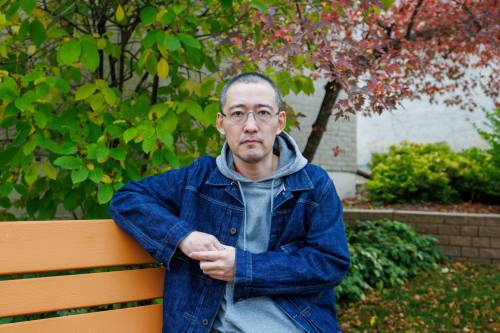
Temporary foreign worker at crossroads without job, alleges immigration consultant misconduct
6 minute read Preview Thursday, Oct. 15, 2026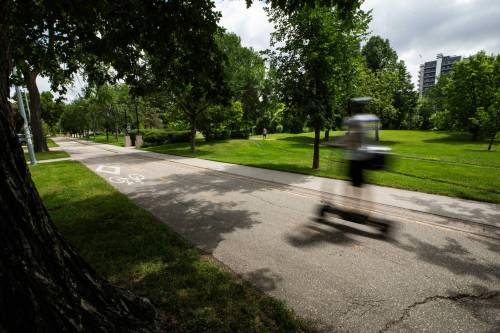
Law will curb e-scooter enthusiasts
4 minute read Preview Thursday, Oct. 15, 2026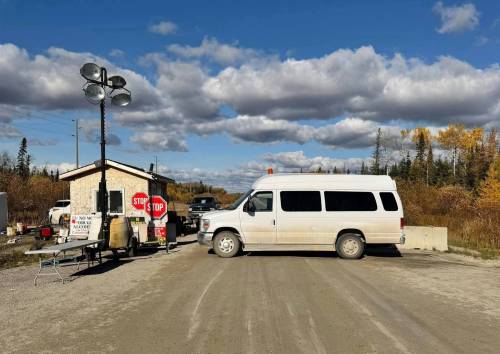
Chief says minister offered money to remove highway checkstop
5 minute read Preview Wednesday, Oct. 14, 2026
Education alone cannot combat residential school denialism
5 minute read Preview Wednesday, Oct. 14, 2026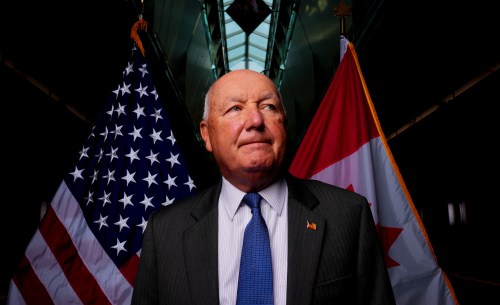
Hoekstra says U.S. watching Canada for signs of interference in midterm elections
5 minute read Preview Friday, Oct. 16, 2026
Halifax’s beloved 104-year-old tortoise is recovering after a successful surgery
2 minute read Preview Wednesday, Oct. 14, 2026
Low-cost grocery store initiative in Elmwood neighbourhood seeks to fill accessibility, security gap
4 minute read Preview Wednesday, Oct. 14, 2026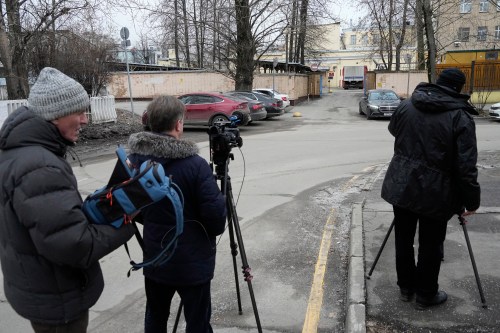
Japanese journalist arrested in Russia’s Sakhalin region on spying charges
3 minute read Preview Friday, Oct. 16, 2026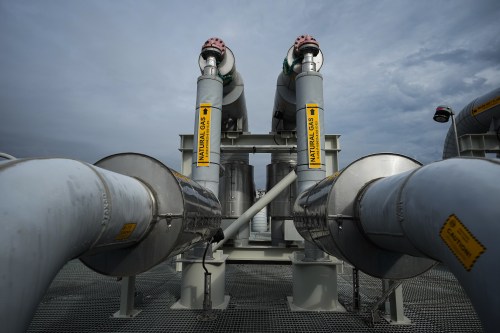
Indigenous groups invest $65.3 million in Coastal GasLink pipeline in B.C.
4 minute read Preview Friday, Oct. 16, 2026
More damaging AI hacking incidents to come unless changes are made, scientists warn
3 minute read Preview Friday, Oct. 16, 2026Time to shift perspective on policing Winnipeg
5 minute read Saturday, Oct. 10, 2026Municipal elections are mere weeks away in Winnipeg and in cities from coast to coast to coast. As ever, policing and its challenges get prime placement among the various spillers of ink. And so, perhaps, it should. Security of person and property is an immediate, sometimes existential concern for citizens. It always has been; probably always will be. And when citizens think security, they usually think police.
We believe it is time to shift our perspective.
Canadian writer and broadcaster H. Gordon Green once observed that “nothing brings back the good old days half so well as a poor memory.” So, let’s for the moment set aside the romance of beat cops in buffalo coats comforting kiddies and soothing seniors. Maybe that’s going too far back.
There was a time when officers walked the beat on Main Street encountering nothing but minor disturbances caused by some poor souls stumbling out of one of the local establishments. The key phrase here is “stumbling out,” not lying passed out on the sidewalk, meandering into traffic or, worse still, engaged in open drug use. Officers could safely lodge such people at the Main Street Project, located on Martha Street, not on the city’s major thoroughfare. It was a simpler time and officers often walked that beat all night without a single incident of note.
Manitoba last province requiring physical stakes on mineral claims
5 minute read Friday, Oct. 9, 2026Potential Manitoba mine sites bear decor not seen in other provinces: GPS-enabled claim markers.
All other provinces permitting mining have dropped requirements for prospectors to physically stake land claims.
They’ve all moved to digital systems.
As Manitoba politicians trumpet plans to triple mining production, exploration companies and the local prospectors association warn outdated staking methods will slow progress.
Indigenous offenders need a new path to justice
5 minute read Preview Friday, Oct. 9, 2026
Landlords will face fines for breaching confidentiality
4 minute read Preview Friday, Oct. 9, 2026
Special House committee votes to push forward major projects bill
4 minute read Preview Saturday, Oct. 10, 2026
Longtime voice of the Blue and Gold marks major milestone
8 minute read Preview Friday, Oct. 9, 2026
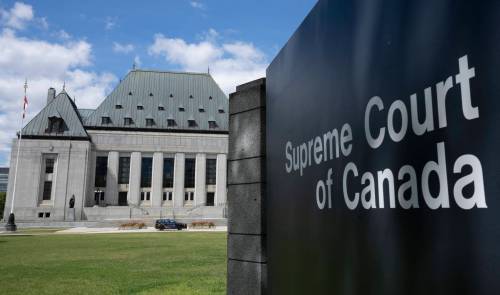
Top court sets sentencing framework for cases involving Indigenous offenders, victims
5 minute read Preview Saturday, Oct. 10, 2026
Diesel-fuelled price hikes could stoke food inflation this fall, experts warn
5 minute read Preview Saturday, Oct. 10, 2026
Orphaned polar bear cub has new home at Winnipeg zoo, but life in captivity speaks to complicated challenges facing species
16 minute read Preview Friday, Oct. 9, 2026AI governance: Canada’s next structural test
4 minute read Wednesday, Oct. 7, 2026Artificial intelligence is accelerating faster than the governance structures meant to contain it. Canada now faces a structural test — whether our institutions can protect autonomy, dignity, and continuity in an era when decision-making is increasingly mediated by systems we did not design, cannot fully audit, and do not yet constitutionally constrain.
This is not a technological problem. It is a governance problem.
AI systems influence how information flows, how institutions behave, and how decisions are made. They shape the conditions under which harm becomes predictable. They amplify both the strengths and weaknesses of the systems into which they are deployed. And they do all of this at a scale and speed that outpaces traditional regulatory tools.
Canada’s current approach to AI governance relies heavily on policy, guidelines, and sector-specific regulation. These are important, but they are not sufficient. What is missing is structural clarity — a constitutional-grade framework that defines authority, responsibility, accountability, and the minimum conditions under which AI systems may operate without undermining human dignity or institutional credibility.

Manitoba tourism reached new heights in 2025
4 minute read Preview Wednesday, Oct. 7, 2026
Alberta separatists see an ally in Quebec premier-designate St-Pierre Plamondon
5 minute read Preview Wednesday, Oct. 7, 2026
Justice minister to announce next steps for MAID in Canada
3 minute read Preview Wednesday, Oct. 7, 2026