
The Land: Places and People
Please review each article prior to use: grade-level applicability and curricular alignment might not be obvious from the headline alone.
Wildfires like this aren’t normal. Stop trying to normalize them.
“Bring a pair of pants and a sweater to Clear Lake — it’s unseasonably cool because of the wildfires.” That was just one of those meteorological idiosyncrasies, attempting to reach back deep into long-forgotten geography lessons, that may seem obvious to those on the Prairies. But for the outsider, a visitor from Toronto, and indeed a relative newcomer to Canada, it was certainly a shock, and a stark reminder that I would be flying into a province still under a state of emergency, which had until recently been decimated by wildfires. It was also an introduction into what may be considered ‘normal’.
Visiting Manitoba this August was extraordinary — the people most certainly lived up to the “friendly” billing that adorns the licence plates, and the scenery of Riding Mountain National Park was worth the trip alone. However, there were a number of topics of conversation that made me question what I had come to know as accepted wisdom.
Talk about fishing restrictions, Indigenous rights, oil and gas permeated discussions, with healthy, good spirited debates. But for me, the most vexing issue was wildfires. More specifically, the extent of their aftermath, effects, and associated restrictions, have become normalized.
MMF objects to city renaming St. Boniface park
2 minute read Preview Monday, Sep. 22, 2025
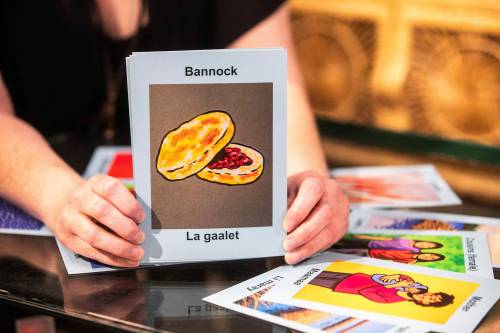
Introduction to Michif — one word at a time
4 minute read Preview Friday, Sep. 19, 2025
Hudson’s Bay seeks approval to auction off 1670 charter, court filings show
5 minute read Preview Friday, Oct. 10, 2025
‘You gave him purpose… gave him his freedom’: grateful mother from Colombia celebrates Sunshine Fund
4 minute read Preview Friday, Sep. 19, 2025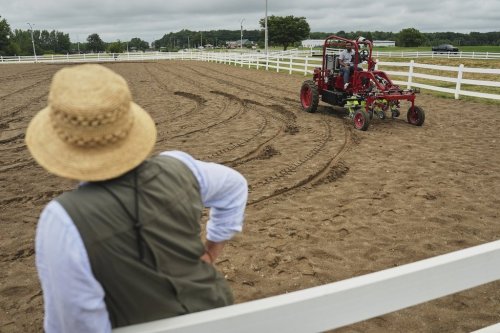
Will electric tractors gain traction? At a pilot event for farmers, researchers see possibilities
6 minute read Preview Friday, Oct. 10, 2025
Province to reimburse Brandon school division for evacuee costs
2 minute read Preview Friday, Sep. 19, 2025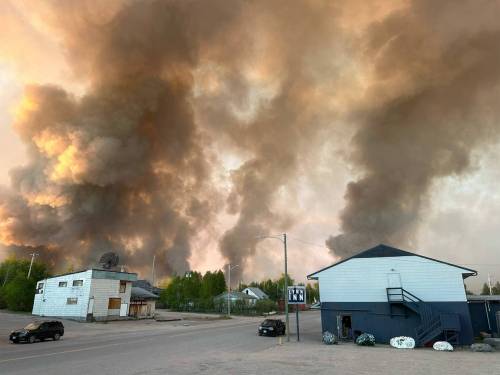
After summer evacuation, northern students ready to hit the books
4 minute read Preview Friday, Sep. 19, 2025
City non-profit inks deal with subsidiary of leader in phosphate-based fertilizers
3 minute read Preview Monday, Sep. 15, 2025
Province creates hunting buffer zone on Bloodvein First Nation
3 minute read Preview Monday, Sep. 15, 2025
Province accuses mining company of negligence in Lynn Lake wildfire
3 minute read Preview Monday, Sep. 15, 2025
Manitobans raise more than $81,000 for cancer research at Terry Fox Run
3 minute read Preview Sunday, Sep. 14, 2025
Equatorial Guinea enforces yearlong internet outage for island that protested construction company
6 minute read Preview Thursday, Oct. 16, 2025
Local engineer was a real game changer
5 minute read Preview Saturday, Sep. 13, 2025
Premier, chiefs question lack of Manitoba First Nation voice on major project council
4 minute read Preview Saturday, Sep. 13, 2025Canadian farmers facing harvest cash-flow crunch, talking support
4 minute read Saturday, Sep. 13, 2025Canadian farmers are understandably disappointed the federal government’s response to China’s punishing import tariffs on canola, pork, peas and seafood hasn’t so far included direct compensation.
After all, the duties are widely seen as retaliation for Canadian tariffs effectively locking Chinese electric cars out of the local market — a policy decision that had nothing to do with agriculture. This is the second time in recent memory China has targeted Canadian farmers to score points on unrelated issues. It’s unlikely to be the last.
While the full impact remains unclear, when Canada’s second-largest canola customer imposes tariffs of 75.8 per cent on seed and 100 per cent on oil and meal, it’s a safe bet demand will be curbed and prices will be lower than they would have been otherwise. Industry estimates place the eventual costs in the range of $2 billion.
However, commodity prices this year are depressed across the board — for a host of reasons. Much of the new-crop canola has yet to be harvested and very little has been sold.
Nation building needs research — not just infrastructure
4 minute read Saturday, Sep. 13, 2025Living through the second Trump administration as a Canadian has been likened, by one commentator, to a teenager being kicked out of the house. We must grow up fast and deal with the fact that we can now only rely on ourselves. So, the federal government is moving fast on files related to security, sovereignty and connectivity. The Liberals passed Bill C-5 to expedite projects that will help Canadians live on our own. Wonderful.
But.
In our rush forward, we cannot overlook the power of nation-building research, which must go hand-in-glove with these infrastructure projects. Research and infrastructure are not competing priorities: they are essential partners in nation-building.
Bill C-5, the Building Canada Act, grants the federal government sweeping powers to quickly build large projects that help goods move faster and more easily. This act intends to strengthen our security, autonomy, resilience and advance the interests of Indigenous Peoples. But there can be no nation-building without nation-building research.

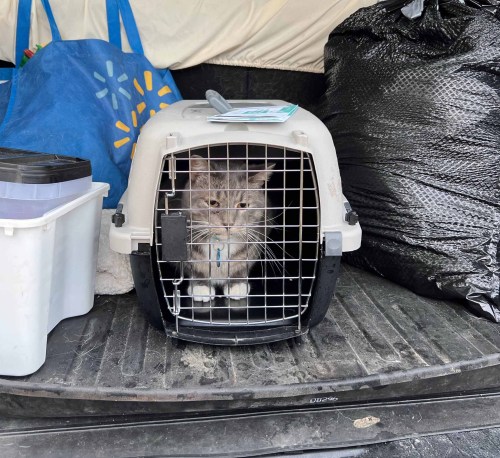
Residents pour cold water on proposed development in St. Vital
5 minute read Preview Friday, Sep. 12, 2025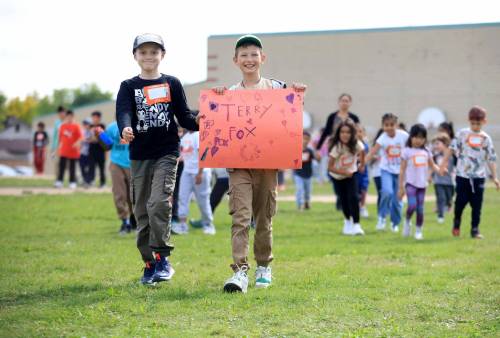
Steinbach, nearby communities flooded in massive overnight deluge
5 minute read Preview Friday, Sep. 12, 2025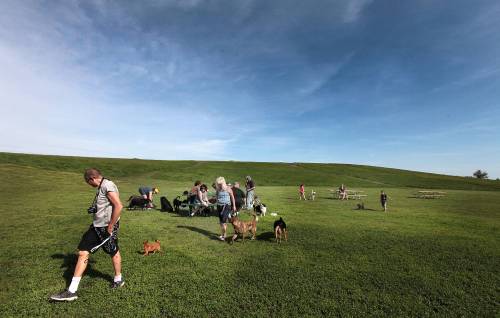
Road through popular dog park proving divisive
5 minute read Preview Friday, Sep. 12, 2025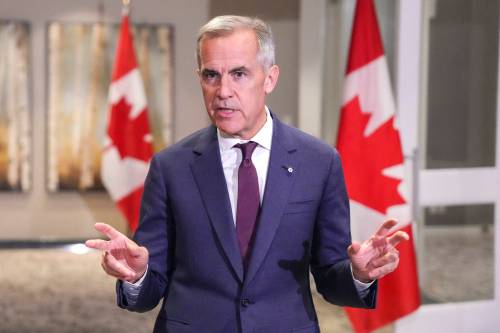
Great potential in Churchill port project — but…
4 minute read Preview Monday, Sep. 8, 2025Farmers face steep harvest climb to profitability
4 minute read Saturday, Sep. 6, 2025The rural scene on Labour Day weekend was quintessentially Manitoba, as farmers chewed away at harvest while the campers rolled by towards one last summer retreat.