The Winnipeg Free Press would like to show you notifications for breaking news and noteworthy local journalism.
No Thanks
Allow
Notification Settings
This browser doesn't support push notifications at the moment. Check browsers features, update your browser or try to use one from the list of recommended to manage your notifications settings:
Firefox (27+)
Google Chrome (30+)
Safari ( MacOS 13+ with browser 16.1+ and iOS 16.4+ ) / Note make sure Push API support enabled under Settings > Safari > Advanced > Experimental Features
Microsoft Edge
If you wish to manage your notification settings from this browser you will need to update your browser's settings for this site. Just click button below and allow notifications for this site
Note Safari 16.4+ working on iOS devices also need this site app to be installed at device's Home Screen for Push Notifications to work
Notifications are blocked for this site. If you wish to manage your notification settings from this browser you will need to update your browser's settings. Usually you'd need to click on site options icon to the left of address bar and change notifications preferences/permissions from there
Breaking News
Urgent and important stories
Recommended Reads
Noteworthy news and features
Close
A lack of locomotivation
If Regina and Hoboken can redevelop their rail yards, why can't Winnipeg?
*First annual payment billed as $205.00 + GST for one year. This annual subscription will automatically renew at $233.00 + GST every 52 weeks (10% off the regular annual price of $259.35). Offer available to new and qualified returning subscribers only. Cancel any time.
To continue reading, please subscribe:
Add Free Press access to your Brandon Sun subscription for only an additional
*Your next Brandon Sun subscription payment will increase by $1.00 and you will be charged $17.95 plus GST for four weeks. After four weeks, your payment will increase to $24.95 plus GST every four weeks.
Nearly every North American city has them -- rail yards that gobble up prime downtown or waterfront land, blight the city and stymie development.
Hey there, time traveller!
This article was published 14/07/2012 (5183 days ago), so information in it may no longer be current.
Nearly every North American city has them — rail yards that gobble up prime downtown or waterfront land, blight the city and stymie development.
But almost every city has redeveloped them, or is in the process of transforming their rail yards. From Victoria to Moncton to Santa Fe, cities are slowly relocating old rail yards to make way for more lucrative and innovative developments.
Winnipeg is no exception. Nearly 30 years ago, we turned the old CN rail yards into The Forks, and the Fort Rouge Yards are about to become a big, new residential development.
But what of the city’s other central yards — the vast CP Rail tracks that segregate the North End? Recently, the Social Planning Council of Winnipeg has tried to spark a city-wide debate over those tracks, saying the first step is a $1.5-million feasibility study to find out whether moving them makes sense, what might be built instead and how the cost-benefit relation shakes out.
It’s not an easy task. The tracks are huge — once the biggest privately owned yards in the world, according to Doug Bell, president of the Winnipeg Railway Museum. CP Rail is content with them and may sell only reluctantly. Low land prices may make development trickier. And political will is in shorter supply now than when The Forks was created in the mid-’80s.
But, if hardscrabble cities such as Hoboken and Regina are redeveloping their yards, why can’t Winnipeg?
Here’s some inspiration from elsewhere.
WINNIPEG FREE PRESS ARCHIVES
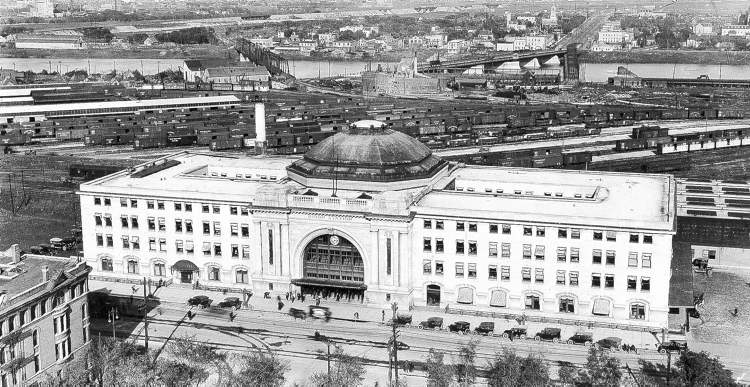
The vast rail yards behind the CN station are seen in past days, where The Forks now sits.
EDMONTON
Where it is: A spot similar to Winnipeg’s CP Rail Yards, on the northwest edge of Edmonton’s downtown. It’s an area about 18 blocks long and two blocks wide.
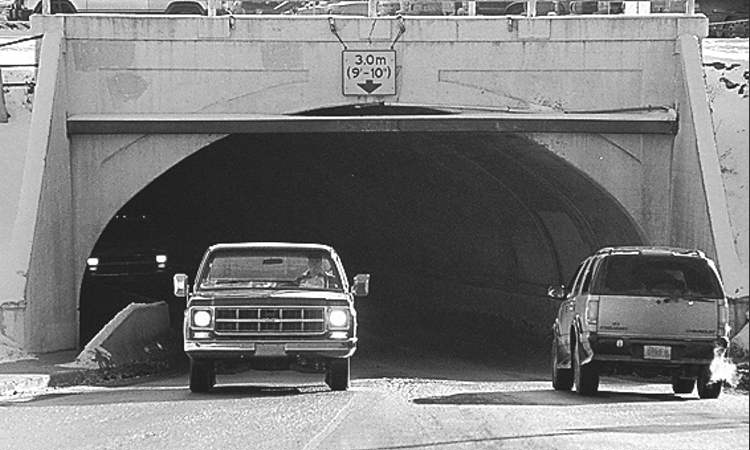
What it was: The CN Rail yards, which functioned until the late 1980s. The long, skinny yards bisected the city and necessitate the famous “rat hole” — a creepy tunnel underneath the yards.
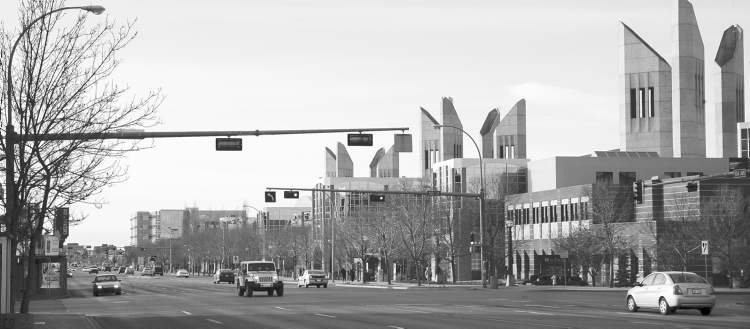
What’s there now: It’s barely an exaggeration to say every big new development in Edmonton has either been built on the yards or is about to be. The site is dominated by one of Edmonton’s most architecturally imposing buildings — the six-block-long Grant MacEwan University, which attracts 7,000 full-time students to the area. Around it, there are hundreds of new condo units, student housing and affordable apartments mixed with small shops and big-box stores and restaurants. Over the last decade, more than 10 warehouses around the site have been converted to hipster lofts thanks to a related incentive program, and a popular summer farmers market has sprung up nearby. The east side of the long property, behind Edmonton’s iconic CN Tower, is slated to become a cluster of new office skyscrapers, including the just-opened Epcor tower. That cluster will be bookended by the new Royal Alberta Museum and a new $450-million downtown arena. At the other end, the old Molson brewery site is about to become a residential retail zone. In short, the transformation is remarkable.
How it happened: In the late 1980s, CN Rail wanted to divest itself of older, less efficient inner-city yards and move, in Edmonton’s case, to bigger and better yards on northern outskirts of town. The catalyst for redevelopment was the sale of a big parcel to the province for $16.7 million. The province then turned the rail land over Grant MacEwan for the college’s new campus. With the proceeds from the sale, CN then expanded trackage on the outskirts of town, while the college sparked the renaissance. CN, which had a small but innovative real estate office in Edmonton, effectively did all the development and site cleanup itself, bit by bit, guided by an area structure plan city planners drafted.
POSTMEDIA NEWS ARCHIVES
Edmonton's rail yards led to the ''rate hole.''
Cost to taxpayers: Because CN led the development, taxpayers’ initial investment was minimal. It included the province’s $16.7-million purchase of the land for Grant MacEwan and $93 million to build the new campus, money the province likely would have spent elsewhere. The city also did some infrastructure work, demolishing a flyover, installing streetscaping and widening 104th Avenue.
Effect: In addition to the boom in construction and the huge increase in the city’s tax base — one of the new 1.4-hecatre shopping centres sold last year for $17 million — the redevelopment helped link the downtown with the working-class neighbourhood to the north. It had traditionally been isolated by the tracks, which also stymied downtown development, said Don Hussey, the project manager in CN’s real estate office who helped orchestrate the renaissance. “The rail yards used to be a barrier to activity in Central McDougall, and they certainly influenced development on either side,” said Hussey, now the principal of Urban Revision Consulting. “It really affected the fabric of the city.”
MONTREAL
Where it is: In Montreal’s Rosemont district, not far from the botanical gardens and Olympic Stadium and just a few klicks from downtown Montreal.
What it was: CP Rail’s Angus shops, where CP manufactured and repaired locomotives and freight cars and did significant building during the Second World War. When the shops closed for good in 1992, the neighbourhood was devastated by job losses and the 50-hectare site was left a blight.
What’s there now: A genuine mix of hundreds of reasonably priced and low-income housing, including townhouses, co-ops, seniors apartments, condos and rentals, along with a large new park inaugurated in 2006 and many smaller ones. An urban, high-tech business park called the Technopole Angus anchors the site’s southern edge, closest to the existing mainline. It and other light industry — a key demand of the neighbourhood — provide more than 2,000 jobs.
How it happened: CP originally proposed high-end housing and a commercial centre, which caused the neighbourhood to balk. Then, as is Montreal’s political tradition, they got organized, creating community groups that still exist.
Cost to taxpayers: The Quebec government chipped in $3.3 million to clean up the site, and the city covered two-thirds of the site-development costs — the sewers, roads, lighting and trees. CP paid for the remaining third. The federal and provincial governments, along with a Quebec-based venture capital fund, put up several million dollars in startup investment, and CP Rail did, too.
Lessons: Jean-Marc Fontan, a Université du Québec Montréal sociologist who was involved in the Angus yards project from the start, said the neighbourhood redevelopment worked because of a lucky confluence of people and resources — city politicians who pressured CP to negotiate, a government investment fund that kick-started development, a local university able to support community activism and CP officials in the real estate division eager to create value from an obsolete yard. “Then you have to be ready to fight, fight, fight and find the little cracks that create the dynamism,” said Fontan.
maryagnes.welch@freepress.mb.ca
PROJECTS UNDERWAY
Hoboken, N.J.: Hoboken has been debating what to do with the old NJ Transit rail yards since 2006. It’s a 21-hectare lot that separates Hoboken from Jersey City and overlooks the Hudson River and the Manhattan skyline. NJ Transit originally pitched a plan that included a 70-storey office tower and several 45-storey residential buildings, but it was met with widespread derision and was scaled back. In the meantime, the city began its own process, which is underway.
Regina, Sask: About half of Regina’s 13.3-hectare CP Rail yards are about to become the site of the city’s new football stadium, hugged by retail and residential projects. Various governments are putting up nearly $350 million, which will leverage roughly $1 billion in private dollars.
Sacramento, Calif.: The massive urban infill project, one of the biggest in the United States, covers 97 hectares of old rail yards and will be roughly the same size as Sacramento’s current downtown. It is slated to include everything under the sun — a whopping 12,000 housing units, retail, office space, parks, a railroad museum, a performing arts centre and now possibly a new stadium. Prep work on the site is already underway.
Rick MacWilliam / Postmedia News Archives
Edmonton's six-bloc-long Grant MacEwan University and surrounding developments have transformed the city's downtown.