

Hopes and fears from Vimy
A look into the hearts and minds of soldiers who fought the pivotal First World War battle

Advertisement
Read this article for free:
or
Already have an account? Log in here »
To continue reading, please subscribe:
Digital Subscription
One year of digital access for only $75*
- Enjoy unlimited reading on winnipegfreepress.com
- Read the E-Edition, our digital replica newspaper
- Access News Break, our award-winning app
- Play interactive puzzles
*Billed as $5.77 plus GST every four weeks. After 52 weeks, price increases to the regular rate of $19.95 plus GST every four weeks. Offer available to new and qualified returning subscribers only. Cancel any time.
Monthly Digital Subscription
$4.99/week*
- Enjoy unlimited reading on winnipegfreepress.com
- Read the E-Edition, our digital replica newspaper
- Access News Break, our award-winning app
- Play interactive puzzles
*Billed as $19.95 plus GST every four weeks. Cancel any time.
To continue reading, please subscribe:
Add Free Press access to your Brandon Sun subscription for only an additional
$1 for the first 4 weeks*
- Enjoy unlimited reading on winnipegfreepress.com
- Read the E-Edition, our digital replica newspaper
- Access News Break, our award-winning app
- Play interactive puzzles
*Your next Brandon Sun subscription payment will increase by $1.00 and you will be charged $17.95 plus GST for four weeks. After four weeks, your payment will increase to $24.95 plus GST every four weeks.
Read unlimited articles for free today:
or
Already have an account? Log in here »
Hey there, time traveller!
This article was published 06/04/2017 (3336 days ago), so information in it may no longer be current.
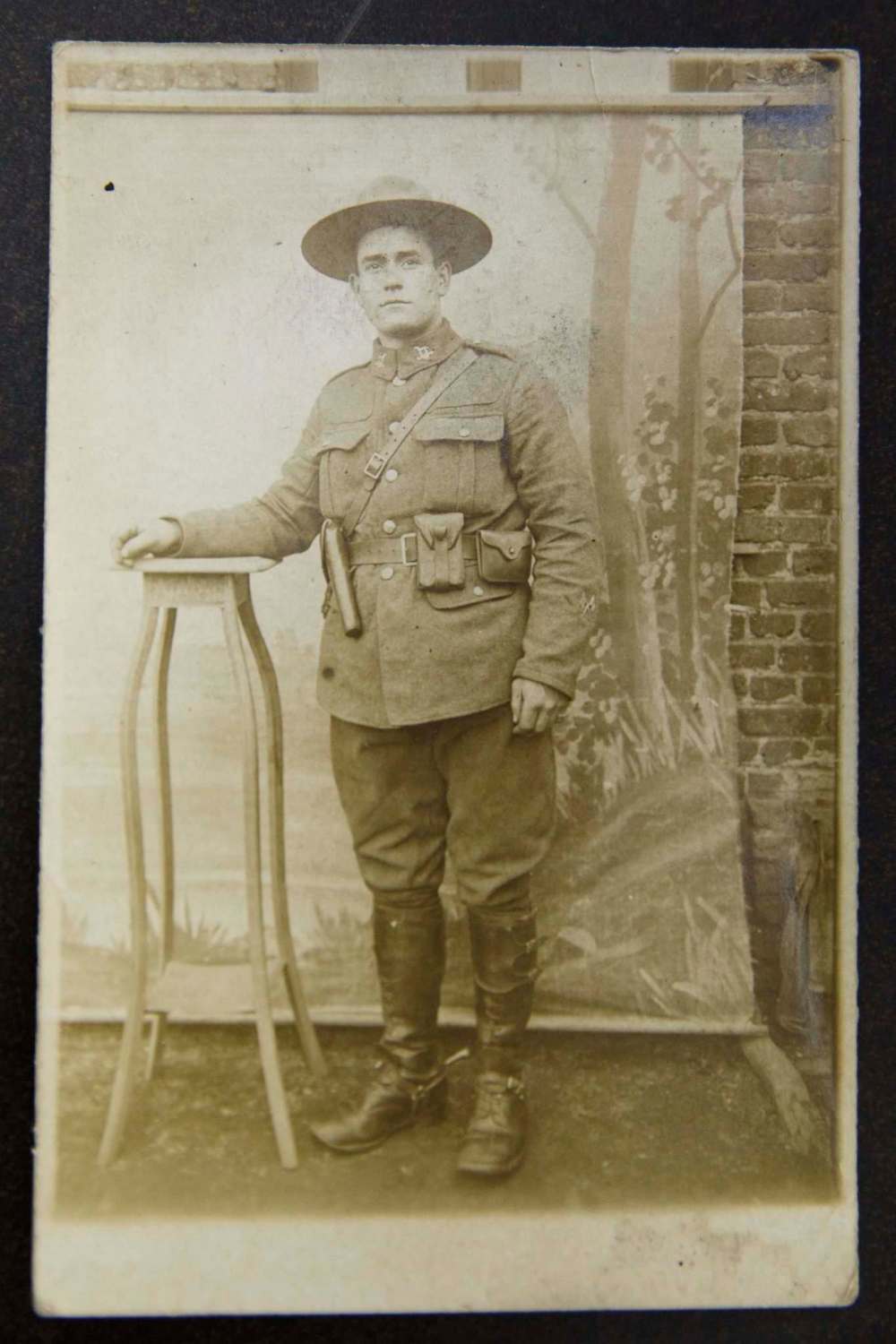
Even in the winter of 1916, George Battershill was longing for home, back on Helmsdale Avenue in East Kildonan.
Battershill was a private with the 61st Winnipeg Overseas Battalion, and his first winter in the muddy, miserable trenches of France had already hardened him to the brutal realities of the First World War.
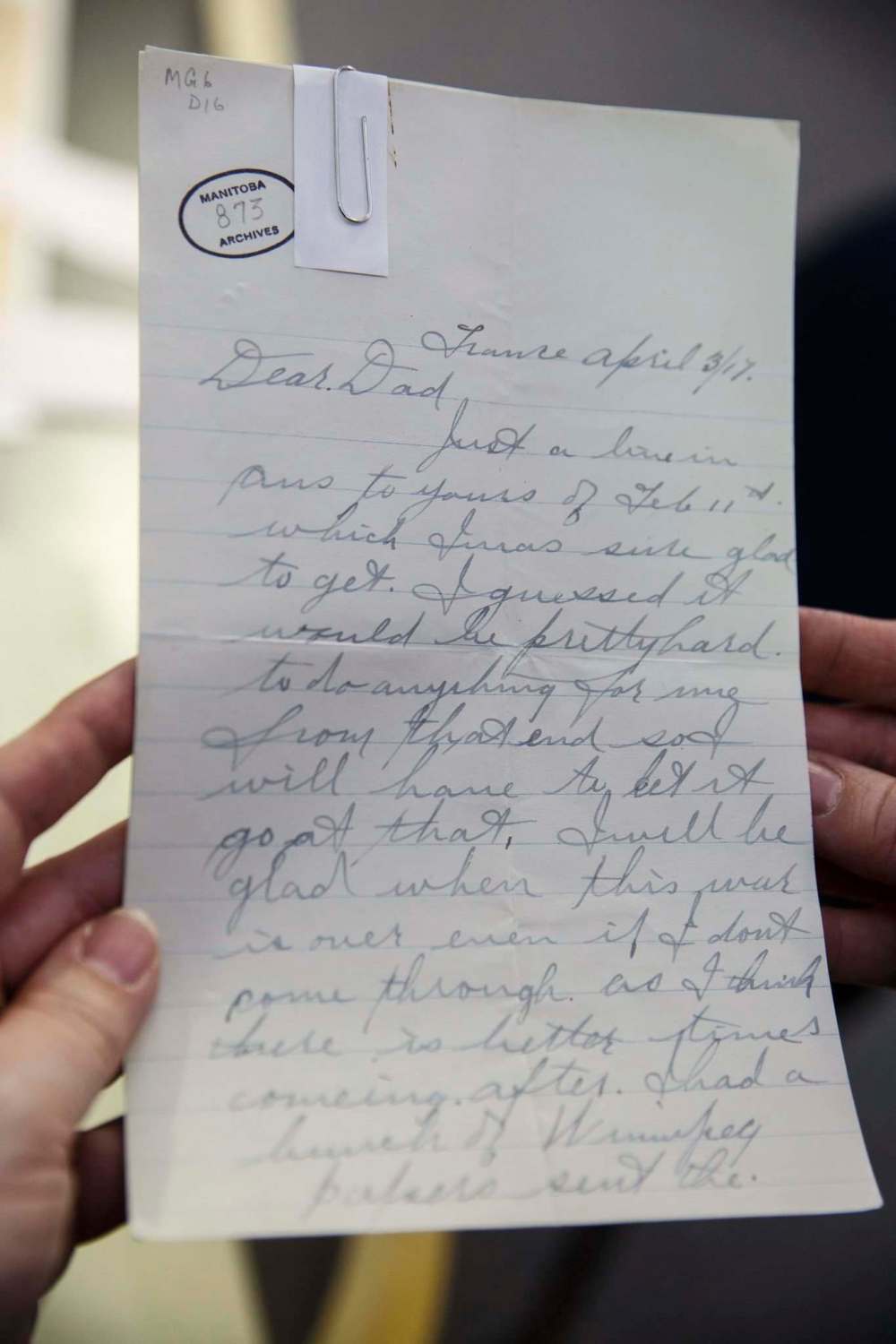
On Dec. 27, 1916, Battershill wrote his mother — listed in the correspondence as J.W. Battershill — a letter; one of dozens he’d write home in his first year on the front. Dear Mother, it read…
“On Xmas Day the Germans came over and gave us beer and cigars and some of the boys shook hands with them but not for me. I have had too many of my chum killed by thos (sic) squareheads and I would sooner turn a machine gun on them than shake their hands.”
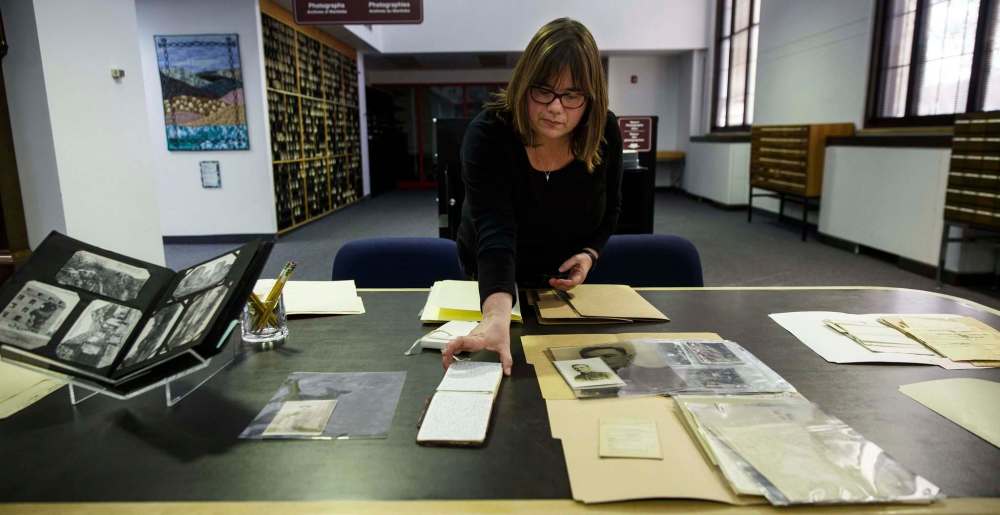
Battershill was referring to rare occasions, during Christmas, when Allied and German soldiers would sometimes lay down their arms and cease firing — even mingle together or play soccer matches on fields where their comrades had fallen in battle.
Battershill’s letters home are part of an open house to be staged at the Archives of Manitoba on April 12 to commemorate the 100th anniversary of the Battle of Vimy Ridge. The collection includes original diaries, letters, photos, scrapbooks — even last wills and testaments — of Manitoba soldiers who fought in the historic battle in France, which marked the first time all four divisions of the Canadian Expeditionary Force fought together in a battle.
The open house will be held from 1 p.m. to 4 p.m. and 6 p.m. to 9 p.m. at the provincial archives, located at 200 Vaughan St.
Also, the University of Manitoba Archives will host Voices From Vimy: Manitobans on the Ridge, from April 11 to June 30. The display features letters, postcards and other records of Manitobans who fought on the ridge.
The U of M exhibit opens at 7 p.m. on April 11 with guest presentations by Tyyne Petrowski and Andrea Martin. The U of M Archives is located in the Elizabeth Dafoe Library.
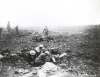
The Battle for Vimy Ridge began on April 9, 1917, when 20,000 soldiers attacked heavily fortified German positions at Vimy Ridge, about 12 kilometres northeast of Arras, France. The Canadians took the ridge by the afternoon and completed their objectives in a few days.
But by the time the firing stopped at the nightfall of the 12th, the Canadian corps had suffered 10,602 casualties: 3,598 killed and 7,004 wounded.
George Battershill was one of them. He was wounded in the thigh on the battlefield and died April 17 in a French hospital.
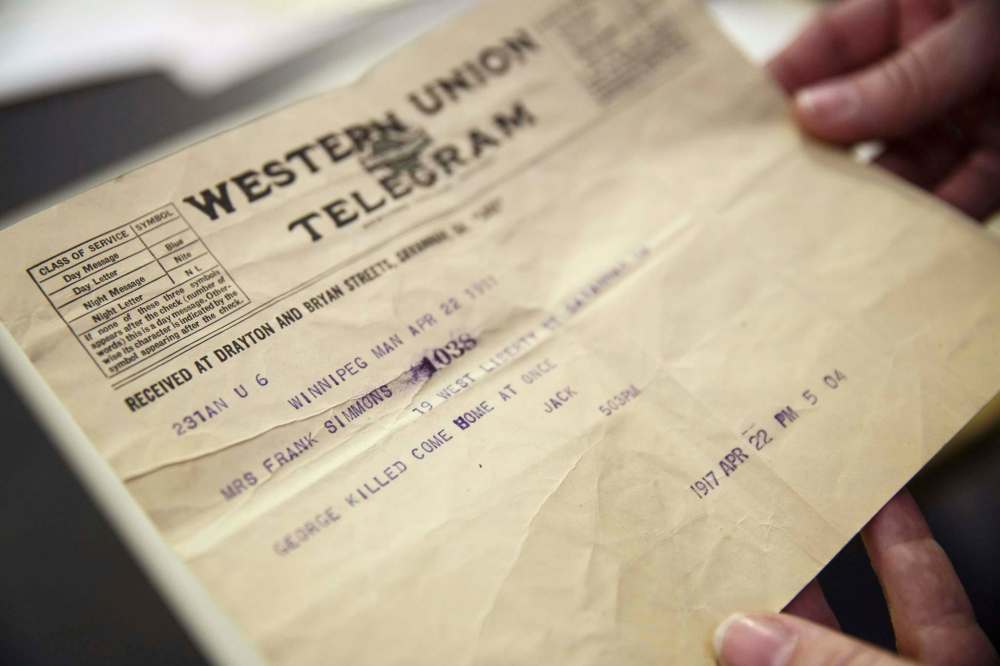
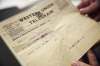
Kathleen Epp, a senior archivist who assembled the open house material, said the collection of original documents — which also includes trench maps and a 1967 film of First World War veterans from Manitoba reminiscing about the Great War — is a means of reaching back through time by reading their own handwritten correspondence to loved ones back home.
“It’s so incredible to read these real stories,” Epp said. “This is what we have left. You can get lost in the history and the numbers of soldiers who fought or lost their lives, but when you narrow it down to the individual stories and families, that’s what I find interesting.”
It’s also local. The diaries and letters are written by young men who grew up on Corydon Avenue or Helmsdale, or small towns such as Manitou and Boissevain.
For example, there is the meticulous diary kept by George Henry Hambley, who was just 18 when he enlisted in the Canadian Expeditionary Force in 1915. Hambley’s journal is not only detailed, but includes superb illustrations of everything from army vehicles to machine guns.
On April 9, 1917, on the first day of the Vimy Ridge battle, Hambley wrote: “Monday morning exactly at 5:30 the bombardment started in earnest — every gun at once and the effect was most wonderful. Fritz’s line was being blown in all directions and in a few minutes it was over.”
Hambley, who was raised near Swan Lake, survived the war and became a United Church minister. (One of the illustrations in his dairy is of a church). He died in Winnipeg in 1983 at the age of 86.
Another soldier featured at the Archives of Manitoba open house is Cpl. Stanley Bowen, who has been part of a Free Press feature in which for the last few months his letters have been transformed into real time tweets under the account @SignedStanley — mostly to his love Mary back in Winnipeg.
“He’s our romantic,” Epp said.
The veterans of Vimy Ridge are all buried now, either where they fell in France or other battlefields of Europe or, for the survivors, after returning home. The last Canadian infantry soldier to survive the battle, Charles Reaper of Winnipeg, died in 2003 at the age of 103.
Epp wants to ensure their handwritten thoughts and words don’t die with them.
“I hope people come away with… the kind of history that sticks with you,” she said. “Manitoba was really young when this happened. It must have had a huge impact on almost every community.
“And it’s just so compelling to hold an actual letter. And it’s not just the story of the boys, it was the story of the people reading these letters. I imagine there were a lot of tears shed reading them.”
In his last letter home, just a week before he stood and fell on Vimy Ridge, George Battershill wrote: “I will be glad when this war is over even if I don’t come through as I think there is better times coming after.”
One-hundred years later, almost to the day, Epp said she will miss Battershill the most.
“I’ve been falling in love with him,” she said. “I’ve been reading him all year. I’m going to miss him.”
randy.turner@freepress.mb.ca
Twitter: @randyturner15
Randy Turner
Reporter
Randy Turner spent much of his journalistic career on the road. A lot of roads. Dirt roads, snow-packed roads, U.S. interstates and foreign highways. In other words, he got a lot of kilometres on the odometer, if you know what we mean.
Our newsroom depends on a growing audience of readers to power our journalism. If you are not a paid reader, please consider becoming a subscriber.
Our newsroom depends on its audience of readers to power our journalism. Thank you for your support.
Randy Turner
Reporter
Randy Turner spent much of his journalistic career on the road. A lot of roads. Dirt roads, snow-packed roads, U.S. interstates and foreign highways. In other words, he got a lot of kilometres on the odometer, if you know what we mean.
Our newsroom depends on a growing audience of readers to power our journalism. If you are not a paid reader, please consider becoming a subscriber.
Our newsroom depends on its audience of readers to power our journalism. Thank you for your support.
Advertisement Advertise With Us
Advertisement Advertise With Us
History
Updated on Thursday, April 6, 2017 7:56 AM CDT: Adds photos
Updated on Thursday, April 6, 2017 7:27 PM CDT: changes Swan River to Swan Lake