

Lives that mattered
Weekly feature in new section marks deaths of notable Manitobans

Advertisement
Read this article for free:
or
Already have an account? Log in here »
To continue reading, please subscribe:
Digital Subscription
One year of digital access for only $1.44 a week*
- Enjoy unlimited reading on winnipegfreepress.com
- Read the E-Edition, our digital replica newspaper
- Access News Break, our award-winning app
- Play interactive puzzles
*Billed as $5.77 plus GST every four weeks. After 52 weeks, price increases to the regular rate of $19.95 plus GST every four weeks. Offer available to new and qualified returning subscribers only. Cancel any time.
To continue reading, please subscribe:
Add Free Press access to your Brandon Sun subscription for only an additional
$1 for the first 4 weeks*
- Enjoy unlimited reading on winnipegfreepress.com
- Read the E-Edition, our digital replica newspaper
- Access News Break, our award-winning app
- Play interactive puzzles
*Your next Brandon Sun subscription payment will increase by $1.00 and you will be charged $17.95 plus GST for four weeks. After four weeks, your payment will increase to $24.95 plus GST every four weeks.
Read unlimited articles for free today:
or
Already have an account? Log in here »
Hey there, time traveller!
This article was published 07/04/2018 (2978 days ago), so information in it may no longer be current.
When it comes to recording death in newspapers, there has been a gender gap throughout the decades.
In the last few weeks, the New York Times has recognized this and launched its Overlooked obituary project. The effort is designed to go back through the decades to find women who should have had an obituary story written about them when they died but didn’t, and write it now. These are stories written by reporters, separate from obituary notices written and paid for by families for publication in the paper.
As one of the project’s creators says, there are many possible explanations the stories weren’t written and published before now: their accomplishments weren’t recognized until long after they died; they had faded into obscurity; no one knew they had died; or maybe an editor didn’t believe the death — and life — was worthy of a writeup.
Who are some of the women whose passing didn’t make the pages of the Times? The writer Charlotte Bronte was one, poet Sylvia Plath was another. So, too, was photographer Diane Arbus. Mary Ewing Outerbridge, credited with introducing tennis to the United States, wasn’t written up when she died in 1886.
To launch the new weekly feature A Life’s Story and the Passages section, the Winnipeg Free Press culled its archives to see how some prominent women were remembered here when they died.
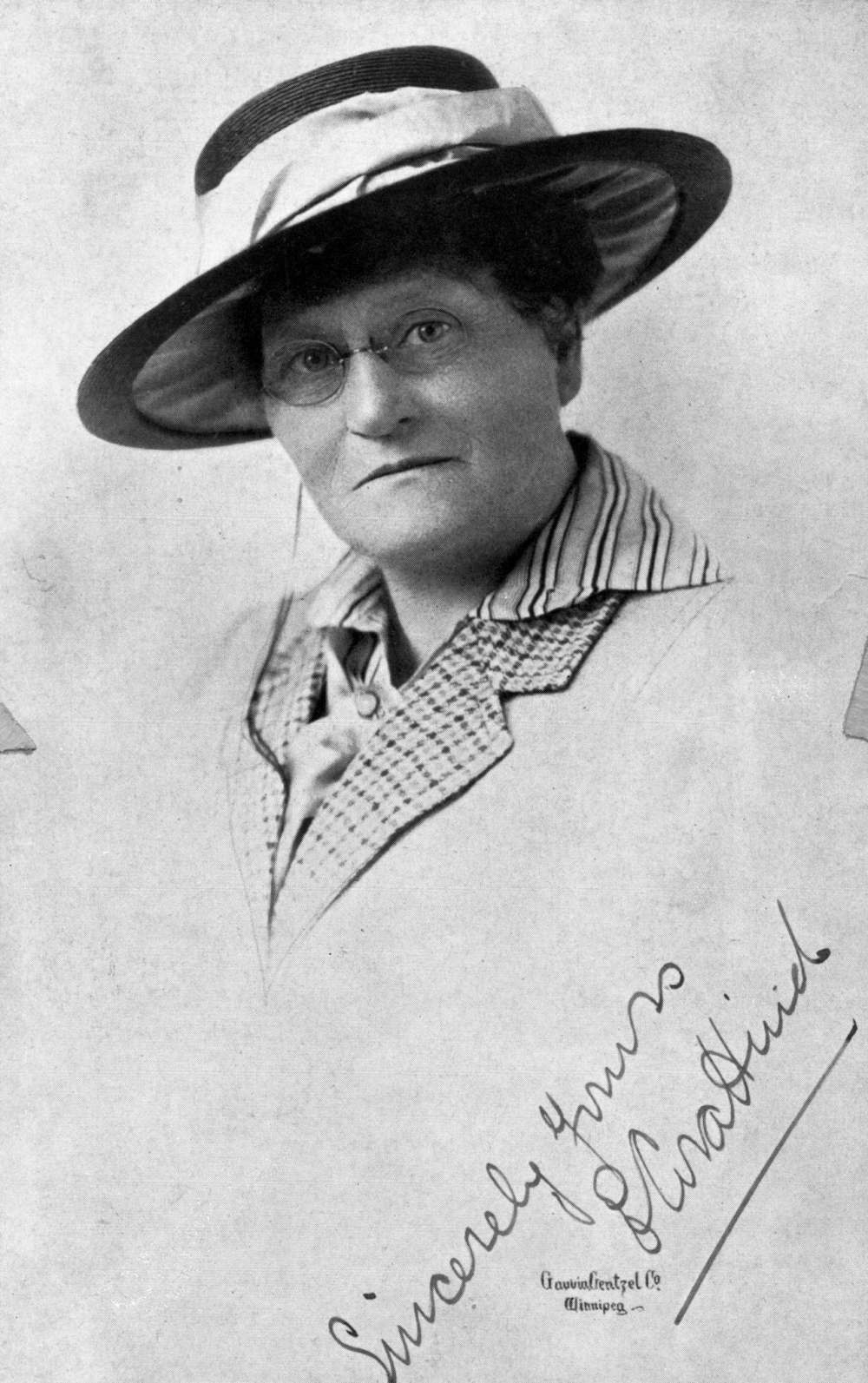
The Free Press put pioneering agriculture reporter E. Cora Hind’s death on Oct. 6, 1942, on the front page under the headline “Life’s Work Ends at 81.” The story noted Hind was not only the dean of Canadian newspaperwomen, but also “a recognized world authority on grain and livestock.”
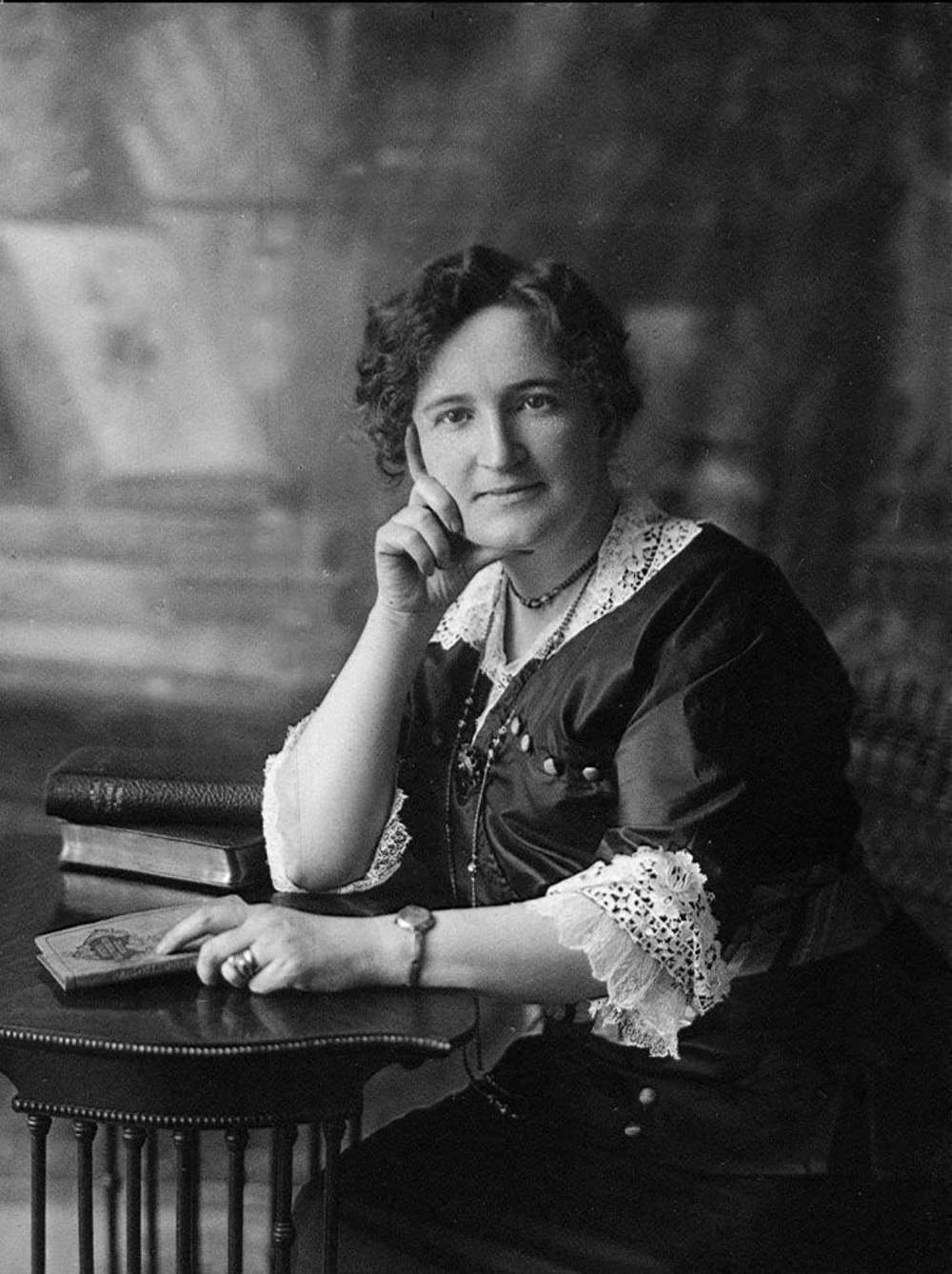
Suffragette and author Nellie McClung’s death didn’t receive front-page treatment; because she died on a Saturday — the Free Press did not publish a Sunday edition — it was reported two days later, on Sept. 7, 1951 on page 7. That may have had something to do with the fact she and her family hadn’t lived in the province since 1912. However McClung, who was referred to as “Canadian author, temperance leader and champion of women’s rights,” did receive another honour. Her death was noted prominently on the editorial page, where the writer said McClung was “a driving and merry force in securing equal suffrage in Manitoba, the first among the provinces.”
When Edith Rogers, the first woman elected to the Manitoba legislature in 1920, died on April 19, 1947, the story appeared on the front page of that day’s paper; the Free Press published several editions throughout the day until the 1980s. Coincidentally, it was the same day the future Queen Elizabeth turned 21, giving her the right to vote.
Rogers’ daughter Margaret Konantz, the first woman from Manitoba elected as an MP in 1963, also merited a next-day front-page story when she died May 11, 1967.
But then there are the stories that didn’t appear when Lillian Beynon Thomas and her sister Francis Marion Beynon, Margret Benedictsson and Jessie Kirk died.
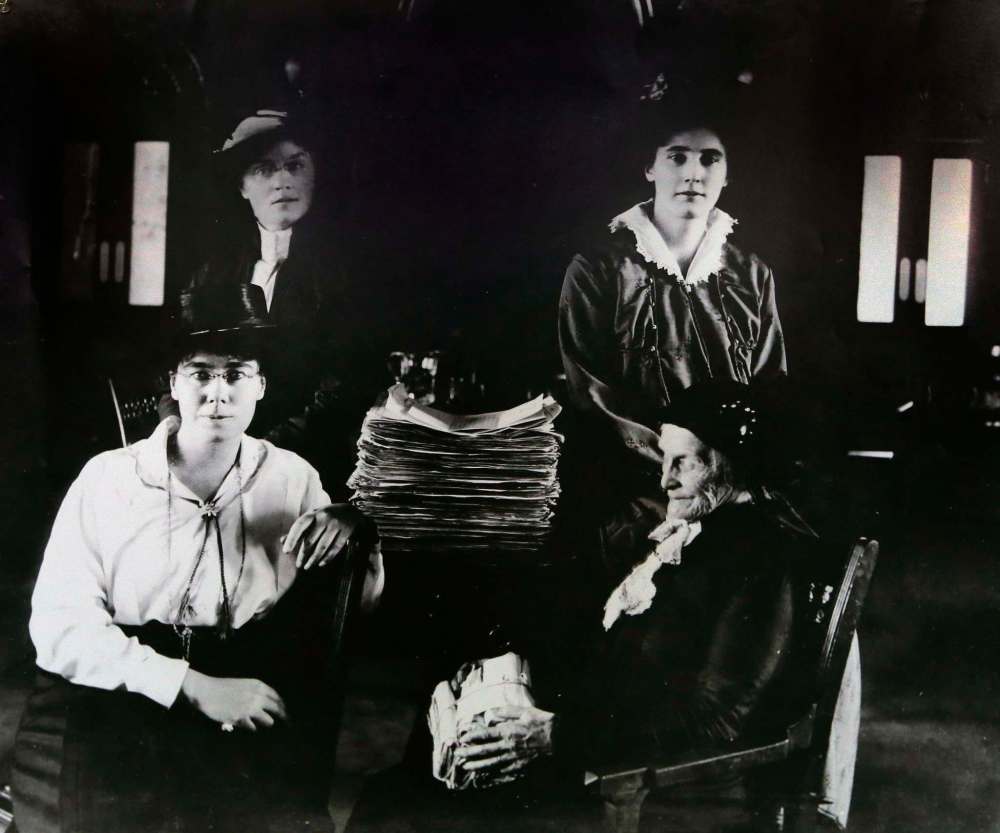
Both Beynon sisters are listed as journalists and feminists on the Manitoba Historical Society’s website. Both were prominent in Winnipeg in the early days of the last century and are credited with pushing several women’s issues, including suffrage. Beynon Thomas worked as an assistant editor responsible for the women’s page of the Weekly Free Press and Beynon was the first full-time editor of female-focused content the Grain Growers’ Guide.
They were such prominent suffragettes that they are featured in Wendy Lill’s play The Fighting Days, first produced in 1983. In fact, when then-premier Tobias Norris said in 1915 that he would put suffrage on the agenda only if it could be shown Manitoba women wanted to vote, it was Beynon Thomas, as head of a 60-member delegation, who delivered a 45,000-strong list of women’s signatures to him before the end of the year, which led to the historic legislation changes few weeks later.
“The women of Manitoba are now citizens, persons, human beings who have groped politically out of the class of criminals, children, idiots and lunatics,” Beynon Thomas wrote in the Weekly Free Press.
There was little coverage when the sisters died.
Beynon’s death received a brief writeup at the very bottom corner of page 33 of the Oct. 6, 1951 edition of the paper. Under the headline “Winnipeg Writer, Frances Beynon, Dies In Hospital,” the article notes that in addition to her role at the Grain Growers’ Guide, she also was a member of the T. Eaton Company’s advertising staff. Her political affiliations, including the Political Equity League and United Farm Women of Manitoba, which made her a compelling figure a few decades earlier was noted almost as an afterthought towards the end.
But that nearly invisible notice was far greater than her sister received. Despite Beynon Thomas’s leading role in securing the right for women to vote, when she died a few years later on Sept. 2, 1961, it was noted only by the family’s paid obituary on page 19 two days later.
That obituary notes that she was in an accident when she was five, preventing her from going to school until she turned 10, but later graduated from Manitoba University in 1905, when she was 30. She taught school for a short time in Morden before joining the Free Press as women’s page editor in the weekly and writing under the name Lillian Laurie. Later, her husband, A.V. Thomas, another journalist at the Free Press, suggested she hold a meeting in their home to look at forming an organization with the sole purpose of getting the vote for women. That gathering in 1912 led to the creation of the Political Equality League.
We’ll never know why Beynon Thomas’s death didn’t generate a news story in the Free Press.
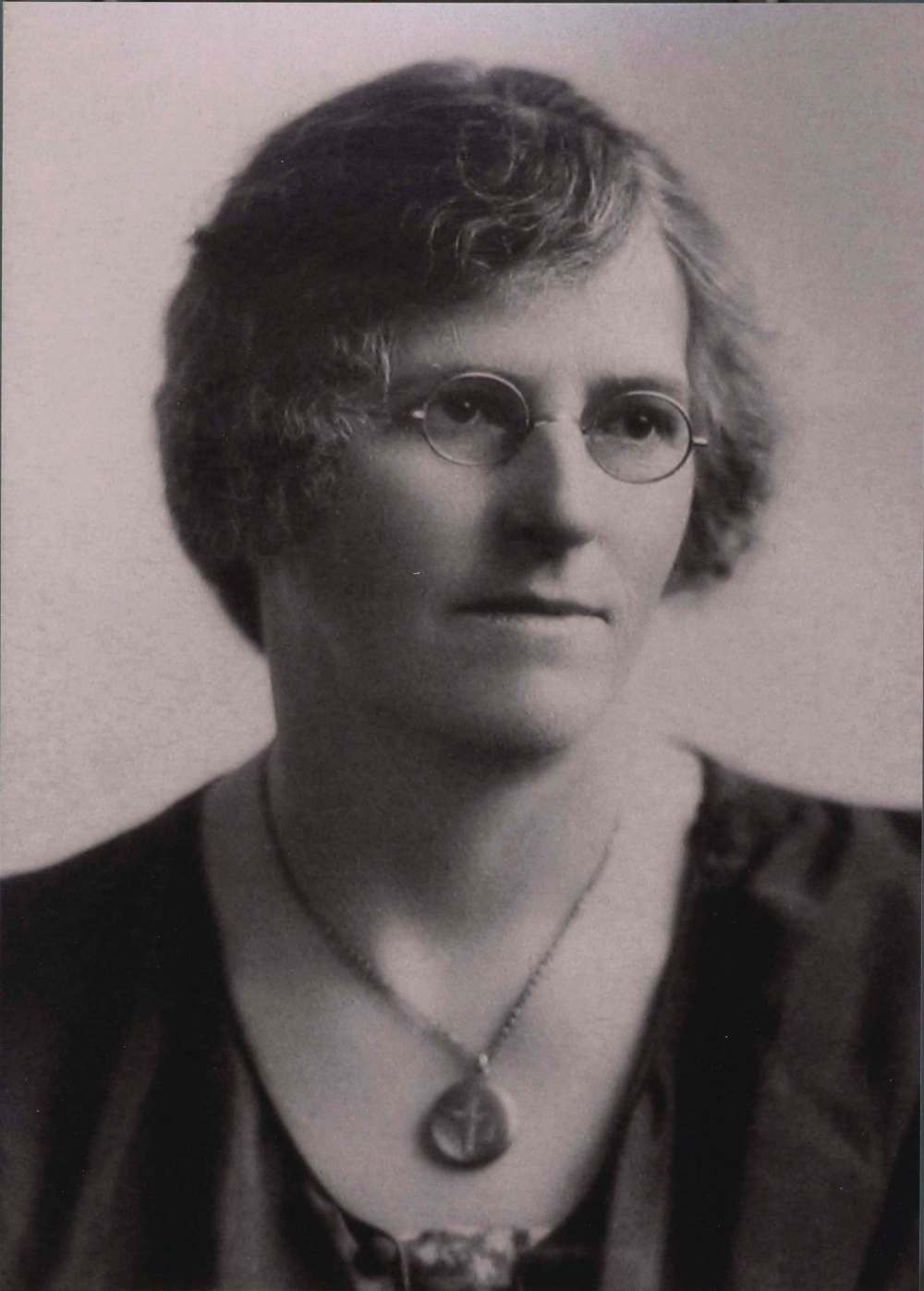
Same with Kirk, the first woman elected to Winnipeg’s city council in 1921. It’s not as if Kirk had faded into history. Just months before she died on Dec. 2, 1965, a Free Press article noted that she had recently been elected to her ninth consecutive term as chairwoman of the civic charities endorsement bureau. But when she died, nothing.
It also happened to Benedictsson, another of the leading suffragettes. She had gained inspiration from leaders of the women’s movement in Iceland, along with the fact that in that country at the time widows and single women could vote during municipal elections. She first went to the United States in 1887 and then Winnipeg in 1890. Eight years later, Benedictsson founded Freyja, an Icelandic-language paper that was also this country’s first feminist literary journal. For more than a dozen years she wrote and inspired women to seek the vote while also helping in the creation of the Icelandic Women’s Suffrage Society in Winnipeg in 1908, serving as its first president.
According to an article about Benedictsson in the Canadian Encyclopedia, she even encouraged readers to withhold sexual relations from their husbands to persuade them to vote for candidates who supported equal rights for women.
After Benedictsson divorced her husband, when he refused her access to his printing press, leading to the end of Freyja, she moved to the United States with their son and daughter. Her death there, in December 1956, was on the front page of Heimskringla, an Icelandic paper published in Winnipeg, but there was no mention in the Free Press.
Shelley Sweeney, head of the University of Manitoba’s archives and special collections, said in days past, many women were ignored for their accomplishments, sometimes because of their own actions.
“I remember one of my students came up to me and said they were researching a prominent female artist in Toronto, but she said while she was really well known in her time, she had completely disappeared,” Sweeney said.
“Part of it was women tended to undervalue their own value. (Artist) Emily Carr left all of her archives to the (British Columbia) provincial archives and people keep viewing them for information about her and publishing it. But because other women didn’t leave records when they passed away, the same women keep getting written up time and again.
“You either have to have the person trumpet themselves or somebody has to be there when they pass away to call the Free Press.”
Sweeney said because a few decades had gone by since their accomplishments, it may have been that many of the suffragettes were forgotten by the time they died.
“Men are quite often commended for what they do — and it is valuable — but even though women complain about that, they then say, ‘nobody would be interested in me.’ But if you destroy your papers, you wipe yourself off from history.”
Margo Goodhand, the first female editor of the Free Press, said even though women were in the minority, she knows how hard reporters at the newspaper worked researching and looking for prominent and notable women who died, to be included in a year-end feature that has run for the last 14 years.
“We all recognize it is harder,” she said. “By the time they die, the family is writing the obituary and they can miss some of what they did. It is also difficult to know what you missed.”
Goodhand said she still can’t understand how reporters at the time could have missed the death of Beynon Thomas and underplayed the death of her sister.
“They were huge in the movement,” she said. “They gave a voice to women. They pushed for women’s suffrage.

“I credit them as much as Nellie McClung for women getting the vote.”
The Free Press can do better by ensuring the remarkable lives of women are properly noted in stories featured in the new Passages section, said editor Paul Samyn, Goodhand’s successor.
“Passages is a testament to those who have left their mark in our province,” he said. “That testament has to better represent the lives of men and women. And to help right the wrongs of the past, the cover stories our newsroom will write for the next several weeks of Passages will be all about women who deserve their due.”
This feature will, in time, help us mark passings of notable Manitobans on a more equal basis so we can tell you why their lives mattered.
kevin.rollason@freepress.mb.ca
Kevin Rollason is a general assignment reporter at the Free Press. He graduated from Western University with a Masters of Journalism in 1985 and worked at the Winnipeg Sun until 1988, when he joined the Free Press. He has served as the Free Press’s city hall and law courts reporter and has won several awards, including a National Newspaper Award. Read more about Kevin.
Every piece of reporting Kevin produces is reviewed by an editing team before it is posted online or published in print — part of the Free Press‘s tradition, since 1872, of producing reliable independent journalism. Read more about Free Press’s history and mandate, and learn how our newsroom operates.
Our newsroom depends on a growing audience of readers to power our journalism. If you are not a paid reader, please consider becoming a subscriber.
Our newsroom depends on its audience of readers to power our journalism. Thank you for your support.
Kevin Rollason is a general assignment reporter at the Free Press. He graduated from Western University with a Masters of Journalism in 1985 and worked at the Winnipeg Sun until 1988, when he joined the Free Press. He has served as the Free Press’s city hall and law courts reporter and has won several awards, including a National Newspaper Award. Read more about Kevin.
Every piece of reporting Kevin produces is reviewed by an editing team before it is posted online or published in print — part of the Free Press‘s tradition, since 1872, of producing reliable independent journalism. Read more about Free Press’s history and mandate, and learn how our newsroom operates.
Our newsroom depends on a growing audience of readers to power our journalism. If you are not a paid reader, please consider becoming a subscriber.
Our newsroom depends on its audience of readers to power our journalism. Thank you for your support.
Related Articles
We've made it easier to find what you want to read
Advertisement Advertise With Us
Advertisement Advertise With Us