

Indigenous Music Awards arrive under cloud of cultural appropriation controversy

Advertisement
Read this article for free:
or
Already have an account? Log in here »
To continue reading, please subscribe:

Digital Subscription
One year of digital access for only $205*
- Enjoy unlimited reading on winnipegfreepress.com
- Read the E-Edition, our digital replica newspaper
- Access News Break, our award-winning app
- Play interactive puzzles
*First annual payment billed as $205.00 + GST for one year. This annual subscription will automatically renew at $233.00 + GST every 52 weeks (10% off the regular annual price of $259.35). Offer available to new and qualified returning subscribers only. Cancel any time.
To continue reading, please subscribe:
Add Free Press access to your Brandon Sun subscription for only an additional
$1 for the first 4 weeks*
- Enjoy unlimited reading on winnipegfreepress.com
- Read the E-Edition, our digital replica newspaper
- Access News Break, our award-winning app
- Play interactive puzzles
*Your next Brandon Sun subscription payment will increase by $1.00 and you will be charged $17.95 plus GST for four weeks. After four weeks, your payment will increase to $24.95 plus GST every four weeks.
Read unlimited articles for free today:
or
Already have an account? Log in here »
Hey there, time traveller!
This article was published 10/05/2019 (2691 days ago), so information in it may no longer be current.
The Indigenous Music Awards will take the Club Regent Event Centre stage May 17, pushing several compelling stories into the spotlight.
It’s the 14th incarnation of the IMAs since being founded in 2006 (taking a hiatus in 2016). The awards are one part of the multi-day Manito Ahbee Festival, which features a music conference, marketplace and trade show, and the well-known international powwow at the RBC Convention Centre.
Jeremy Dutcher is nominated, and fresh off his 2018 Polaris Music Prize and 2019 Juno Award for his album Wolastoqiyik Lintuwakonawa. Mainstream success is not always a formula for Indigenous music industry success, so it’s curious if his peers will vote for him again.
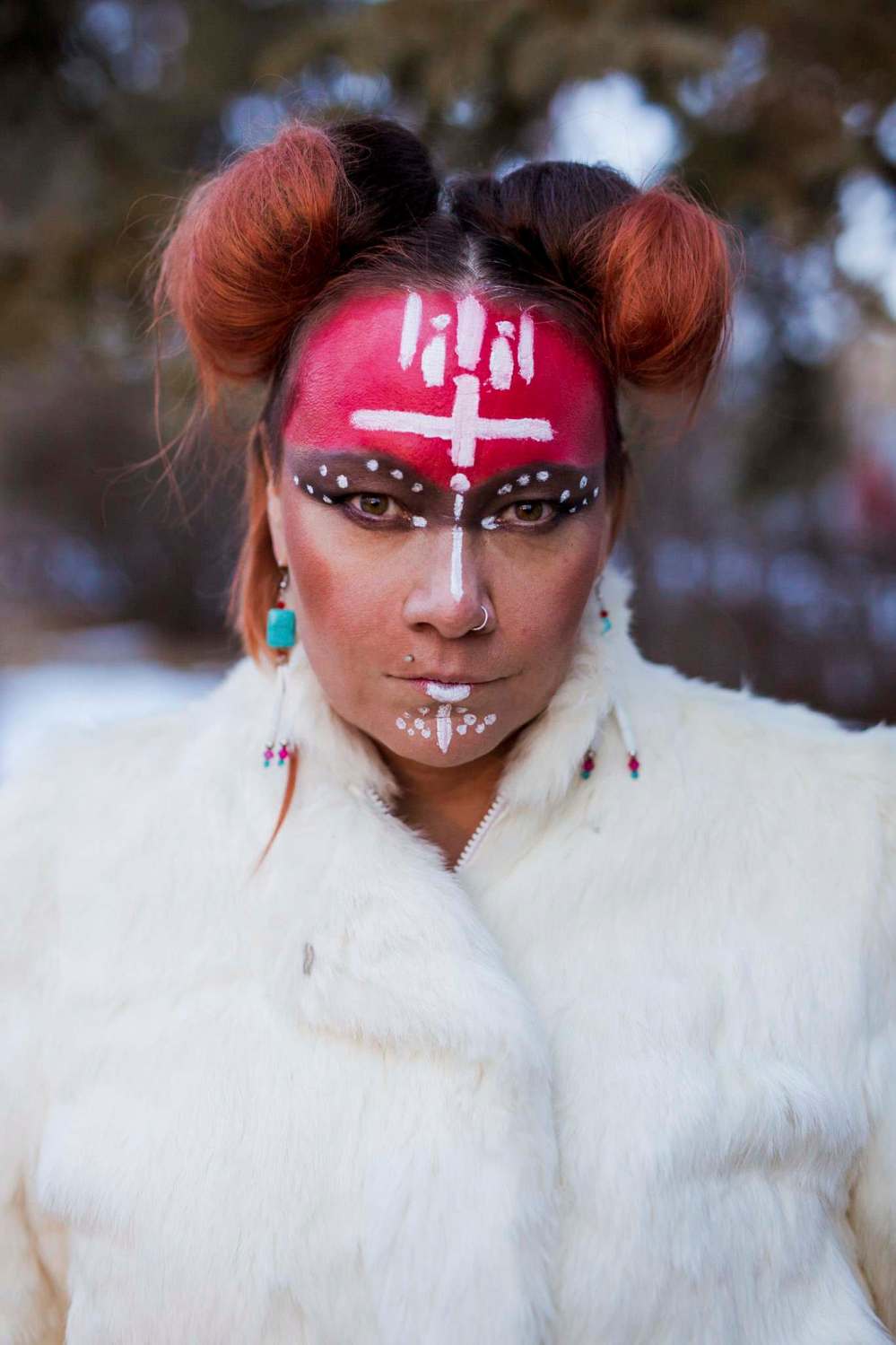
Also worth checking out is Jerilynn Webster, a.k.a. JB the First Lady, nominated for best rap/hip-hop album (Righteous Empowered Daughter). She combines spoken-word, beat-boxing and raps about subjects such as residential schools and missing and murdered Indigenous women.
As usual, there is lots of Manitoba content, including: Vince Fontaine and Chris Burke-Gaffney are up for best producer/engineer for Sandra Sutter’s Cluster Stars; and Don Amero is up for best country album (Evolution) and best music video (Church). Locally-produced CBC program Unreserved is nominated for best radio station program promoting Indigenous music.
This year’s IMAs, however, arrive under a cloud of controversy that drives to the heart of Indigenous music, culture, and the issue of appropriation.
Over the past two months, several Inuit musicians have announced they are boycotting the IMAs. They have been joined by well-known group A Tribe Called Red in calling for a change in the way the awards handle what they call theft and exploitation of Inuit culture.
At issue: a Cree singer/songwriter named Cikwes, who performs music similar to throat singing and has admitted to “imitating” the art form. Her album Isko is nominated in the folk music category.
Tanya Tagaq, Kelly Fraser, and the duo PIQSIQ, announced on social media they would withdraw future participation in the IMAs until the organization revised its policies and instituted Inuit representation on the event board.
“We respectfully asked the IMAs to remove Cikwes as a nominated artist,” Fraser said. “Until her album is taken off or there is an apology, we are adamant in not putting our music forward for the IMAs.”
Lisa Meeches, IMA executive director of Manito Ahbee, and David Dadeneau, chairman of the board of governors, told the Free Press “the IMAs are not in a position to say whether or not Cikwes appropriated throat singing.”
They pointed out “80-plus registered industry voters (similar the Oscar academy) voted on each of the 19 categories. The top vote-getters become the final nominees.”
Manito Ahbee therefore has decided not to interfere and to let Cikwes’ nomination stand.
Not all Inuit artists are boycotting the IMAs: Angela Amarualik is nominated for best new artist and will be performing live at the event.
Appropriation, of course, is theft — a personal benefit at the cost of someone else. Appreciation is crediting, compensating, and identifying where something — whether it be art, a story, or knowledge — comes from.
Taking Indigenous expressions without permission or respect — especially one as sacred as throat singing, an art form that builds and fortifies Inuit community and relationships amongst women — has a long-travelled history in North America.
When Canada presents itself to the world, it usually presents a stolen and uncompensated Indigenous image. (See the inukshuk logo for the 2010 Vancouver Winter Olympics.)
Indigenous communities have had their expressions taken, remade, and then sold back to them. This is wrong, and the IMA is aware of it.
“Manito Ahbee has been communicating with the artists, and the IMAs have committed to adding Inuk board members, as well as Inuit representation to the elders committee and the IMAs committee,” Meeches and Dandeneau said.

“We have also committed to having a respectful dialogue on cultural appropriation. With the intentions to begin this dialogue within our music conference during Manito Ahbee 2019 on how to move forward so everyone can be involved in revisiting the current rules and regulations and making any changes necessary.”
Here’s a rule of thumb: if the people who create, utilize, and identify themselves with an art form ask someone to not use it, don’t. It’s that simple.
I predict if Cikwes wins, more boycotts will be called for.
It’s a good thing the event is being held at a casino, because Manito Ahbee is gambling on their artists and the audience to be patient.
niigaan.sinclair@freepress.mb.ca
Niigaan Sinclair is Anishinaabe from Peguis First Nation and a professor in the Department of Indigenous Studies at the University of Manitoba. He’s been a columnist for the Free Press since 2018. Read more about Niigaan.
Every piece of writing Niigaan produces is reviewed by an editing team before it is posted online or published in print — part of the Free Press‘s tradition, since 1872, of producing reliable independent journalism. Read more about Free Press’s history and mandate, and learn how our newsroom operates.
Our newsroom depends on a growing audience of readers to power our journalism. If you are not a paid reader, please consider becoming a subscriber.
Our newsroom depends on its audience of readers to power our journalism. Thank you for your support.
Niigaan Sinclair is Anishinaabe from Peguis First Nation and a professor in the Department of Indigenous Studies at the University of Manitoba. He’s been a columnist for the Free Press since 2018. Read more about Niigaan.
Every piece of writing Niigaan produces is reviewed by an editing team before it is posted online or published in print — part of the Free Press‘s tradition, since 1872, of producing reliable independent journalism. Read more about Free Press’s history and mandate, and learn how our newsroom operates.
Our newsroom depends on a growing audience of readers to power our journalism. If you are not a paid reader, please consider becoming a subscriber.
Our newsroom depends on its audience of readers to power our journalism. Thank you for your support.
Advertisement Advertise With Us
Advertisement Advertise With Us
History
Updated on Friday, May 10, 2019 6:55 PM CDT: Updates headline
Updated on Monday, May 13, 2019 6:11 AM CDT: Minor corrections throughout