

Bisons midfielder on the comeback trail after beating cancer

Advertisement
Read this article for free:
or
Already have an account? Log in here »
To continue reading, please subscribe:

Digital Subscription
One year of digital access for only $205*
- Enjoy unlimited reading on winnipegfreepress.com
- Read the E-Edition, our digital replica newspaper
- Access News Break, our award-winning app
- Play interactive puzzles
*First annual payment billed as $205.00 + GST for one year. This annual subscription will automatically renew at $233.00 + GST every 52 weeks (10% off the regular annual price of $259.35). Offer available to new and qualified returning subscribers only. Cancel any time.
To continue reading, please subscribe:
Add Free Press access to your Brandon Sun subscription for only an additional
$1 for the first 4 weeks*
- Enjoy unlimited reading on winnipegfreepress.com
- Read the E-Edition, our digital replica newspaper
- Access News Break, our award-winning app
- Play interactive puzzles
*Your next Brandon Sun subscription payment will increase by $1.00 and you will be charged $17.95 plus GST for four weeks. After four weeks, your payment will increase to $24.95 plus GST every four weeks.
Read unlimited articles for free today:
or
Already have an account? Log in here »
Hey there, time traveller!
This article was published 03/10/2022 (1419 days ago), so information in it may no longer be current.
It was just a simple slice of rye bread with butter spread across it, but to Katelyn Isfeld, it meant everything.
After 33 rounds of radiation, the University of Manitoba Bisons soccer player had burns around her jaw and all the way down her neck. The inside of her mouth and throat were also severely damaged in the process, leaving Isfeld unable to eat anything but meal replacement shakes for four months.
“It was pure torture. Honestly, the worst part of my treatments was that,” Isfeld told the Free Press on Monday. “By far the worst, because I was starving all the time.”
This came after six gruelling rounds of chemotherapy.
“If you imagine the worst flu you’ve ever had, when your energy is completely drained… it was like that, but times 100,” said Isfeld.
Roughly half a year removed from all treatments, Isfeld was finally able to do something that most people take for granted – eat solid foods.
“It was the happiest moment of my life. That sounds so ridiculous, but I remember one day I was like ‘I’m going to eat this.’ I was trying so hard for so long to eat little things but I was always failing. I was getting so upset about it. But then one day with soup, I was able to eat one piece of bread with butter and it was the best tasting thing I’ve ever tasted in my life,” said the midfielder.
It was at the end of November 2019 when Isfeld, who was 19 at the time, was diagnosed with Stage 4 Nasopharyngeal cancer — a rare type of cancer starts in the upper part of the throat, behind the nose.
She was misdiagnosed at first, with her doctor convinced that Isfeld had nothing more than an ear infection. Isfeld couldn’t hear anything out of one her ears and none of her medication was helping.
Isfeld didn’t feel like herself on the pitch, either. She couldn’t get her conditioning where it needed to be and had a difficult time getting through practices, something that never used to be an issue.

Isfeld also had a lump appear on one of her lymph nodes on her neck.
“In the middle of the season, I ended up basically putting my foot down and forcing my doctor to send me to a specialist… I just had a very bad feeling about it and for some reason, I just knew it wasn’t an ear infection,” said Isfeld, a product of Linden Christian School.
“My doctor didn’t want to send me to a specialist. She told me to wait it out and that it would go away eventually which now we know wasn’t the case. So, I told her that I needed to be sent to a specialist or that I’d go to a different doctor.”
Thankfully, Isfeld was as persistent as she was. The specialist could immediately tell it wasn’t an ear infection. Isfeld underwent the proper tests and when they discovered what the problem was, she was ordered to start treatment right away. They figured Isfeld had cancer for a year at that point.
“After I got diagnosed, like after that moment where it felt that my world just shattered, I don’t think that I really processed what happened until a good six months to a year after my treatments finished,” Isfeld said. “It was only after everything where I started mentally processing it and being like ‘Wait, what just happened? Was this real? Did this actually happen to me?’ Which is crazy because you remember everything, you know that it was you and that you went through it. But for some reason, your brain doesn’t let you accept it because it’s too scary and almost too traumatizing to let yourself think about almost.”
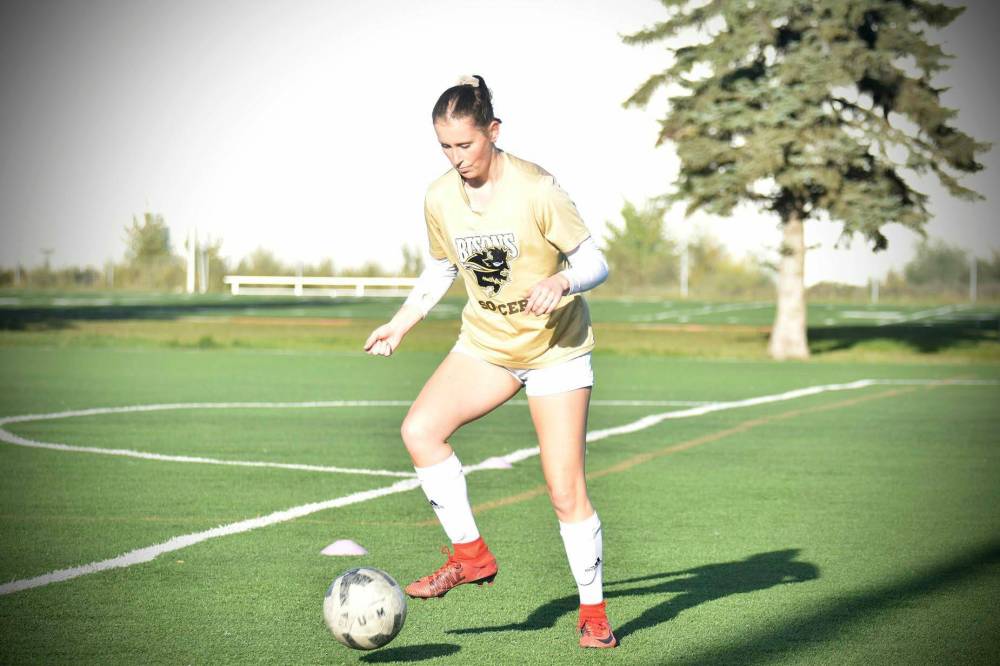
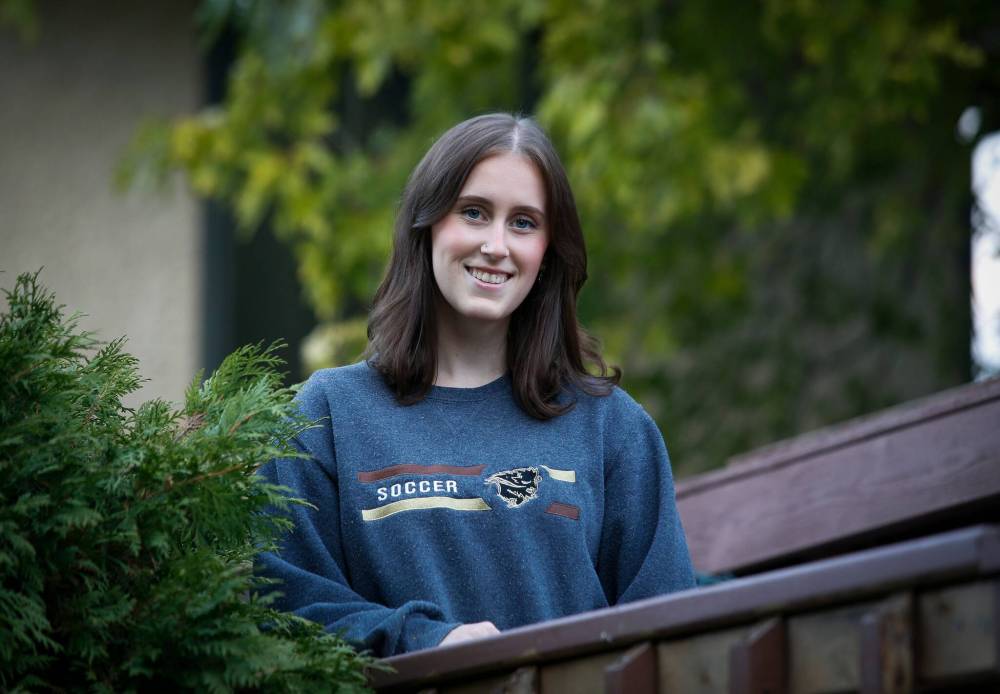
Isfeld is now cancer free. She still goes to the doctor every six months for a scan, but she hasn’t recquired any treatments since 2020. She officially rejoined the Bisons last season and used the year to take it slow and work on herself. Isfeld, who was invited to several soccer camps in Europe back in 2017, hasn’t had her comeback match yet as she’s still not at 100 per cent physically, but the senior is back practising with the team in what will be her final season.
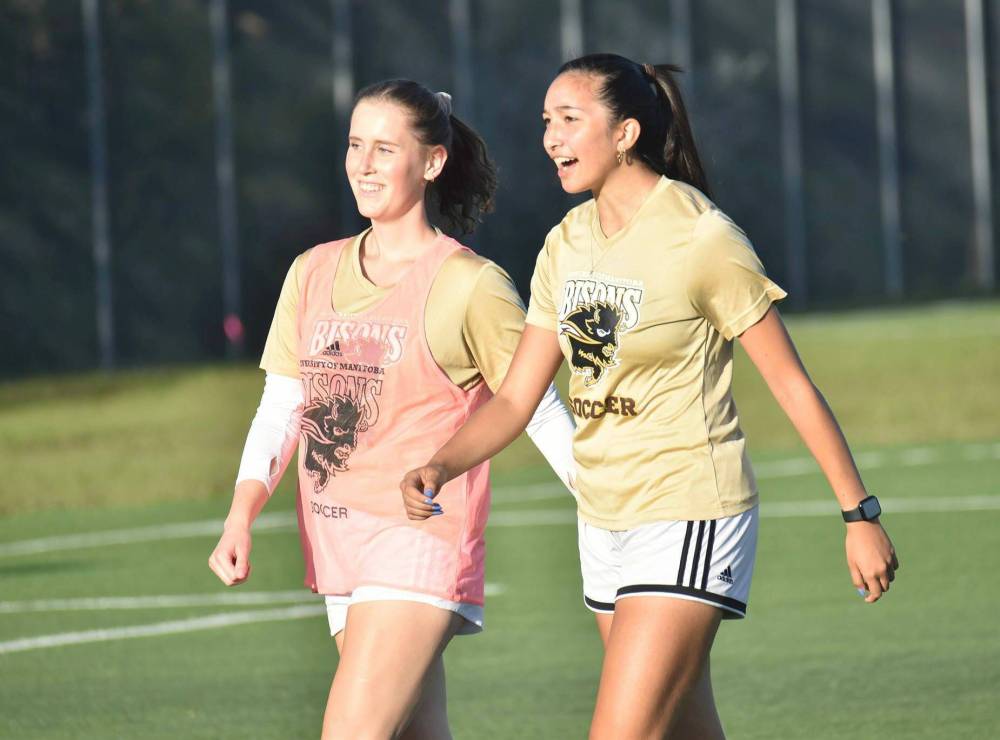
The Herd is 3-6-1 in 2022 and currently hold the fifth and final playoff spot in the Canada West’s Prairie Division.
“If I can’t play, I’m perfectly OK with that because I’m honestly just proud of myself for getting back to the point where I can practice again and I can compete with the other girls on my team,” she said.
“… Honestly, being able to play soccer again and just be active again was a huge motivation for me to kind of say, sorry for my language, but ‘(expletive) you cancer. I’m gonna get up and do this again and you’re not gonna stop me.’ That was a huge motivation for me every day.”
It goes without saying, but Isfeld has been an inspiration to the entire Bisons program.
“Her resilience, her love for the sport, and how much she cares about the team is amazing. She attended our sessions, even when she was struggling, to support and be there for the team,” said Bisons women’s soccer head coach Vanessa Martinez Lagunas.

“She’s a champion on and off the field and I’m just extremely proud of her and what she has done to overcome this really difficult challenge.”
Isfeld is a private person. More than half the people she knows didn’t know anything about her diagnosis until last week when the English major wrote about her journey for the school’s website. The idea scared her at first, but now she wants to get her story out there to help others.
“What did I need when I was at my lowest? I thought about it and if I could’ve read someone’s story and know that they got through it and know that there was hope for me, it would’ve been so great for me to have. I think the breaking point for me telling people was if I can help one person out there, if there’s anybody in that situation that needs to hear this and know they’re going to be OK, it’s worth it.”
taylor.allen@freepress.mb.ca
Twitter: @TaylorAllen31
Taylor Allen is a sports reporter for the Winnipeg Free Press. Taylor was the Vince Leah intern in the Free Press newsroom twice while earning his joint communications degree/diploma at the University of Winnipeg and Red River College Polytechnic. He signed on full-time in 2019 and mainly covers the Blue Bombers, curling, and basketball. Read more about Taylor.
Every piece of reporting Taylor produces is reviewed by an editing team before it is posted online or published in print — part of the Free Press‘s tradition, since 1872, of producing reliable independent journalism. Read more about Free Press’s history and mandate, and learn how our newsroom operates.
Our newsroom depends on a growing audience of readers to power our journalism. If you are not a paid reader, please consider becoming a subscriber.
Our newsroom depends on its audience of readers to power our journalism. Thank you for your support.
Taylor Allen is a sports reporter for the Winnipeg Free Press. Taylor was the Vince Leah intern in the Free Press newsroom twice while earning his joint communications degree/diploma at the University of Winnipeg and Red River College Polytechnic. He signed on full-time in 2019 and mainly covers the Blue Bombers, curling, and basketball. Read more about Taylor.
Every piece of reporting Taylor produces is reviewed by an editing team before it is posted online or published in print — part of the Free Press‘s tradition, since 1872, of producing reliable independent journalism. Read more about Free Press’s history and mandate, and learn how our newsroom operates.
Our newsroom depends on a growing audience of readers to power our journalism. If you are not a paid reader, please consider becoming a subscriber.
Our newsroom depends on its audience of readers to power our journalism. Thank you for your support.
Advertisement Advertise With Us
Advertisement Advertise With Us