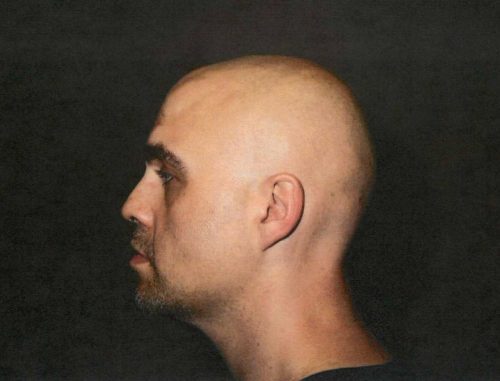
High-stakes justice balancing act Winnipeg serial killer's defence team argues he should be declared not criminally responsible; critics contend it’s a way to avoid accountability, but others say public safety and compassion are priorities
Read this article for free:
or
Already have an account? Log in here »
To continue reading, please subscribe:

Digital Subscription
One year of digital access for only $205*
- Enjoy unlimited reading on winnipegfreepress.com
- Read the E-Edition, our digital replica newspaper
- Access News Break, our award-winning app
- Play interactive puzzles
*First annual payment billed as $205.00 + GST for one year. This annual subscription will automatically renew at $233.00 + GST every 52 weeks (10% off the regular annual price of $259.35). Offer available to new and qualified returning subscribers only. Cancel any time.
To continue reading, please subscribe:
Add Free Press access to your Brandon Sun subscription for only an additional
$1 for the first 4 weeks*
- Enjoy unlimited reading on winnipegfreepress.com
- Read the E-Edition, our digital replica newspaper
- Access News Break, our award-winning app
- Play interactive puzzles
*Your next Brandon Sun subscription payment will increase by $1.00 and you will be charged $17.95 plus GST for four weeks. After four weeks, your payment will increase to $24.95 plus GST every four weeks.
Read unlimited articles for free today:
or
Already have an account? Log in here »
Hey there, time traveller!
This article was published 17/05/2024 (853 days ago), so information in it may no longer be current.
“No person is criminally responsible for an act committed or an omission made while suffering from a mental disorder that rendered the person incapable of appreciating the nature and quality of the act or omission or of knowing that it was wrong.”
— Criminal Code of Canada, Sec. 16 (1)
The names of Donna Trueman and Vince Li are forever linked to horrendous Manitoba crimes.
Trueman grabbed a broom handle and killed her four-year-old son, Skylar, in 1991 at their Winnipeg townhouse. Li beheaded Greyhound bus passenger Tim McLean, 22, on a stretch of the Trans-Canada Highway near Portage la Prairie in 2008.
Despite the grisly nature of the crimes, Trueman and Li were both found not criminally responsible, a determination that is often controversial and routinely misunderstood.
A ruling of not criminally responsible — or NCR — means the accused can’t be held responsible for the crime because they were experiencing a mental disorder at the time.
SUPPLIED Video of Jeremy Skibicki during his interrogation by Winnipeg Police detectives.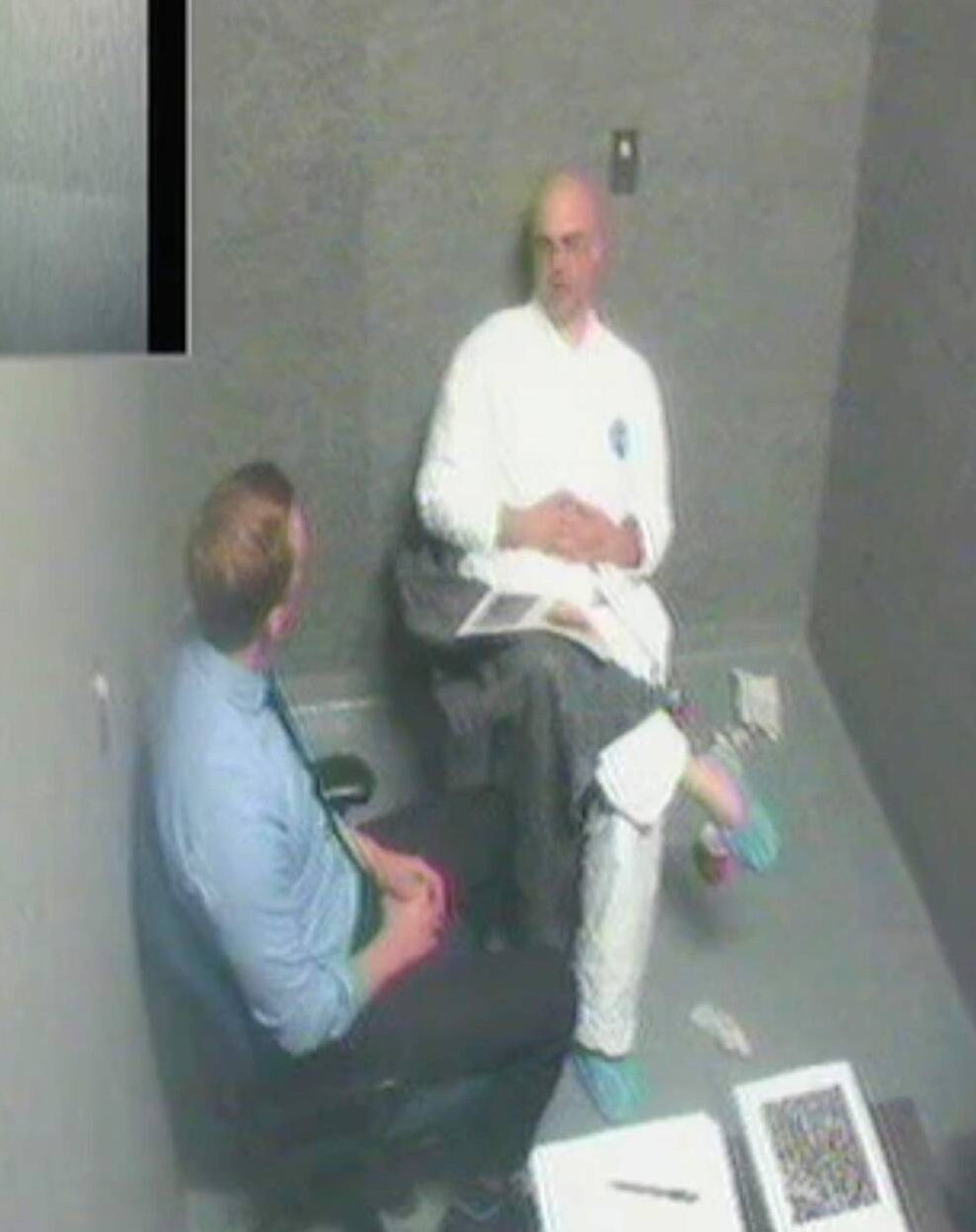
Trueman’s case was the first in Canada to be dealt with under the new Criminal Code of Canada provision that replaced not guilty by reason of insanity.
Today, 109 Manitobans have been spared imprisonment because they have been found not criminally responsible. Release conditions are tailored to each individual and they are routinely monitored by the Manitoba Criminal Code Review Board.
But every time a prominent case surfaces with NCR as a defence, intense scrutiny follows.
The Jeremy Skibicki trial was going to be sensational by its very nature: an accused serial killer of vulnerable women in the nation’s epicentre of murdered and missing Indigenous women and girls.
Long before it got to court, there had already been twists and turns. His legal team, arguing for a judge-alone trial, conducted a poll to gauge whether or not their client could get a fair trial by a jury. Following that unsuccessful gambit, they pivoted to a NCR defence by saying he’s no longer contesting the killings.
“It has to have made you incapable of appreciating the nature, quality and consequences of their actions or that it was morally wrong.”–Brandon Trask
Given the hours-long detailed confession to police, shown in the trial’s first few days, it may have been the only option left. Earlier this week, the judge ordered a psychiatric assessment following a request from the Crown.
A guilty verdict would see Skibicki, who is charged with first-degree murder in the slayings of Rebecca Contois, 24, Morgan Harris, 39, and Marcedes Myran, 26, as well as a fourth unidentified woman known as Buffalo Woman, receive an automatic life prison sentence with no chance of parole for 25 years.
A NCR verdict would, instead, send him to a psychiatric hospital, where there is the theoretical chance — if successfully treated — he could be back on the streets earlier.
That outcome is often a lightning rod, however legal experts stress a high threshold must be met before a NCR determination can be reached. They also stress NCRs make up a small fraction of cases in the criminal justice system, and the accused deemed to be NCR are often detained longer than if they were found guilty and sent to prison.
Brandon Trask, an assistant law professor at the University of Manitoba and a former prosecutor, said there’s a two-step process involved. (Each person interviewed for this story said they could not comment specifically on the Skibicki case.)
“The first step is they have to be found as suffering from a disease of the mind,” Trask said. “Usually you can get over that hurdle.
JESSICA LEE / FREE PRESS FILES Brandon Trask is an assistant law professor at the University of Manitoba and a former prosecutor.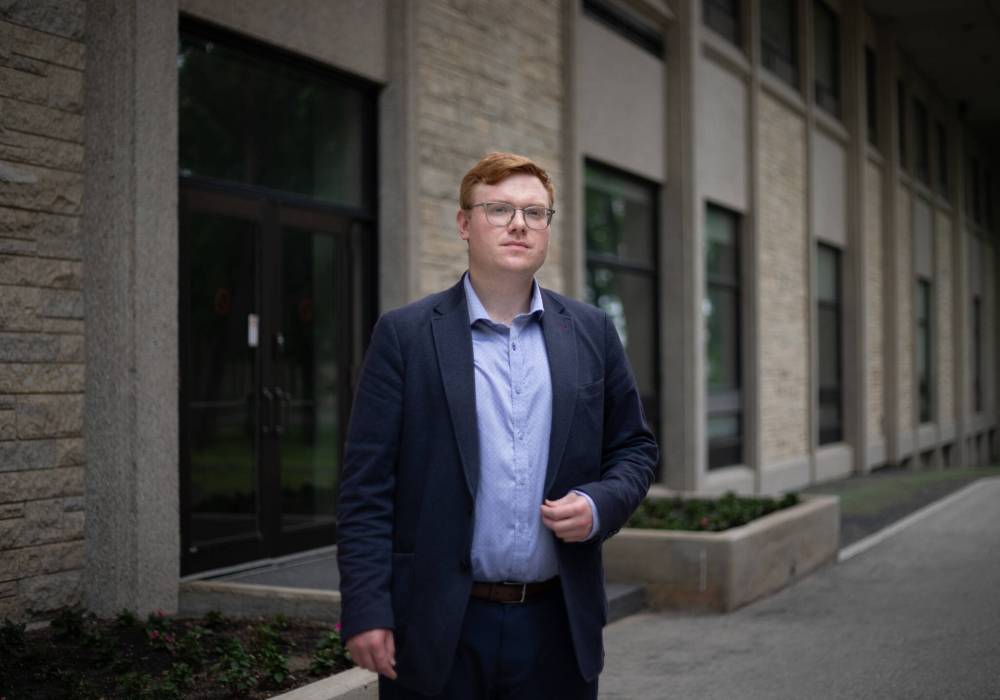
“But the second step is a challenge. It has to have made you incapable of appreciating the nature, quality and consequences of their actions or that it was morally wrong. It’s not enough for someone to say they were suffering from a mental disorder.”
Retired lawyer Heather Leonoff has a unique perspective on NCRs. Before spending years heading the provincial constitutional law branch, she was a criminal defence counsel, which is how she came to represent Trueman in 1991. That case, she said, illustrates why it was so important to amend the Criminal Code at the time, which gave the justice system a third option, other than a finding of guilt or acquittal.
“I would have last talked to her in the early ‘90s and, as far as I know, she went on to live her life,” Leonoff said.
“People could have a very, very acute psychotic breakdown which led to tragedy, but with proper medical treatment they could be quite well…. Donna Trueman is a real example of why the legislation was changed.”
Leonoff said the law makes protection of the public paramount, but also has provisions for treating the accused and following their progress. And while the accused isn’t imprisoned, there’s no guarantee the individual will ever be released from hospital, she said.
“It may be that the mental illness will never be successfully treated,” she said.
RUTH BONNEVILLE / FREE PRESS Retired lawyer Heather Leonoff represented Donna Trueman, whose case was the first to be dealt with under a new Criminal Code of Canada provision that replaced not guilty by reason of insanity.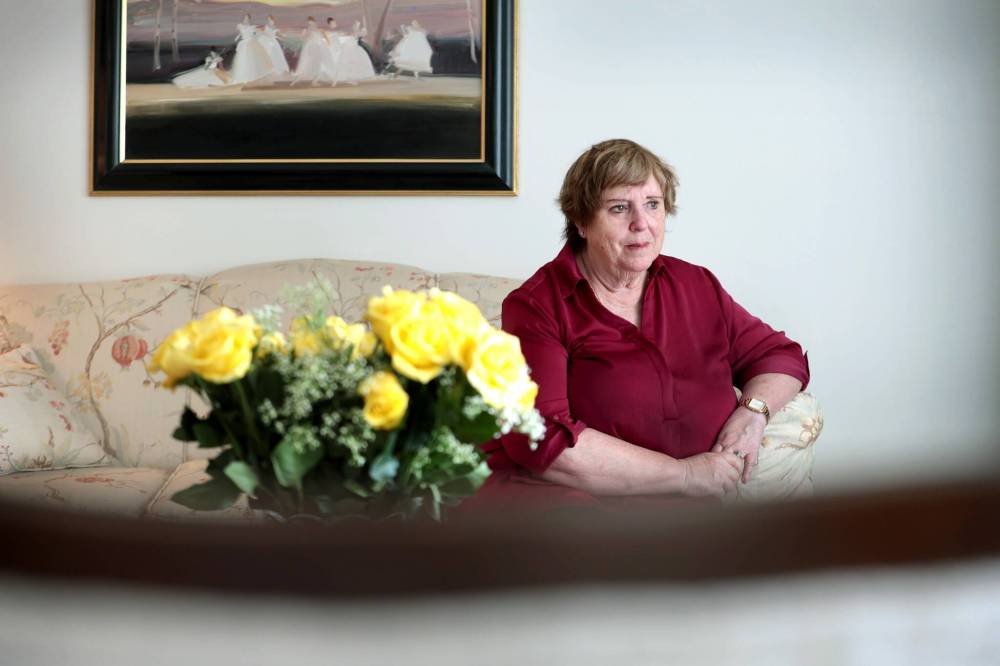
An accused found NCR is diverted to a provincial review board, chaired by a judge or lawyer and having a minimum of four other members and at least one psychiatrist. Karen Wittman, a lawyer, is the current chair of the Manitoba Criminal Code Review Board. She could not be reached for comment.
The longest case under the board’s purview has been followed since 1998.
Dr. Stanley Yaren worked as a psychiatrist for five decades and was the province’s director of forensic psychiatry for almost 30 years. As someone who worked with people found not guilty by reason of insanity and NCR, he often testified before the review board. He later served on the board before his retirement.
“If anything, it increased my respect and regard for the review board’s work,” Yaren said.
“People could have a very, very acute psychotic breakdown which led to tragedy, but with proper medical treatment they could be quite well….”–Heather Leonoff
“In the old system there really wasn’t a lot of specificity for how a person was assessed…. Now the hearings are formalized… and what is pre-eminent is the protection of the public and, secondarily, the well-being of the individual.”
However, “there is no specific test” when it comes to determining who is and isn’t NCR, Yaren said.
“It is really based on a clinical examination and a review of all of the information regarding the offence,” he said. “It really is based on clinical psychiatrist’s experience.”
But the court, not the psychiatrist, makes the final determination, he said.
Because NCR cases can involve notorious crimes, the Harper government amended the NCR provisions in the Criminal Code to add a separate section for people deemed “high-risk accused,” Yaren said.
These were cases where the court believed there was still “a substantial likelihood that the accused will use violence that could endanger the life or safety of another person,” or if the acts were so brutal in nature they indicated a risk of “grave physical or psychological harm to another person,” he said.
The eventual decision to release those individuals rests with the courts, not review boards.
Trask said the precursor to NCR goes back almost two centuries ago, when King George III was nearly assassinated by James Hadfield, a former British soldier.
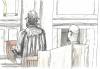
FREE PRESS FILES Psychiatrist Dr. Stanley Yaren, is seen in a 2009 courtroom sketch at Vince Li's trial.
Hadfield believed the second coming of Jesus Christ would occur more quickly if he was executed by the British government, so he hatched a plan to kill the king.
The judge ruled he was insane, but because that meant Hadfield would have been released to his family, the trial was put on hold until Parliament created a law requiring hospital detention for people deemed insane.
Trask said people in Canada were held indefinitely until the Supreme Court ruled it was unconstitutional, paving the way for NCRs to replace the verdict of not guilty by reason of insanity.
Trask said unlike criminals in the court system, the recidivism rate of people found NCR is low.
“There have been some high-profile situations where it has happened, but that is quite rare,” he said.
A 2013 study by the Mental Health Commission of Canada found more than half of the people determined to be NCR who were discharged either conditionally or absolutely by a review board did not have to be re-hospitalized and had no further contact with the judicial system.
Those who needed help ended up back in the health-care system, not the criminal-justice system.
The study also found charges of violence — including homicide, attempted murder and major sexual offences — made up only eight per cent of NCR cases.
Trask said people need to recognize the NCR system exists to prevent punishment of people acting on a delusion tied to a mental disorder.
Related Articles
Ex-wife of admitted killer testifies he threatened to have sex with her corpse










“We shouldn’t punish them the same as someone with moral blameworthiness,” he said.
Leonoff said it is easy for someone to be critical of NCRs and the mental-health system, until a family member is directly affected.
“None of us are immune from mental health challenges,” she said. “If someone in our family has an acute mental-health challenge, I’m sure they would want (compassion).
“Through no fault of their own, these people find themselves in very tragic circumstances. It was Donna Trueman’s physical body doing the action, but not her usual self. It was an acutely psychotic individual.”
Of the 109 Manitobans currently under the purview of the review board, two notable names are not: Trueman and Li.
Both were given absolute discharges — Trueman the same day as her final court appearance — and quietly resumed their lives.
“I saw all of the Donna Truemans,” Leonoff said. “I saw her in the midst of an acute, acute, acute psychotic breakdown. She had no concept of what she had done.
“Then, it was a matter of weeks, not even months, of the treatment working and she was doing quite well. In the end, I saw a quiet, unhappy, but totally safe Donna Trueman. She was back to herself and they didn’t need her to stay any longer.
“NCR is not a get-out-of-institution-free card — it is a balancing of public safety and compassion.”
kevin.rollason@freepress.mb.ca

Kevin Rollason
Reporter
Kevin Rollason was a general assignment reporter at the Free Press.
Our newsroom depends on a growing audience of readers to power our journalism. If you are not a paid reader, please consider becoming a subscriber.
Our newsroom depends on its audience of readers to power our journalism. Thank you for your support.