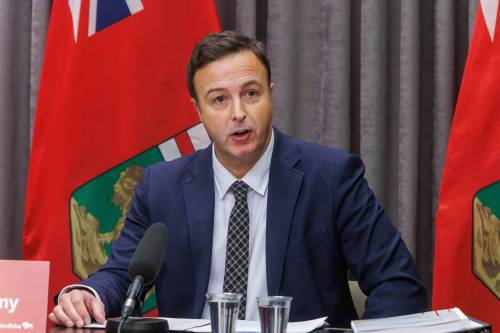
A pledge to deliver dignity Health minister talks about building personal care homes, creating seniors’ advocate and the weight of managing crucial portfolio
Read this article for free:
or
Already have an account? Log in here »
To continue reading, please subscribe:
Digital Subscription
One year of digital access for only $1.44 a week*
- Enjoy unlimited reading on winnipegfreepress.com
- Read the E-Edition, our digital replica newspaper
- Access News Break, our award-winning app
- Play interactive puzzles
*Billed as $5.77 plus GST every four weeks. After 52 weeks, price increases to the regular rate of $19.95 plus GST every four weeks. Offer available to new and qualified returning subscribers only. Cancel any time.
To continue reading, please subscribe:
Add Free Press access to your Brandon Sun subscription for only an additional
$1 for the first 4 weeks*
- Enjoy unlimited reading on winnipegfreepress.com
- Read the E-Edition, our digital replica newspaper
- Access News Break, our award-winning app
- Play interactive puzzles
*Your next Brandon Sun subscription payment will increase by $1.00 and you will be charged $17.95 plus GST for four weeks. After four weeks, your payment will increase to $24.95 plus GST every four weeks.
Read unlimited articles for free today:
or
Already have an account? Log in here »
Hey there, time traveller!
This article was published 30/12/2024 (661 days ago), so information in it may no longer be current.
Health, Seniors and Long-term Care Minister Uzoma Asagwara draws from a deep, decades-old connection to personal care homes as the NDP government tries to live up to its promise to fix health care and help every Manitoban grow old with dignity.
The former university basketball star says it’s a tall order that can be met through teamwork, commitment and restoring relationships that suffered under the previous Progressive Conservative government.
A year into the NDP’s mandate, the 40-year-old registered psychiatric nurse spoke to the Free Press about the job, the need for an independent seniors advocate, the overuse of antipsychotics drugs in personal care homes, improving standards of care and the shortage of care home beds. The following interview was conducted Dec. 12 and has been edited for length.
Q: Describe what sort of personal care home experiences you’ve had with a friend or a loved one.
A: “I volunteered at the personal care home in St. Norbert when I was in high school and I really loved it. That’s where I learned how to play bridge. Playing bridge with seniors keeps you sharp.”
(Asagwara grew up in Winnipeg without any aunts, uncles or grandparents.)
“I really enjoyed being around the seniors in that personal care home. I thought they were really lovely.” Since then, the minister has worked in long-term care as a nurse and has loved ones who live in personal care homes.
In high school, Health, Seniors and Long-term Care Minister Uzoma Asagwara volunteered at a personal care home.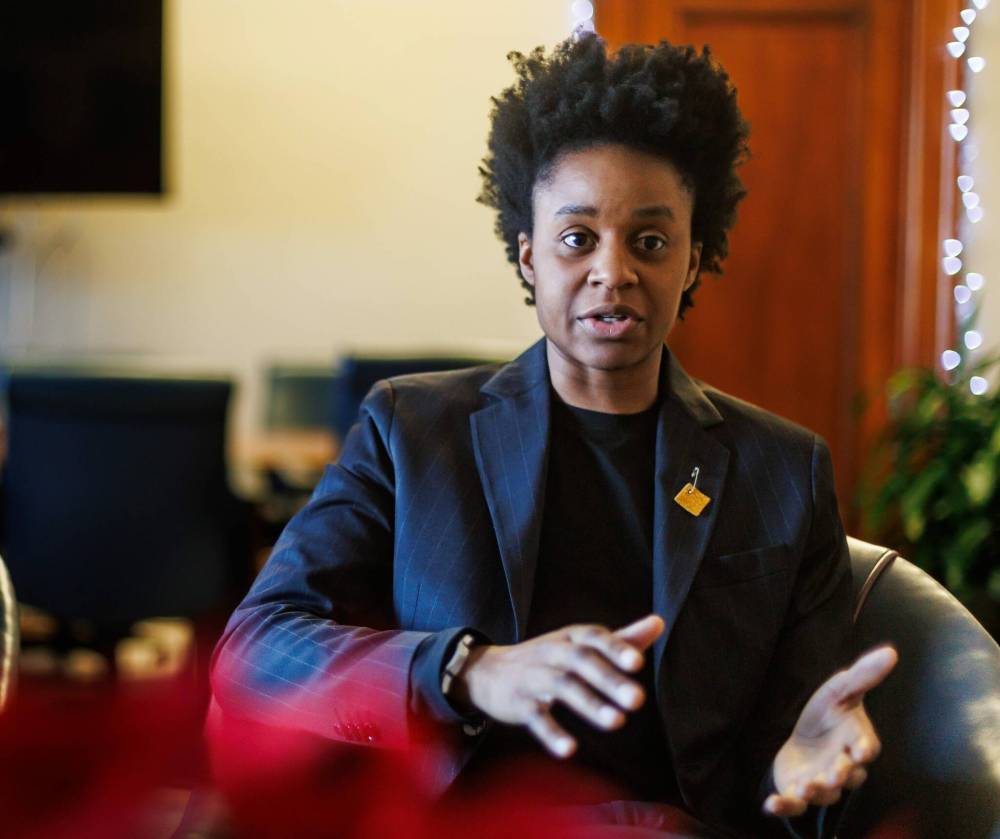
Q: Do you get first-hand reports from them?
A “I do. The thing that I always hear from folks is how much they appreciate the relationships they have with staff, health-care aides, nurses, recreational workers, spiritual care workers.”
Q: Your portfolio — health, seniors and long-term care — is so heavy that the previous Tory government split it between two ministers. How do you oversee such major files and a sweeping mandate?
A: “I don’t do this work by myself. I’ve got a really great team: people in the department who are deeply passionate about long-term care, wonderful partners across the province in community and in the health-care system who care deeply about personal care homes, long-term care and how we make life better for older adults and seniors.”
Asagwara accused the former government of disregarding and ignoring the people whose voices are fundamental to understanding how to strengthen health care for seniors.
“I’ve had the opportunity to go out and listen to folks in personal care homes and hear directly from them what they’d like to see and to repair the relationships that were damaged.”
That included negotiating collective agreements with front-line staff whose wages were frozen for years.
“If we want to see a better health-care system overall, if we want to see long-term care and personal care homes improve, we have to improve the culture in health care by treating the people who provide care to us every day well. If we continue to do this work in a sustainable way, if we continue to build capacity, strong relationships and change the culture, we’re going to continue to move this area in a much better and brighter direction, and make sure that we have generations of Manitobans who are excited to join this health-care team, which is what we need to see.”
Related Articles
Homes cater to residents’ spiritual needs at crucial time of life





Q: How do you, personally, manage the responsibility?
A: “I’m a nurse. I made the decision many years ago to be someone who provides care to others, and that can hopefully be part of people having better health outcomes. This is a rare opportunity to be able to influence policy, to make laws, to invest in health care in ways that can actually shape health care in the right ways for generations to come. This is my top priority. I made big changes in my life to make sure that I’m able to work very long hours and work pretty much every day of the week. I also make sure that I practise what I preach and I exercise every day, even if it’s just for 15 minutes. I do things that support me having positive mental health. I prioritize spending time with people who I love and thankfully love me in return. I’ve got a beautiful nephew who just makes me unbelievably happy and I’m fortunate to be able to see him regularly.”
Q: When will a seniors advocate be in place and what difference will they make for personal care home residents?
A: “The ball is rolling now in terms of that office being stood up” but no firm date is set.
The officer of the legislative assembly is to identify, analyze and address systemic problems or concerns faced by seniors, acting as a watchdog over much of Asagwara’s portfolio.
“We understood from the public that they really wanted to see a truly independent office. I’m confident that that’s moving along as quickly as possible and it’s going to factor in the voices of community.”
Q: A national report recently identified care home residents being prescribed antipsychotic drugs even though they weren’t diagnosed with psychosis. Is Manitoba addressing concerns about antipsychotics being used more often than they should?
A: “We’re certainly keeping our eye on the evolving research in this area. As the health minister and as somebody who has worked in long-term care, we want to make sure that we are using the latest and greatest evidence to support the way that care is provided in the province.”
The minister trusts Manitoba experts are evaluating the concerns and the research and are looking at ways seniors can receive care “in a dignified, safe and appropriate way.”

Q: Manitoba now funds up to 3.8 hours of care per resident per day. In opposition, you called for 4.1 — the recommended national standard. Where’s the province at now regarding the standard of care?
A: “We are committed to continuing to move in the direction of increasing hours per resident, per day. In order to make sure that we can deliver on those hours per resident, per day, we need way more folks working on the front lines.”
The province has hired 870 net new health workers — including many personal care home staff — and has a target of hiring 1,000.
“We also recognize that the health needs of an aging population is evolving. We know that there are more folks who are being diagnosed with dementia, Alzheimer’s and it’s actually happening a little bit earlier with the onsets we’re seeing.”
Q: When your government took office, it put six new personal care homes promised by the Tories on hold. Last month’s throne speech said work on one of them — the 95-bed home in Lac du Bonnet — will begin by year’s end. Is your government building any more new personal care homes?
A: “We didn’t put any projects on hold because, quite frankly, those are announcements that were made by the previous government with no actual plan in place to deliver on them. When we came into government, we were looking at how do we dig ourselves out of this massive hole in terms of personal care home beds.”
Former PC premier Brian Pallister promised 1,200 new beds but when he left office there were fewer than he when he started, in part due to the 2022 closure of 260-bed Parkview Place in Winnipeg.
“We started creating a plan: where do we actually need these beds to be, where is it going to make the biggest difference, how are we going to staff those beds and how can we deliver this in a sustainable way? Lac du Bonnet personal care home was an obvious choice (and) has been fighting for this for decades and have been amazing partners in being able to finally get this done. The fencing is up, equipment is on site. I’ll be there this month putting up the signs myself.”
The minister promised more care homes will be built.
“We’re going to initiate a new personal care home build every year.”
Meanwhile, 110 of the 200-plus beds closed under the PCs have been reopened, Asagwara said, and the province is adding 70 transitional beds for people waiting in hospital for a care home bed, with 40 already up and running.
carol.sanders@freepress.mb.ca

Carol Sanders
Legislature reporter
Carol Sanders is a reporter at the Free Press legislature bureau. The former general assignment reporter and copy editor joined the paper in 1997. Read more about Carol.
Every piece of reporting Carol produces is reviewed by an editing team before it is posted online or published in print — part of the Free Press‘s tradition, since 1872, of producing reliable independent journalism. Read more about Free Press’s history and mandate, and learn how our newsroom operates.
Our newsroom depends on a growing audience of readers to power our journalism. If you are not a paid reader, please consider becoming a subscriber.
Our newsroom depends on its audience of readers to power our journalism. Thank you for your support.