A picture of frustration on Winnipeg streets September’s return of reduced-speed school zones and the photo-enforcement fines that accompany them brings calls for changes from drivers who say the system is an unfair cash grab
Read this article for free:
or
Already have an account? Log in here »
To continue reading, please subscribe:
Digital Subscription
One year of digital access for only $1.44 a week*
- Enjoy unlimited reading on winnipegfreepress.com
- Read the E-Edition, our digital replica newspaper
- Access News Break, our award-winning app
- Play interactive puzzles
*Billed as $5.77 plus GST every four weeks. After 52 weeks, price increases to the regular rate of $19.95 plus GST every four weeks. Offer available to new and qualified returning subscribers only. Cancel any time.
To continue reading, please subscribe:
Add Free Press access to your Brandon Sun subscription for only an additional
$1 for the first 4 weeks*
- Enjoy unlimited reading on winnipegfreepress.com
- Read the E-Edition, our digital replica newspaper
- Access News Break, our award-winning app
- Play interactive puzzles
*Your next Brandon Sun subscription payment will increase by $1.00 and you will be charged $17.95 plus GST for four weeks. After four weeks, your payment will increase to $24.95 plus GST every four weeks.
Read unlimited articles for free today:
or
Already have an account? Log in here »
Hey there, time traveller!
This article was published 26/09/2025 (394 days ago), so information in it may no longer be current.
On a bright and clear September morning, drivers squint when they enter the most-ticketed school zone in Winnipeg.
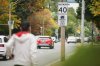
The 30 km/h sign on Talbot Avenue that warns oncoming traffic about a reduced speed limit behind River Elm School is harshly backlit, making it difficult to see.
“I see people get ticketed all the time,” said Aaron Lagimodiere, a father who regularly drives eastbound on the thoroughfare during rush-hour, year-round. “When you see the flash go off, that sucks — it really sucks.”
MIKE DEAL / FREE PRESS Aaron Lagimodiere, whose daughter is a Grade 2 student at River Elm School, was fined $324 for speeding on Sept. 1, a holiday Monday.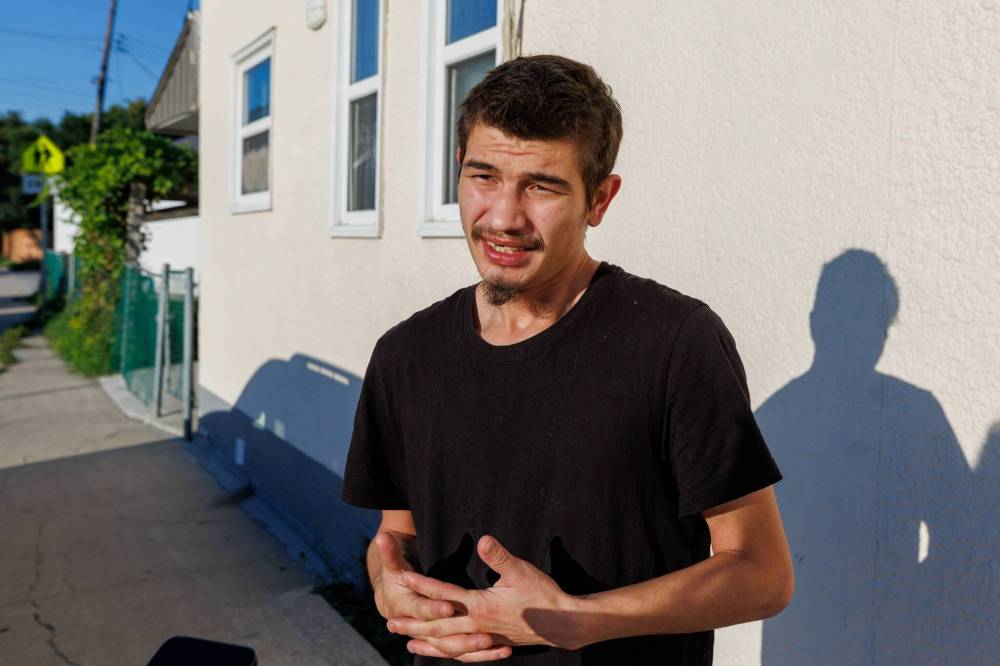
On Sept. 1, a holiday Monday before his daughter’s first day of Grade 2, Lagimodiere was fined $324 for speeding.
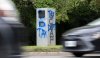
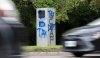
He relayed his frustrations to the Free Press during school drop-off earlier this week, standing on a sidewalk steps away from a nondescript photo-enforcement van on Talbot Avenue.
Lagimodiere said he was driving under 50 km/h — the regular speed limit outside the hours of 7 a.m. and 5:30 p.m. on weekdays between Sept. 1 and June 30 — at the time.
“It’s just a big money-grab,” he said.
The 25-year-old cited minimal, poorly placed signage and the annual late-summer speed-limit changes, which he acknowledged he failed to remember and suggested many Winnipeggers do, as well.
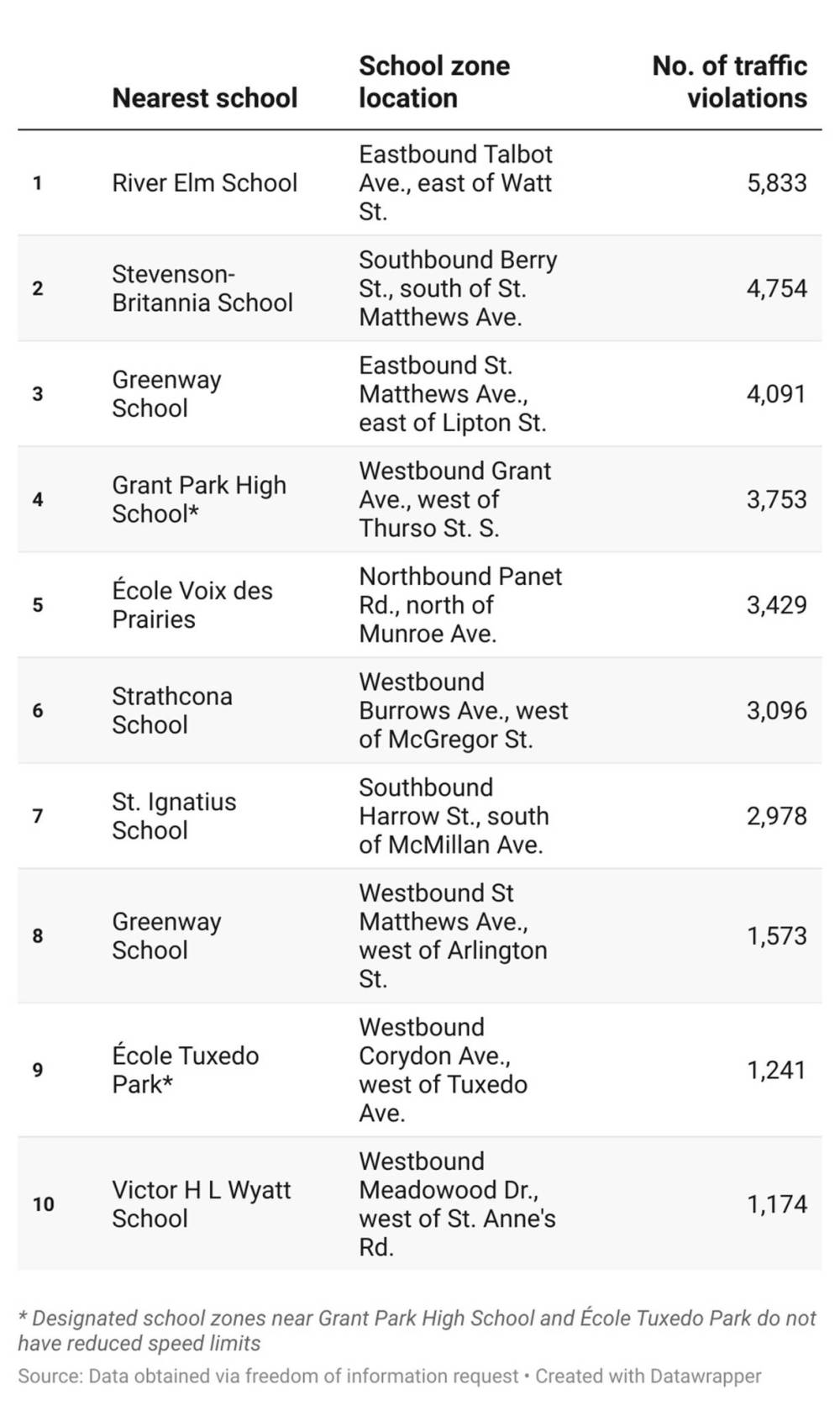
The area around River Elm School, in particular eastbound Talbot Avenue east of Watt Street, topped the list of school zones with the highest number of traffic infractions recorded by the Winnipeg Police Service between Sept. 1, 2024 and June 30.
There were 5,833 violations there, according to enforcement data on the 10 city locations with the highest number of infractions.
The Free Press obtained those numbers through a freedom of information request.
River Elm School employees, parents and nearby workers were not surprised to learn their backyard was a hot spot for speeding.
As Lagimodiere put it, “you’re screwed,” if you miss the only 30 km/h sign facing oncoming traffic upon turning onto Talbot Avenue off Watt Street.
He suggested that if school zones were truly about protecting pedestrians, then the City of Winnipeg would be marking them well and making them much larger.
There are approximately 150 school zones in Winnipeg with reduced-speed limits now in effect until Canada Day.
As students settle into their routines for the school year, the Free Press is launching an ongoing series that will focus on chronic road-safety problems and possible solutions.
“Generally speaking, when it comes to this situation of congestion around schools, the picture is not very good. It’s quite bleak,” said Ewald Friesen, manager of government and community relations at CAA Manitoba.
The local affiliate of the not-for-profit Canadian Automobile Association conducts regular polling on public perceptions of road safety and infrastructure.
MIKE DEAL / FREE PRESS The only 30 km/h sign facing oncoming traffic turning onto Talbot Avenue off Watt Street.
A spring survey of more than 500 caregivers of elementary-aged children found 90 per cent of them had witnessed a motorist engage in “dangerous behaviours” in a school zone.
Speeding was identified as the most common occurrence, followed by motorists blocking bus zones and distracted-driving incidents.
Participants in the online survey — conducted by Toronto-based Dig Insights in May and whose results have a confidence level of 95 per cent — were overwhelmingly in support of reducing speed limits around schools.
Just under half of the respondents said they believe automated-speed enforcement helps slow drivers.
Photo-radar is “a particularly interesting issue because it tends to raise people’s blood (pressure),” Friesen said.
Just this week, Ontario Premier Doug Ford announced plans to ban all speed cameras, owing to their ineffectiveness and predatory nature, in his province.
CAA’s stance on speed cameras — stationary or mobile — is that they should not be revenue-generating tools for municipalities.
Friesen said “proper signage” is also critical, as far as his organization is concerned, because motorists need to be provided with an opportunity to “do the right thing.”
“Manitobans care about this issue,” he said. “None of them want to injure a child or themselves or anybody else on the road.”
MIKE DEAL / FREE PRESS Just under half the participants in a recent online survey said they believe automated-speed enforcement helps slow drivers.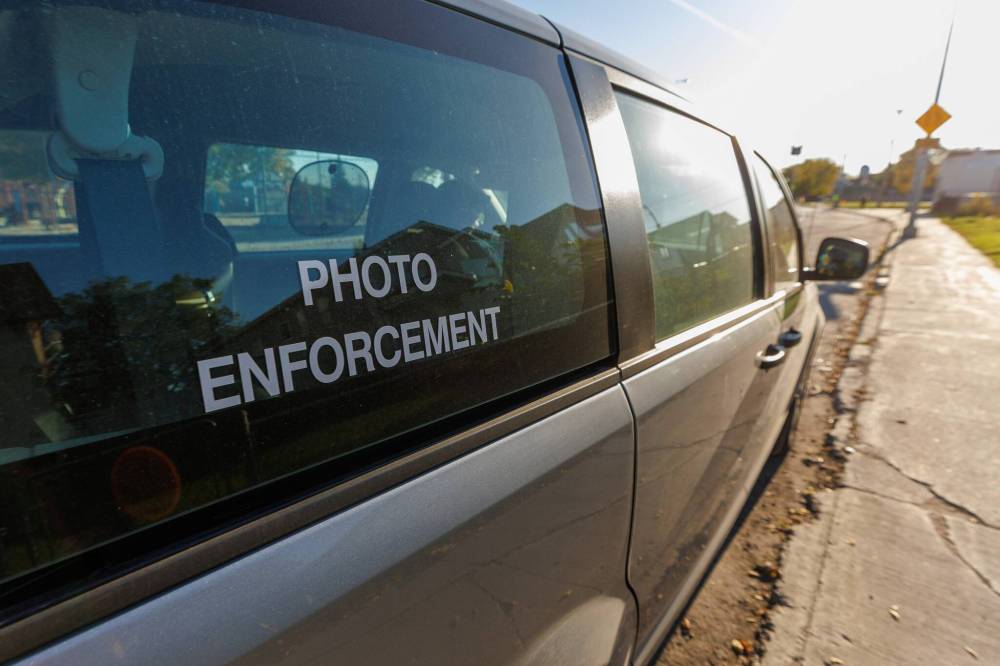
Traffic-safety researcher Curtis Pankratz has studied speeding in Winnipeg school zones and photo radar at large for the better part of the last decade.
Pankratz has found, on average, all photo enforcement speeding tickets issued in Winnipeg generate a monthly average of about $4 million.
“It typically goes up in September. On Sept. 1, they make a lot of money,” he said.
The worst spots — based on infraction data that Pankratz has collected regularly, dating back to September 2014 — include River Elm School, St. Ignatius School, Stevenson-Britannia School, Greenway School and Strathcona School.
Six in 10 school zone-related tickets were generated in those neighbourhoods, his analysis shows.

Pankratz, an associate professor of sociology at the University of Winnipeg, shared his findings with the city’s public works committee on Sept. 11.
“There’s no indication that the enforcement is reducing speeding in these areas and there’s very clear evidence that we have a very small number of areas that have the most serious problems with speeding,” he told the public meeting.
At the same time, he noted that those reduced-speed zones are not systematically or equally enforced.
Both police and the private contractor that staffs photo-radar vans are “crystal clear” about the fact that they enforce “where the speeding is,” Pankratz said.
“Regardless, when there’s this many infractions in a few places, it needs to be investigated,” he told committee chair Coun. Janice Lukes (Waverley West) and her colleagues.
He spoke in favour of a motion to investigate highly ticketed areas and assess if status-quo infrastructure is keeping students, teachers and other school community members safe.
“It’s time that we actually do things that we know, scientifically, would slow down traffic,” he said during his eight-minute presentation.
The committee voted to receive the motion and input from vocal supporters — including multiple school trustees, one of whom is both a father and public school teacher in Winnipeg — “as information.”
“It’s time that we actually do things that we know, scientifically, would slow down traffic.”
Public works director Jim Berezowsky told the meeting that doing so made the most sense because these issues are “already being worked on as part of our road-safety action plan.”
“We, as public works are, probably, more or as passionate as everybody that submitted and raised their concerns,” Berezowsky said.
Coun. Cindy Gilroy said she was frustrated by the outcome of the motion she first tabled in July.
For personal, political and environmental reasons, school-zone safety is a top priority for the elected official whose Daniel McIntyre ward includes Wolseley, the West End and surrounding neighbourhoods.
Gilroy lives near an elementary school where drop-off and pick-up congestion is a constant issue. She also represents walkable, inner-city neighbourhoods in which many voters do not own cars.
“At the end of the day, if we really want to deal with greenhouse gas emissions, we need people to walk more. If we want to deal with the health issues that we’re seeing, we need people to walk more. And our schools are having major issues with too many people driving their kids to school,” she said.
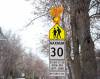
MIKE DEAL / FREE PRESS City of Winnipeg councillor Cindy Gilroy has repeatedly advocated for improvements such as a lit sidewalk and brighter signage at the intersection of St. Matthews Avenue and Banning Street where a 30 km/h zone has caught many drivers.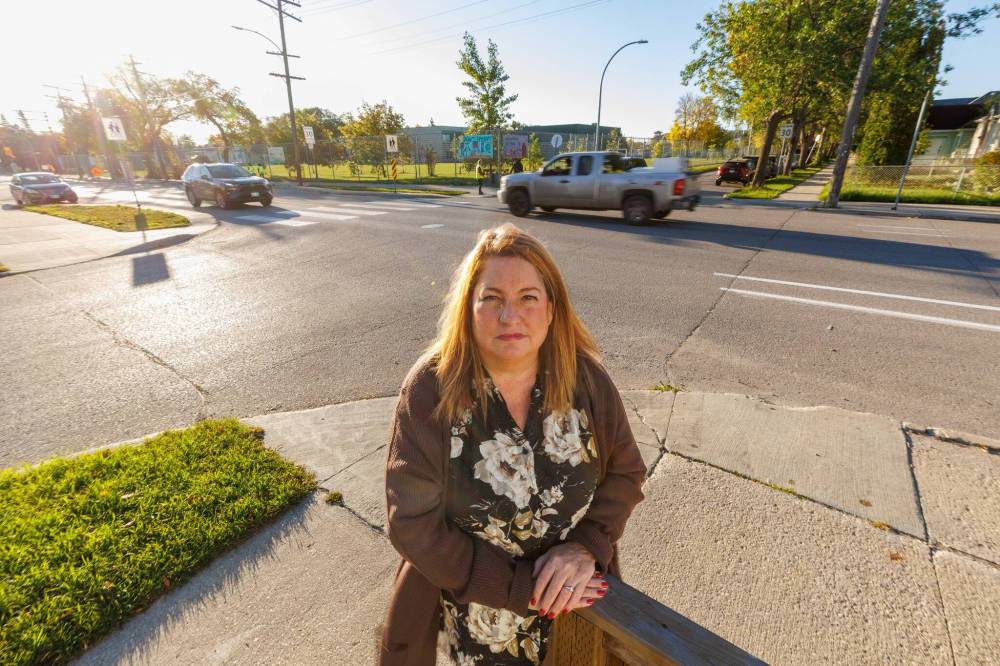
One school zone, around Greenway School in the West End, earned the dubious distinction of having two separately defined areas in the 10 worst 2024-2025 violations list.
The nursery-to-Grade 6 school, which is located in Gilroy’s ward, is bordered on three sides by St. Matthews Avenue and Burnell and Banning streets.
A combined 5,664 tickets were generated in that zone between Sept. 1, 2024 and June 30; 4,091 of them were issued on eastbound St. Matthews Avenue east of Lipton Street. The remaining 1,573 were for westbound violations on St. Matthews Avenue west of Arlington Street.
“Clearly, there’s an issue… I see sightline improvements that could happen, by just even moving the sign over,” Gilroy said, standing at the corner of St. Matthews Avenue and Lipton Street at exactly 8:44 a.m. Friday.

She noted that the sun was blocking her view of both the school and the 30 km/h speed-limit sign posted for oncoming motorists.
“It’s hard to see, and (a photo-radar) truck is right behind the sign, so they’re not even giving people an opportunity to slow down before they get ticketed,” she said.
“It’s not fair.”
Both Gilroy and Pankratz expressed shock that Winnipeg police charged $1,200 to obtain school zone infraction data; they argued it’s a matter of public safety and should be readily available to everyone.
maggie.macintosh@freepress.mb.ca
Parent perceptions on school zone safety
Asked about what they think would help slow drivers in school zones, parents and guardians of school-aged children who participated in a recent online survey expressed support for a range of interventions:
- speed bumps (59 per cent)
- automated-speed enforcement (47 per cent)
- automated signs that inform drivers of their speed (46 per cent)
- police enforcement (44 per cent)
- flashing amber lights over a road crossing or at non-signalized intersection (42 per cent)
- school crossing guards (42 per cent)
- road markings (36 per cent)
- CAA’s school safety patrollers (34 per cent)
— Online survey of 516 parents and guardians of elementary-aged children conducted by Dig Insights for CAA Manitoba in May 2025

Maggie Macintosh
Education reporter
Maggie Macintosh reports on education for the Free Press. Originally from Hamilton, Ont., she first reported for the Free Press in 2017. Read more about Maggie.
Funding for the Free Press education reporter comes from the Government of Canada through the Local Journalism Initiative.
Every piece of reporting Maggie produces is reviewed by an editing team before it is posted online or published in print — part of the Free Press‘s tradition, since 1872, of producing reliable independent journalism. Read more about Free Press’s history and mandate, and learn how our newsroom operates.
Our newsroom depends on a growing audience of readers to power our journalism. If you are not a paid reader, please consider becoming a subscriber.
Our newsroom depends on its audience of readers to power our journalism. Thank you for your support.
Related Articles
Ontario plans to ban speed cameras; Ford frames move as affordability measure