

Criminologist urges police to collect race-based data
Testifies at inquest into fatal shooting of Indigenous teen

Advertisement
Read this article for free:
or
Already have an account? Log in here »
To continue reading, please subscribe:
Monthly Digital Subscription
$1 per week for 24 weeks*
- Enjoy unlimited reading on winnipegfreepress.com
- Read the E-Edition, our digital replica newspaper
- Access News Break, our award-winning app
- Play interactive puzzles
*Billed as $4.00 plus GST every four weeks. After 24 weeks, price increases to the regular rate of $19.95 plus GST every four weeks. Offer available to new and qualified returning subscribers only. Cancel any time.
Monthly Digital Subscription
$4.99/week*
- Enjoy unlimited reading on winnipegfreepress.com
- Read the E-Edition, our digital replica newspaper
- Access News Break, our award-winning app
- Play interactive puzzles
*Billed as $19.95 plus GST every four weeks. Cancel any time.
To continue reading, please subscribe:
Add Free Press access to your Brandon Sun subscription for only an additional
$1 for the first 4 weeks*
- Enjoy unlimited reading on winnipegfreepress.com
- Read the E-Edition, our digital replica newspaper
- Access News Break, our award-winning app
- Play interactive puzzles
*Your next Brandon Sun subscription payment will increase by $1.00 and you will be charged $17.95 plus GST for four weeks. After four weeks, your payment will increase to $24.95 plus GST every four weeks.
Read unlimited articles for free today:
or
Already have an account? Log in here »
A criminologist tapped to review the police shooting death of an Indigenous teen following a high-speed pursuit in 2020 testified Tuesday that racial stereotypes could have contributed, though it’s impossible to see into the mind of the officer who fired the shots.
Scot Wortley was called as an expert witness during the ongoing inquest into the death of 16-year-old Eishia Hudson. He argued a lack of race-based data makes it difficult to determine how much racial stereotypes can influence police interactions in Winnipeg.
“I personally think that these stereotypes can create hypervigilance when dealing with people of a certain background and hypervigilance or fear is one of the factors that, again, trigger use of force,” Wortley told court.
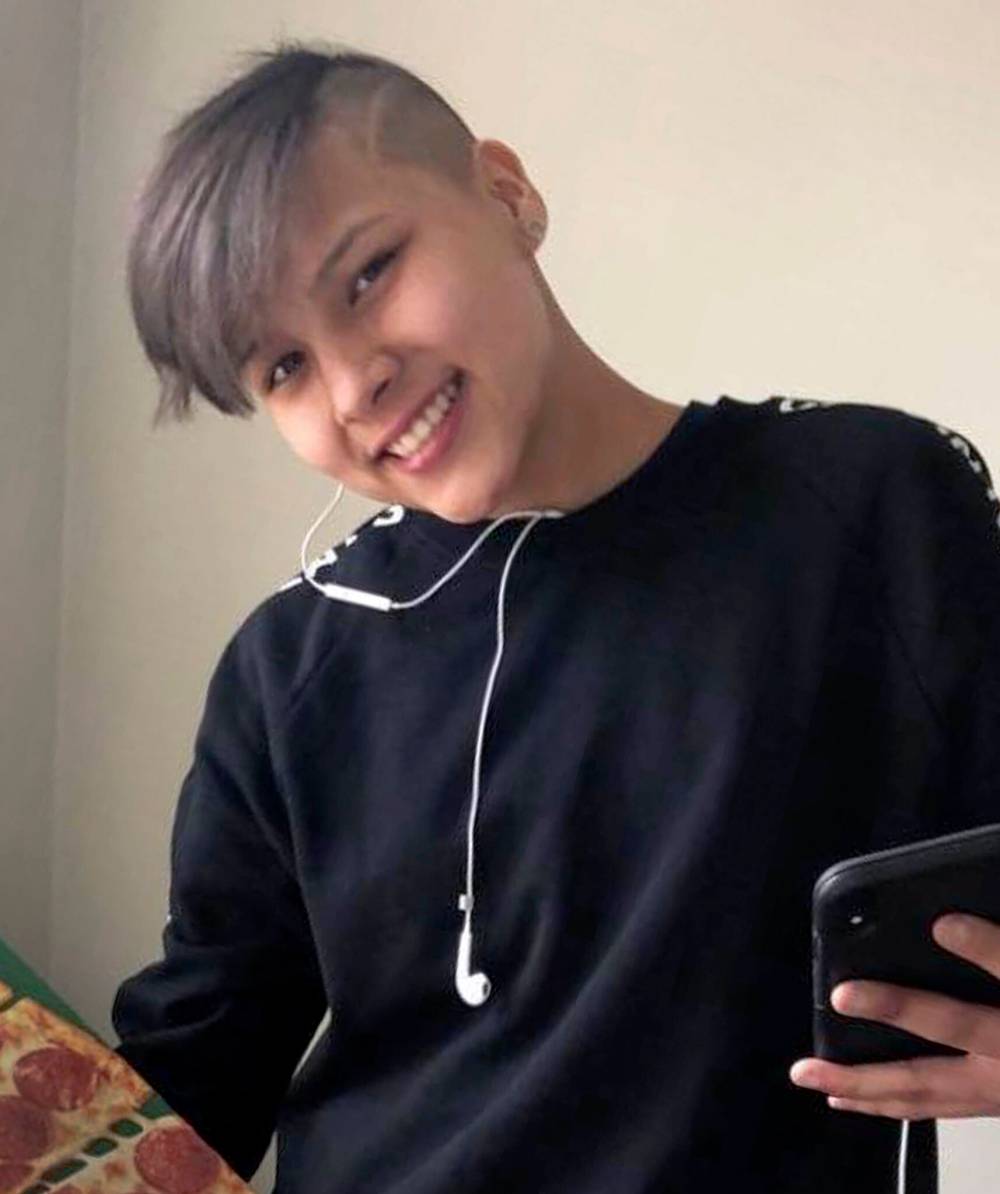
SUPPLIED
Eishia Hudson, 16, was shot and killed by police in 2020.
“If the objective of fair and impartial policing is to reduce racial disparities, if it is to improve confidence in the police among Indigenous and other racialized groups, then you have to measure that.”
Little of Wortley’s testimony centred on the shooting of Hudson, but rather offered his view on the broader landscape of police use of force against Indigenous and Black people in Canada.
The criminologist prepared a report for the court that concluded Indigenous people in Winnipeg are much more likely to die during interactions with police than other demographics.
The Manitoba Courts have declined to provide public copies of exhibits tabled as evidence during the inquest.
Under cross-examination from Kimberly Carswell, the lawyer for the Winnipeg Police Service, Wortley acknowledged his findings were based on a limited amount of data collected in other research documents and media reports.
He said he requested race-based data on use-of-force interactions from the WPS, but learned it does not require its officers to collect such data.
Carswell stressed the majority of police services in Canada do not report racial statistics, except for those in Ontario, where provincial legislation makes it mandatory.
She questioned whether the report was thorough enough to fairly draw conclusions about policing in Winnipeg.
“We have a history of not collecting high-quality data on this issue. Calls to collect this data have, for decades, been fiercely resisted or ignored by major police services across the country,” Wortley countered.
“The argument that I’m trying to make in the report is that we need a standardized data collection process.”
The criminologist recommended the WPS, and other police services, mandate the collection of race-based data, including documenting the race of everyone who interacts with police, regardless of whether a use-of-force incident occurs.
Hudson, a member of Berens River First Nation, was killed after leading police on a high-speed pursuit that began in Winnipeg’s Sage Creek neighbourhood after a liquor story robbery.
She was behind the wheel of a stolen Jeep alongside four other youths when she fled an attempted traffic stop and reached speeds exceeding 100 kilometres per hour, the inquest heard previously.
Information provided to officers via police radio indicated the suspects were Indigenous youth, and that the driver was a male.
Wortley suggested this could have created a racial bias that coloured the actions of police responding to the incident and their perception of the threat.
He acknowledged it is “never going to be completely possible to know exactly what was going through an officer’s mind prior to making a use-of-force decision.”
Const. Kyle Pradinuk, the officer who fired the fatal shots, previously testified that the suspect description provided to him had no influence on his decision to shoot Hudson.
He fired one round at the teenager after she crashed the Jeep into another vehicle, and then attempted to reverse while being approached by officers on foot. He fired a second round a moment later, believing the vehicle had begun to move forward, he said.
Video captured by a bystander and played in court shows the Jeep’s reverse lights were still activated when the second shot was fired.
Chris Butler, a police use-of-force expert, previously testified officers had little time to respond after the crash and that the shooting was justified.
“I saw no evidence in my review of this entire incident that the race of the individuals in this case in any way improperly impacted the officer’s risk assessments, decision making and interventions,” Butler said.
Wortley was the latest expert witness to appear during the inquest, which included weeks of testimony in February and March before a break.

The inquest resumed Monday with testimony from a WPS patrol sergeant, former inspector and a constable who witnessed the pursuit.
Wortley will return to the stand Wednesday. Peter Rampat, another use-of-force expert, will appear later this week, before proceedings are scheduled to break until June 16.
The inquest must determine whether the shooting of Hudson was justified and whether systemic racism played a role in her death.
Judge Margaret Wiebe, who cannot assign blame, is expected to issue a final report that could include recommendations on how to prevent similar tragedies.
tyler.searle@freepress.mb.ca
Tyler Searle is a multimedia producer who writes for the Free Press’s city desk. A graduate of Red River College Polytechnic’s creative communications program, he wrote for the Stonewall Teulon Tribune, Selkirk Record and Express Weekly News before joining the paper in 2022. Read more about Tyler.
Every piece of reporting Tyler produces is reviewed by an editing team before it is posted online or published in print — part of the Free Press‘s tradition, since 1872, of producing reliable independent journalism. Read more about Free Press’s history and mandate, and learn how our newsroom operates.
Our newsroom depends on a growing audience of readers to power our journalism. If you are not a paid reader, please consider becoming a subscriber.
Our newsroom depends on its audience of readers to power our journalism. Thank you for your support.
Tyler Searle is a multimedia producer who writes for the Free Press’s city desk. A graduate of Red River College Polytechnic’s creative communications program, he wrote for the Stonewall Teulon Tribune, Selkirk Record and Express Weekly News before joining the paper in 2022. Read more about Tyler.
Every piece of reporting Tyler produces is reviewed by an editing team before it is posted online or published in print — part of the Free Press‘s tradition, since 1872, of producing reliable independent journalism. Read more about Free Press’s history and mandate, and learn how our newsroom operates.
Our newsroom depends on a growing audience of readers to power our journalism. If you are not a paid reader, please consider becoming a subscriber.
Our newsroom depends on its audience of readers to power our journalism. Thank you for your support.
Related Articles
Winnipeg officer who shot girl was right to use lethal force: police expert






Advertisement Advertise With Us
Advertisement Advertise With Us